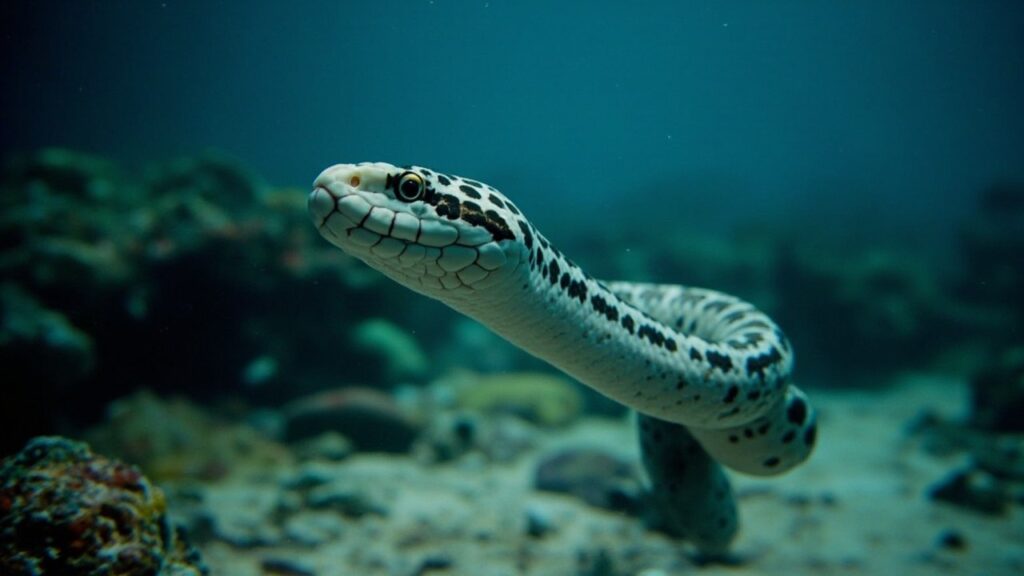
Anacondas are large, semi-aquatic boas in the genus Eunectes. The green anaconda is strongly associated with the Amazon and Orinoco regions, while the yellow anaconda is centred farther south in the Paraguay and Paraná river system. Species-specific information is more useful than treating every anaconda as an Amazon River animal.
Wetland hunters
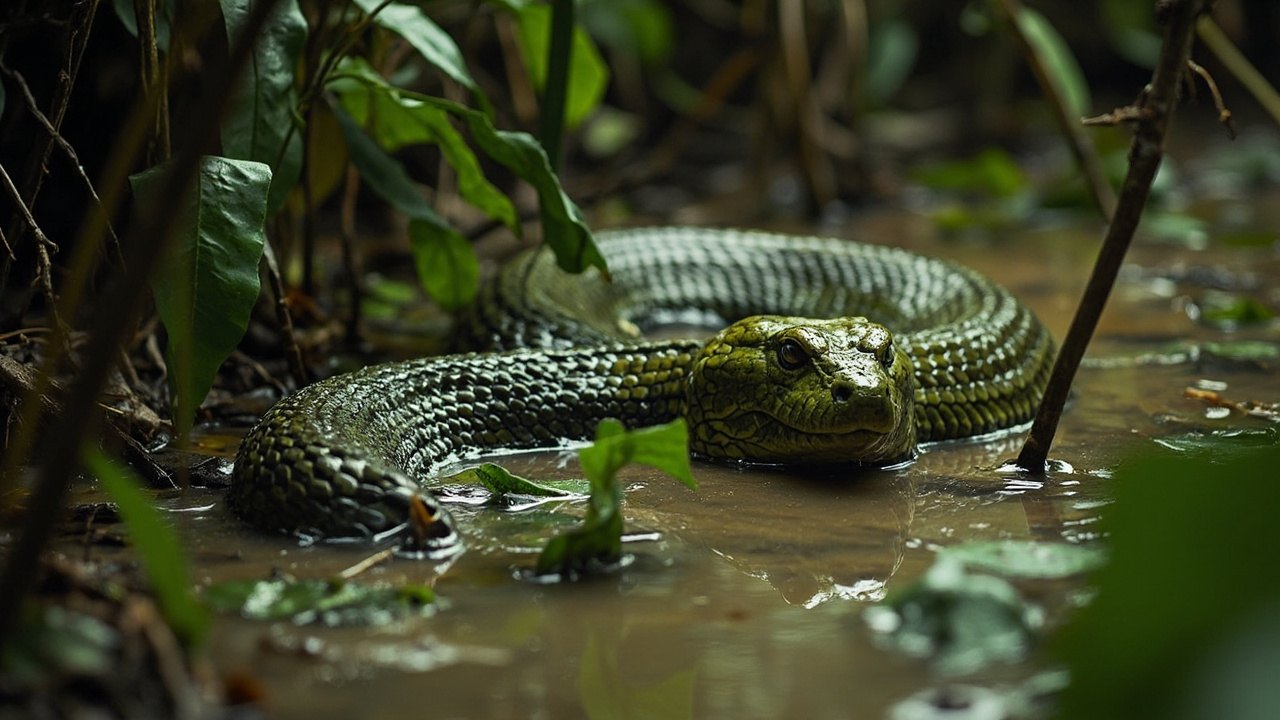
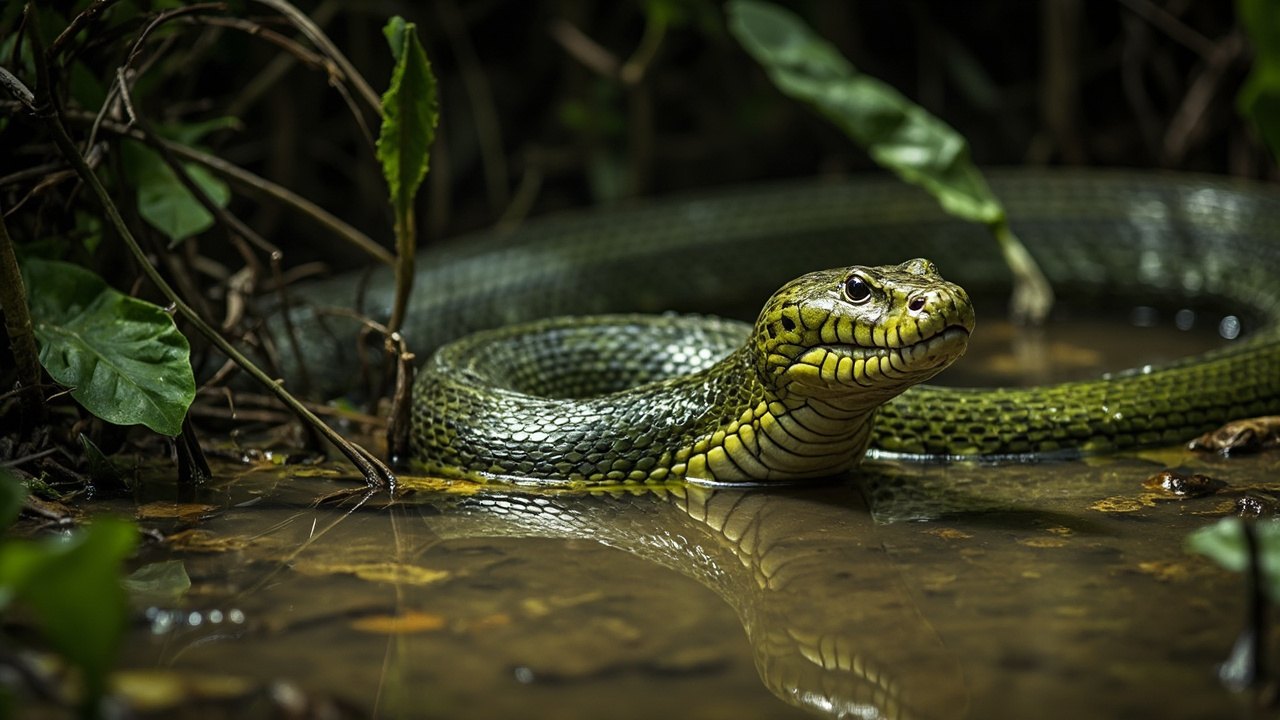
Anacondas use swamps, flooded forest, marshes, slow rivers and other wetland habitats. Their eyes and nostrils sit high on the head, which helps them remain mostly submerged. They can move on land, but water and dense wetland cover are central to their lifestyle.

Constriction interrupts circulation
Anacondas are non-venomous. They capture prey with their teeth and coils, and constriction rapidly disrupts the prey’s circulation. The old phrase that a snake simply squeezes until prey suffocates is incomplete. Prey and hunting behaviour vary with the anaconda species, size and habitat.
Avoid unverified extremes
Stories about impossible lengths, weights and encounters are common. Reliable descriptions should avoid universal size records and fixed breeding months unless they name the species, locality and source. Recent taxonomic research also means that broad labels such as green anaconda should be used with care.
Respect large wild snakes
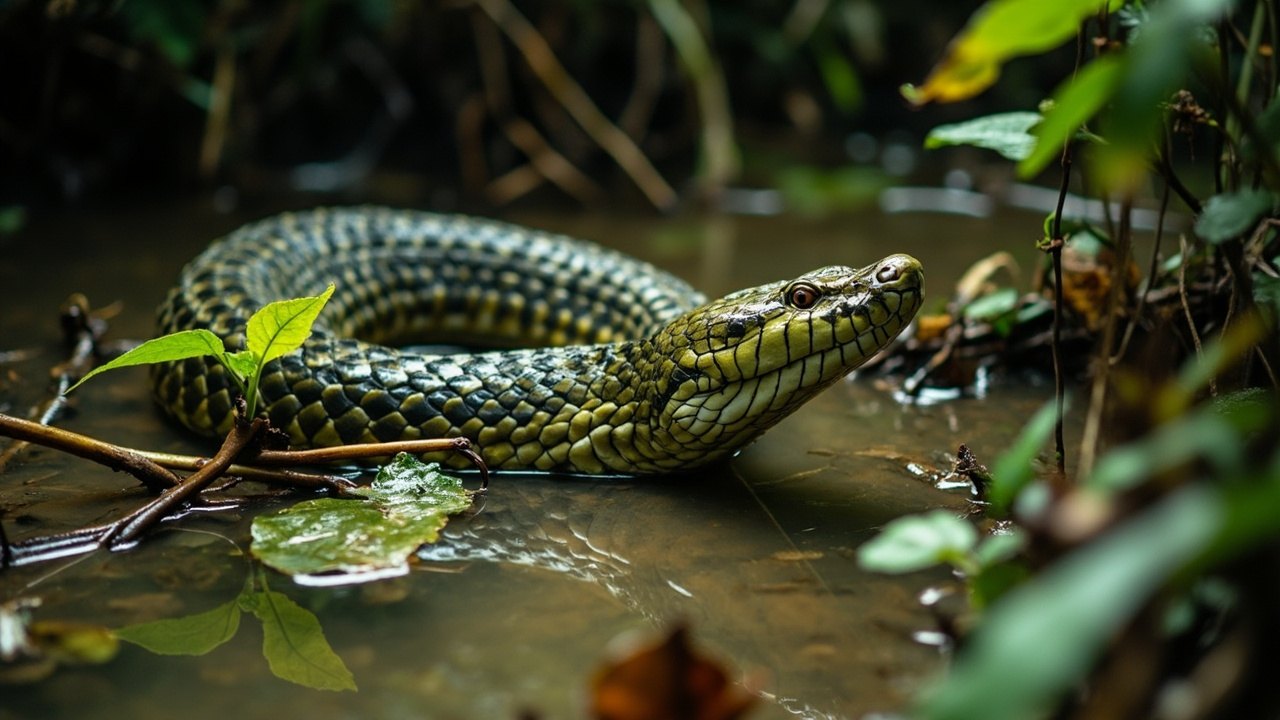
Large boas are powerful animals and should never be approached, handled or used for sensational photos. Wetland protection, safe local coexistence and accurate species identification are more useful than repeating myths about giant river monsters.
Floodplains Change With the Water
Seasonal flooding can connect forest, marsh and river channels, then leave those areas separated as water falls. An anaconda may use the cover and prey available at a particular stage of that cycle, so a dry-season sighting does not describe the whole year. Protecting floodplain vegetation and water quality supports the reptiles as well as fish, birds and mammals that share the wetland.
Size Stories Need Evidence
Anacondas are often described through extreme length and weight claims that cannot be checked. A measured animal, an identified species, a location and a documented method are more useful than a headline. Females of some anaconda species are larger than males, but individual size still varies with age, food availability and the population being studied.
Wetland Protection Is Species Protection
Draining, contamination and disturbance can change the cover and prey that anacondas depend on. Avoiding close encounters is also part of protection. A large snake seen near water should be given room to move away, while local wildlife authorities can advise if there is a genuine safety concern.
Sources and review notes
Reviewed 23 August 2026. Reptile biology is wonderfully variable. We have avoided turning one species, photograph or dramatic observation into a rule for an entire group, and we have used cautious wording where evidence or local conditions differ.
Reference starting points: The Reptile Database, The IUCN Red List of Threatened Species, and PubMed-indexed research. Conservation status, taxonomy and local laws can change, so check the linked databases and the relevant local authority for current information.
Spotted something we should revisit? Send Reptile Explorer a correction—thoughtful reader feedback is always welcome.