A Species-Specific Nesting Journey
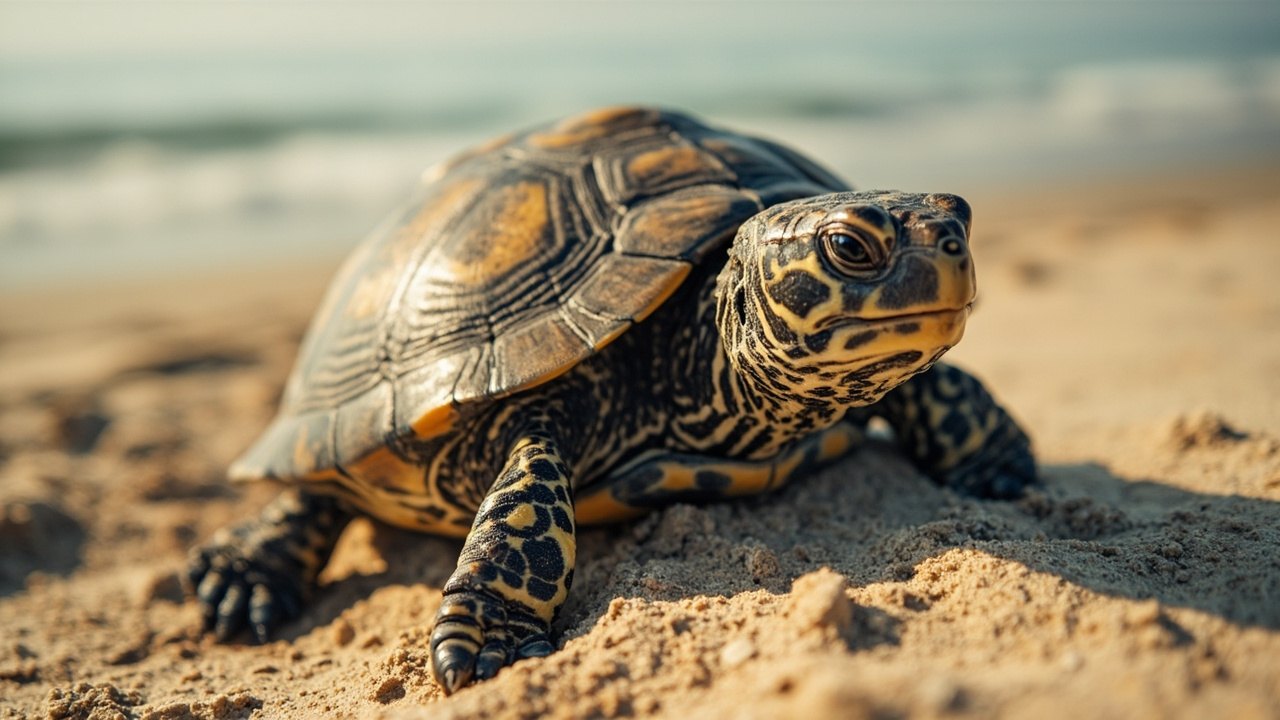
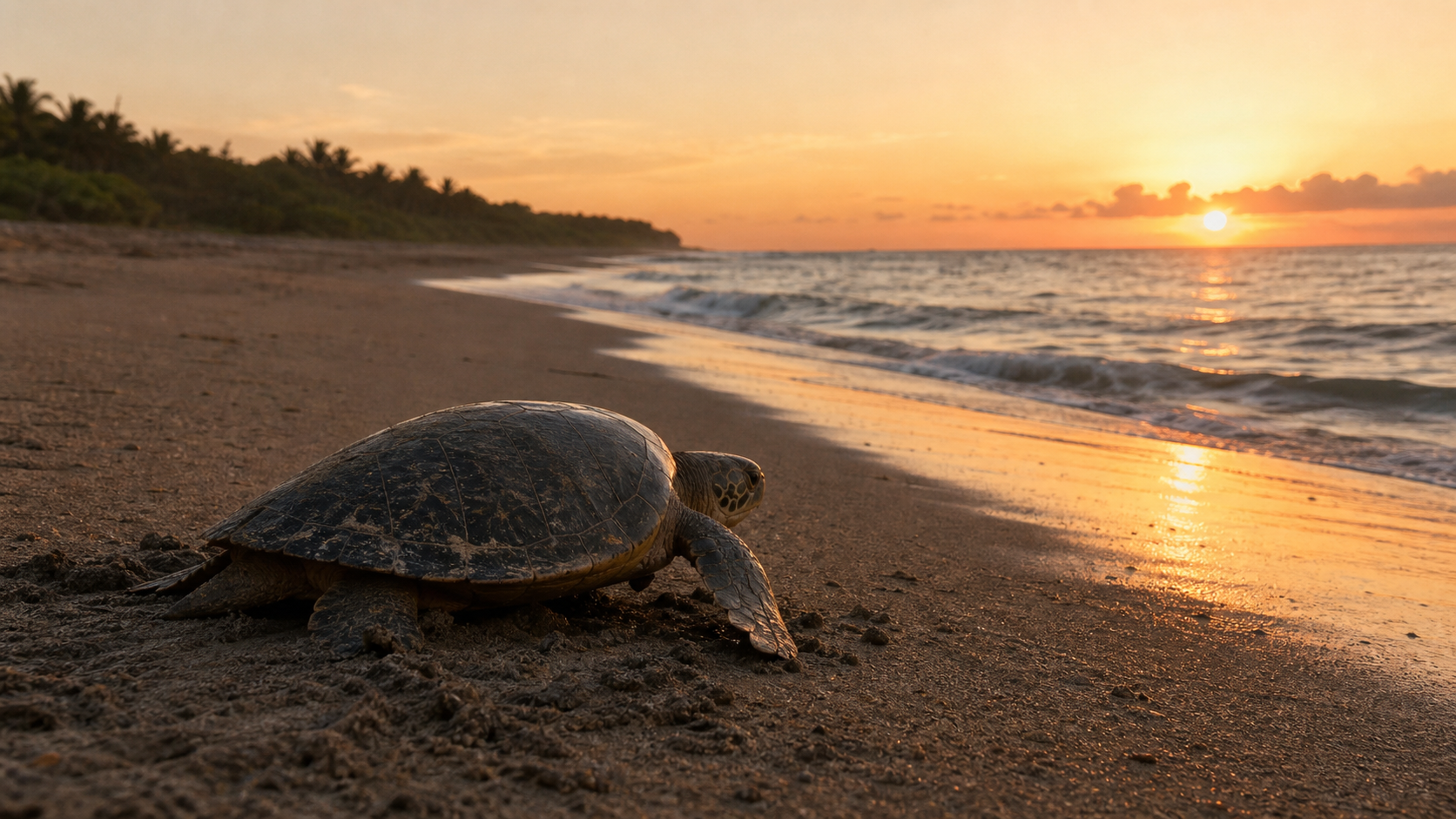
Sea turtles return to suitable beaches to nest, but timing, clutch size and nesting frequency differ among species and locations. A female excavates a chamber with her rear flippers, lays her eggs, covers the nest and returns to the water. Hatchlings receive no parental care after emergence, so beach conditions are especially important.

Incubation and Orientation
Incubation temperature influences development and sex in sea turtles, although the thermal environment reflects several factors rather than nest depth alone. When hatchlings emerge, they normally orient toward the brighter, open horizon over the sea. Artificial lighting, obstacles and vehicle tracks can interfere with this short but vulnerable journey.
Keeping Nesting Beaches Safer
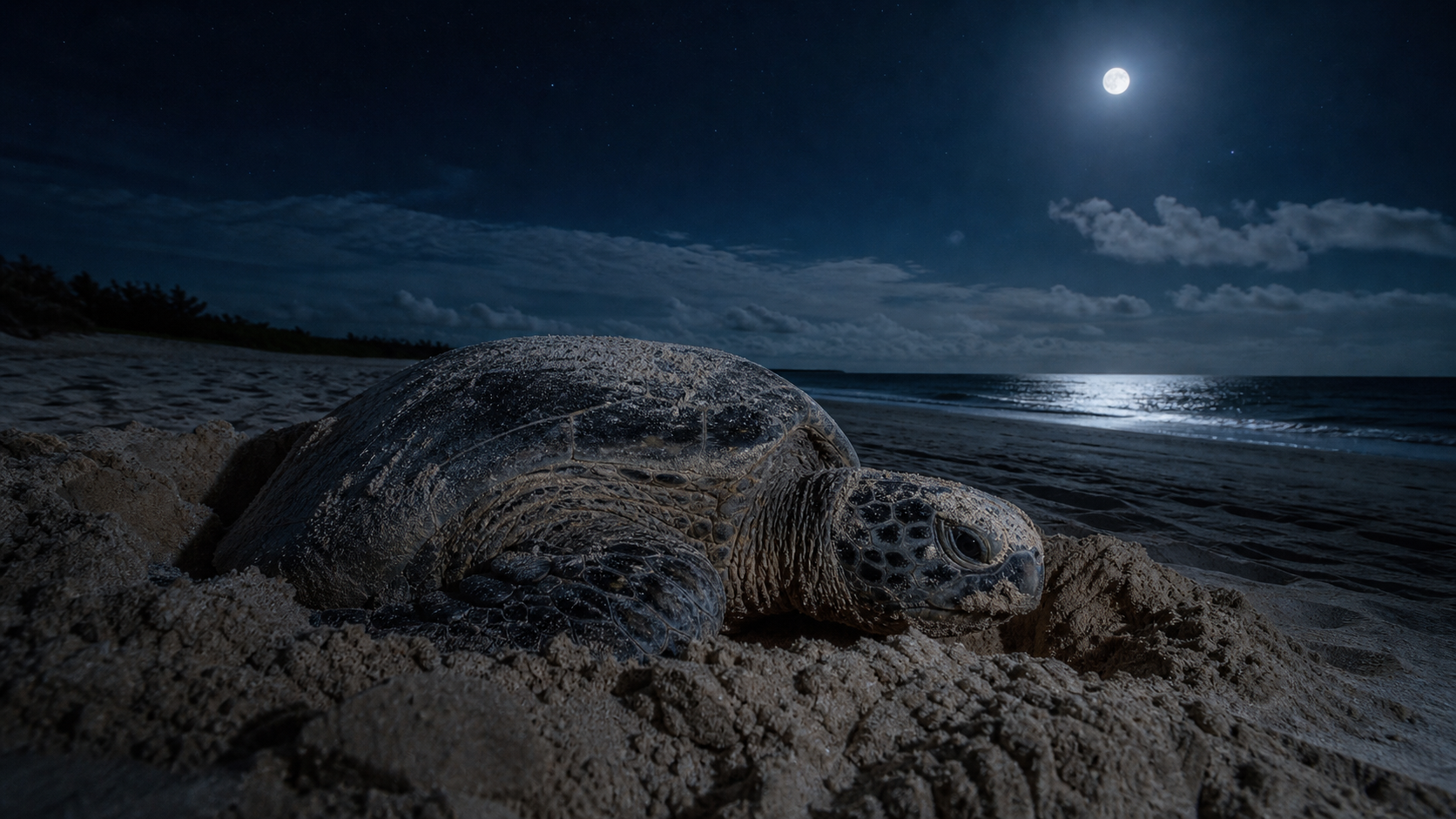
Beach protection works best when local rules are followed: keep lights shielded from the shore, remove furniture and litter, avoid driving on nesting areas, and give turtles and hatchlings plenty of distance. Never handle, relocate or “help” a turtle unless authorised wildlife staff direct it. Report injured animals or disturbed nests to the local wildlife authority.
Beach Shape Affects Nest Success
Nesting females need more than sand. Beach width, slope, erosion, vegetation, tidal flooding and obstacles can influence whether a site is accessible and whether a nest remains intact through incubation. Conditions can change after storms or development work, so one successful nesting season does not prove that a beach will remain suitable. Local monitoring programmes can identify new risks without disturbing the nesting animal.
Dark Shorelines Support Natural Orientation
Adult females and hatchlings can be affected by artificial light visible from a nesting beach. Shielding lights, closing blinds, moving fixtures away from the shore, and following local turtle-friendly lighting rules can reduce disorientation. Flash photography and phone lights should not be used around nesting turtles or hatchlings. The safest photograph is usually taken from a distance under the conditions permitted by local wildlife authorities.
Trained Monitors Handle Intervention
A marked nest, hatchling track or turtle near the dunes can attract attention, but visitors should not uncover eggs, carry hatchlings or move a female toward the water. Vehicles, furniture, litter and deep ruts can block movement or damage nests. Report injured animals, exposed eggs or hatchlings moving inland to the relevant sea-turtle programme or wildlife authority, whose staff can decide whether intervention is necessary.
Sources and review notes
Reviewed 23 August 2026. Reptile biology is wonderfully variable. We have avoided turning one species, photograph or dramatic observation into a rule for an entire group, and we have used cautious wording where evidence or local conditions differ.
Reference starting points: The Reptile Database, The IUCN Red List of Threatened Species, and PubMed-indexed research. Conservation status, taxonomy and local laws can change, so check the linked databases and the relevant local authority for current information.
Spotted something we should revisit? Send Reptile Explorer a correction—thoughtful reader feedback is always welcome.