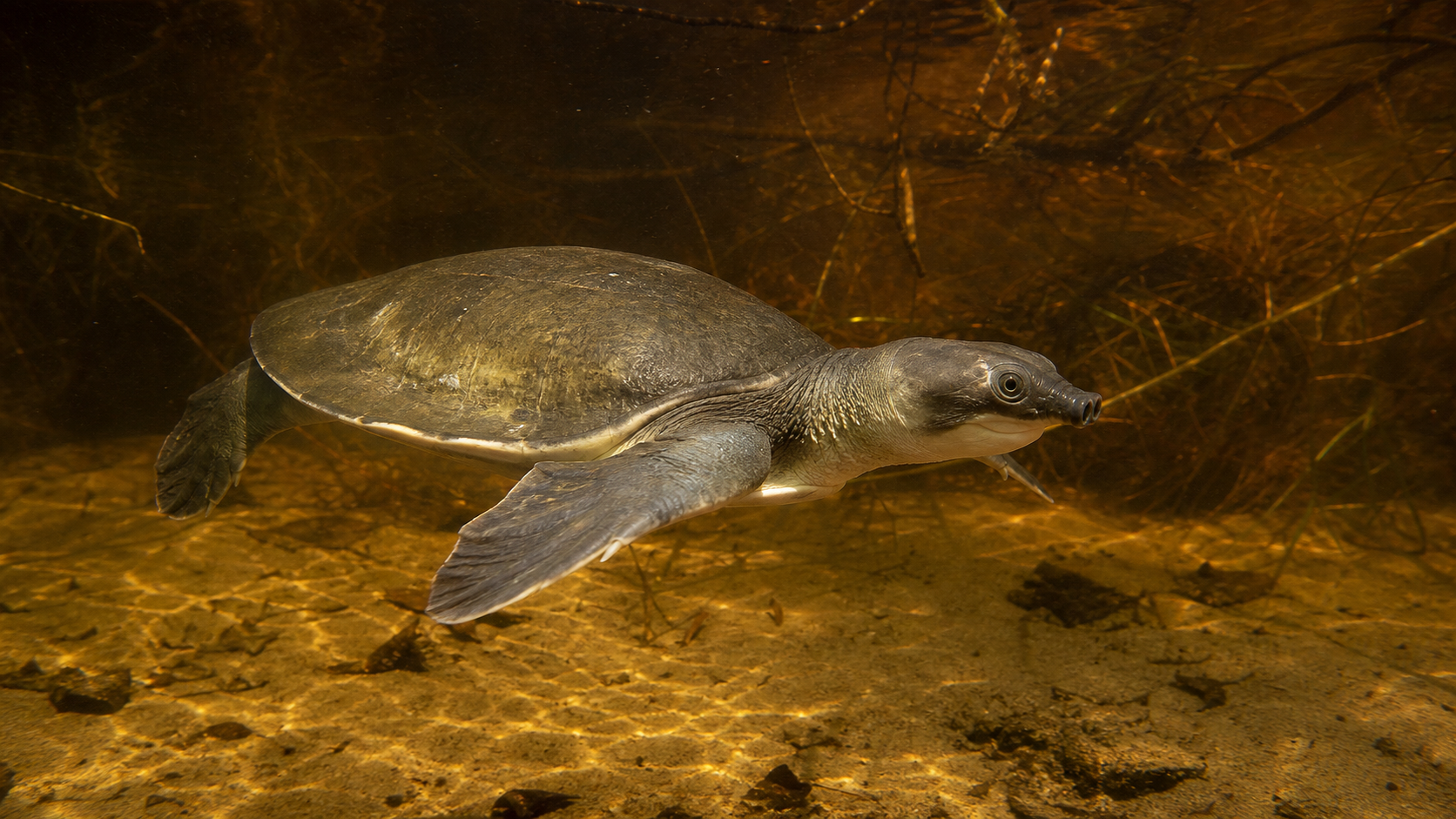
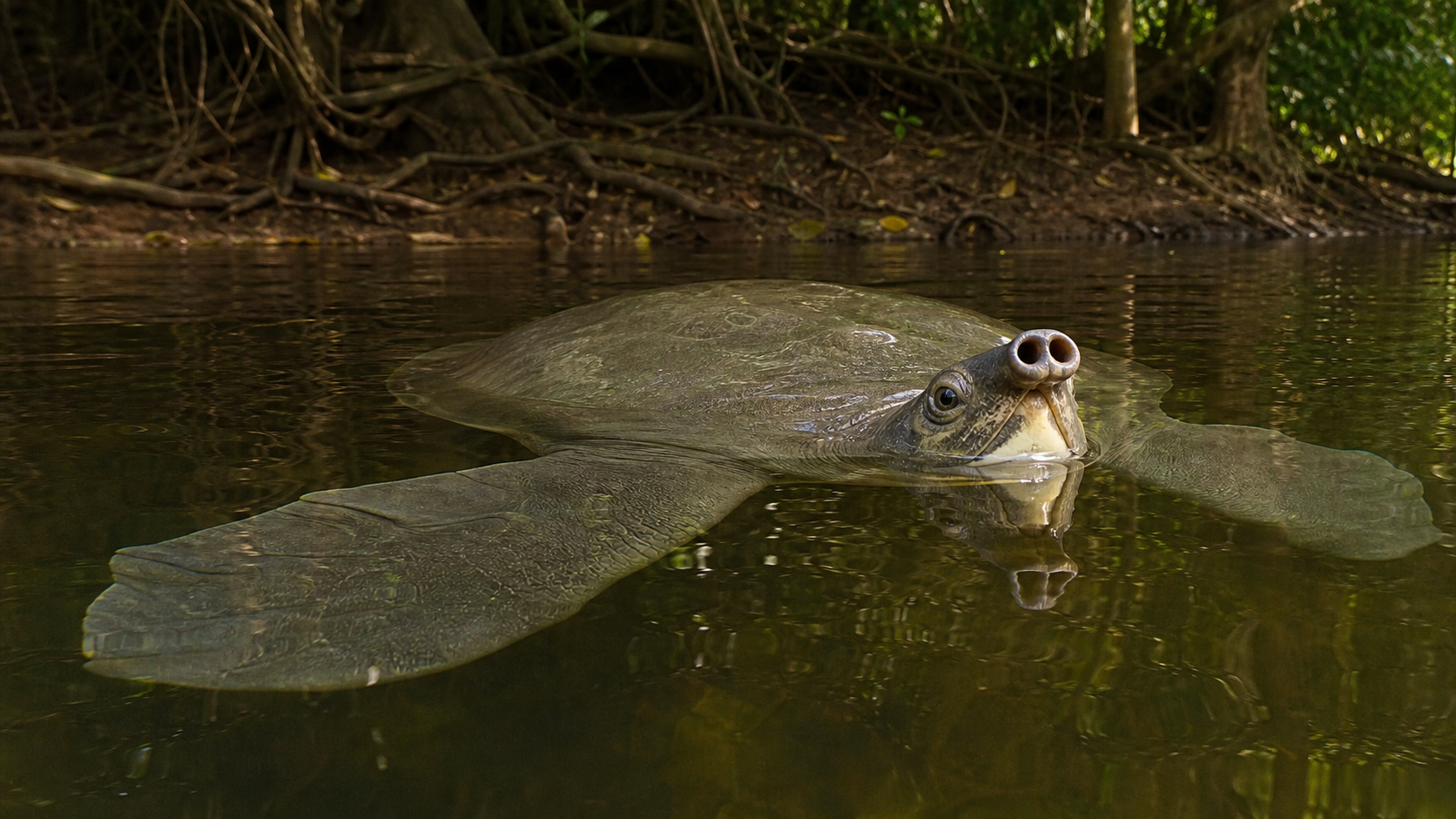
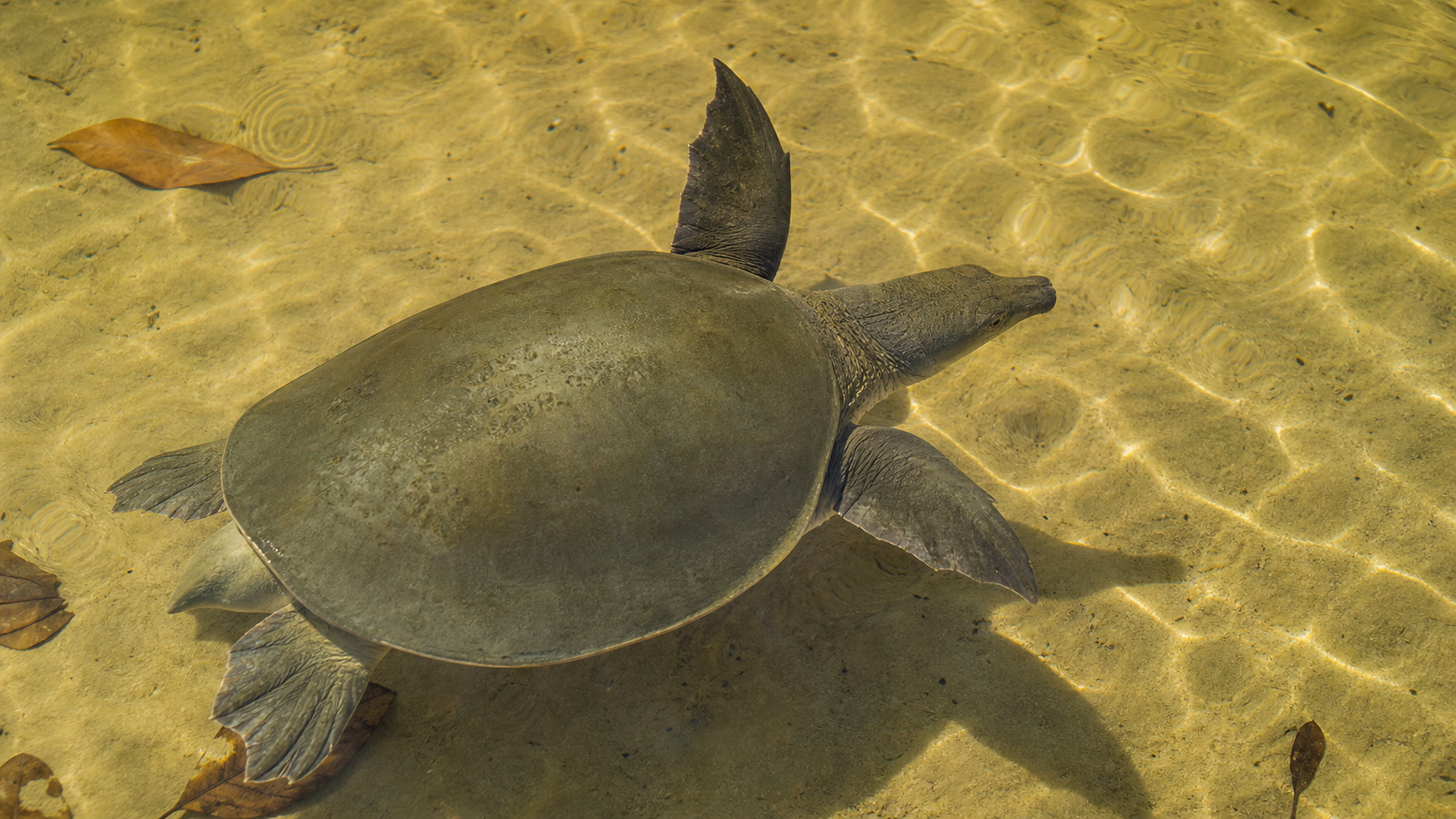
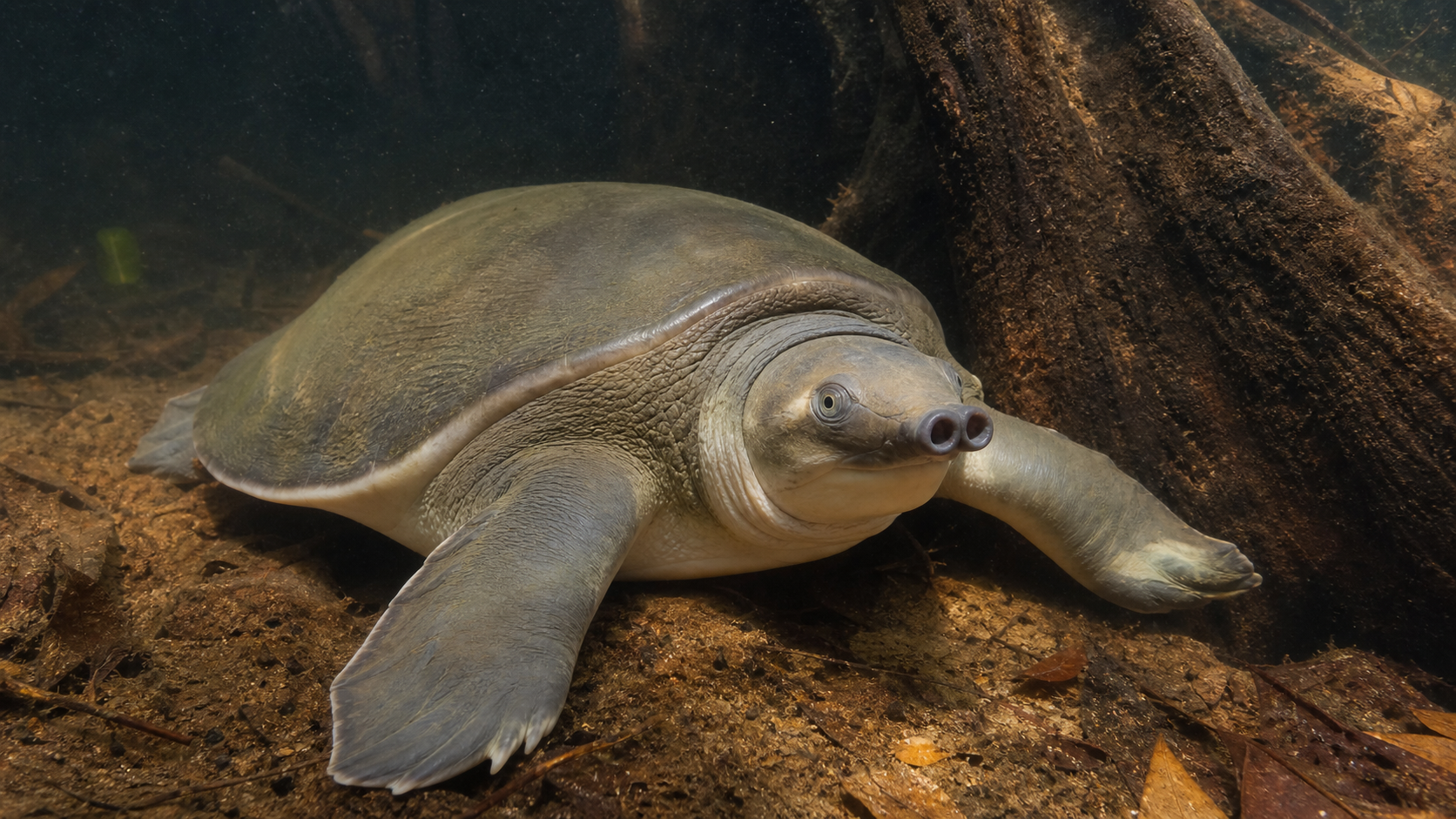
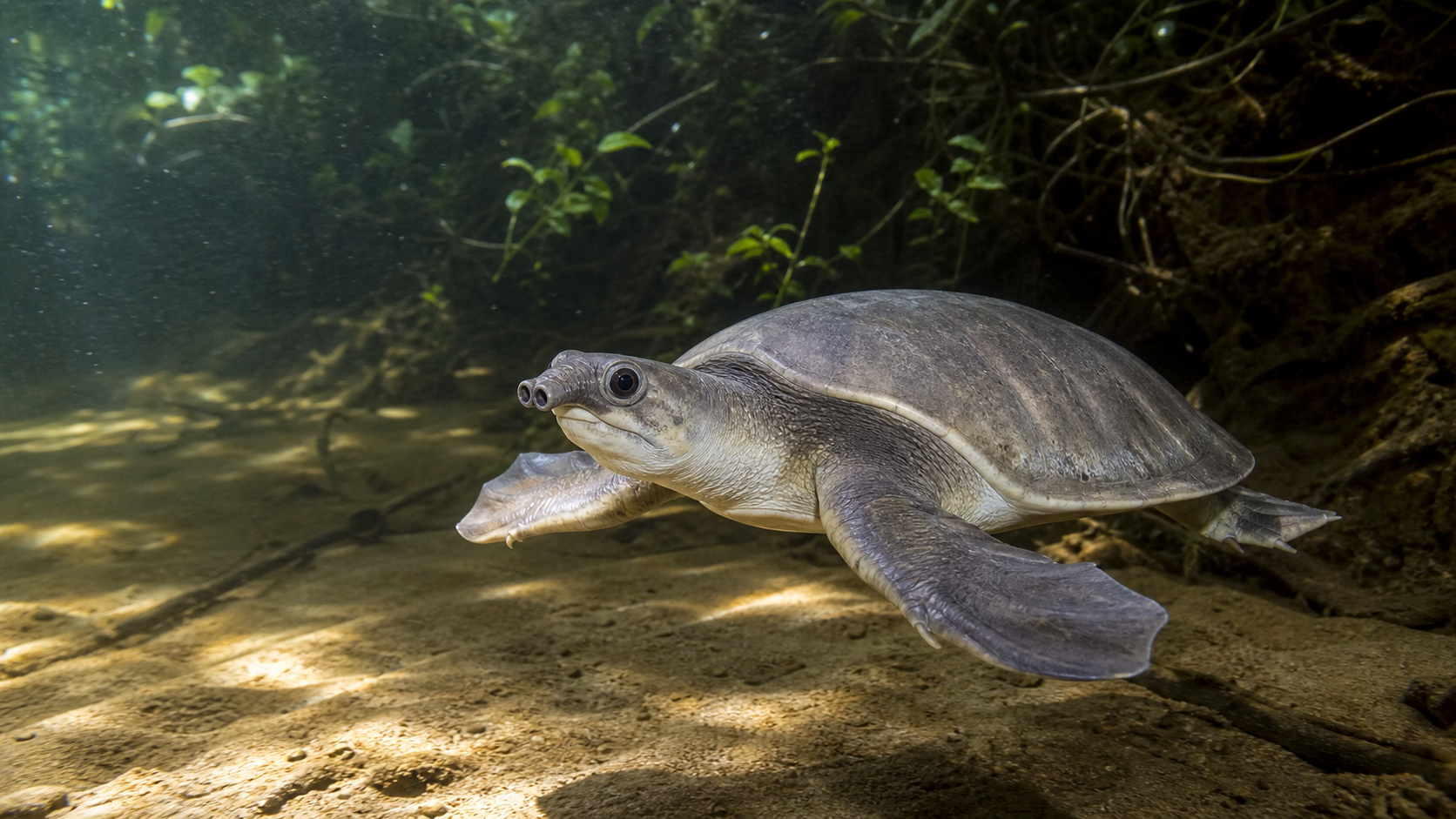
The pig-nosed turtle, Carettochelys insculpta, is a distinctive freshwater turtle native to southern New Guinea and northern Australia. Its fleshy, snorkel-like snout and broad paddle-like flippers make it look superficially like a sea turtle, but it lives in rivers, lagoons and wetlands rather than the ocean.
A unique freshwater turtle
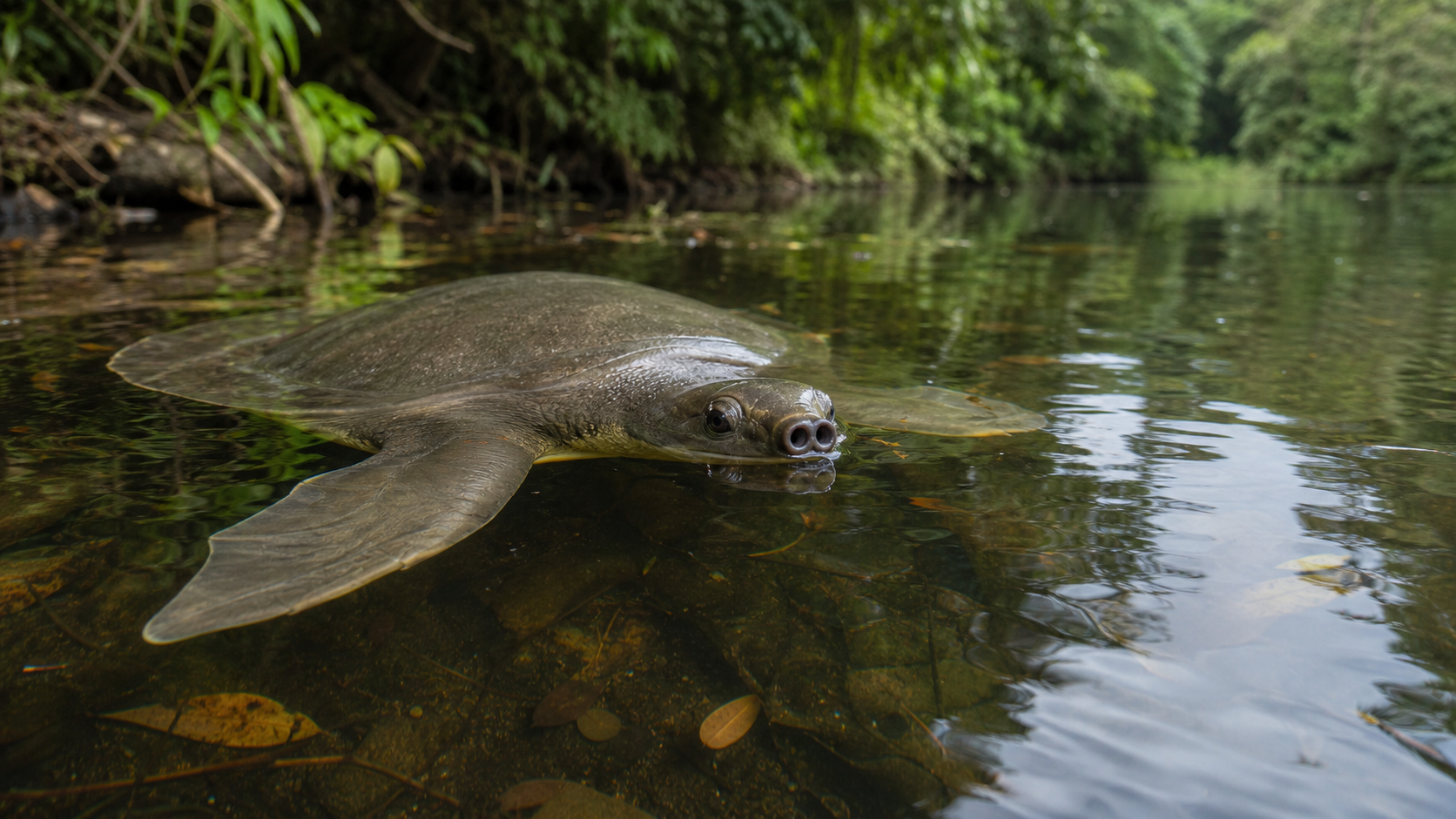
This species is the only living member of the family Carettochelyidae. It has a smooth, leathery shell rather than the hard scutes seen on many other freshwater turtles. The snout lets it take in air at the surface while keeping most of the head submerged.
Food and habitat
Pig-nosed turtles are omnivores. Their diet can include fruit, leaves, aquatic plants and invertebrates, with details varying by location and season. They use warm freshwater systems with suitable cover and feeding areas; a river name alone does not describe the full range of habitat they need.
Nesting happens on land
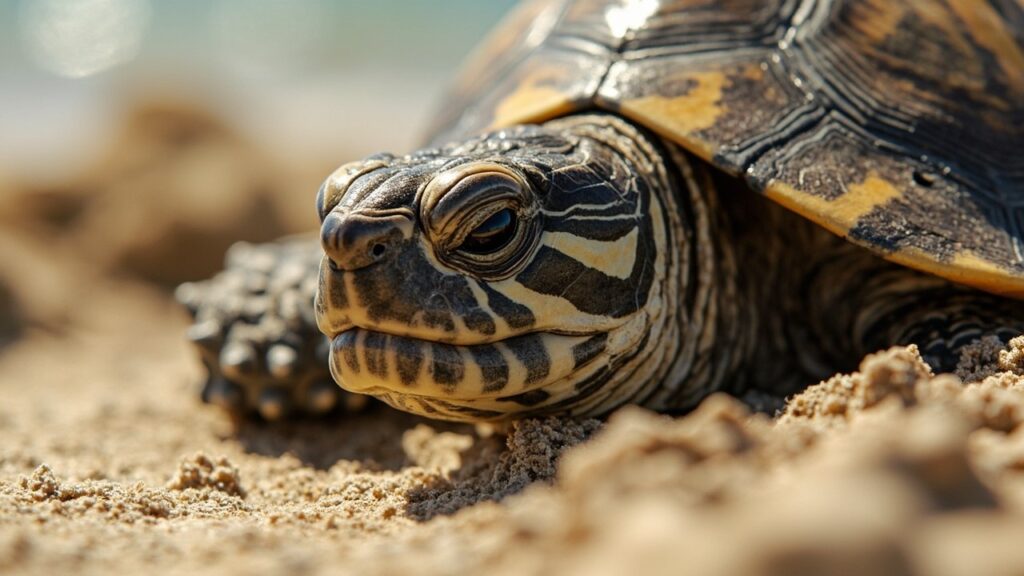
Although the turtles spend most of their lives in water, females come onto exposed sandy banks to nest. Water habitat and nesting habitat must both be protected. It is inaccurate to place nests on a riverbed or to treat all aquatic areas as suitable for reproduction.
Conservation priorities
Harvest, illegal trade, habitat disturbance and altered river conditions can threaten local populations. Accurate range information matters: the Daly River is in northern Australia, while New Guinea includes Papua New Guinea and Indonesian Papua. Protecting the species means protecting connected freshwater habitat and safe nesting banks in both parts of its native range.
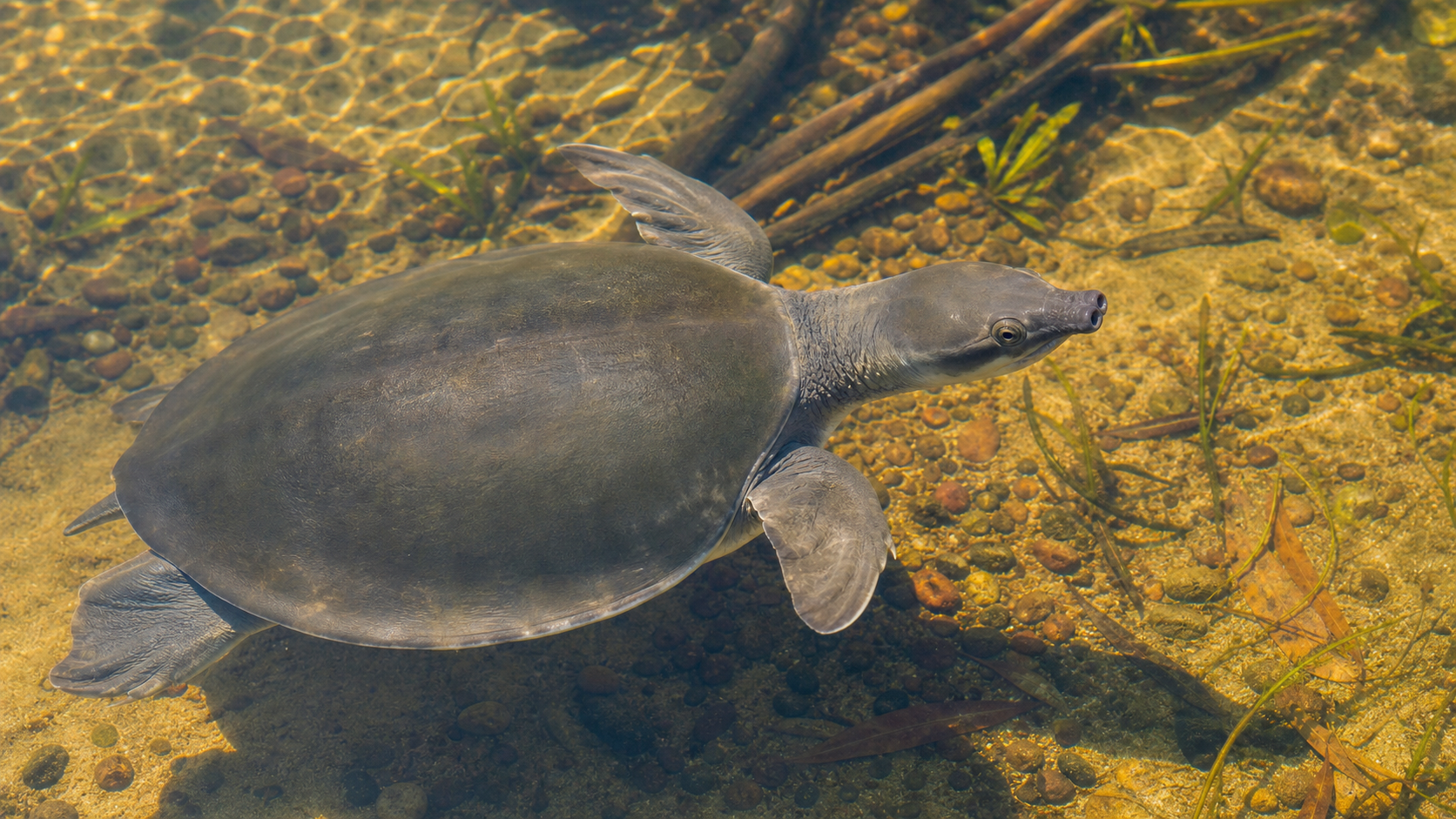
River Habitat Has Several Parts
In northern Australia, pig-nosed turtles use river channels and billabongs where sandy or gravelly bottoms, leaf litter and submerged cover offer places to rest and feed. Conditions differ across the Australian and New Guinean portions of the range, so one river should not be treated as a model for every population. Water quality, connected wetlands and bank vegetation can influence how useful a site is.
Protect Nesting Banks Without Disturbance
Females need access to suitable exposed banks, but nesting sites can be vulnerable to erosion, vehicle traffic, dogs, harvest and changes in water level. People who see a turtle should remain well back and avoid digging, moving eggs or sharing a sensitive location publicly. Sightings reported with date and habitat notes can be useful to the appropriate conservation programme.
Sources and review notes
Reviewed 23 August 2026. Reptile biology is wonderfully variable. We have avoided turning one species, photograph or dramatic observation into a rule for an entire group, and we have used cautious wording where evidence or local conditions differ.
Reference starting points: The Reptile Database, The IUCN Red List of Threatened Species, and PubMed-indexed research. Conservation status, taxonomy and local laws can change, so check the linked databases and the relevant local authority for current information.
Spotted something we should revisit? Send Reptile Explorer a correction—thoughtful reader feedback is always welcome.