An Iguana Found Nowhere Else
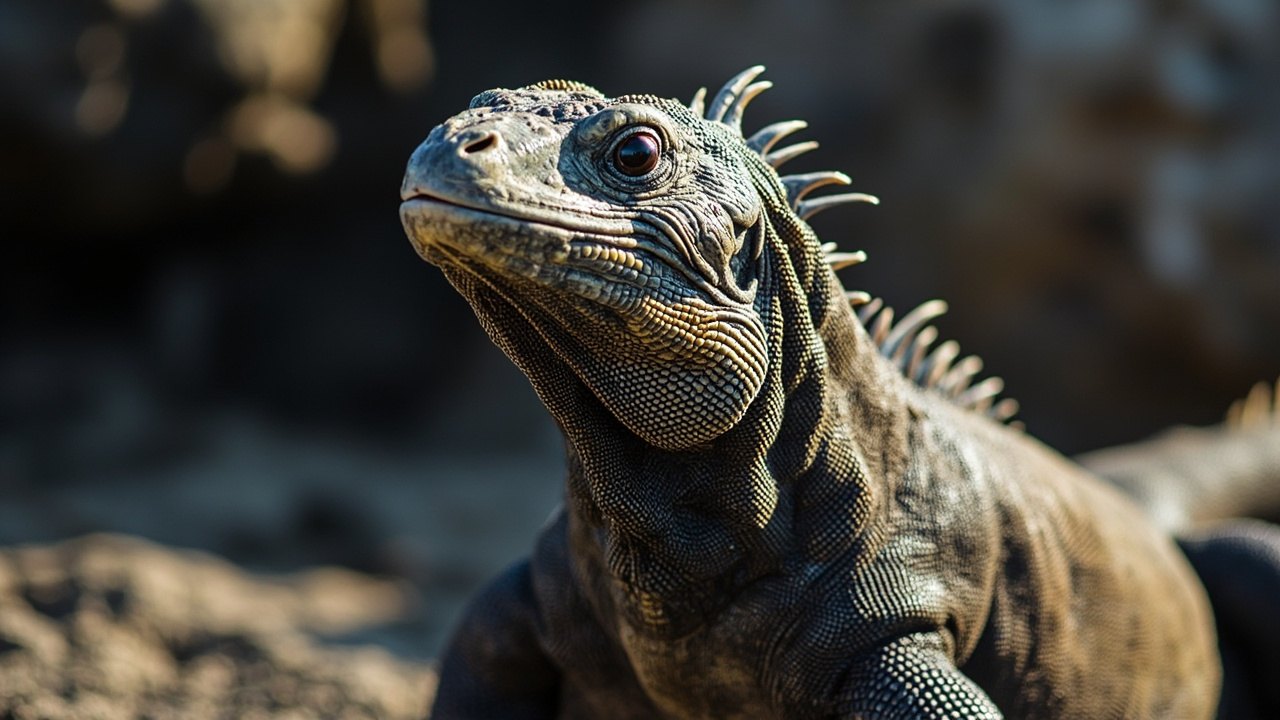
The marine iguana, Amblyrhynchus cristatus, is endemic to the Galapagos Archipelago. It is the only living lizard that regularly forages at sea, making it one of the clearest examples of island evolution in a reptile.

Feeding at the Edge of the Ocean
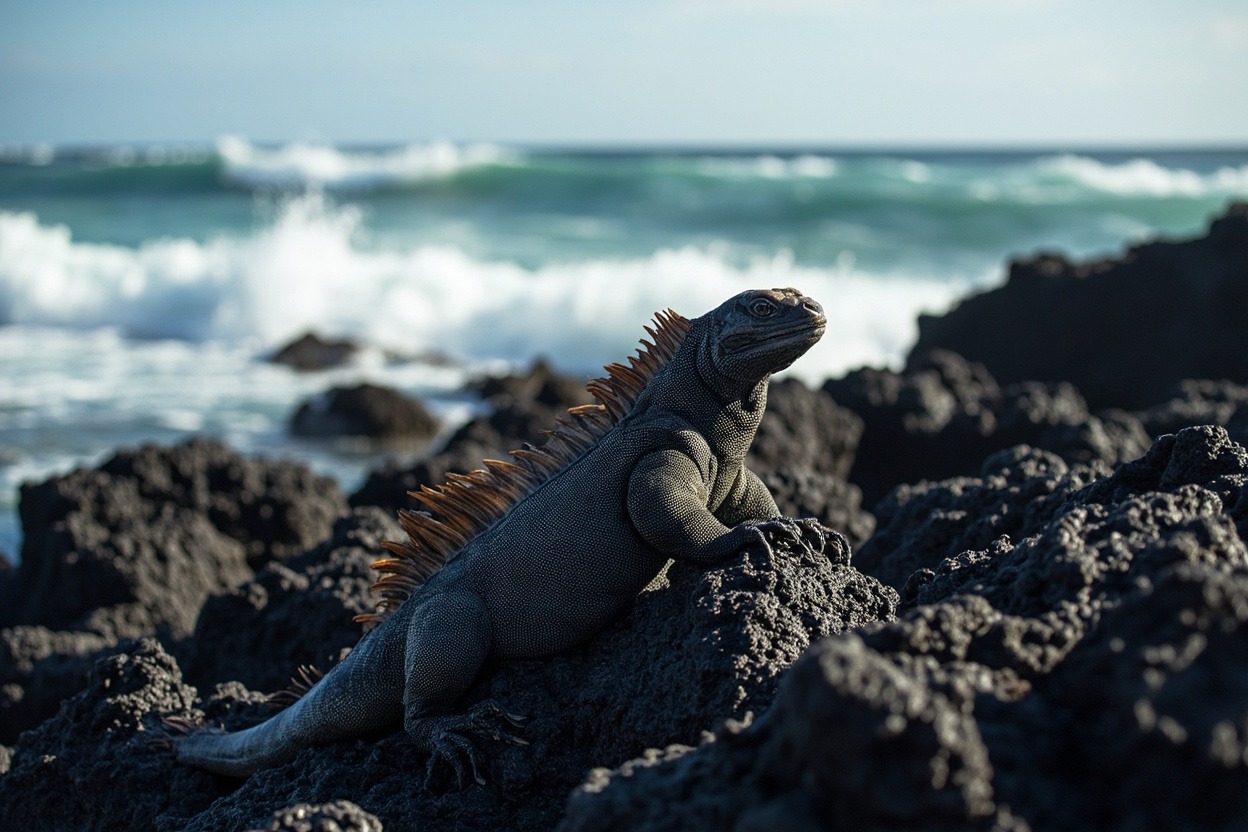
Marine iguanas feed mainly on marine algae. Flattened tails help them swim, while nasal salt glands remove excess salt taken in during feeding. After time in cool water, they bask on sun-warmed surfaces to restore body temperature.
Ocean Conditions Shape Survival
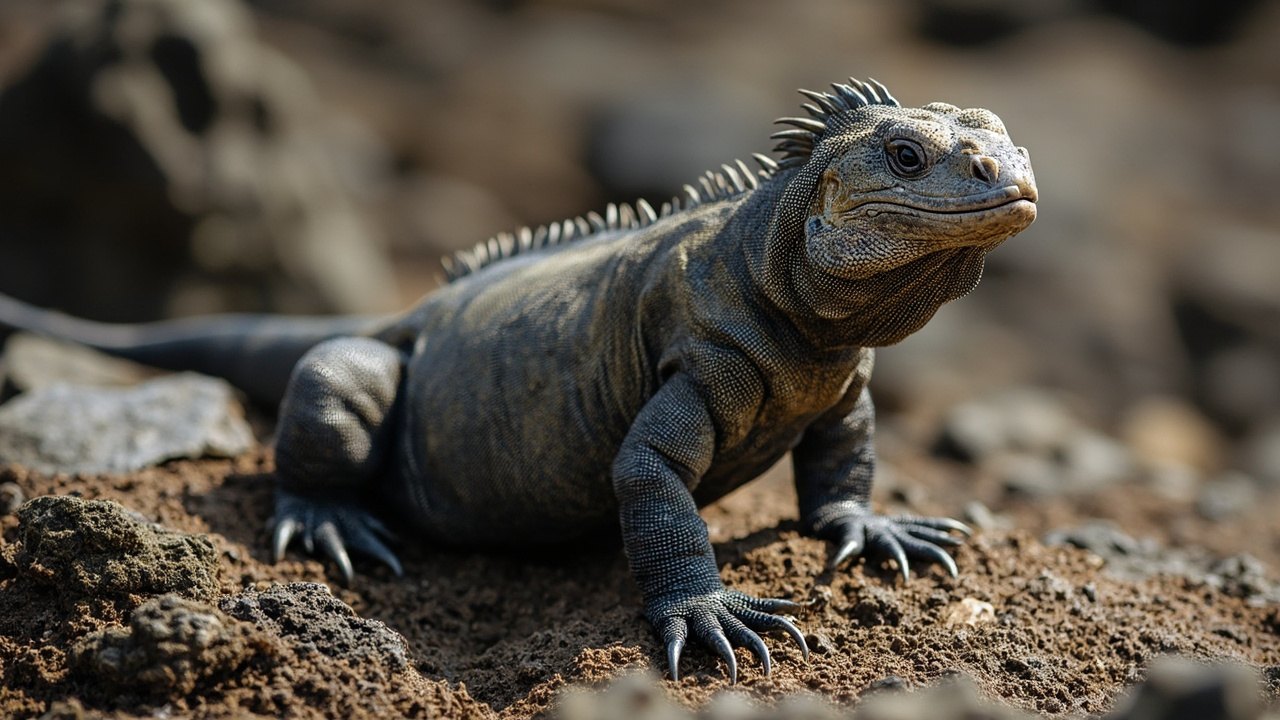
Different islands support distinct populations with local differences in size and colour. Food shortages during strong El Nino events, introduced predators, pollution, and disease can affect survival. Visitors can help by following park rules, keeping distance, and never approaching or feeding wildlife.
Foraging Between Land and Sea
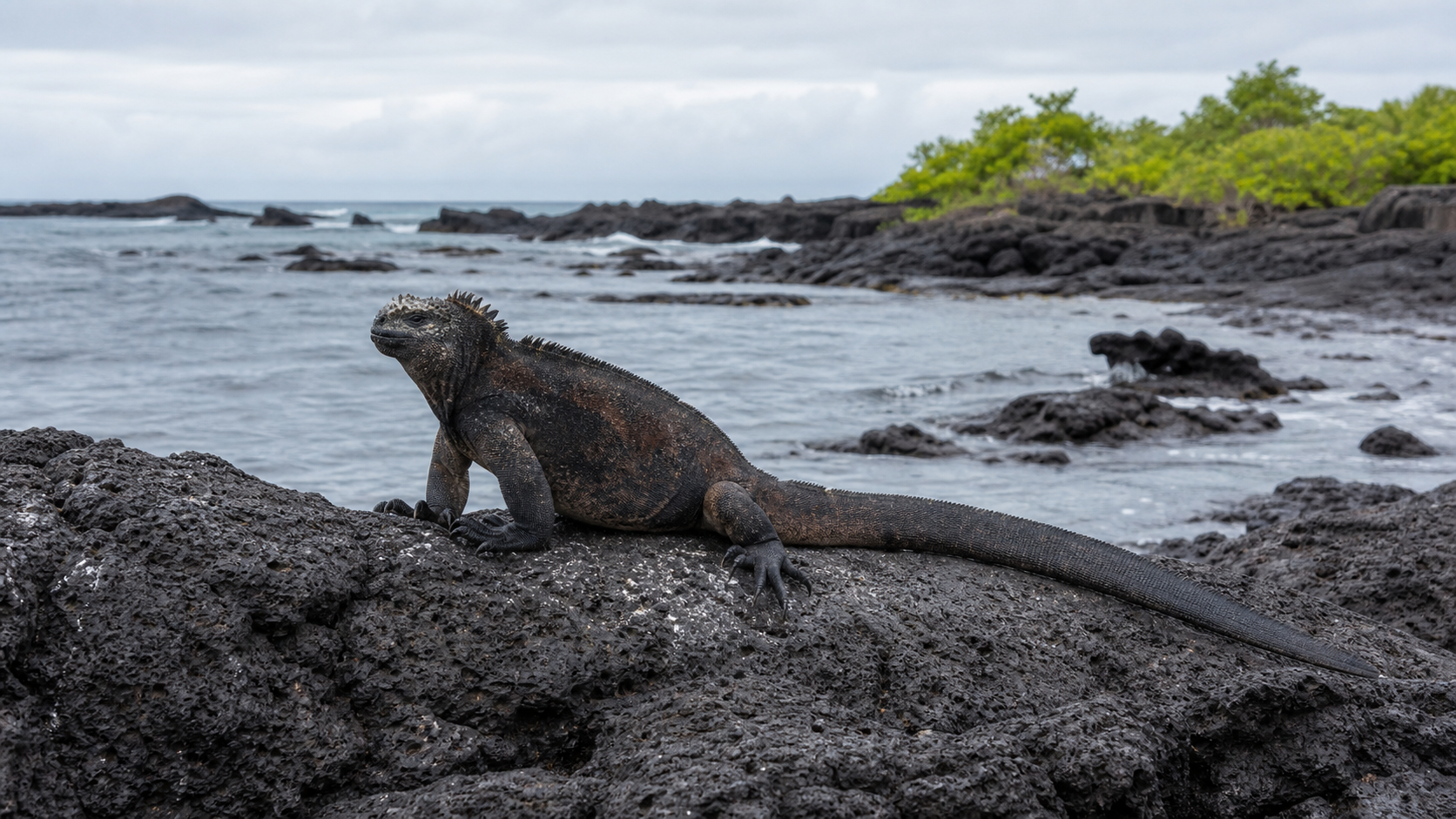
Marine iguanas occupy a narrow ecological boundary. They rest and reproduce on land, but obtain much of their food from algae growing on rocky shores and in shallow coastal water. Smaller animals often feed in the intertidal zone, while some larger individuals can swim and dive to reach submerged algae. The exact feeding pattern varies with body size, shoreline conditions, and the food available at a particular island.
Time in cool seawater creates a thermoregulation challenge for an ectothermic animal. After foraging, an iguana may return to exposed rocks and use solar warmth to regain body temperature. This sequence is a practical example of behavioural thermoregulation, not evidence that the animal is equally active in every weather condition or at every tide.
Island Populations Are Not Interchangeable
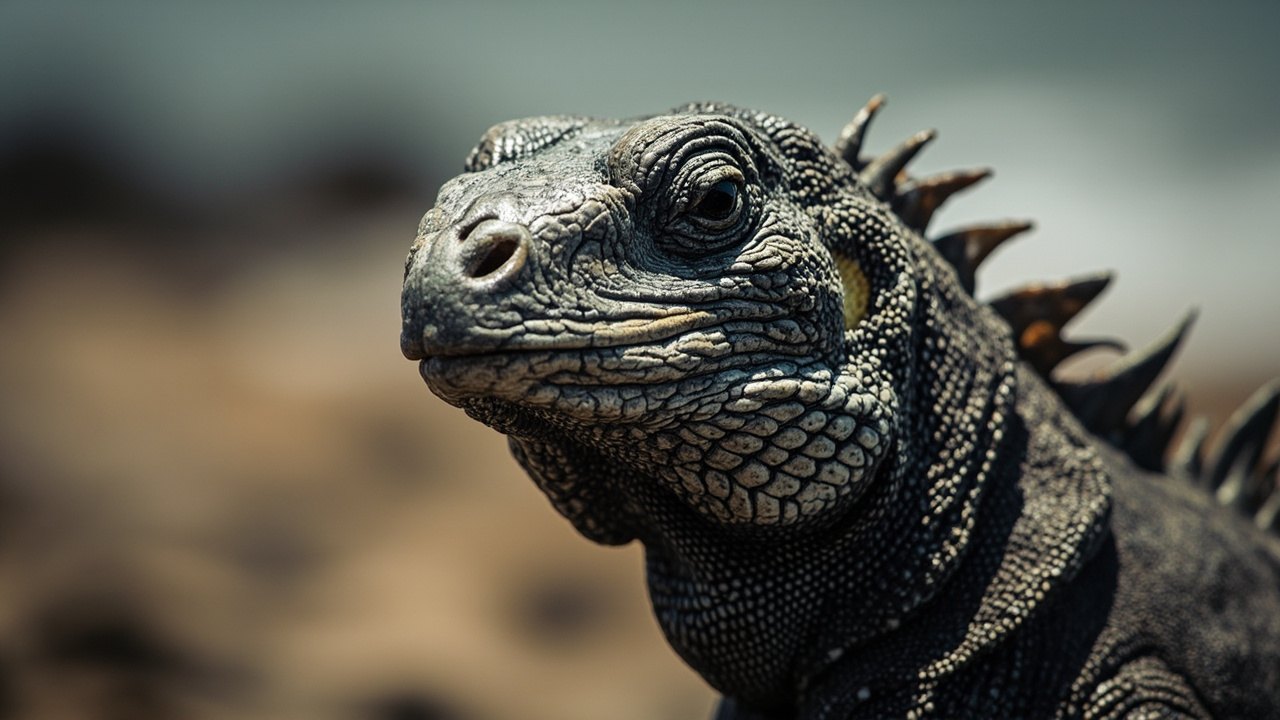
Galapagos islands differ in coastline, currents, algae, elevation, and local climate. Marine iguanas can therefore differ in appearance and ecology between islands. Those differences are important for conservation because a pressure affecting one colony, such as a local food shortage, disease event, or disturbance at a nesting area, may not have the same effect elsewhere in the archipelago.
Respect Helps Reduce Disturbance
Wild iguanas should be observed without blocking their path between resting sites and the shore. Visitors should follow protected-area guidance, keep distance, and avoid leaving food or waste near wildlife. Marine iguanas are compelling because their sea-feeding lifestyle is unusual among living lizards, but that does not make them safe to approach closely or handle. Protecting coastal habitat and allowing the animals to use it without repeated disturbance supports the behaviours that make the species distinctive.
Sources and review notes
Reviewed 23 August 2026. Reptile biology is wonderfully variable. We have avoided turning one species, photograph or dramatic observation into a rule for an entire group, and we have used cautious wording where evidence or local conditions differ.
Reference starting points: The Reptile Database, The IUCN Red List of Threatened Species, and PubMed-indexed research. Conservation status, taxonomy and local laws can change, so check the linked databases and the relevant local authority for current information.
Spotted something we should revisit? Send Reptile Explorer a correction—thoughtful reader feedback is always welcome.