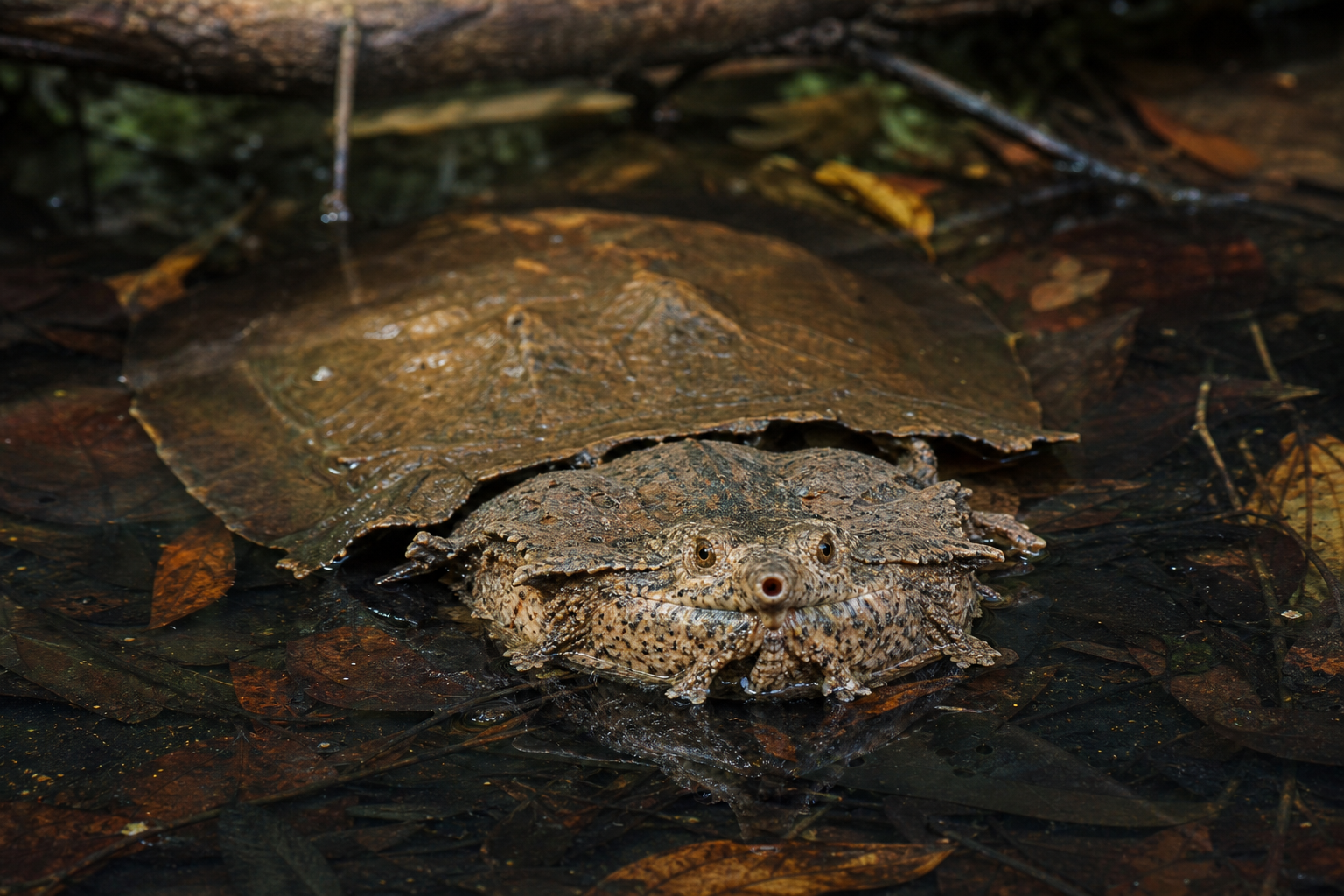
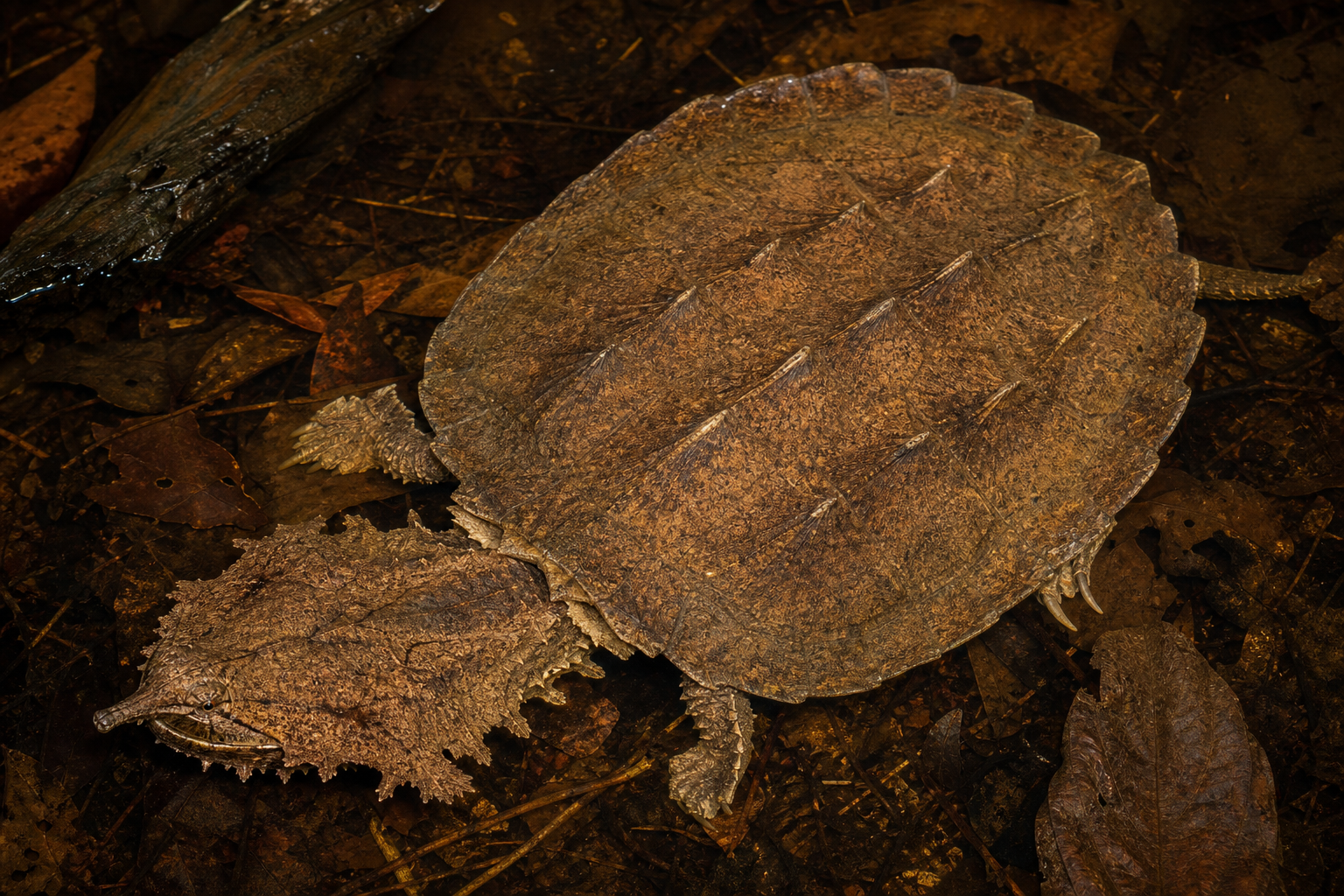
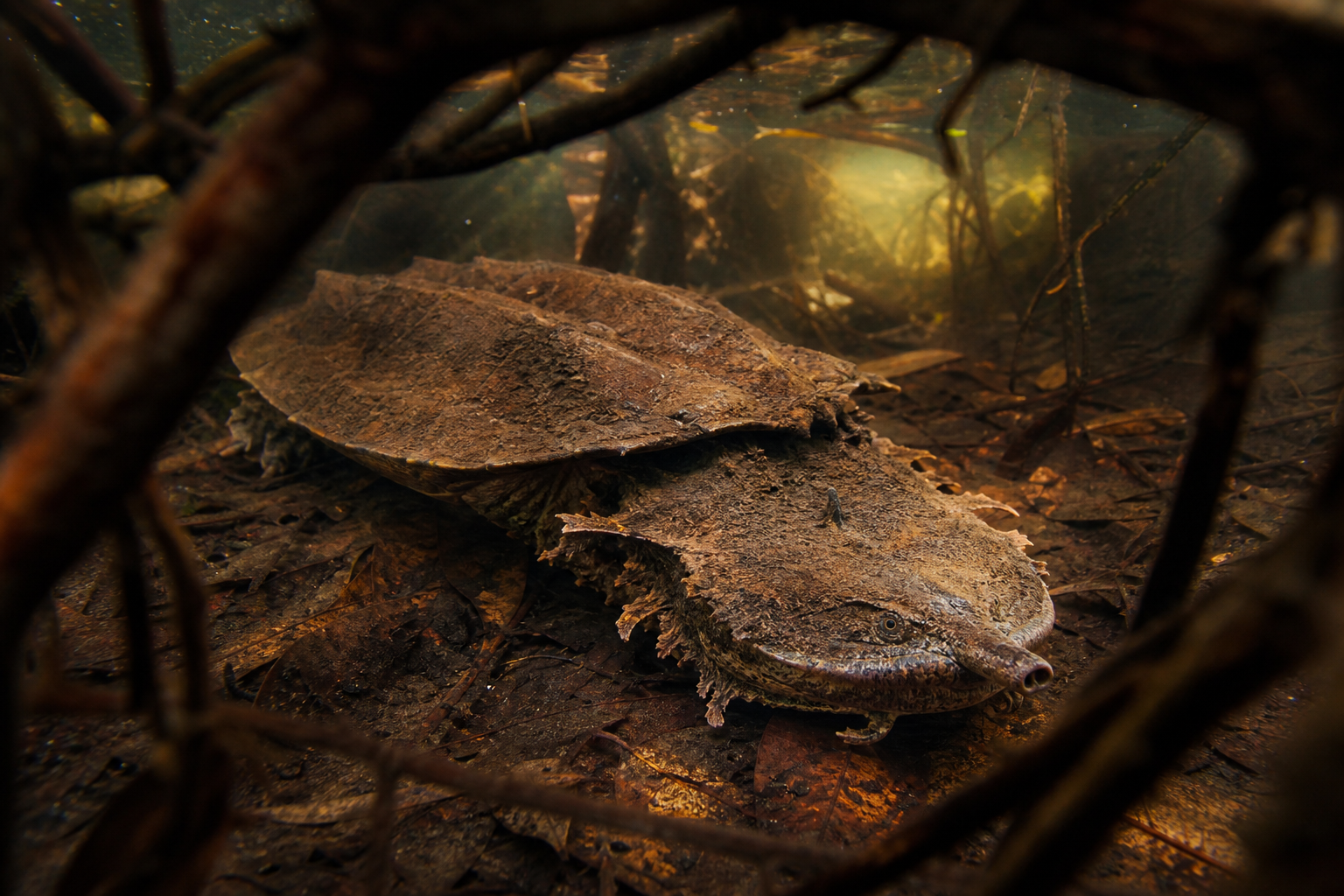
Amazon matamatas are freshwater ambush turtles of quiet, slow-moving Amazonian waters. Their textured shell, broad flattened head and irregular skin flaps help them blend into leaf litter and submerged debris. Modern taxonomy recognizes an Amazon lineage and an Orinoco lineage, so descriptions should not treat both regions as interchangeable.
Breathing and feeding
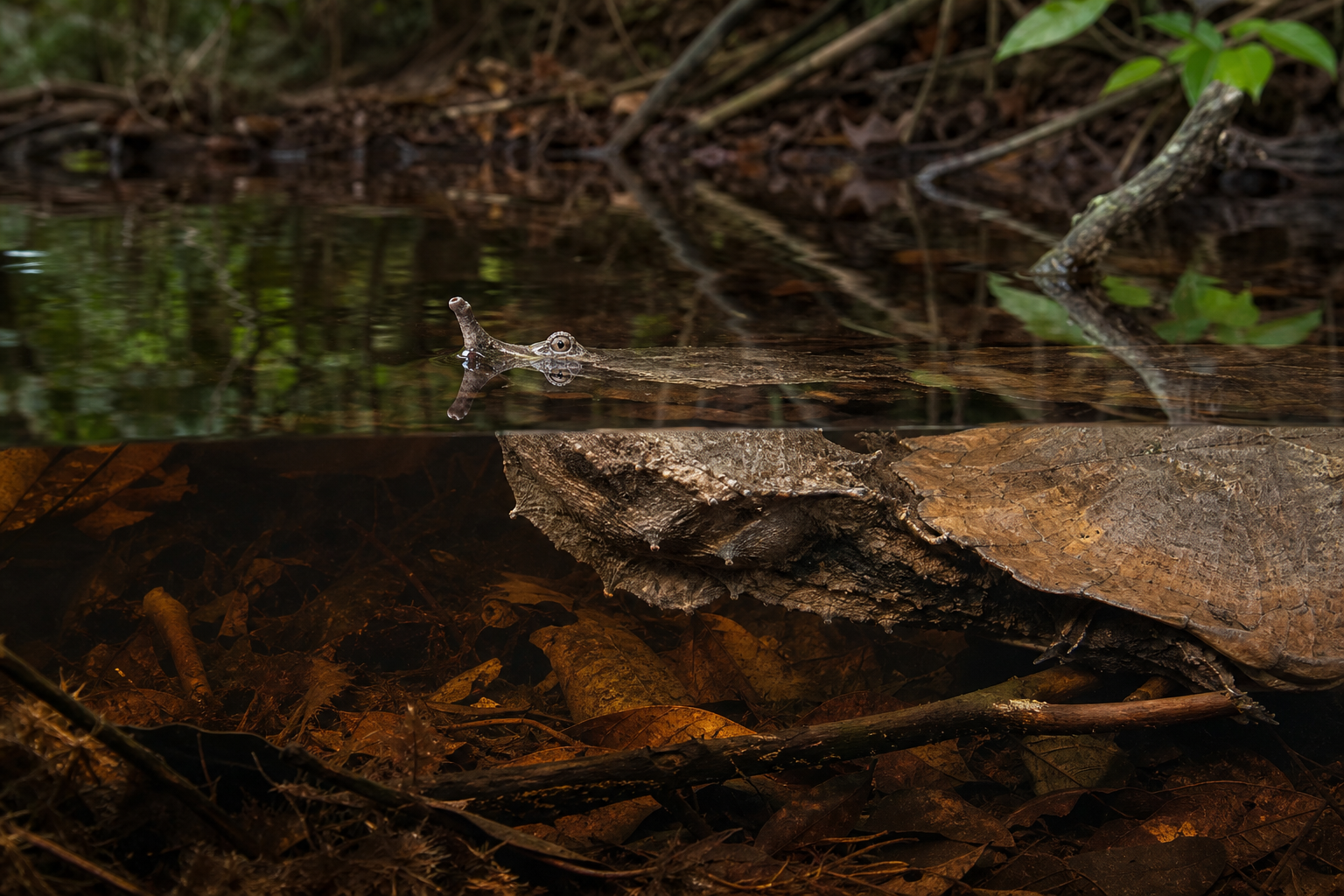
A matamata does not breathe underwater. It extends its snorkel-like snout to the surface for air while much of the body remains submerged. When prey comes close, the turtle opens its mouth rapidly and draws in fish or aquatic invertebrates with a suction-like action, then swallows prey whole.
Freshwater specialists
These turtles are associated with calm freshwater habitats, not a generic brackish-water setting. Broad claims about nocturnal behavior, nesting dates, clutch sizes, incubation times or lifespan should be avoided unless they are tied to a population and source. International trade is regulated, and wild animals should never be released or moved between watersheds.
Captive care needs expertise
Matamatas are specialized, long-lived animals. Prospective keepers should check local law, use legal captive-bred sources and consult a reptile veterinarian for species-specific care. Do not use a generic low-pH, live-prey or handling recipe as a substitute for professional guidance.
Observe without disturbance
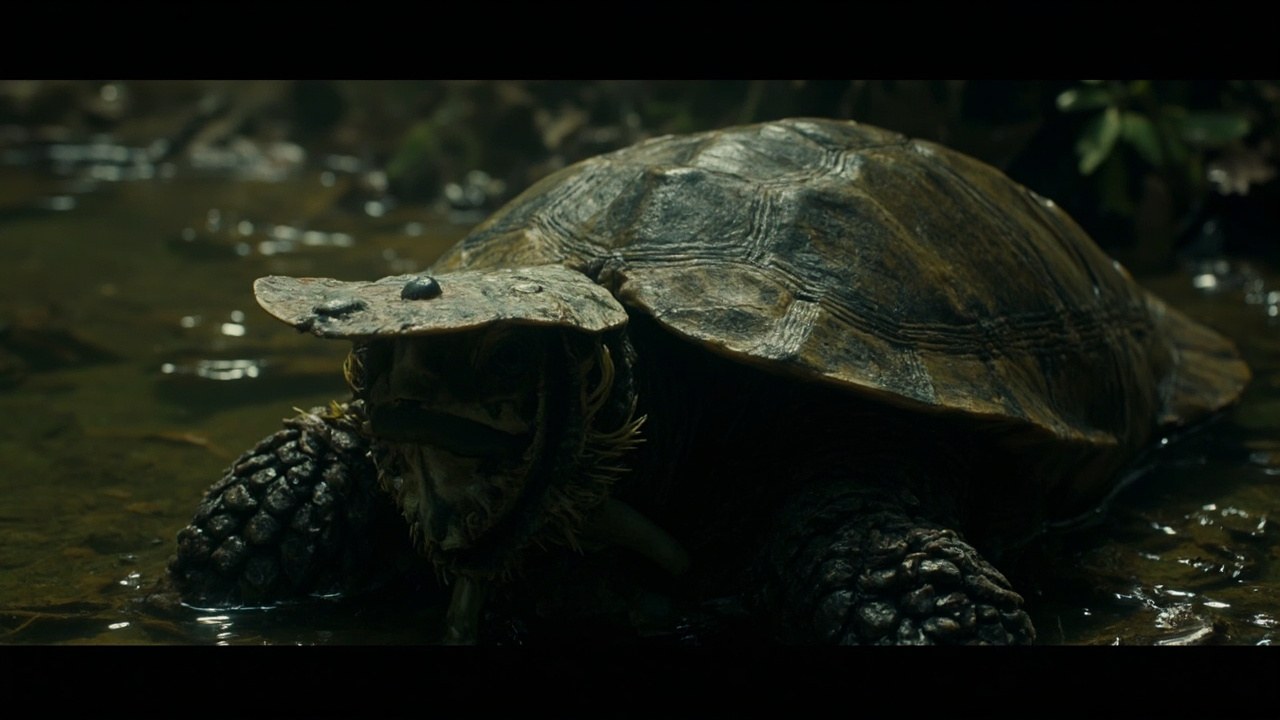
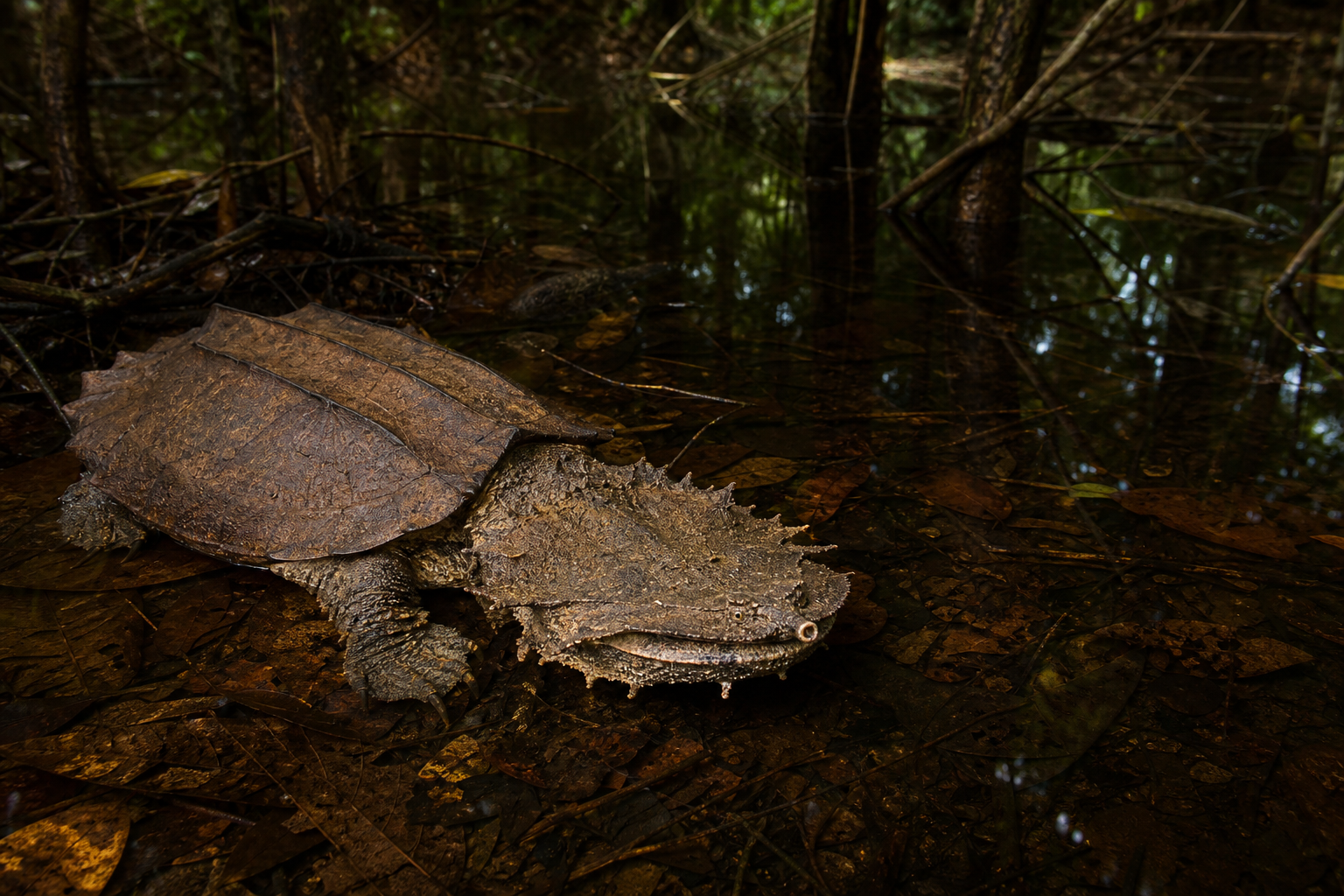
Camouflage is central to the matamata’s survival. Keep a respectful distance, do not lift animals from the water and avoid disturbing shallow resting areas or nesting banks.
Shape Serves a Quiet-Water Life
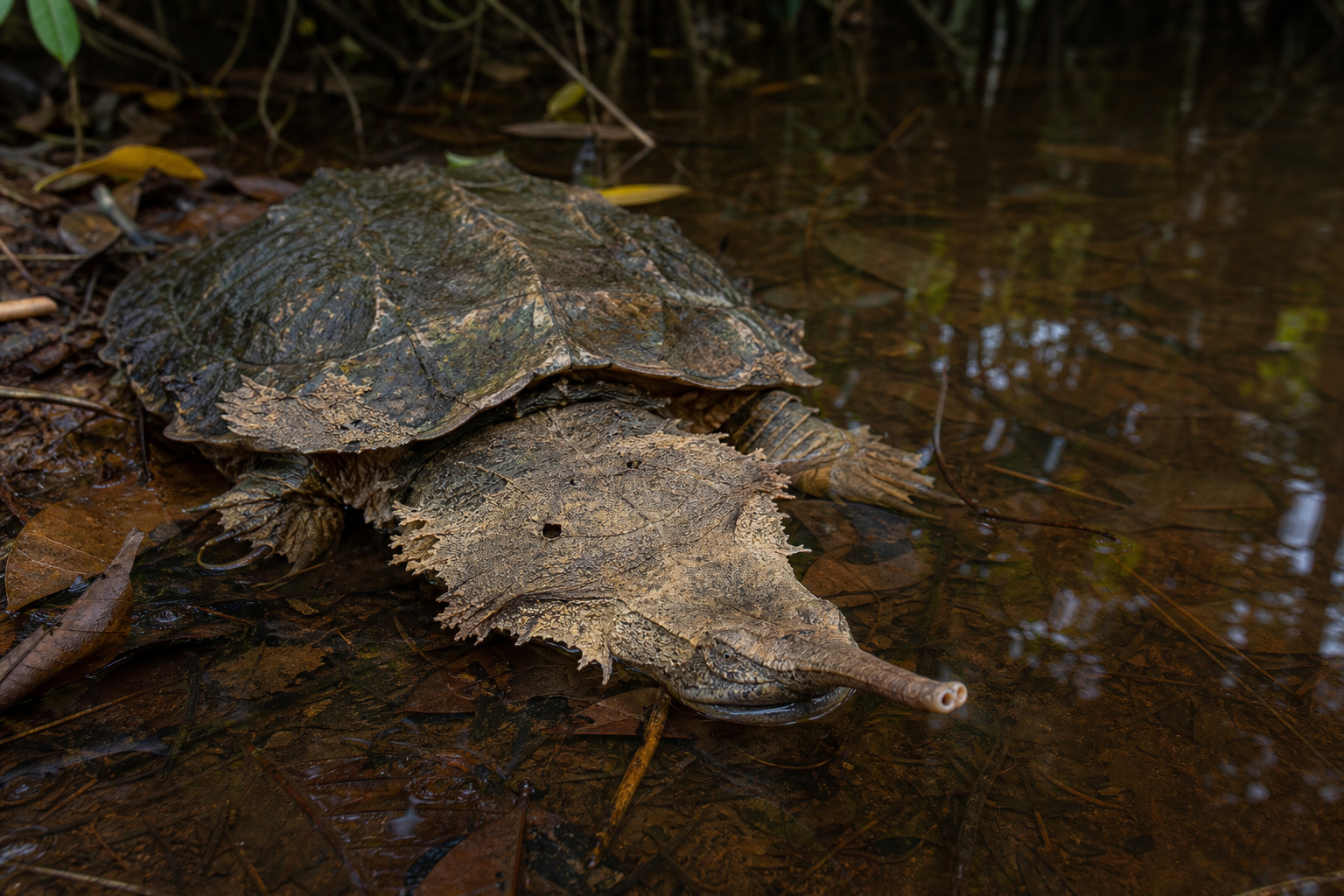
The matamata’s broad, flattened head and irregular outline help it disappear among roots, leaf litter and submerged debris. That camouflage works best in the still or slow water used by the turtle. Strong current, clear open water or repeated disturbance can change how an animal rests and feeds. A dramatic appearance should not be mistaken for evidence that it can thrive in any freshwater habitat.
Location Improves Identification
Amazonian and Orinoco matamatas have distinct evolutionary histories, and locality is useful information when describing a turtle. A photo without a verified source cannot establish where an animal came from, particularly in captivity or trade. Keeping records of lawful origin is important for conservation, welfare planning and any future assessment by a qualified veterinarian or wildlife authority.
Handling Removes Camouflage’s Protection
Picking up a matamata for a photograph can expose it to stress, injury and drying. The animal should be observed from a distance in the water or left undisturbed. Captive care should be based on reputable, species-specific guidance, with any health concern assessed by a reptile-qualified veterinarian rather than by changing water conditions at random.
Sources and review notes
Reviewed 23 August 2026. Reptile biology is wonderfully variable. We have avoided turning one species, photograph or dramatic observation into a rule for an entire group, and we have used cautious wording where evidence or local conditions differ.
Reference starting points: The Reptile Database, The IUCN Red List of Threatened Species, and PubMed-indexed research. Conservation status, taxonomy and local laws can change, so check the linked databases and the relevant local authority for current information.
Spotted something we should revisit? Send Reptile Explorer a correction—thoughtful reader feedback is always welcome.