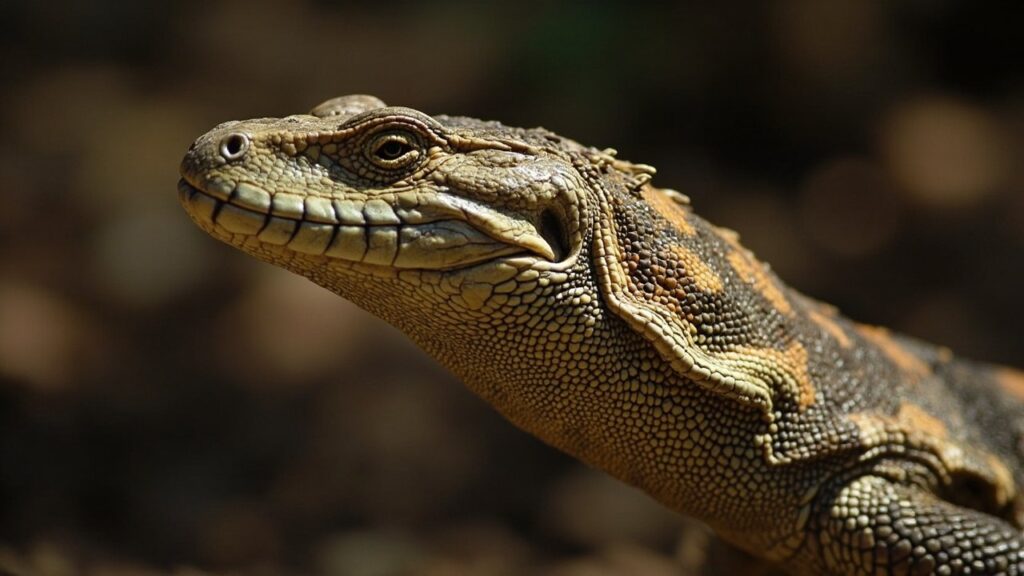
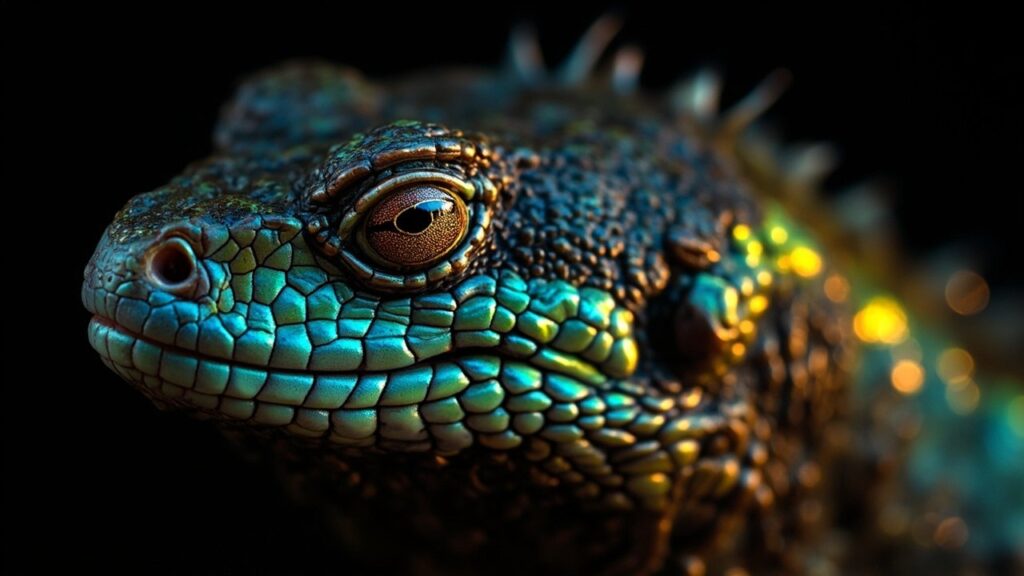
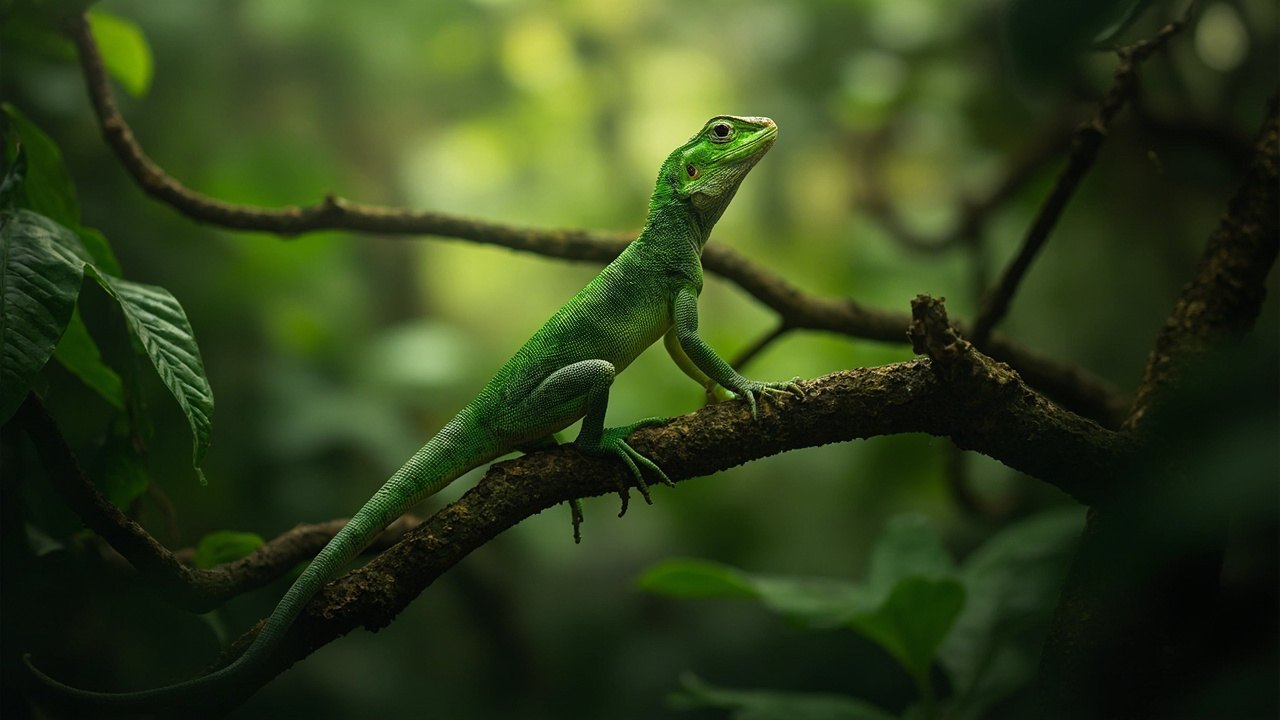
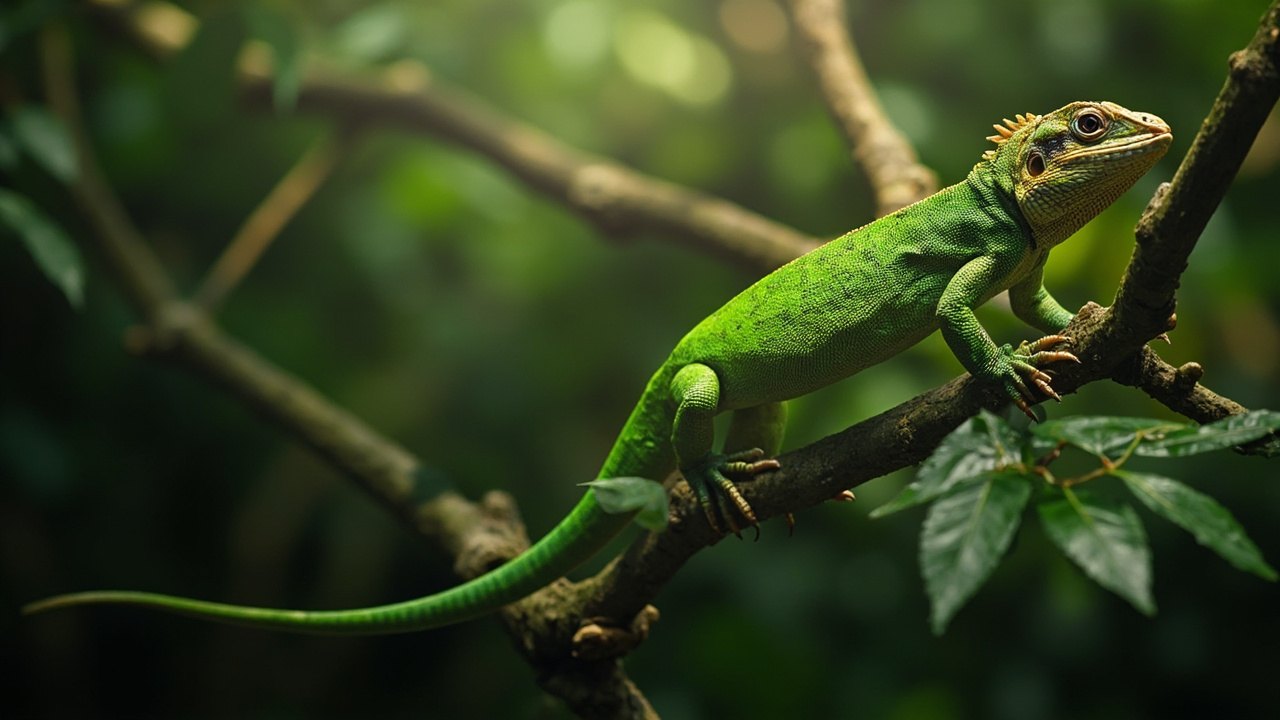
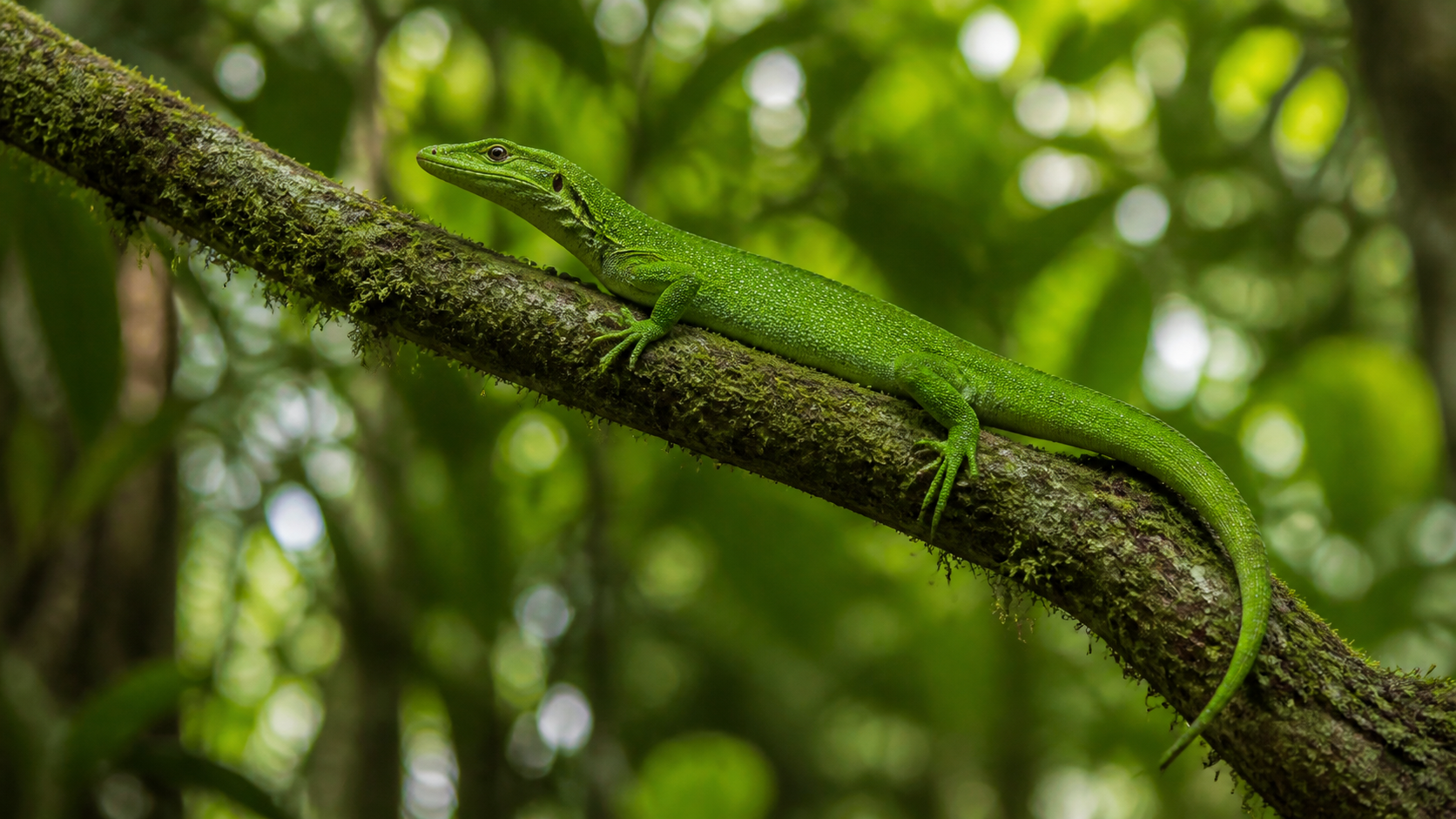
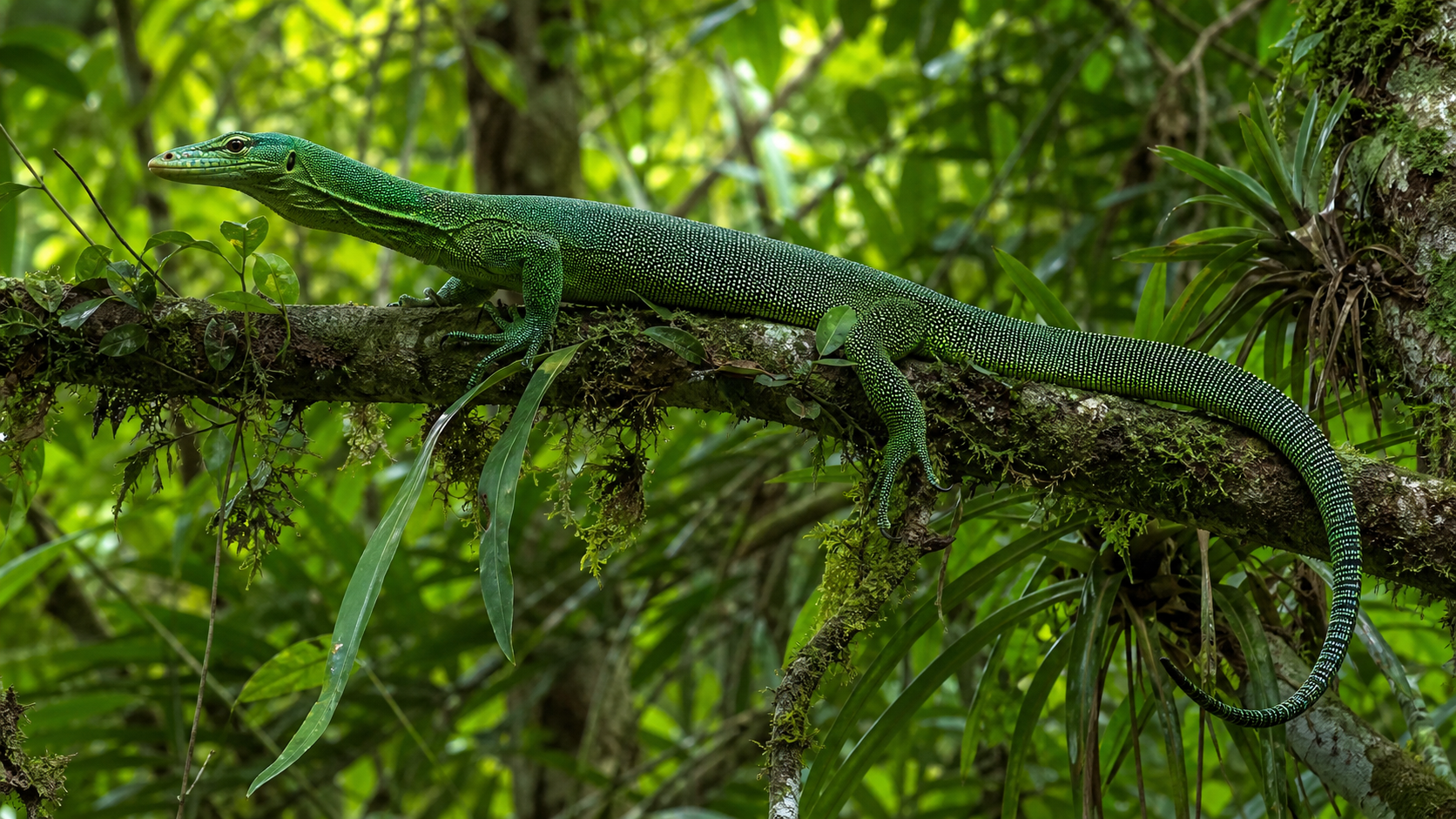
Emerald tree monitors (Varanus prasinus) are arboreal varanids from New Guinea and nearby islands. Their green coloring, claws and long prehensile tail help them move and camouflage in vegetation. They are specialized lizards, not a beginner pet.
Life above the forest floor
They feed mainly on invertebrates and small vertebrates. Females have been reported to use arboreal termite nests for nesting. Claims about a single exact canopy height, universal plantation use or a simple husbandry formula should be treated cautiously because conditions vary across their range and in captivity.

Care and safety
Do not handle wild monitors. A bite or scratch can cause injury, and any significant wound deserves medical advice. Captive animals require legal, captive-bred sourcing, spacious climbing opportunities, correct heat, lighting and diet, plus veterinary support from someone experienced with reptiles. Routine claw trimming is not a default care practice.
A note on venom claims
Varanid venom systems are an area of research, so it is inaccurate to claim that an emerald tree monitor has no venom glands. That does not make it an animal to fear; it is a reason to avoid casual handling and respect any monitor lizard’s natural defenses.
Conservation
Protecting forest habitat, preventing illegal collection and supporting lawful, welfare-focused breeding all matter. Wildlife images should show the animal without baiting, restraint or disturbance of nesting sites.
Forest Structure Matters
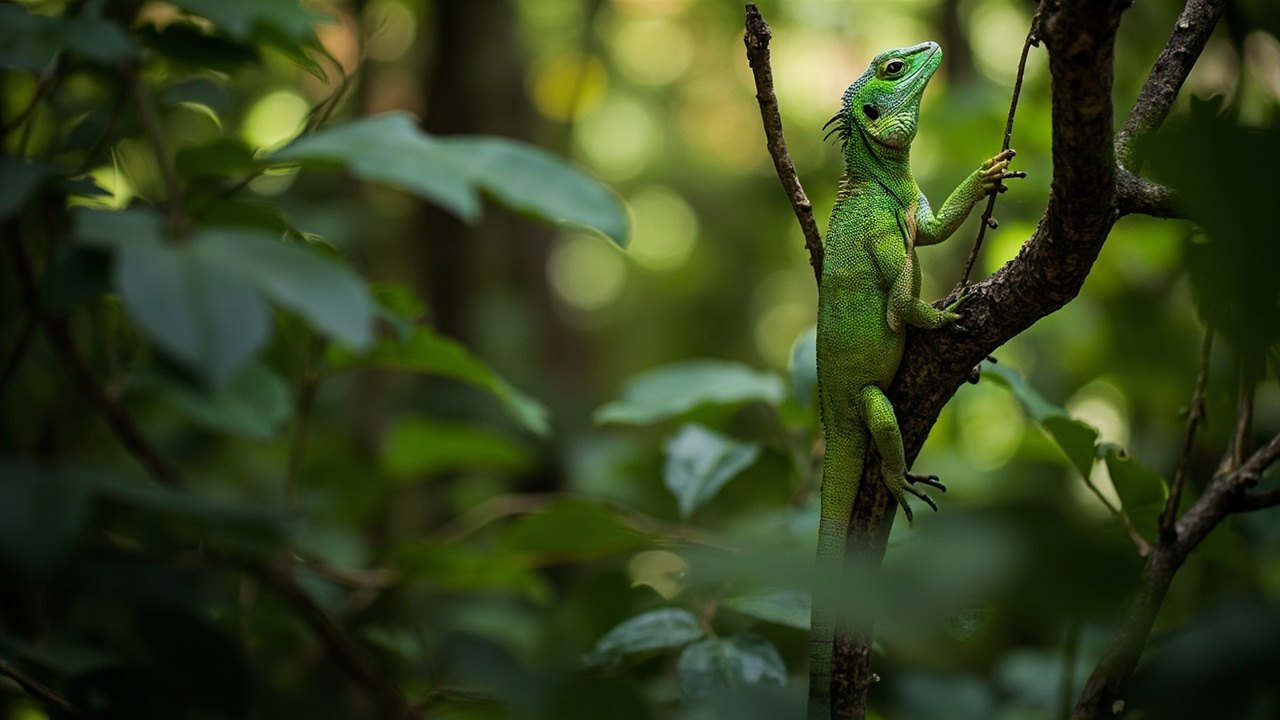
An arboreal monitor uses branches, trunks, vegetation density and gaps between supports in different ways. A description of forest height alone says little about whether it offers routes, cover, prey and safe resting places. Logging, fragmentation and removal of old trees can change those features even when some green canopy remains. Observations should distinguish a monitor seen in a tree from evidence that a site supports a stable population.
Captive Care Requires Options
A tall enclosure is not automatically a usable one. A captive emerald tree monitor needs stable climbing routes, secure retreats and measured environmental conditions chosen for the species and individual. Empty vertical space can leave an animal exposed. A keeper should plan access for cleaning and health checks without having to chase, grab or repeatedly remove the lizard from its cover.
Conservation Starts Before a Sale
Interest in striking reptiles can increase pressure on wild populations when origin is unclear. Prospective keepers should verify local law, legal captive-bred documentation and the ability to provide long-term specialist care before obtaining an animal. A purchase should never create demand for a monitor taken from the forest.
Sources and review notes
Reviewed 23 August 2026. Care works best when it starts with the exact species in front of you. We checked this article against current veterinary husbandry guidance, but measured enclosure conditions and a reptile-experienced veterinarian should guide decisions for an individual animal.
Reference starting points: Merck Veterinary Manual: reptile management and husbandry, CDC: healthy handling around reptiles and amphibians, and The Reptile Database. Conservation status, taxonomy and local laws can change, so check the linked databases and the relevant local authority for current information.
Spotted something we should revisit? Send Reptile Explorer a correction—thoughtful reader feedback is always welcome.