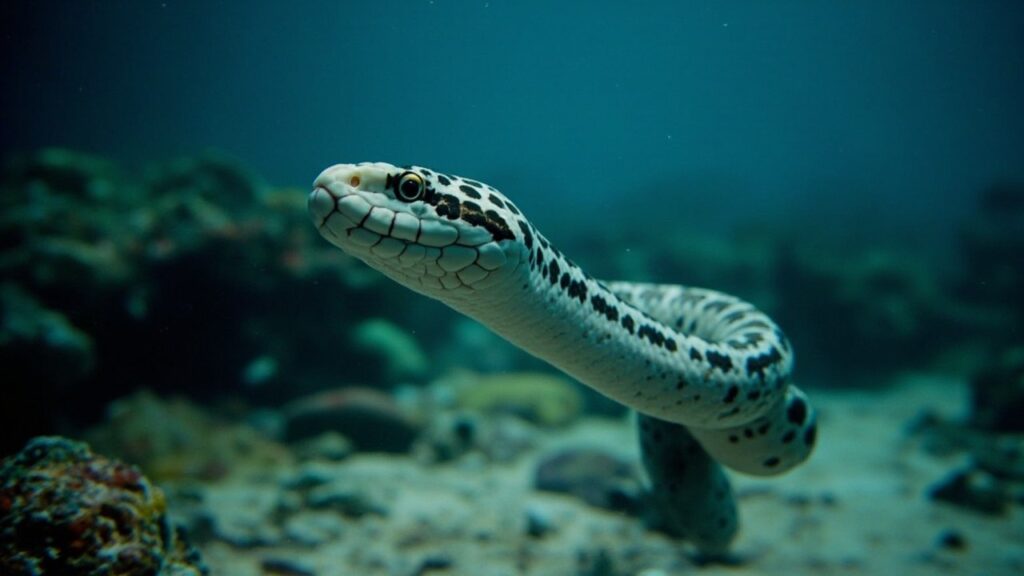
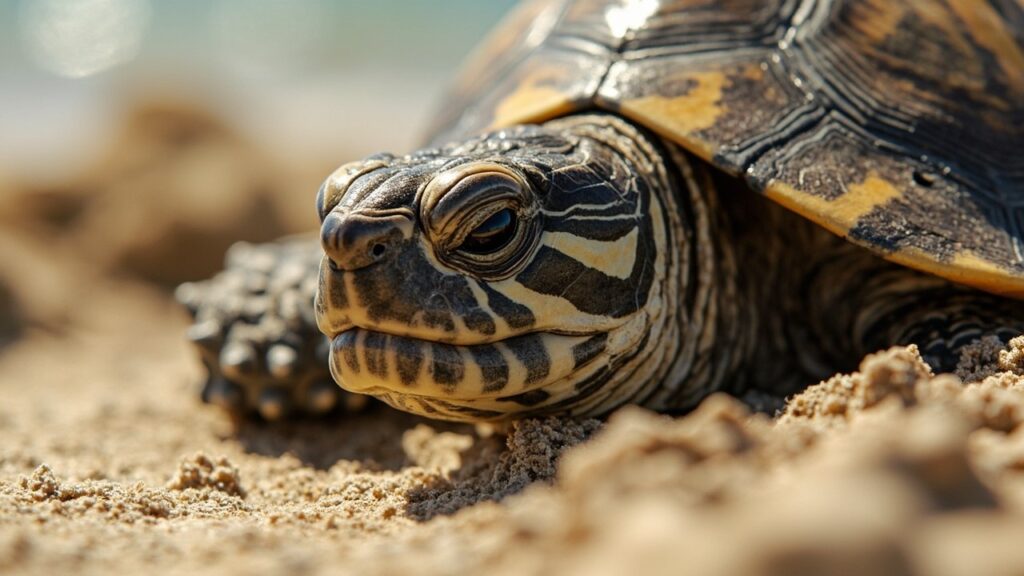
Sea kraits in the genus Laticauda are amphibious relatives of true sea snakes. They hunt in the ocean but return to land for resting, digestion, shedding and reproduction. That semi-terrestrial lifestyle should not be generalized to every sea snake.
Land and sea in one life cycle
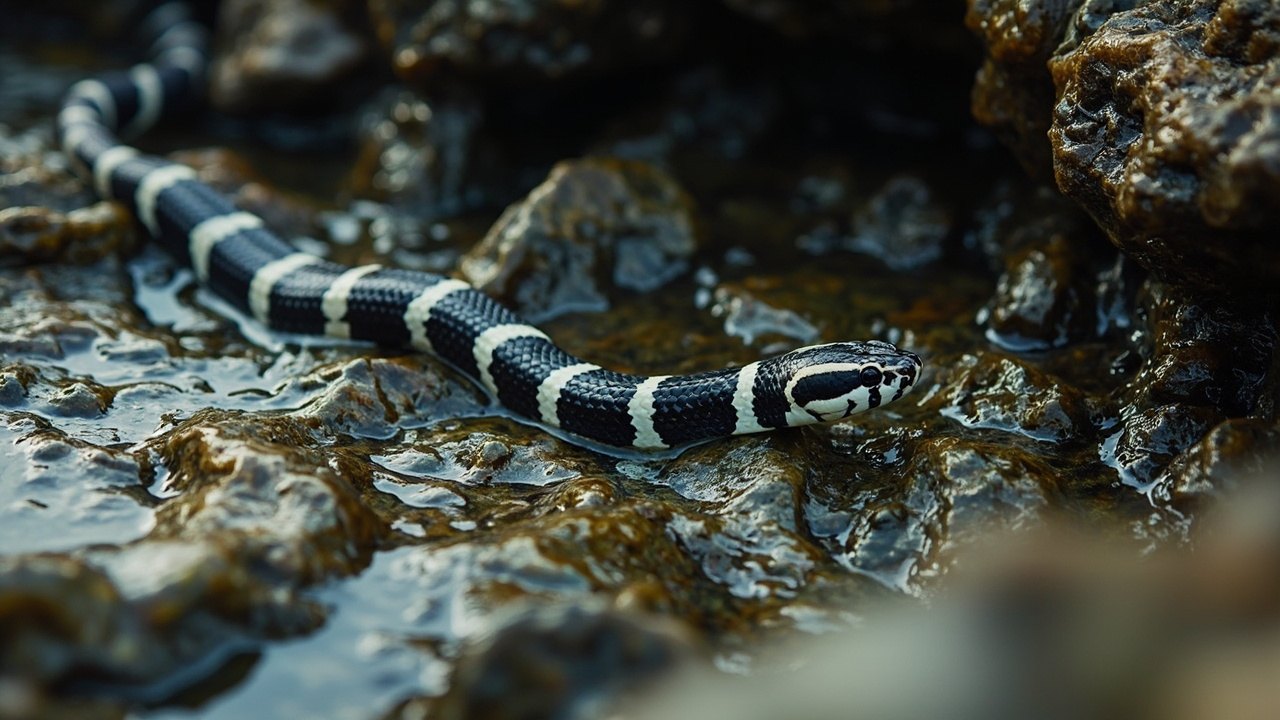
The yellow-lipped sea krait (Laticauda colubrina) is a familiar example of a banded species that uses tropical shorelines and reefs. Time on land and movement patterns vary with population, sex, season and study site, so a single timing figure is not a rule for all animals.

Do not confuse sea kraits with all sea snakes
Many true sea snakes are fully marine and do not need to return to land. Both groups are venomous and should be watched from a distance. Intertidal rocks, reef crevices and beaches are habitat, not places to handle or pose an animal.
Coastal conservation
Healthy reefs, shorelines and nesting or resting sites are important. Light pollution, coastal construction, fishing pressure and disturbance can affect marine reptiles differently at different sites.
Safe encounters
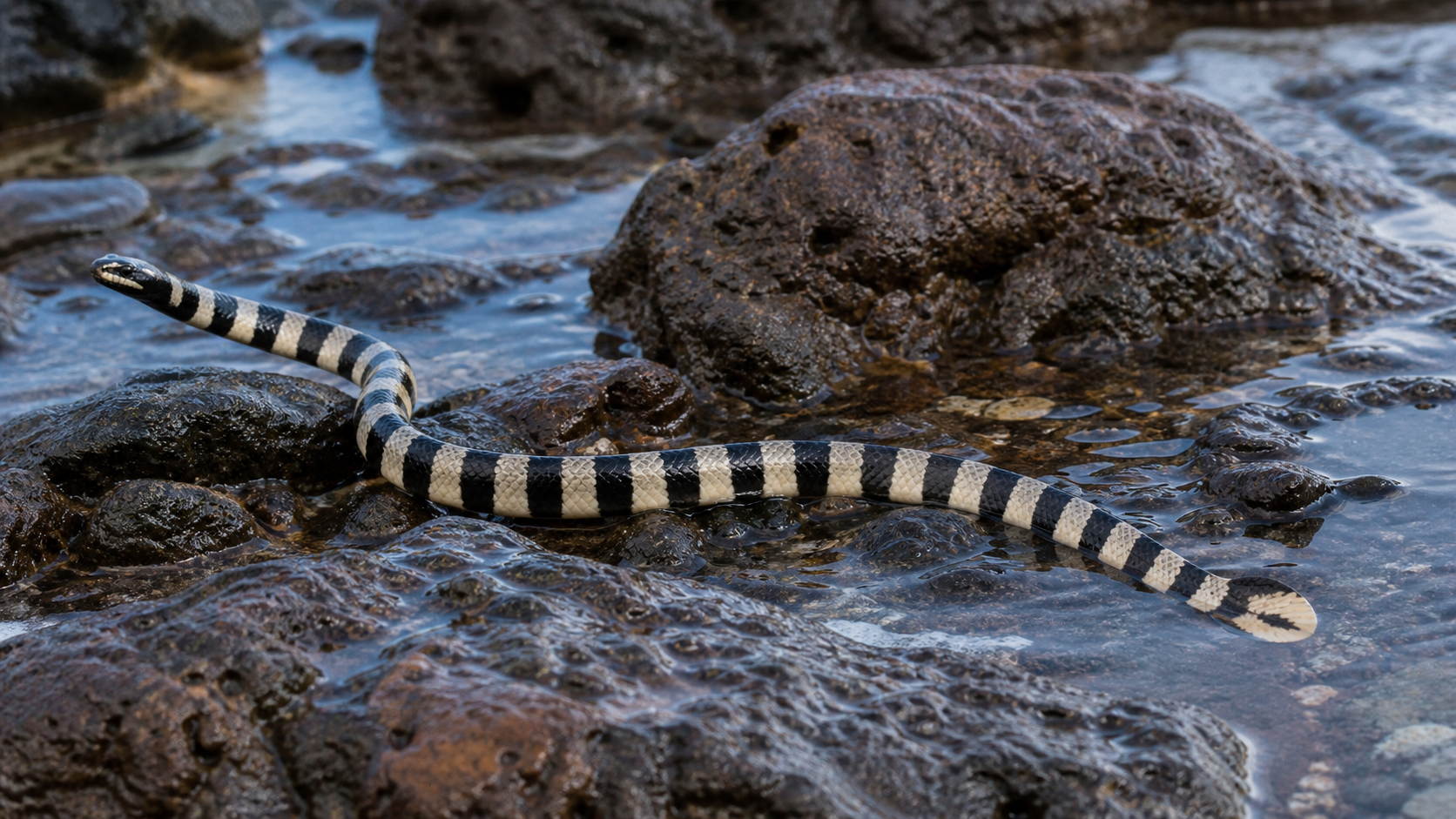
If you see a sea krait on shore, leave it a clear route back to the water and keep people and pets away. Contact local wildlife authorities if it is stranded or entangled.
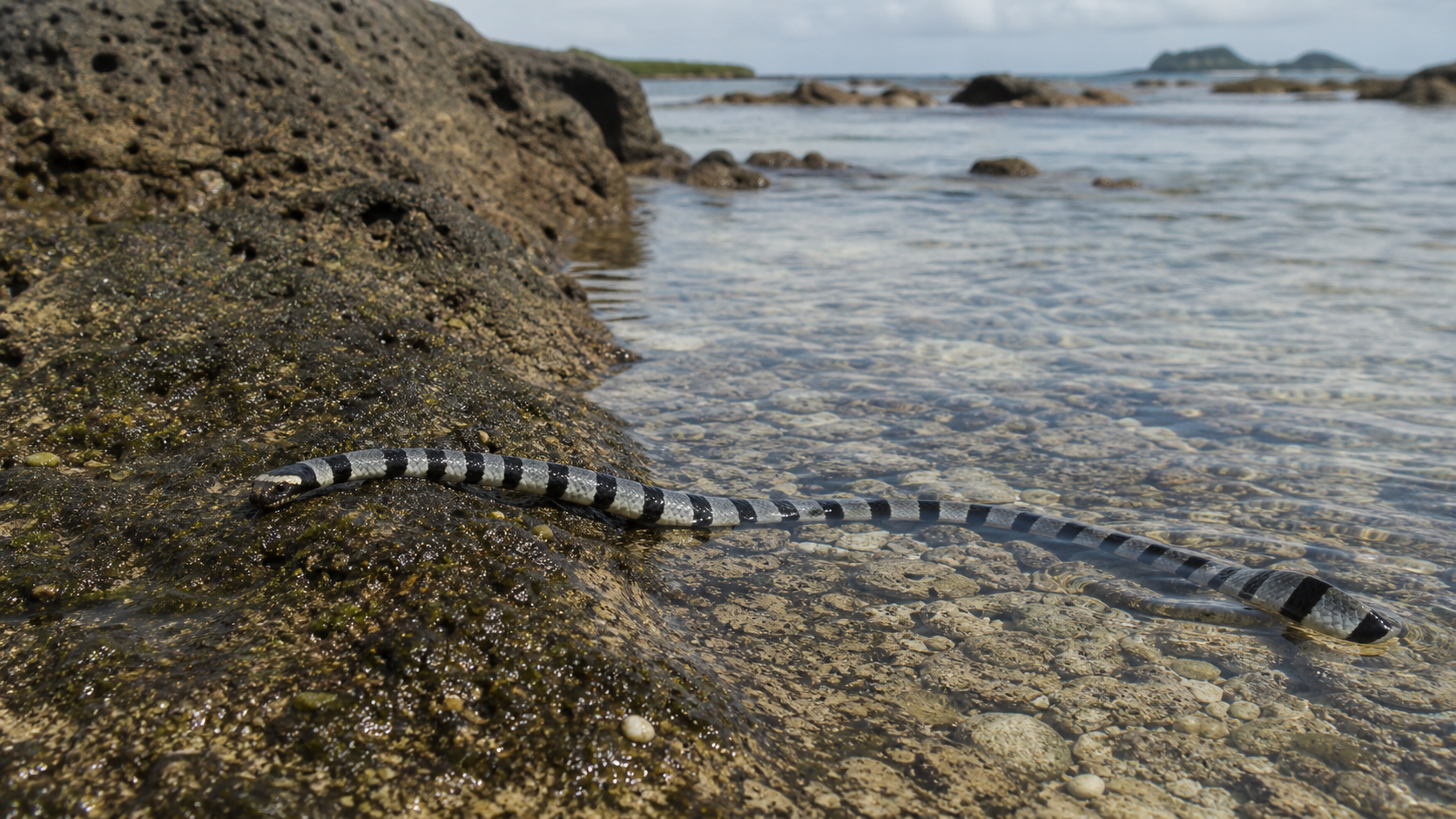
Sea Kraits Are Marine Hunters That Still Need Air
Sea kraits swim and hunt in marine water, but they are air-breathing reptiles that surface to breathe. Their swimming tail and ability to use land set them apart from true sea snakes that spend their entire lives at sea. Time above water varies with the species and setting, so a krait on a beach is not automatically stranded or in need of handling.
Reefs and Shorelines Form One System
Food found on reefs is linked to resting, shedding and egg-laying sites on land for species that use them. Coastal construction, bright lights, loose dogs and repeated disturbance can therefore affect more than a visible stretch of sand. A healthy coast includes both the water where animals forage and the protected access points they use.
Coastal Encounters Need Distance
Do not block a sea krait’s route, pick it up or push it toward the water. Give it room and contact local wildlife responders only if it is clearly injured, entangled or trapped. The safest observation leaves the animal able to choose its own route.
Sources and review notes
Reviewed 23 August 2026. Reptile biology is wonderfully variable. We have avoided turning one species, photograph or dramatic observation into a rule for an entire group, and we have used cautious wording where evidence or local conditions differ.
Reference starting points: The Reptile Database, The IUCN Red List of Threatened Species, and PubMed-indexed research. Conservation status, taxonomy and local laws can change, so check the linked databases and the relevant local authority for current information.
Spotted something we should revisit? Send Reptile Explorer a correction—thoughtful reader feedback is always welcome.