A large lizard of tropical vegetation
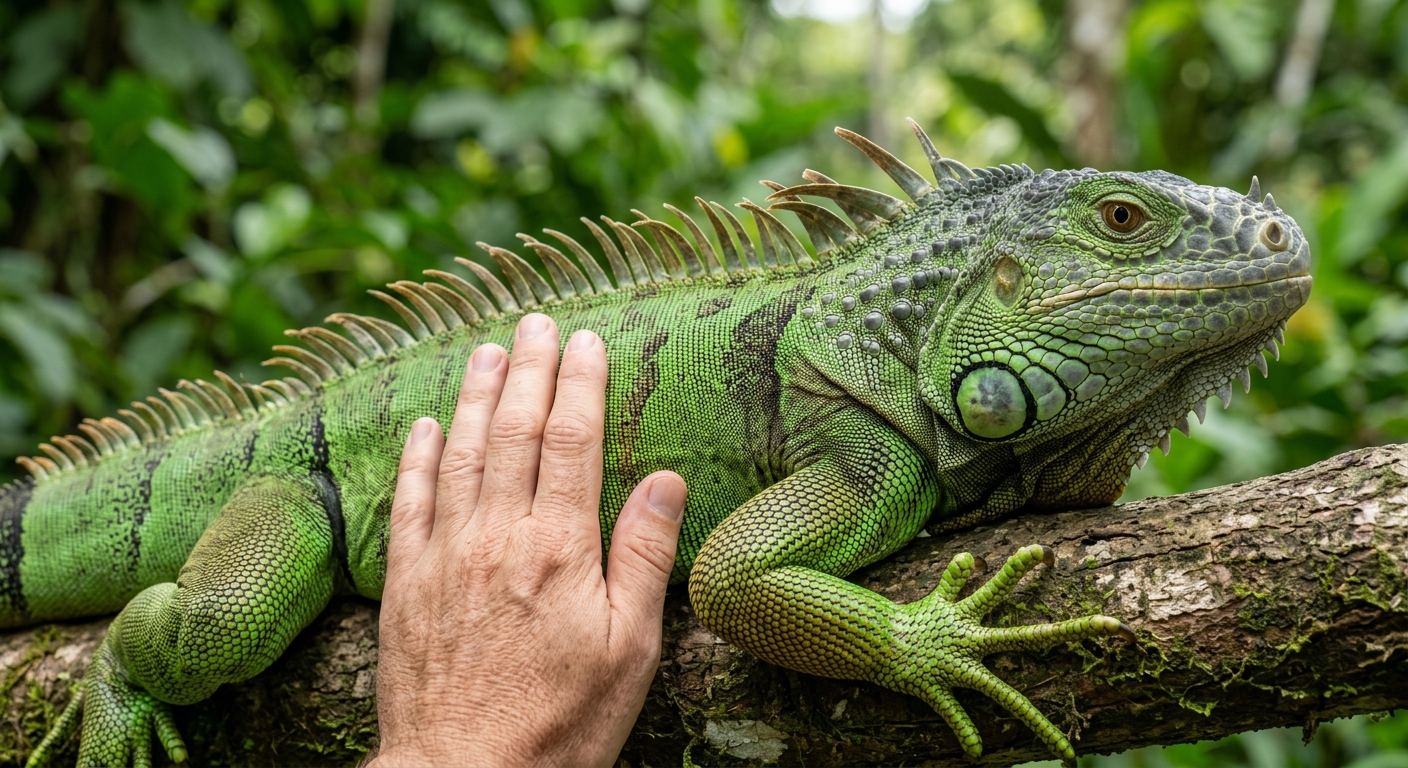
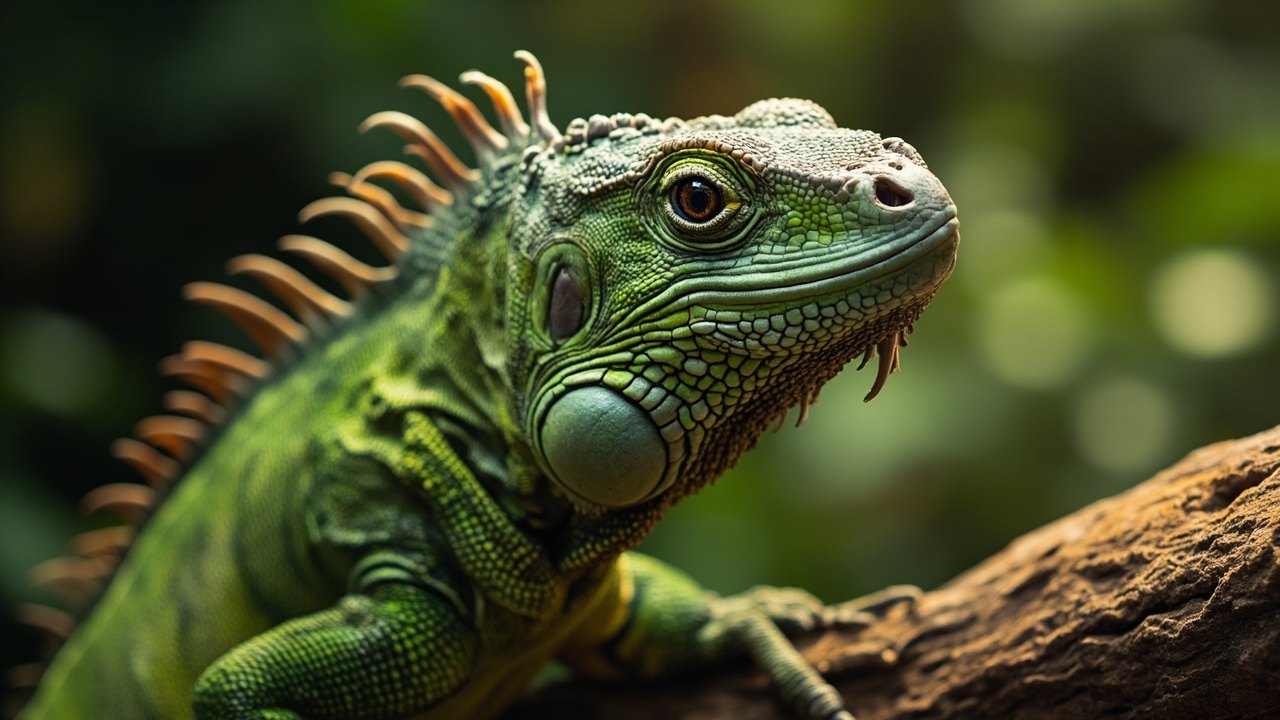
The green iguana, Iguana iguana, is a largely arboreal lizard native to parts of tropical Central and South America. It uses trees, riverbanks and other warm, vegetated habitats, and can swim well when necessary. Adults are primarily herbivorous, feeding on leaves, flowers, fruit and other plant material.


Behaviour and ecology
Head movements, posture and dewlap displays can be part of communication, while the tail is an important defensive tool. Green iguanas contribute to food webs and may disperse seeds, but their effects vary by habitat. They should not be released outside their native range, where introduced populations can damage ecosystems and create welfare problems.
Captive care requires adult-scale planning
Green iguanas grow into large, long-lived reptiles requiring substantial climbing space, appropriate lighting, heat, humidity, nutrition and veterinary care. A high-fibre, plant-based diet must be balanced for the individual animal rather than assembled from a casual list of produce. They are not suitable for impulse purchase or small permanent enclosures.
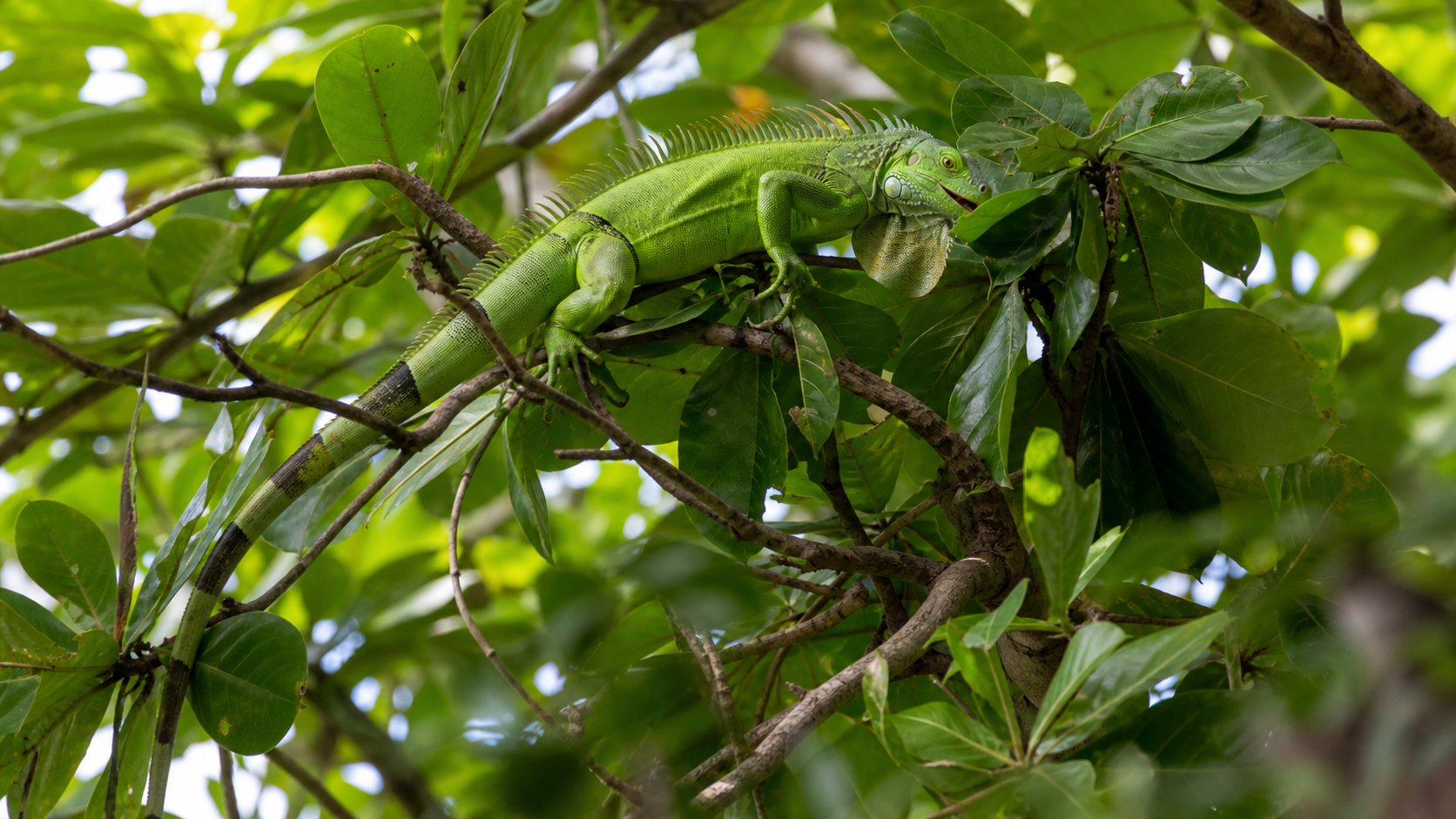
Tree Cover and Waterways Shape Daily Life
Green iguanas use branches, trunks, shoreline vegetation and sunny openings in tropical habitat. Height above ground can provide a resting place and a route away from disturbance, while nearby water can offer an escape route. A green iguana seen in a canal or on a roof outside its native range does not show that the local ecosystem is suitable. Introduced populations can damage vegetation, compete for space and create welfare problems when people attempt to catch or move them.
Adults are primarily herbivorous, although food use can vary with age and local availability. Leaves, flowers and fruit do not make all plant material suitable for an individual animal in captivity. Wild feeding observations are ecological context, not a complete diet plan for a pet.
Captive Housing Needs Vertical Space and Choice
A large iguana needs more than floor area. It needs stable climbing structure, safe places to rest at different temperatures, appropriate light, humidity management and room to avoid constant exposure. Crowding, weak branches, unrestricted household access and an enclosure designed for a juvenile can all create preventable risks. Tail strikes and bites are possible defensive responses when an animal is frightened or restrained.
Prevent Releases and Impulse Purchases
Never release a pet green iguana outdoors. If care is no longer possible, contact a qualified rescue, veterinarian or lawful rehoming service. People considering one should confirm adult housing, local rules, specialist veterinary access and the long-term cost before obtaining the animal.
Sources and review notes
Reviewed 23 August 2026. Reptile biology is wonderfully variable. We have avoided turning one species, photograph or dramatic observation into a rule for an entire group, and we have used cautious wording where evidence or local conditions differ.
Reference starting points: The Reptile Database, The IUCN Red List of Threatened Species, and PubMed-indexed research. Conservation status, taxonomy and local laws can change, so check the linked databases and the relevant local authority for current information.
Spotted something we should revisit? Send Reptile Explorer a correction—thoughtful reader feedback is always welcome.