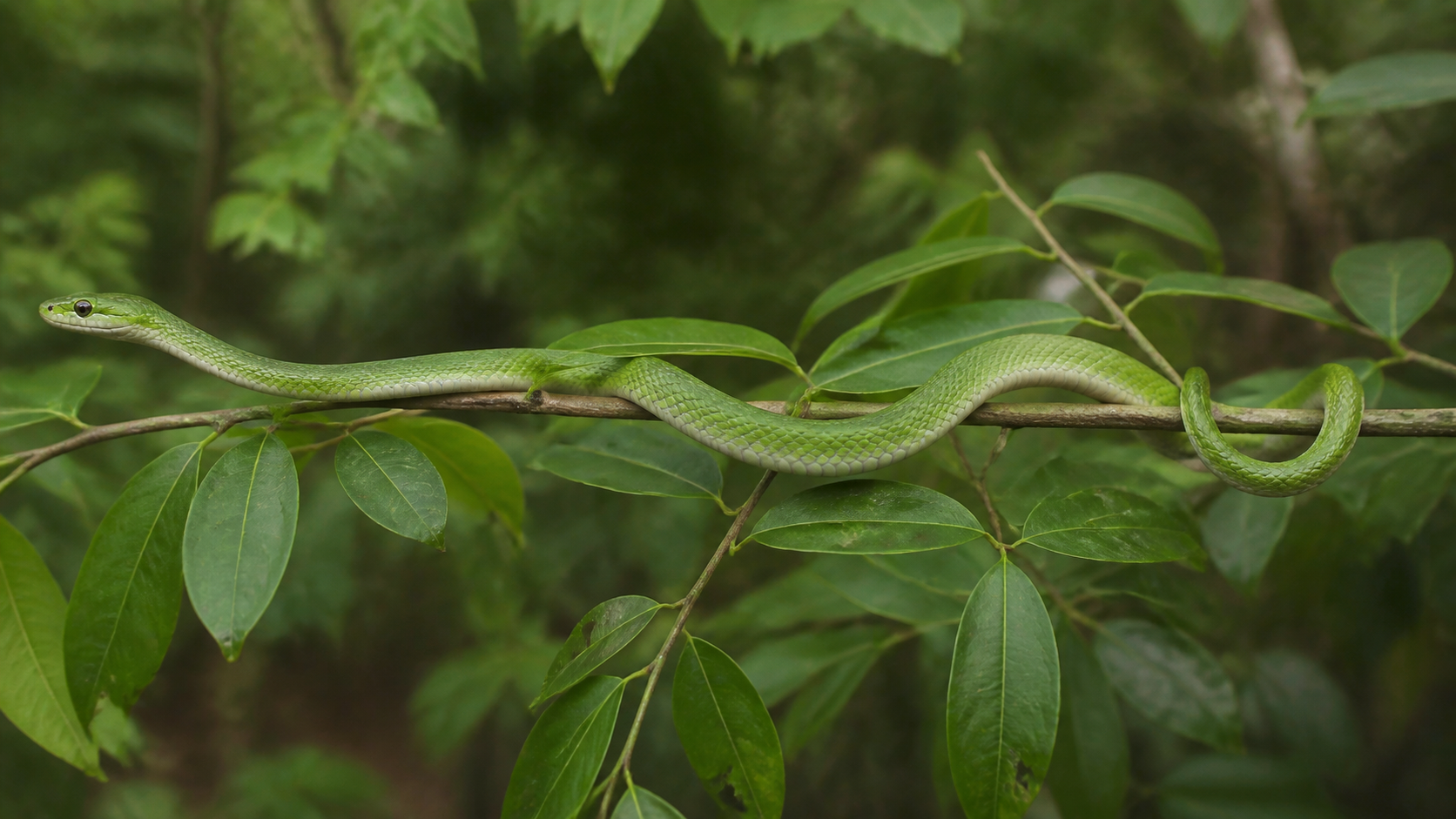
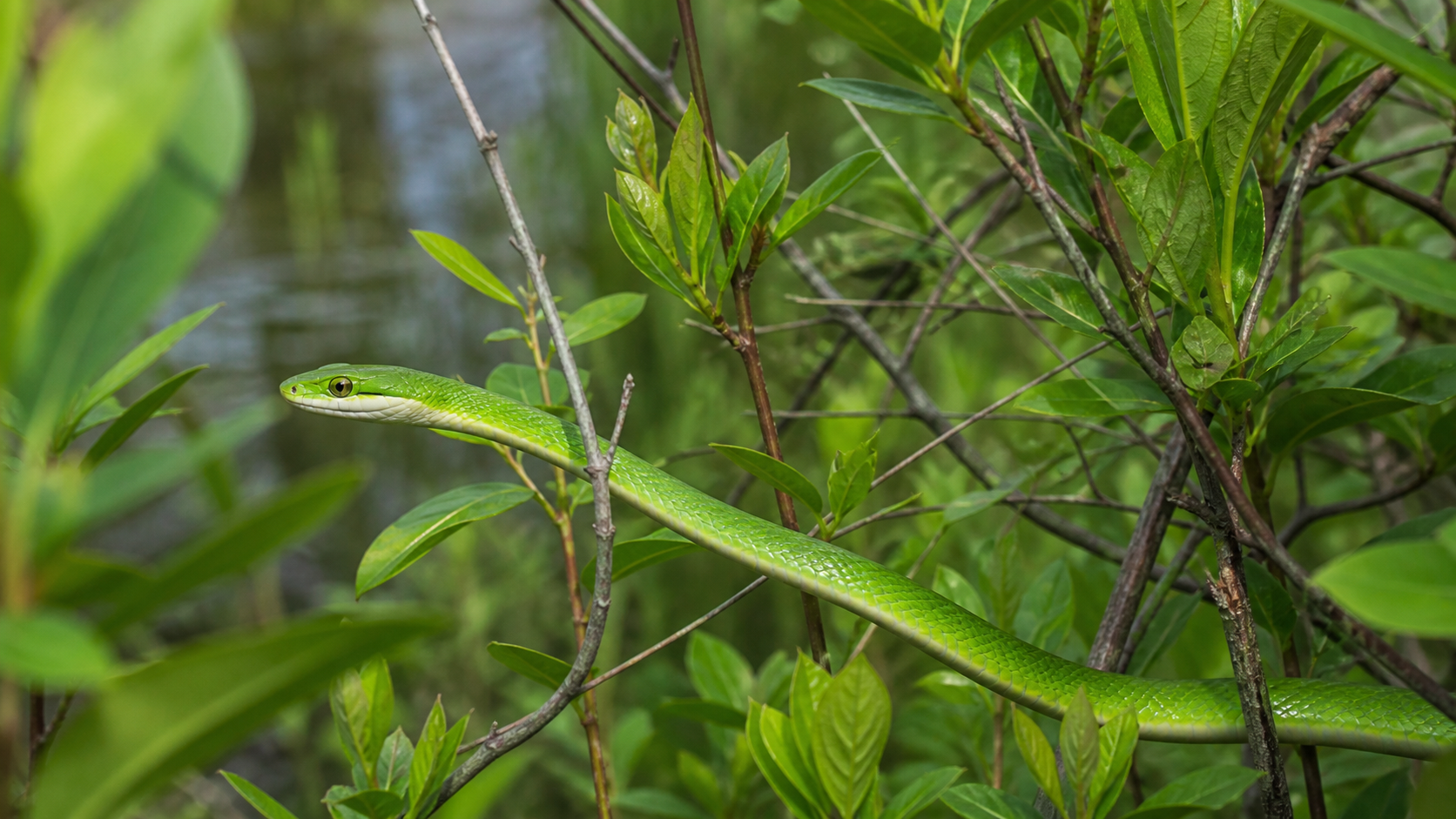
Rough greensnakes (Opheodrys aestivus) are nonvenomous, largely day-active snakes associated with dense shrubs and trees, often near water. Their range extends broadly across the southeastern and central United States into northeastern Mexico, with local populations varying in status.
Camouflage and diet
Green coloring helps them disappear among leaves and stems. They mainly eat insects and spiders; land snails and young treefrogs can be occasional prey. They can climb well and may swim, but they are not a tool for pest control and should not be collected from the wild.

Habitat and conservation
Vegetated edges, wetlands and connected shrub cover are important. Pesticide use near these habitats can reduce prey and expose wildlife, so preserve native vegetation and use pest management carefully. Overwintering can involve deep leaf litter, rotten logs, stumps and ground cover.
Captive animals need specialist care
Do not take a wild snake as a pet. Any captive animal should come from a legal, responsible source and receive species-specific care from a reptile veterinarian. A generic mealworm or enclosure recipe is not an adequate welfare plan.
Leave wildlife wild
If you see a rough greensnake, enjoy it from a distance and let it move away. Avoid handling, mowing dense cover during active periods or removing the vegetation it uses for shelter.
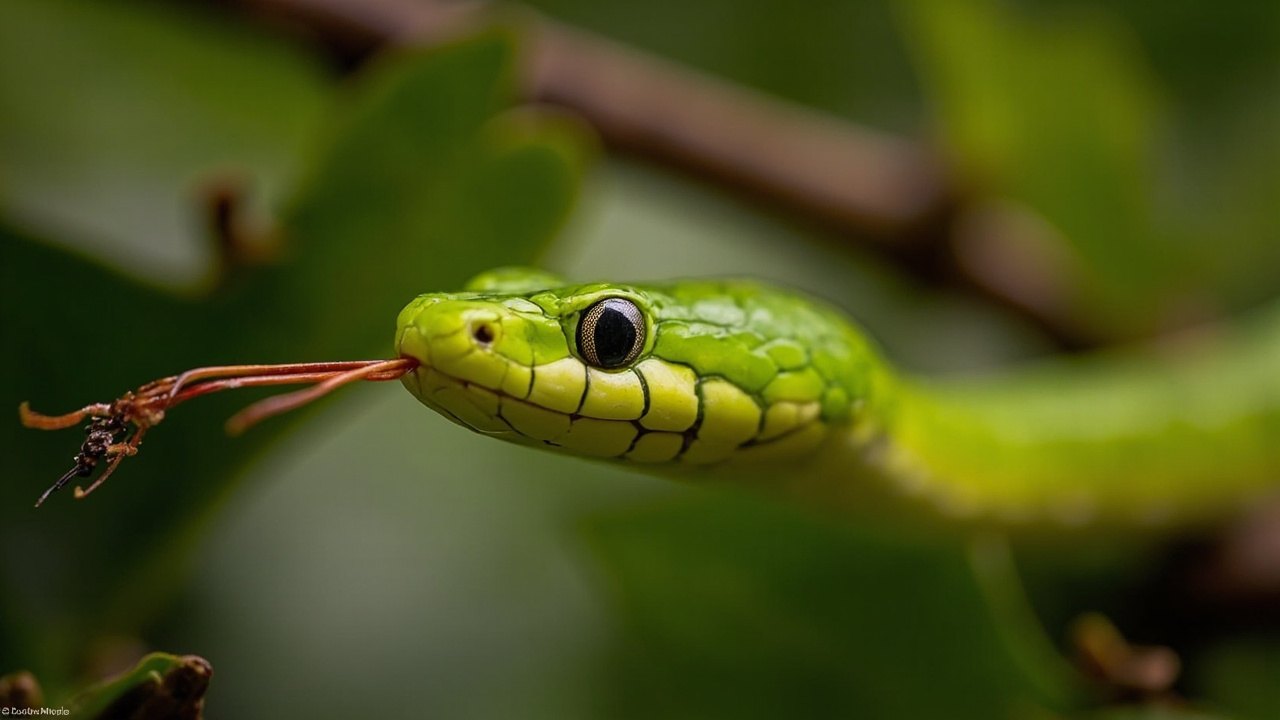
Small Prey Links the Snake to Vegetation
Rough greensnakes rely on the invertebrates supported by shrubs, grasses and wetland edges. A tidy-looking yard can lose shelter and prey at the same time if leaf litter and native vegetation are removed without care. The goal is not to attract a snake to a particular spot, but to keep a connected landscape usable for many small animals.
Range Does Not Mean Equal Security
A broad geographic range can include populations facing very different pesticide exposure, habitat loss and road pressure. Local records and surveys are needed before calling a species common or secure in a particular county or state. A green snake seen once can be a valuable observation, but it is not a population estimate.
Observation Works Best at a Distance
A rough greensnake may freeze in vegetation rather than flee. Avoid touching the branch, cutting cover around it or attempting to move it for a clearer image. Leaving the animal in place protects its camouflage and makes the sighting more useful as a record of habitat use.
Sources and review notes
Reviewed 23 August 2026. This article includes an amphibian because herpetology studies reptiles and amphibians together. We say that plainly so the relationship is interesting without blurring the difference between the two groups.
Reference starting points: AmphibiaWeb, The IUCN Red List of Threatened Species, and PubMed-indexed research. Conservation status, taxonomy and local laws can change, so check the linked databases and the relevant local authority for current information.
Spotted something we should revisit? Send Reptile Explorer a correction—thoughtful reader feedback is always welcome.