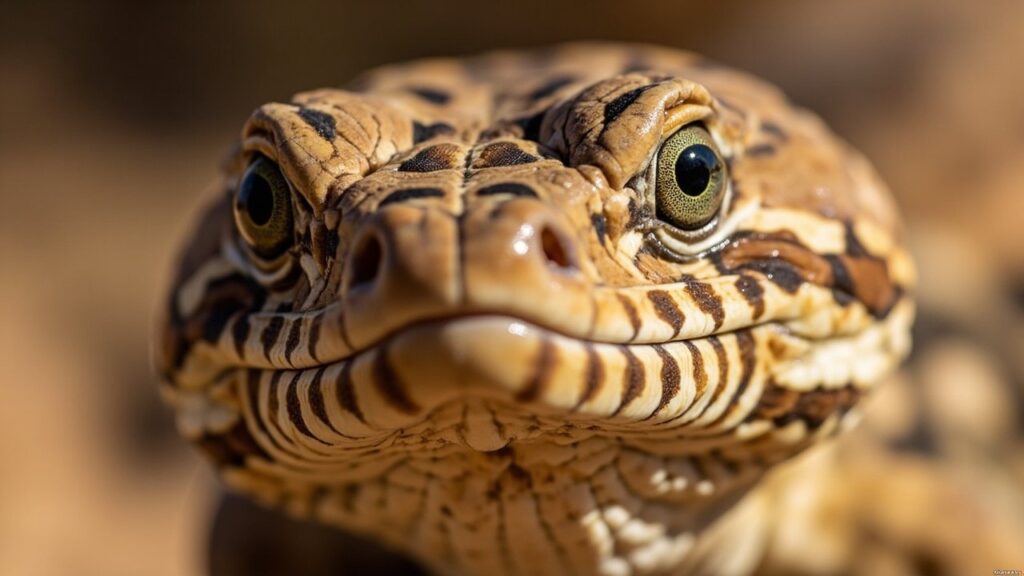
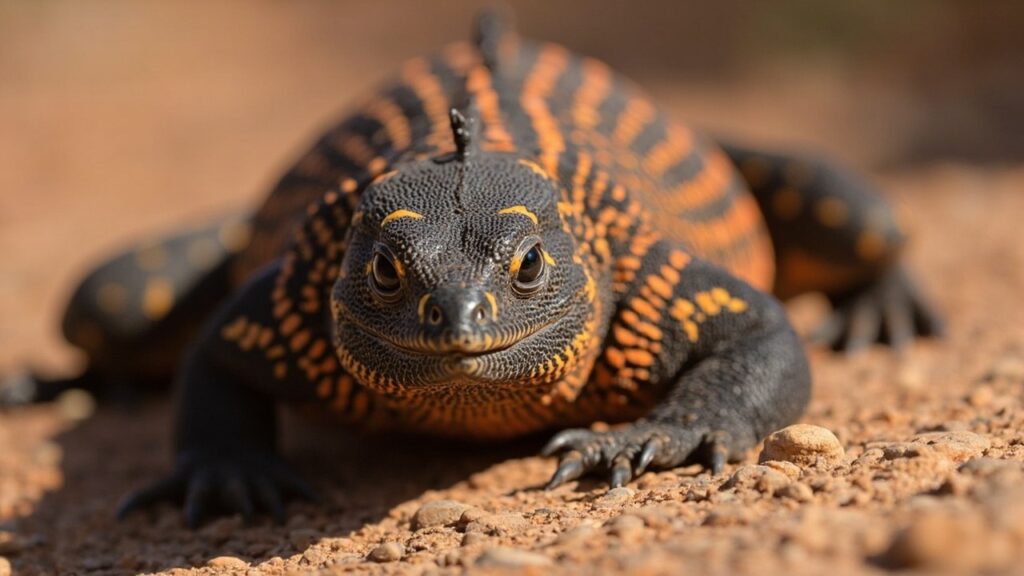
Arabian Peninsula deserts include dunes, gravel plains, wadis and mountain foothills. Reptile communities differ by country and habitat, so a single species total or universal adaptation cannot accurately describe the entire region.
Adaptations are species-specific
Desert reptiles may use sheltering, activity timing, burrowing, camouflage and reduced water loss to cope with heat and aridity. Those strategies vary among species; it is inaccurate to claim that all desert reptiles have reflective scales, water-conserving glands or the same tail-fat strategy.

Put species in their real ranges
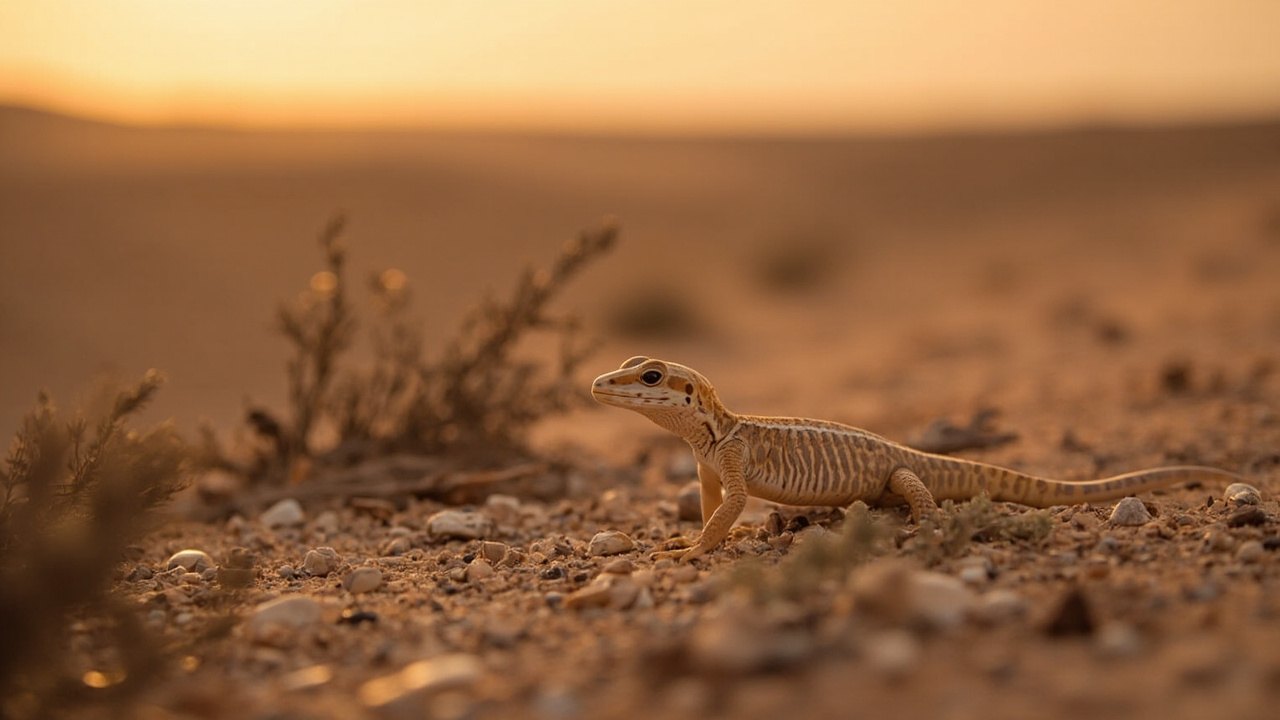
Examples must be matched to the right landscape. The Arabian horned viper in the Peninsula is Cerastes gasperettii, while the Euphrates softshell turtle belongs to the Tigris-Euphrates freshwater system rather than Arabian Desert fauna. Rear-fanged snakes, including Psammophis schokari, should never be treated as safe to handle.
Observe from a distance
Watch reptiles without lifting rocks, reaching into burrows or approaching snakes. Habitat protection, careful road use and respect for protected areas help more than collecting animals or spreading simplified survival myths.
Local knowledge is essential
For identification, regulations or safety questions, use a current local field authority rather than a broad regional list. Desert conditions can be dangerous for people as well as wildlife.
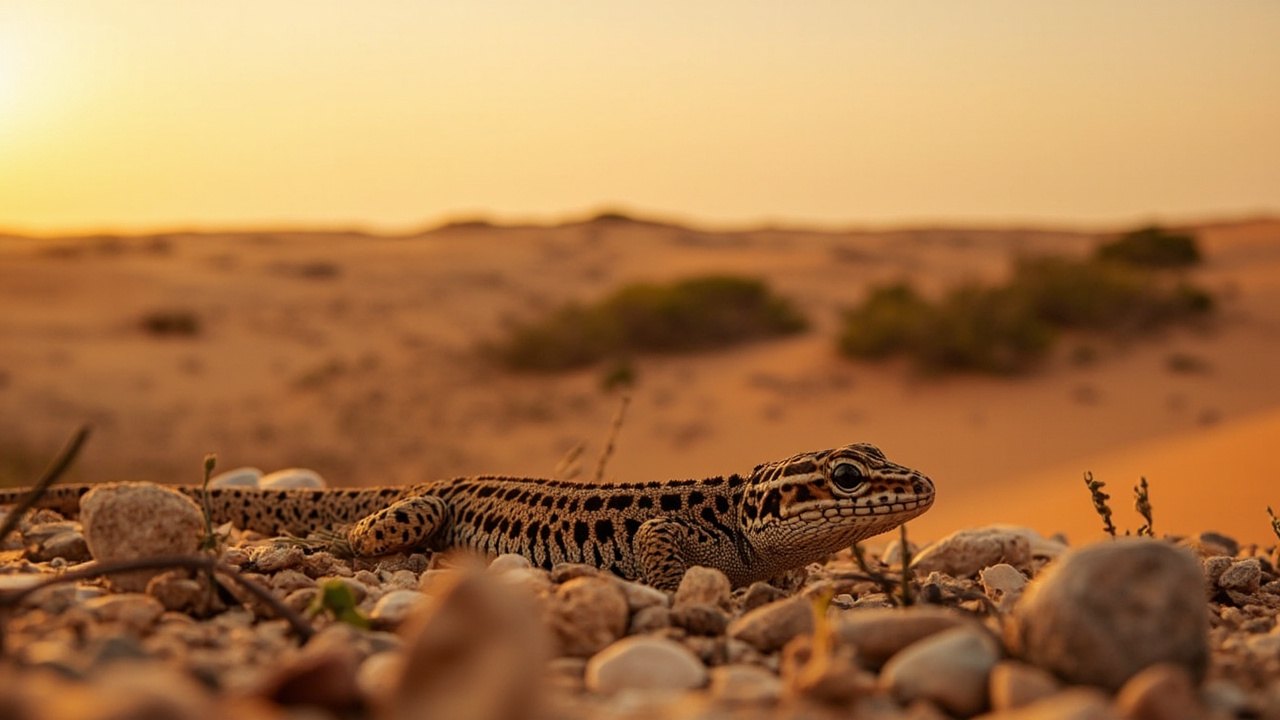
Arabian Desert Habitat Is Varied
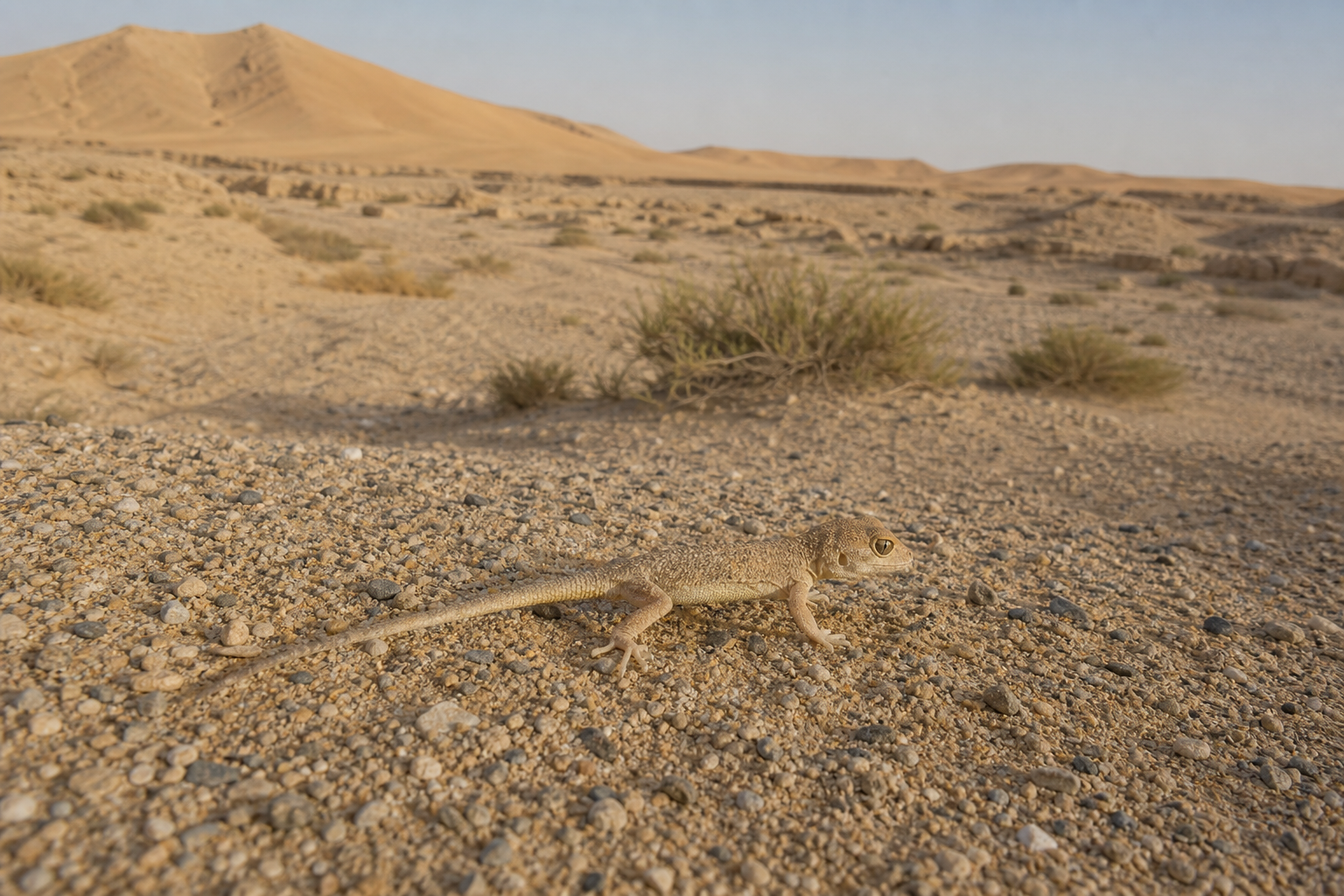
The Arabian Peninsula includes dune fields, stony plains, wadis, coastal areas and mountain foothills. Each setting differs in substrate, vegetation, temperature and water availability. A reptile associated with loose sand may not occur in a rocky wadi, and a species known from one country may be absent from a similar-looking site across a border.
Activity timing can reduce exposure to extreme daytime conditions. Some reptiles use burrows, shaded rocks or vegetation, while others emerge at night. These strategies differ by species and season. A broad survival story should not replace a verified record of which animal uses which habitat.
Ranges and Names Change With Research
Field surveys, museum material and taxonomic study can refine species names and distributions. For identification, legal questions or safety information, use current regional authorities rather than an unverified general list. An ambiguous photograph should remain unidentified if features or location are insufficient.
Desert Observation Needs Care
Do not reach into holes, lift rocks or approach snakes for a closer image. Stay on permitted routes and leave cover in place. These actions protect wildlife and reduce risk to people in a demanding environment.
Sources and review notes
Reviewed 23 August 2026. Conservation is rarely a one-step success story. We have kept the language specific about evidence, limits and local context, because a programme that helps one population may not transfer neatly to another.
Reference starting points: The IUCN Red List of Threatened Species, IUCN conservation-translocation guidelines, and the current CITES Appendices. Conservation status, taxonomy and local laws can change, so check the linked databases and the relevant local authority for current information.
Spotted something we should revisit? Send Reptile Explorer a correction—thoughtful reader feedback is always welcome.