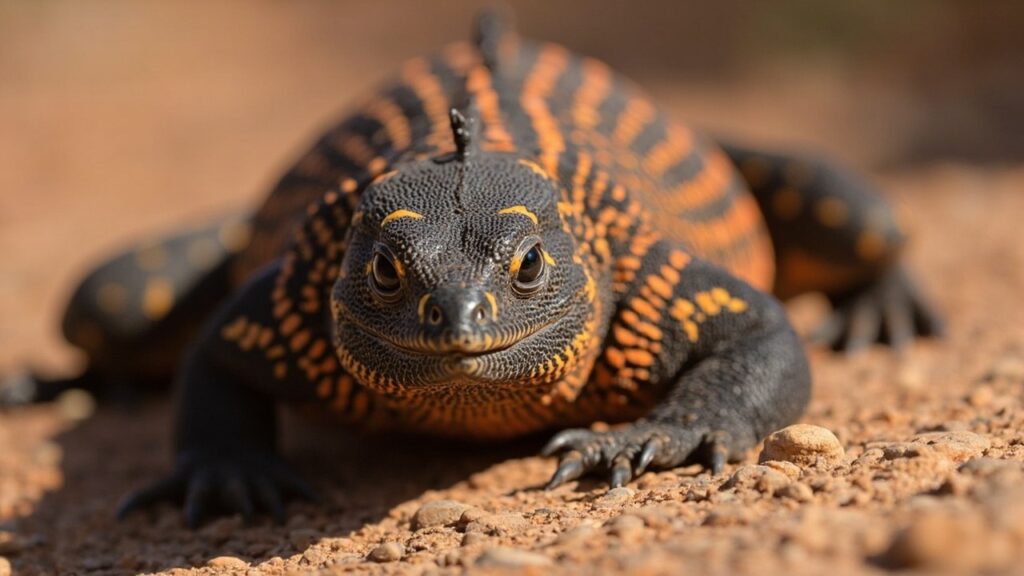
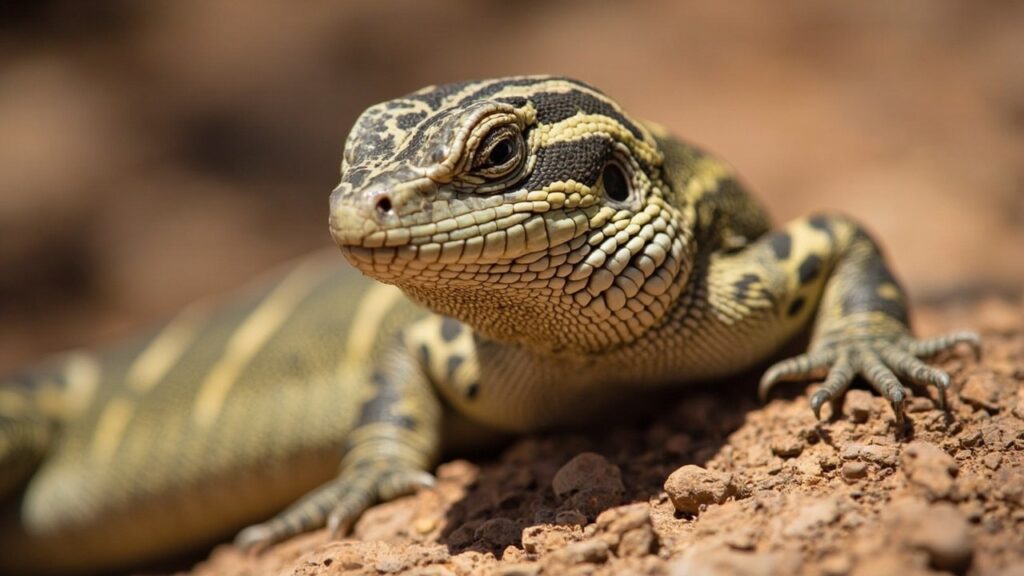
The Sahara is more than open sand
The Sahara contains dunes, rocky plateaus, dry riverbeds, gravel plains, oases, and sparse scrub. Reptiles occupy these different microhabitats rather than living in one uniform desert. A sand-dwelling gecko, a rock lizard, and a desert monitor face different conditions, so their activity, diet, shelter, and water balance cannot be described by one rule.

Behaviour limits exposure to heat
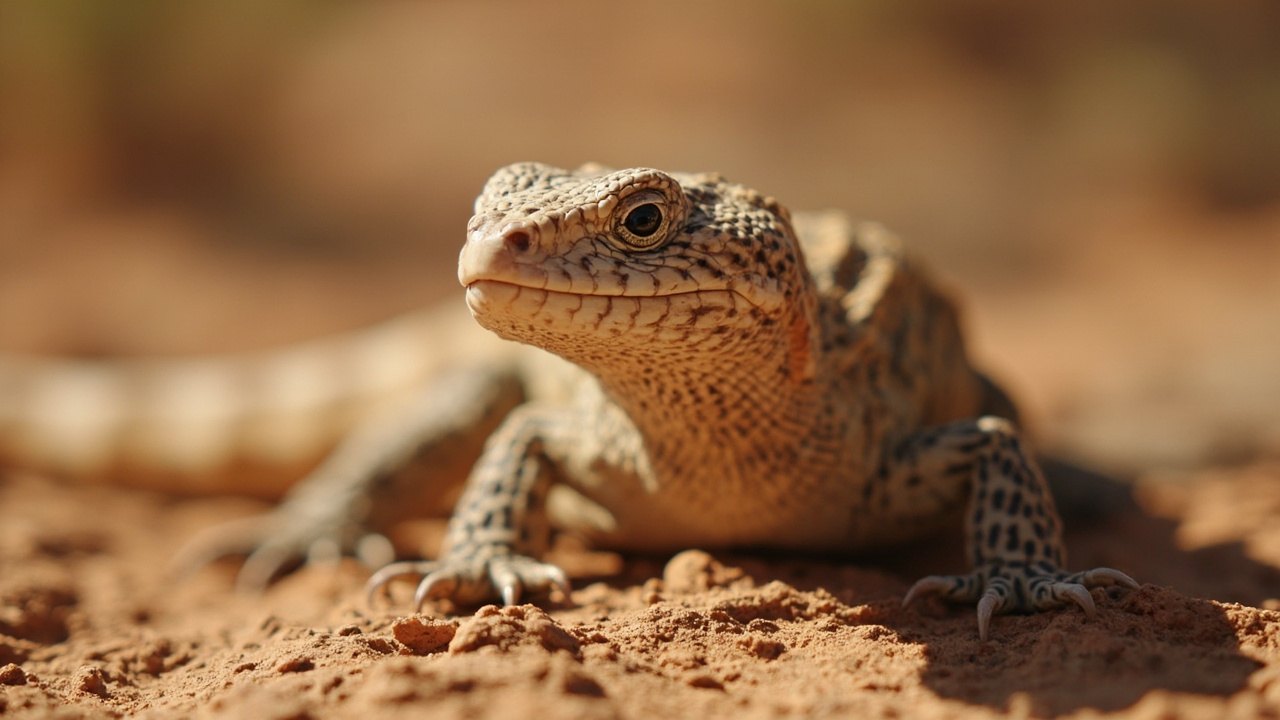
Because reptiles rely on external heat sources, the timing of activity matters. Many use shade, crevices, vegetation, or burrows when surface temperatures are unsafe, then emerge during cooler parts of the day or at night. Underground refuges can moderate both temperature and moisture. These choices are as important as visible physical features when an animal is surviving an arid landscape.
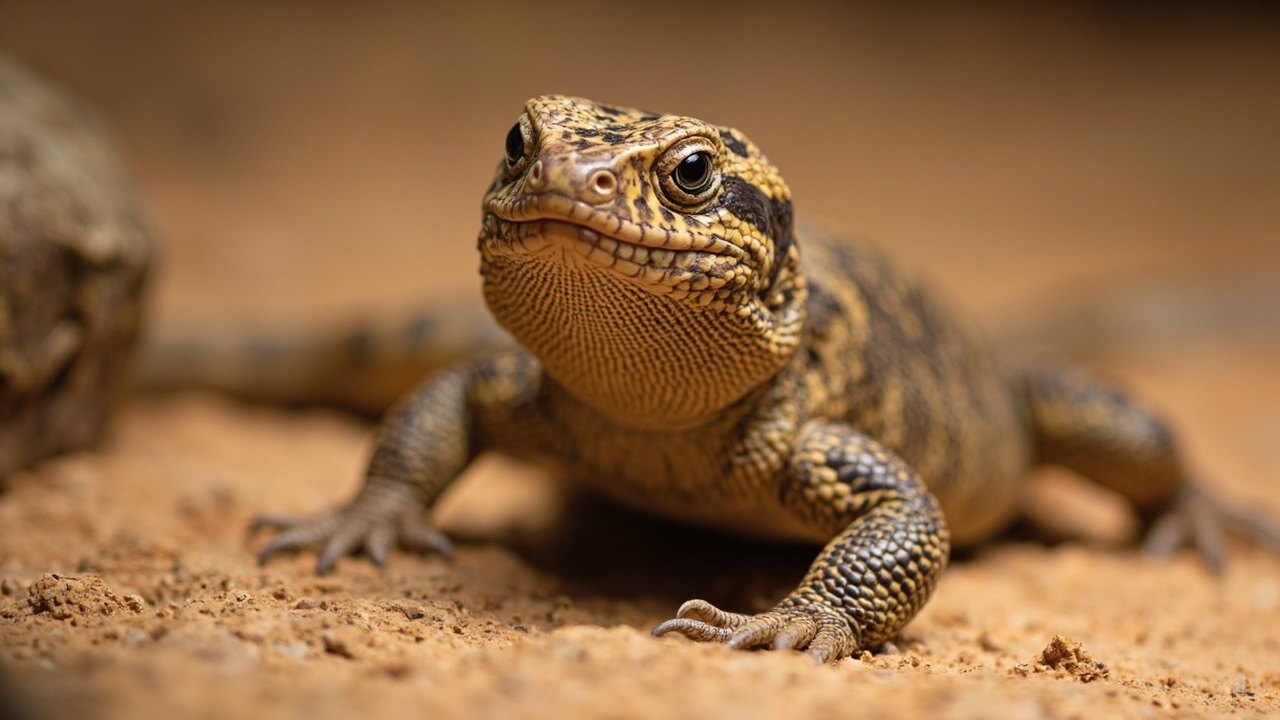
Sand specialists show useful variation
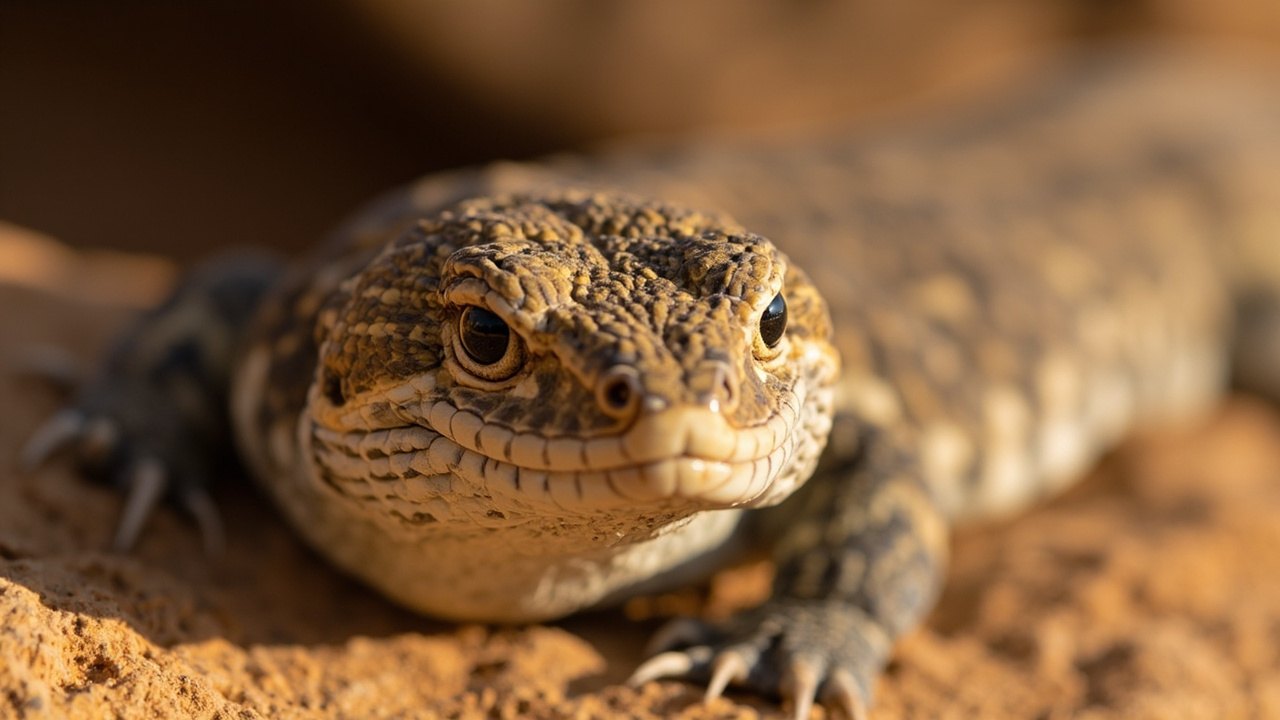
Some Saharan and Arabian geckos in the genus Stenodactylus have depressed or fringed toes that increase surface area and improve grip on loose wind-blown sand. Other reptiles use different body shapes, scales, or movement patterns for their own habitats. Adaptation is therefore specific to a lineage and place. Protecting the variety of desert habitats matters as much as protecting the famous dunes.
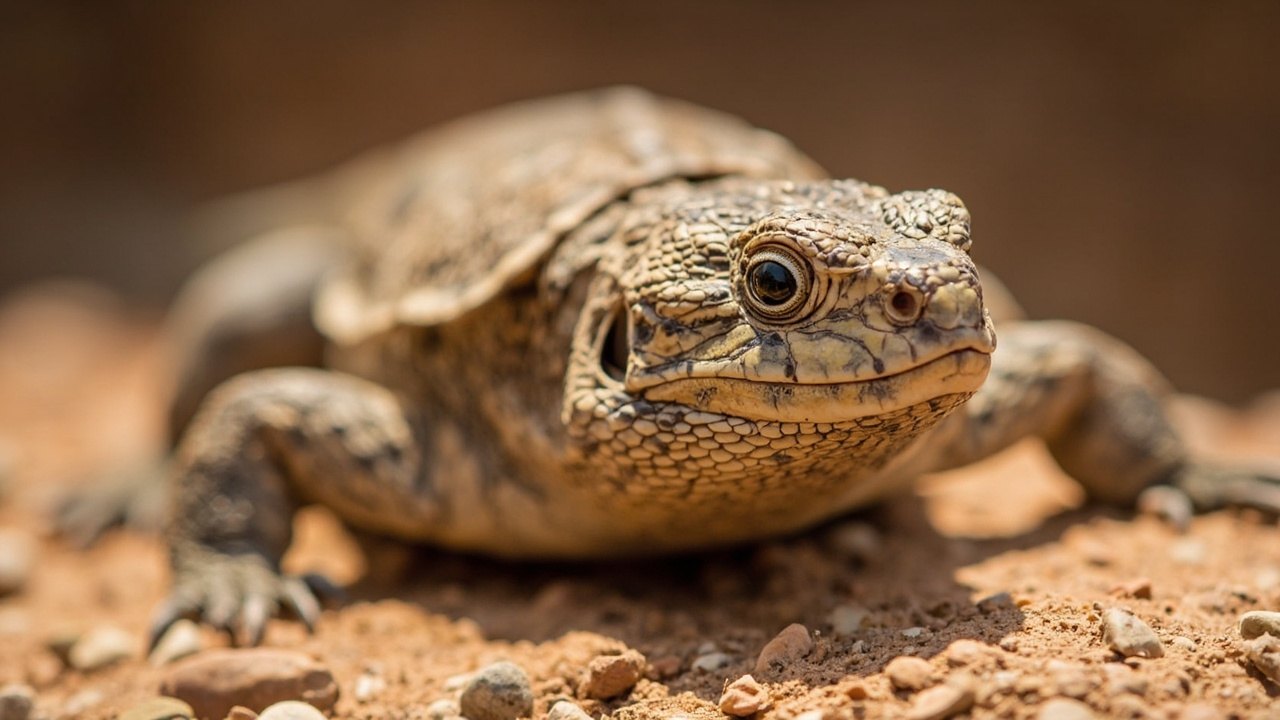
Desert Conditions Change Over Short Distances
Sand, gravel, exposed rock, dry channels and vegetated pockets absorb and release heat differently. A burrow or crevice can be much cooler than the nearby surface during the day and may retain more moisture. Reptiles use these differences to reduce exposure, but the useful refuge depends on the species, its size and the time of day.
The Sahara also spans a large part of North Africa, so an animal recorded in one country or habitat should not be assumed to occur across the whole region. Local field surveys and verified records are needed before making claims about distribution, rarity or conservation status.
Water Balance Is Not One Desert Formula
Reptiles can obtain water from food, temporary rainfall or suitable shelter, and they can reduce water loss through behaviour and physiology. The details differ among lineages. A broad statement that a desert reptile never drinks or survives without water is less informative than describing the habitat and conditions actually used by that species.
Leave Refuges Undisturbed
Turning over stones, digging into burrows or driving off established routes can destroy the limited cover available in an arid area. Observe from a distance, avoid handling wildlife and use local guidance for protected areas and species.
Sources and review notes
Reviewed 23 August 2026. Fossils, anatomy and family trees become more interesting—not less—when uncertainty is made visible. We have separated well-supported observations from interpretations that may change as new specimens and studies appear.
Reference starting points: The Reptile Database, PubMed-indexed research, and Smithsonian natural-history resources. Conservation status, taxonomy and local laws can change, so check the linked databases and the relevant local authority for current information.
Spotted something we should revisit? Send Reptile Explorer a correction—thoughtful reader feedback is always welcome.