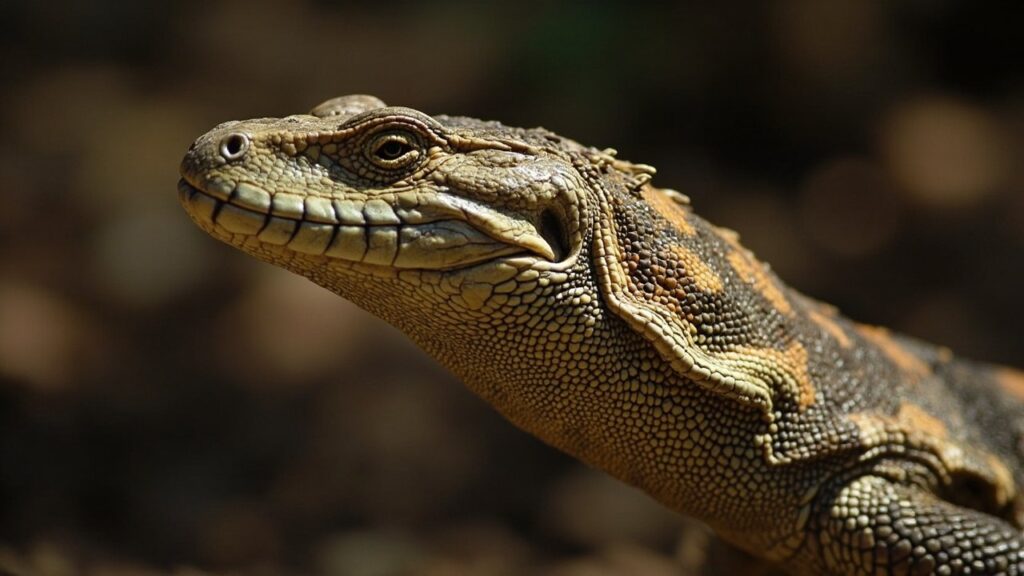
Gliding, not powered flight
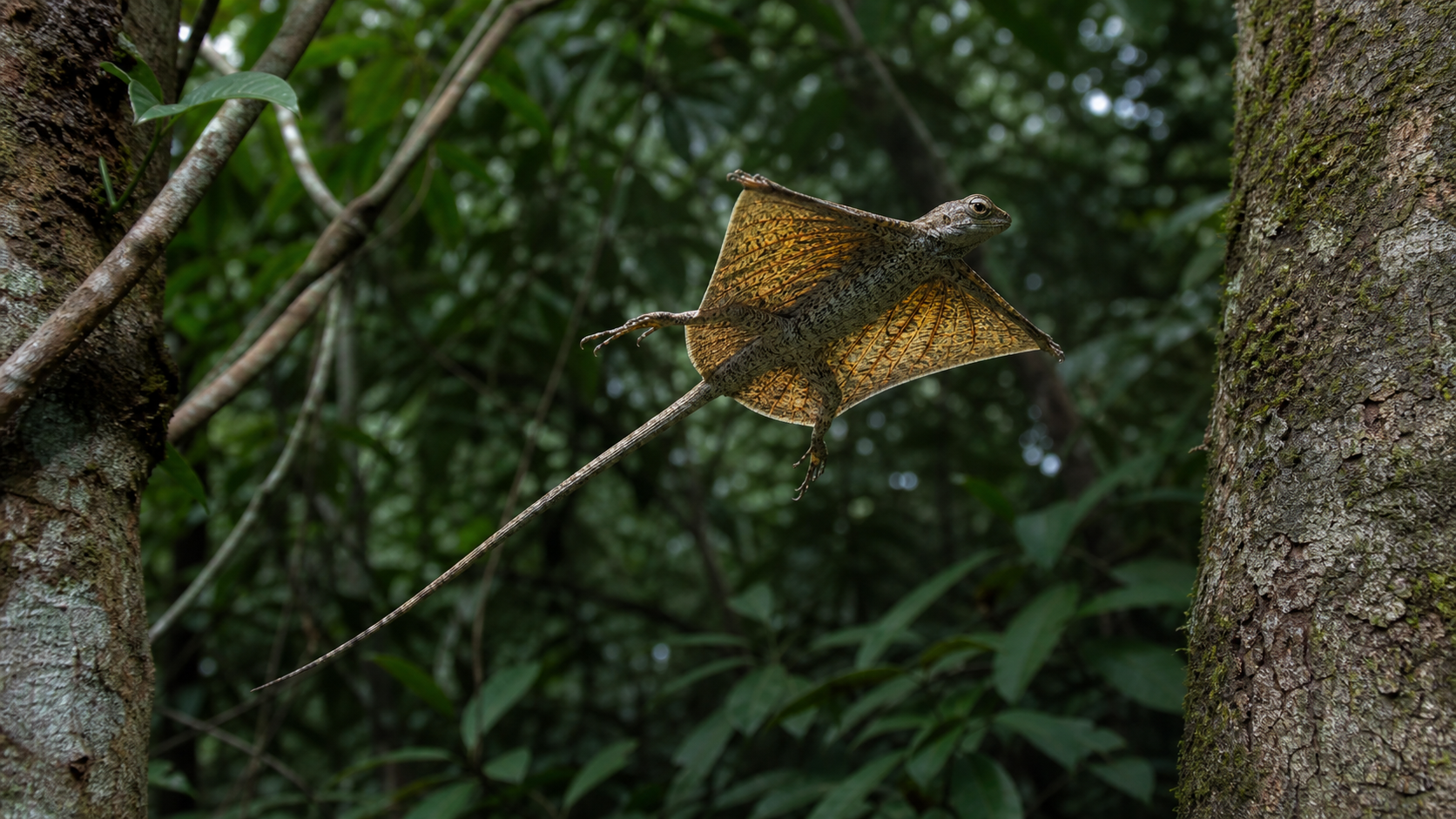
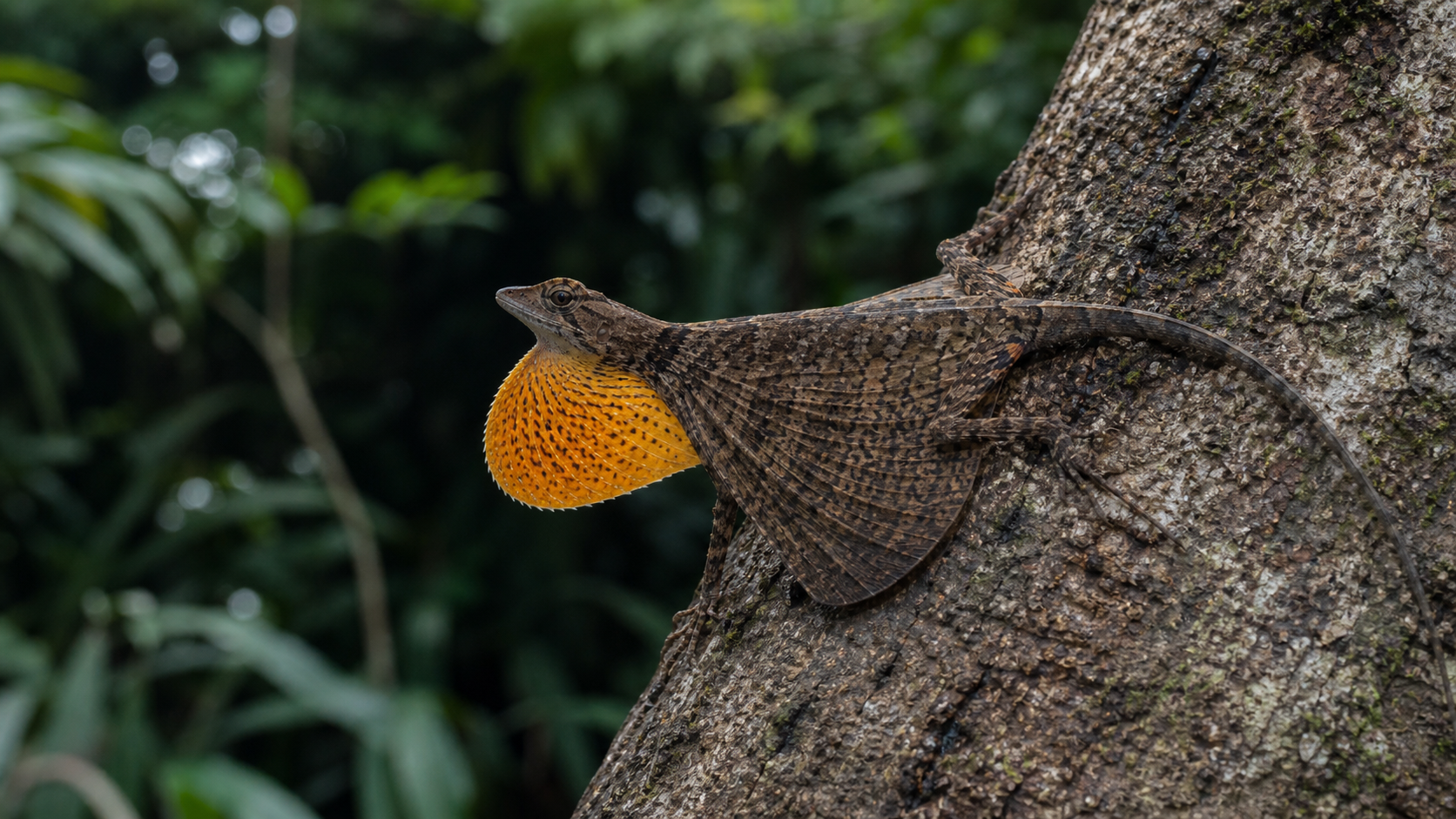
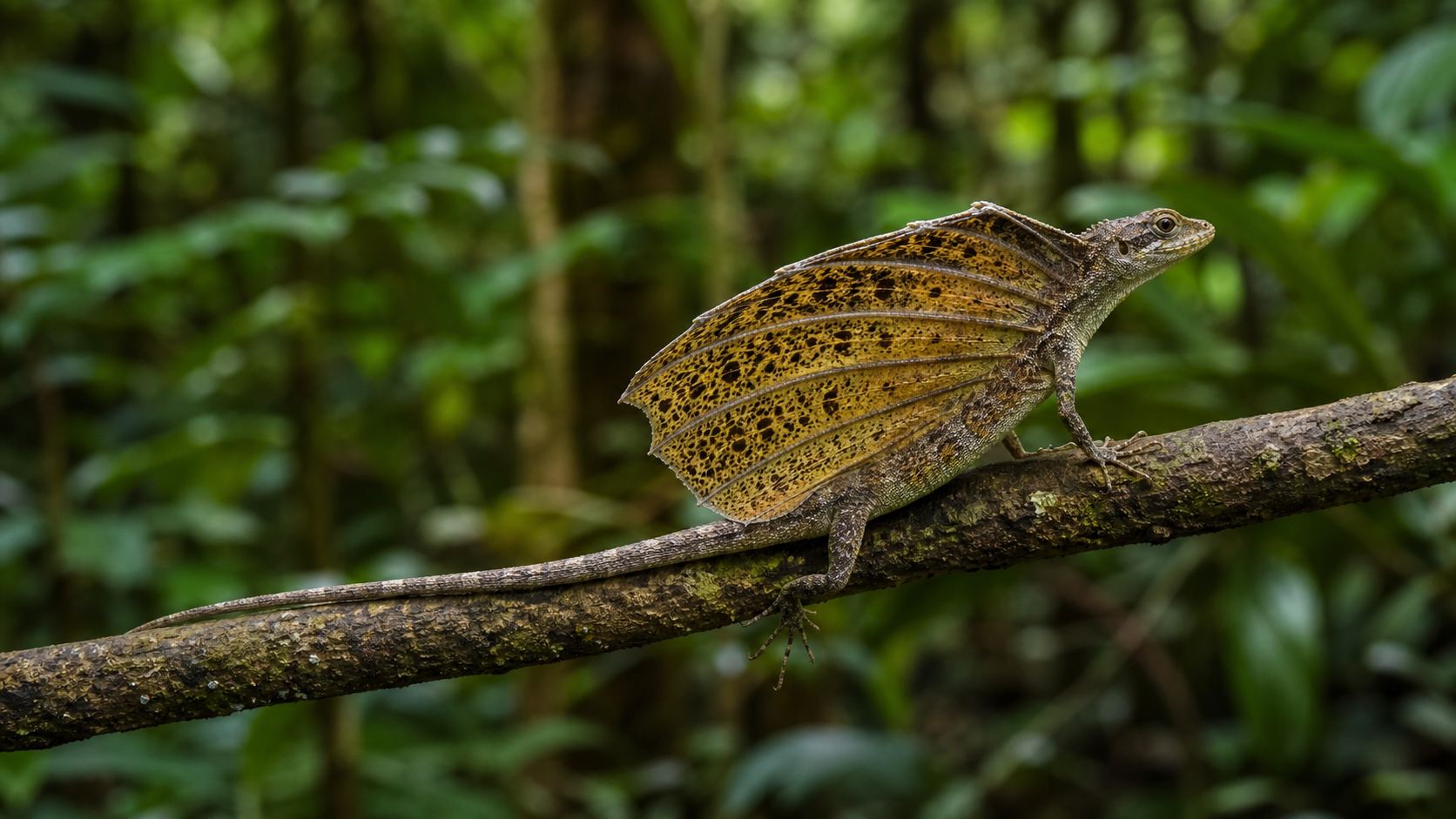
Draco lizards live in forests of South and Southeast Asia. They do not flap their way through the canopy. Instead, they launch from a trunk or branch and glide to another support, using a membrane called a patagium to create lift and control their descent.
Ribs, membranes and a balancing tail
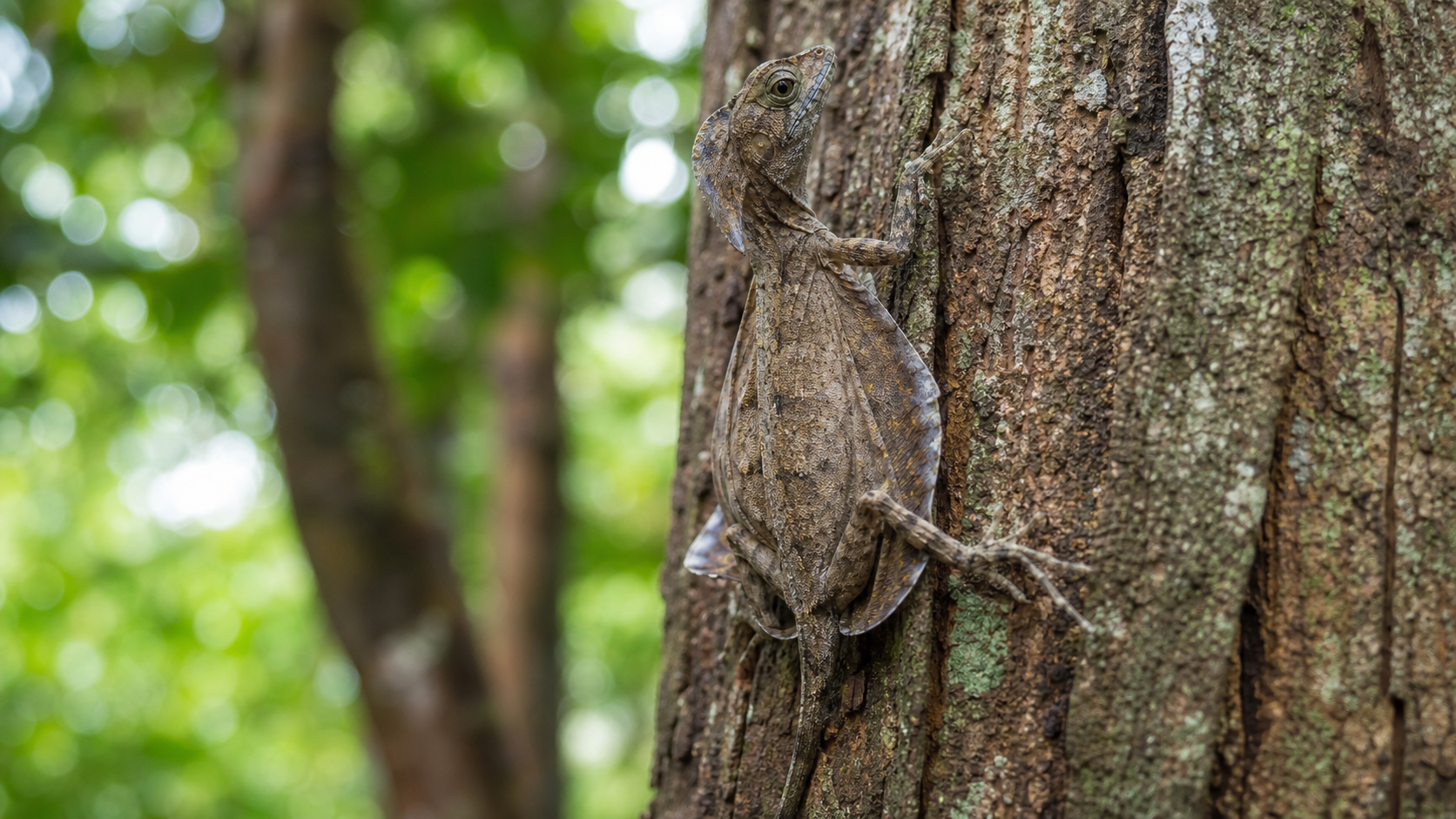
Elongated ribs support the patagium, while the body, limbs and tail help the lizard steer and land. A throat fan is also used in display by many species. These features work best in a connected forest canopy; a lizard cannot safely “fly” across every open gap.
Why forest structure matters
Gliding can reduce the need to descend to the ground, where risks and travel costs may be different. It also makes Draco vulnerable to canopy fragmentation. Protecting mature trees, forest corridors and the insects these lizards eat is more useful than treating gliding as a novelty detached from habitat.
The patagium folds away between glides
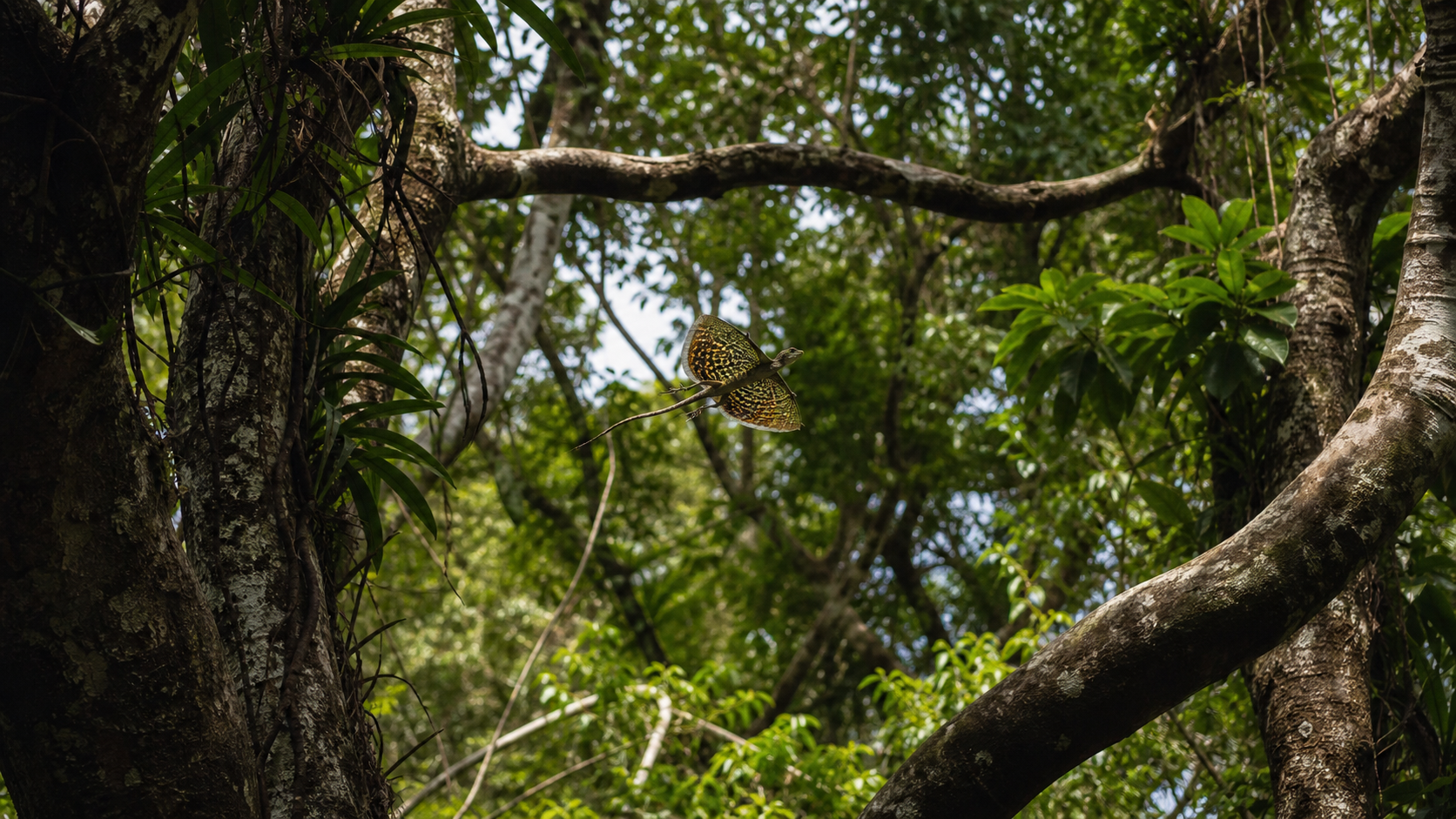
A Draco lizard does not carry a permanent wing shape as it moves around a trunk. Its elongated ribs support a membrane called the patagium, which can be extended for a glide and folded against the body when not in use. The animal launches from height, directs its body toward another trunk or branch, and lands with the help of its feet and claws. The tail contributes to balance and control, but the lizard still loses height during a glide.
Different Draco species use different forest regions and elevations across South and Southeast Asia. Their colour, throat fan, and body size can vary, so a general description should not be used to assign every gliding lizard to one species. A precise record includes the country or island, forest type, and a clear image of the animal without removing it from its perch.
Canopy gaps have practical consequences
Gliding works best where trunks and branches are within reach of a safe launch and landing route. Clearing, roads, and isolated trees can create gaps that change how an arboreal lizard moves through its habitat. A forest patch that looks connected from the ground may be harder to cross in the canopy. Mature trees, layered vegetation, and insect prey therefore matter to Draco lizards as much as the famous gliding display. Protecting connected forest structure is a more meaningful conservation goal than treating the species as a novelty.
Sources and review notes
Reviewed 23 August 2026. Reptile biology is wonderfully variable. We have avoided turning one species, photograph or dramatic observation into a rule for an entire group, and we have used cautious wording where evidence or local conditions differ.
Reference starting points: The Reptile Database, The IUCN Red List of Threatened Species, and PubMed-indexed research. Conservation status, taxonomy and local laws can change, so check the linked databases and the relevant local authority for current information.
Spotted something we should revisit? Send Reptile Explorer a correction—thoughtful reader feedback is always welcome.