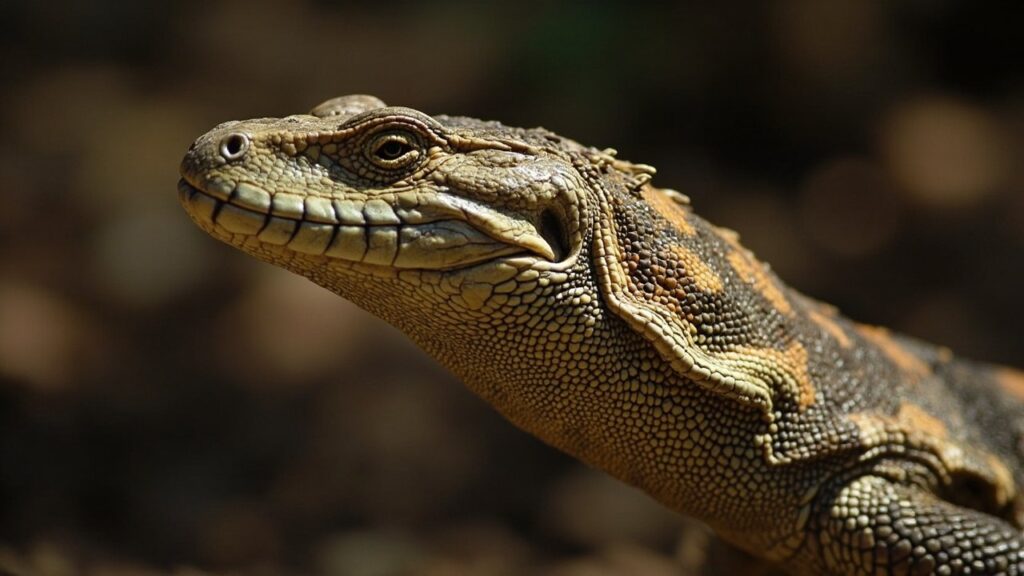
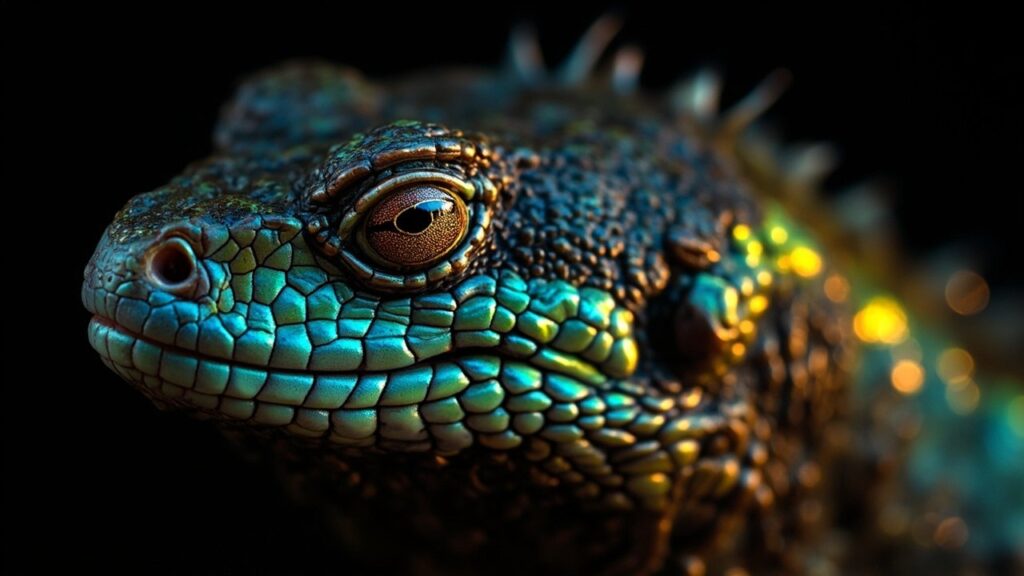
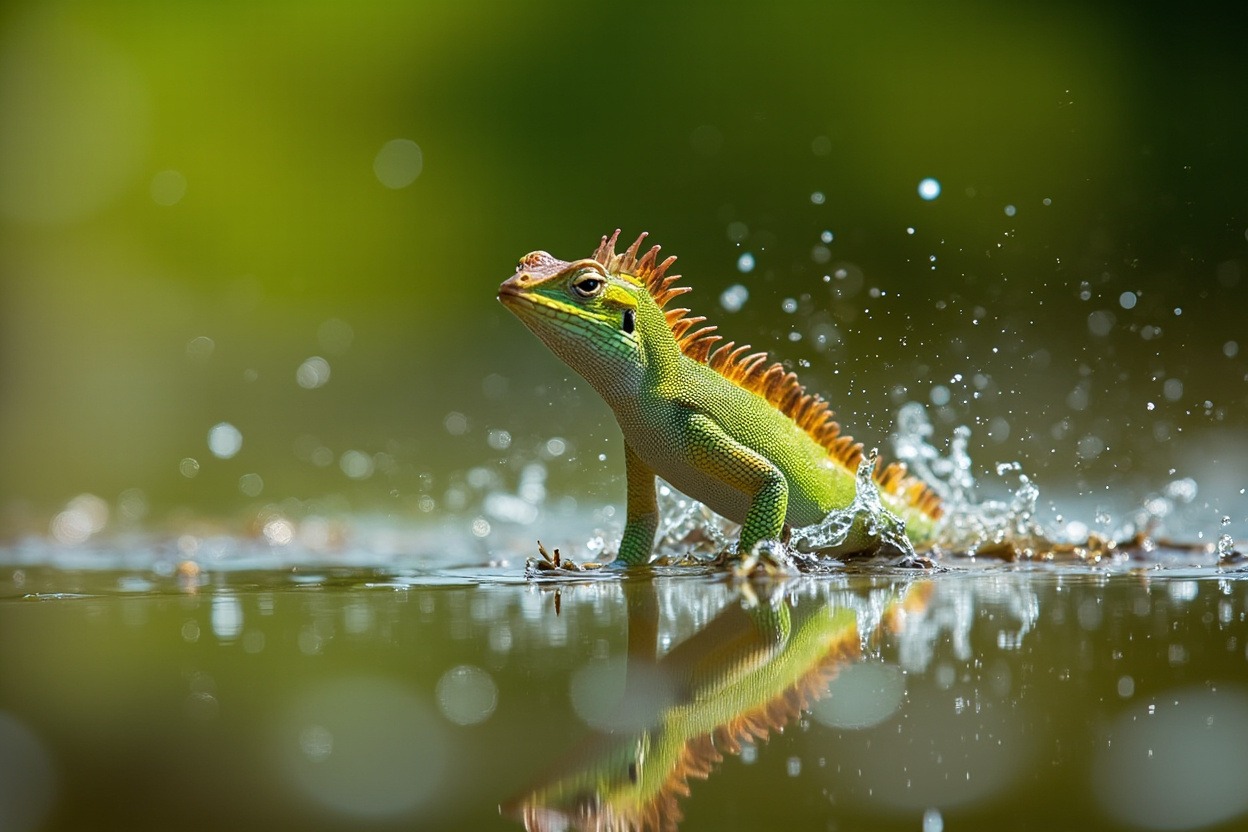
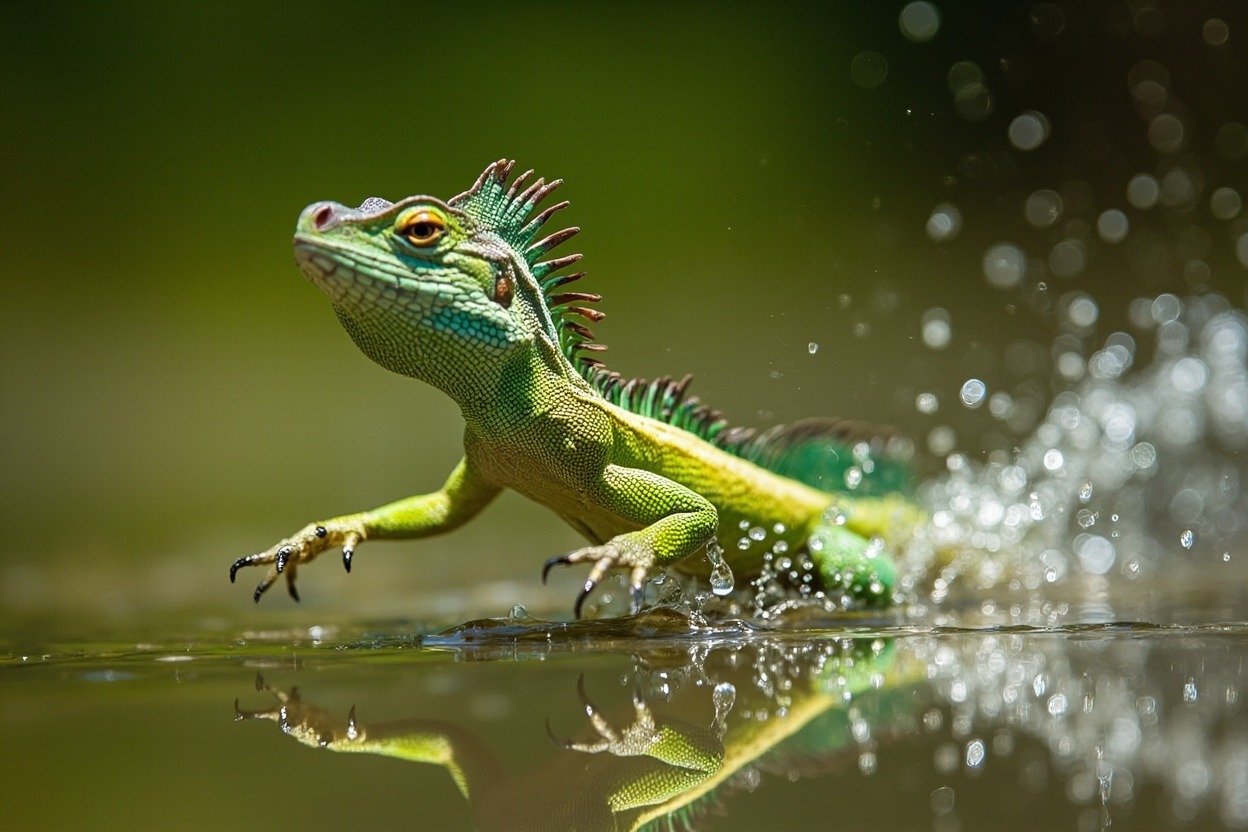
The plumed basilisk, Basiliscus plumifrons, is a Central American lizard often called the “Jesus lizard” because it can run across water for short distances. The nickname is memorable, but the behaviour is rapid running and surface support, not literal walking on water.

How the water run works
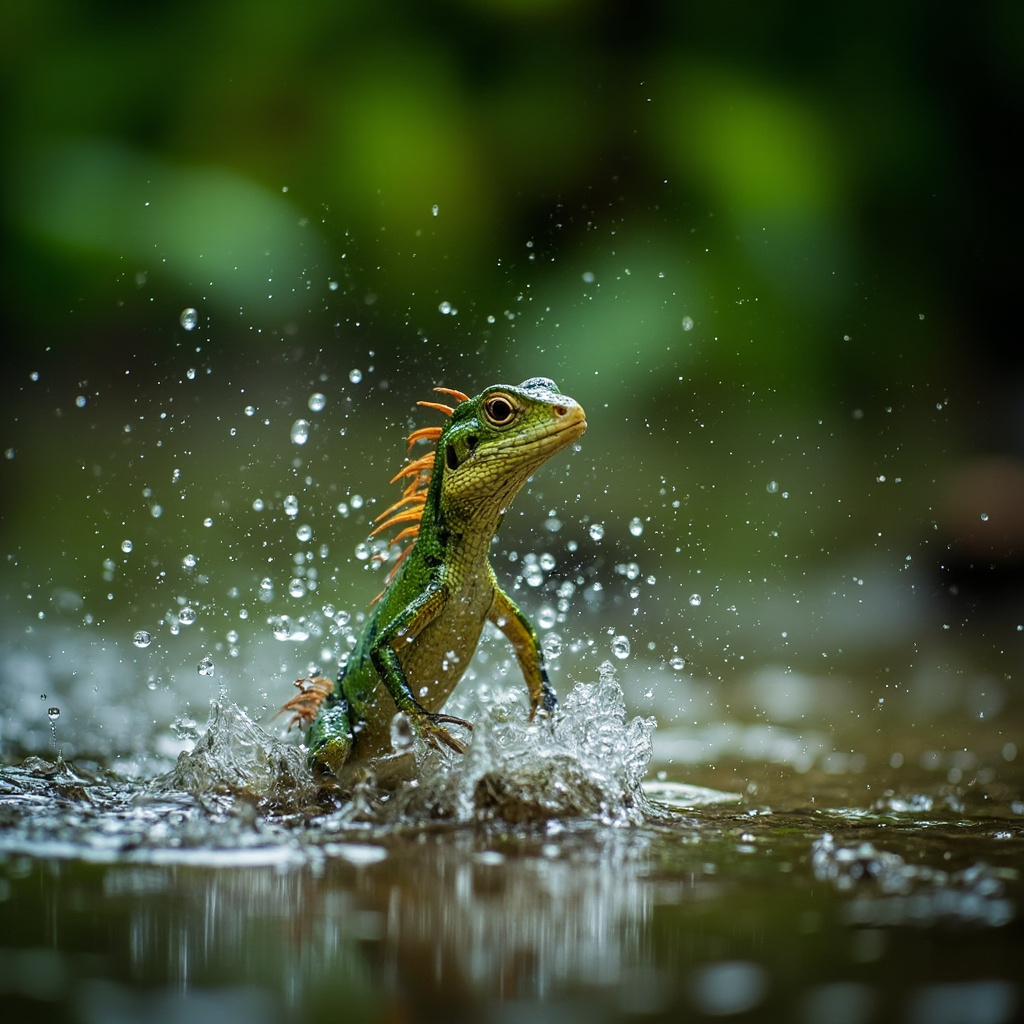
Powerful hind legs, rapid foot slaps, and fringed toes help the lizard create enough support to stay on the surface briefly. Its size, speed, water conditions, and the distance involved all matter. Basilisks often use this as an escape strategy when startled.
More than a party trick
Plumed basilisks are arboreal, semi-aquatic reptiles with striking crests, especially in males. Their colour and shape help them live in humid forest environments, but no single photo should be used to identify a species without reliable context.
Observe from a distance
Do not chase a basilisk toward water to make it run. Natural escape behaviour is best observed without forcing it.
Water running has physical limits
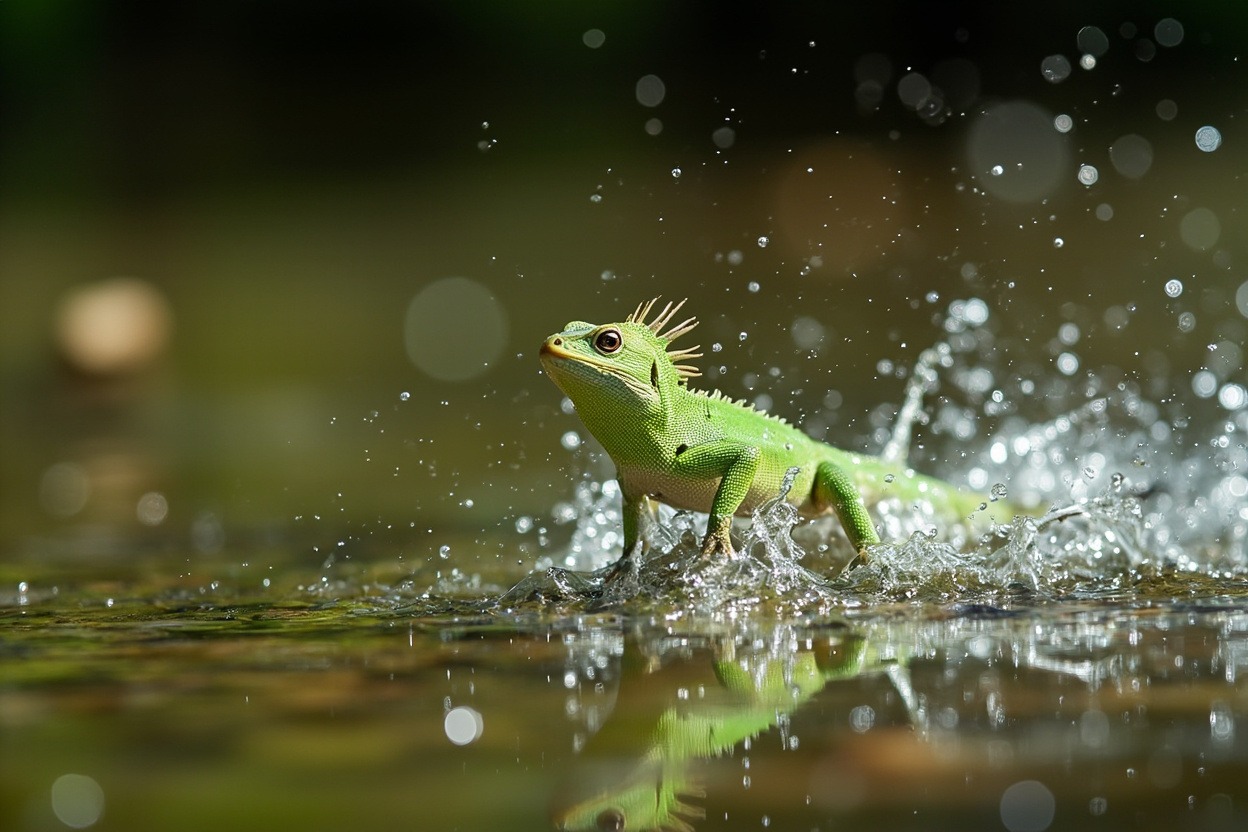
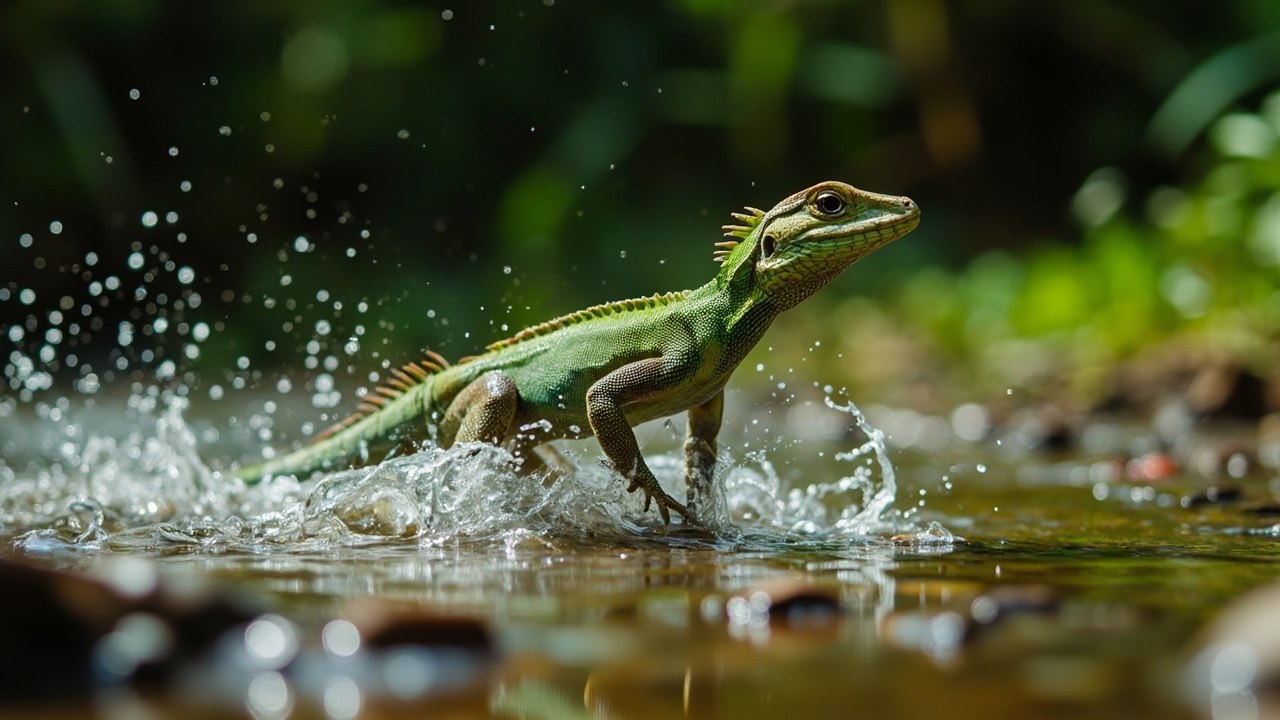
A plumed basilisk stays on the surface briefly by moving its hind feet very quickly and pushing water downward. Each step creates a small air pocket and a force that supports the body for a moment. Speed, body mass, foot shape, water surface, and the distance to safety all affect the result. The lizard eventually loses support or reaches cover, so the behaviour is best understood as a short escape response rather than a way to travel indefinitely across water.
Adult males are especially notable for crests on the head, back, and tail, while females and young animals can look different. The species is associated with humid forest and watercourses in Central America, where branches, vegetation, and banks provide routes away from danger. A photograph of a basilisk on water may be striking, but it does not show the full habitat or the reason the animal entered the water.
Natural observation avoids forced escapes
Chasing a basilisk or blocking its path to make it run is harmful and can push it toward a predator, road, or unsuitable water. Watch quietly, stay on established paths, and allow the animal to choose where it goes. If a lizard is seen near a stream, note the surrounding vegetation and perch sites as well as the water itself. Protecting shaded banks, connected vegetation, and clean water supports the conditions in which this species can use both trees and waterways.
Sources and review notes
Reviewed 23 August 2026. Reptile biology is wonderfully variable. We have avoided turning one species, photograph or dramatic observation into a rule for an entire group, and we have used cautious wording where evidence or local conditions differ.
Reference starting points: The Reptile Database, The IUCN Red List of Threatened Species, and PubMed-indexed research. Conservation status, taxonomy and local laws can change, so check the linked databases and the relevant local authority for current information.
Spotted something we should revisit? Send Reptile Explorer a correction—thoughtful reader feedback is always welcome.