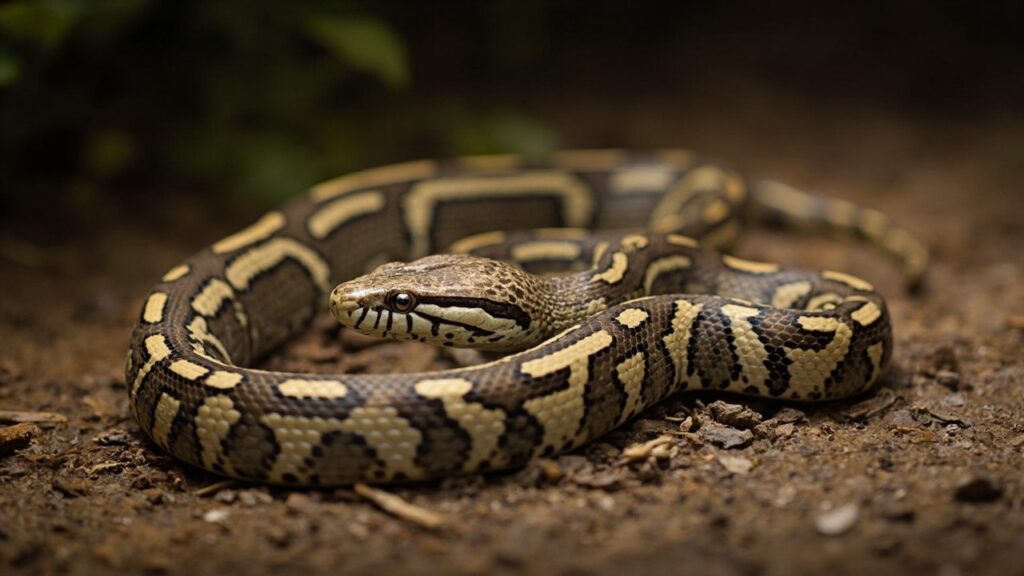
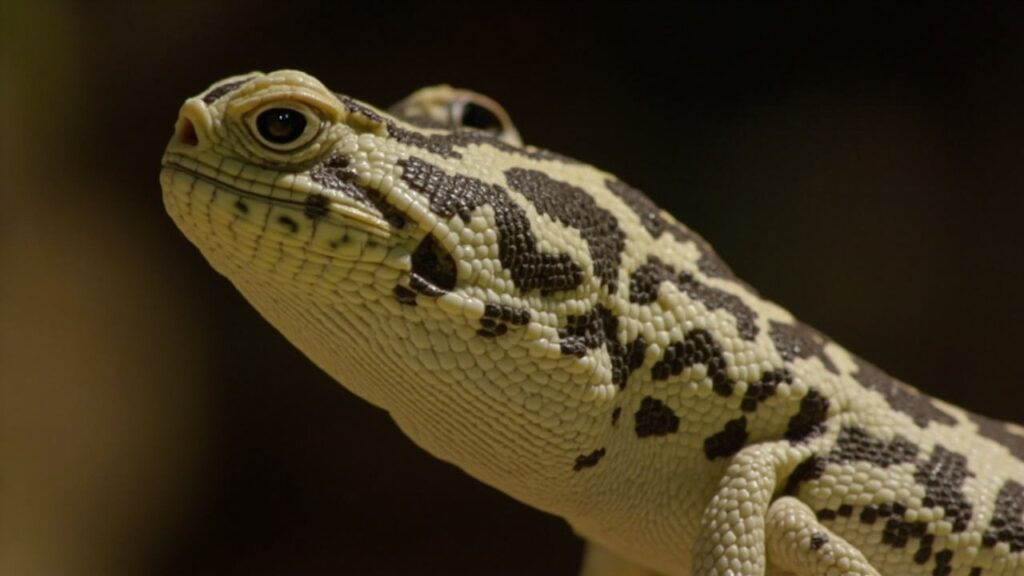
A snake’s forked tongue is a chemical-sensing tool. It collects tiny particles from air and surfaces, then delivers them to the vomeronasal organ in the mouth for analysis. This process helps a snake build a detailed picture of its surroundings.
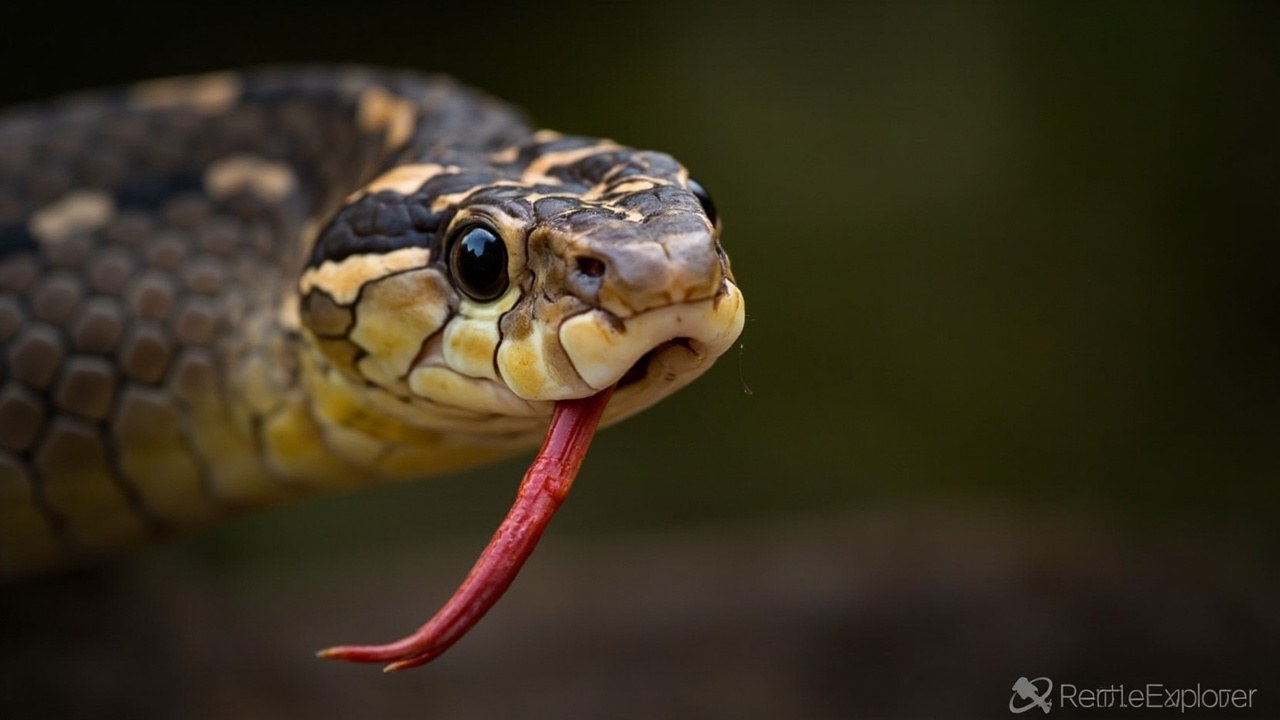
Why the tongue is forked
The two tips can collect information from slightly different places. Comparing those signals can help a snake follow a scent trail or orient toward its source. The tongue is not a venom-delivery organ and does not sting.
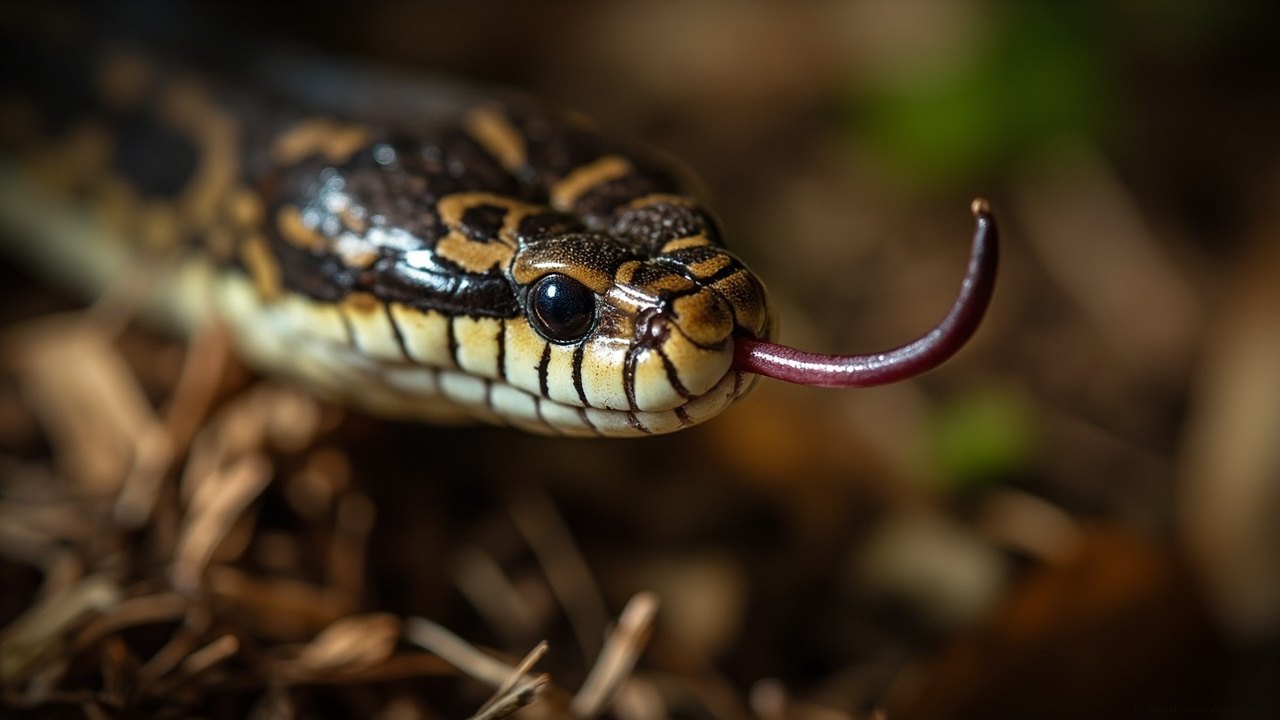
More than “taste”
The popular phrase “snakes taste the air” is a useful shortcut, but the system is specialized chemical sensing. Snakes also use their nostrils, and some species have additional sensory adaptations such as heat pits. Each system contributes different information.
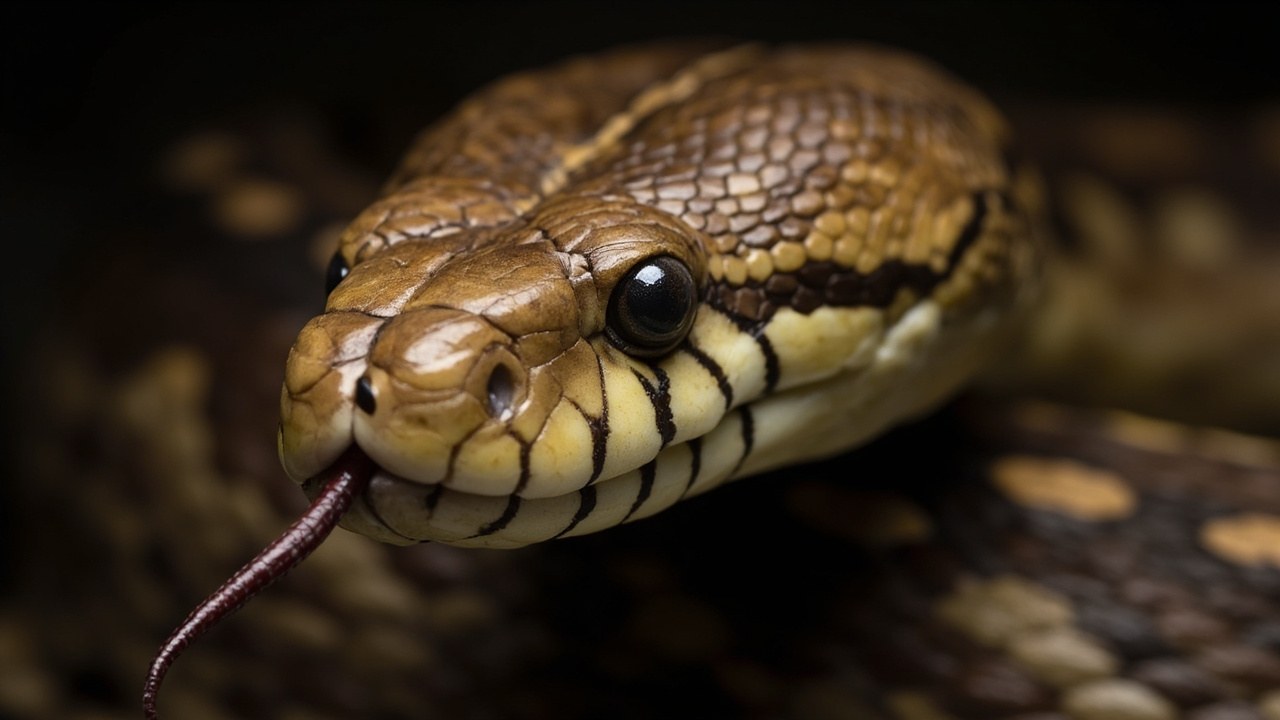
What tongue-flicking does not mean
A flicking tongue does not, by itself, prove that a snake is aggressive or safe. Do not use it as a reason to approach, handle, or try to identify an unfamiliar animal at close range.
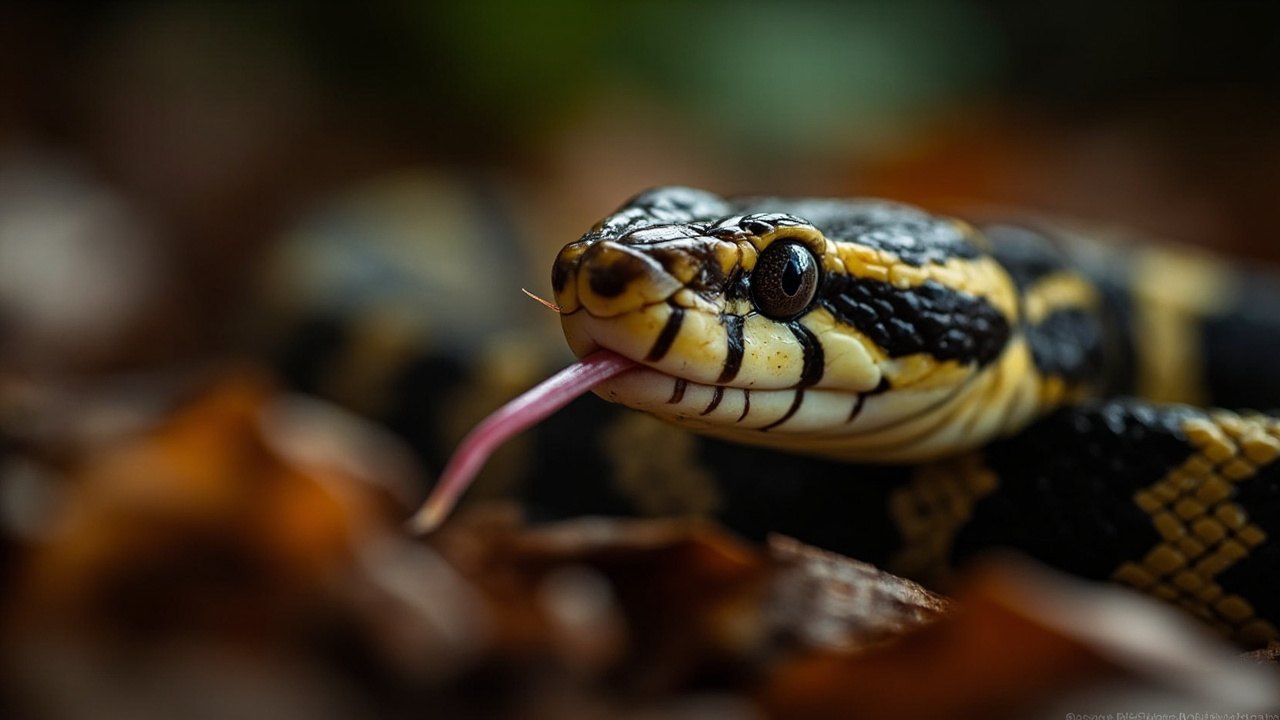
Chemical Particles Reach the Vomeronasal Organ
When a snake flicks its tongue, particles collected on the tips are transferred to openings in the roof of the mouth that lead to the vomeronasal organ. This organ processes chemical cues from surfaces and air. The process is distinct from ordinary taste, although both are forms of chemical sensing. It can help a snake investigate prey, another snake, a trail or a familiar route through cover.
Each tongue tip samples a slightly different point in space. Differences between the two samples can assist orientation, especially when a snake follows a trail. The precise value of this information depends on the species, substrate, airflow and the cue being followed. A forked tongue is useful, but it does not act like a camera or guarantee that the snake knows exactly what is nearby.
One Behaviour Does Not Explain the Whole Animal
Frequent tongue-flicking can occur while a snake explores a new area, follows scent, responds to movement or simply gathers information. It is not a reliable signal of aggression, hunger or friendliness on its own. Head position, body posture, distance from cover and the identity of the species all matter when behaviour is interpreted.
Leave Identification and Safety Separate
A forked tongue cannot identify a snake, distinguish venomous from non-venomous species or make a close approach safe. If an unfamiliar snake is encountered, give it space and use local field guidance or a qualified wildlife responder when identification is needed. Never provoke an animal to make it flick its tongue for a photograph.
Sources and review notes
Reviewed 23 August 2026. Reptile biology is wonderfully variable. We have avoided turning one species, photograph or dramatic observation into a rule for an entire group, and we have used cautious wording where evidence or local conditions differ.
Reference starting points: The Reptile Database, The IUCN Red List of Threatened Species, and PubMed-indexed research. Conservation status, taxonomy and local laws can change, so check the linked databases and the relevant local authority for current information.
Spotted something we should revisit? Send Reptile Explorer a correction—thoughtful reader feedback is always welcome.