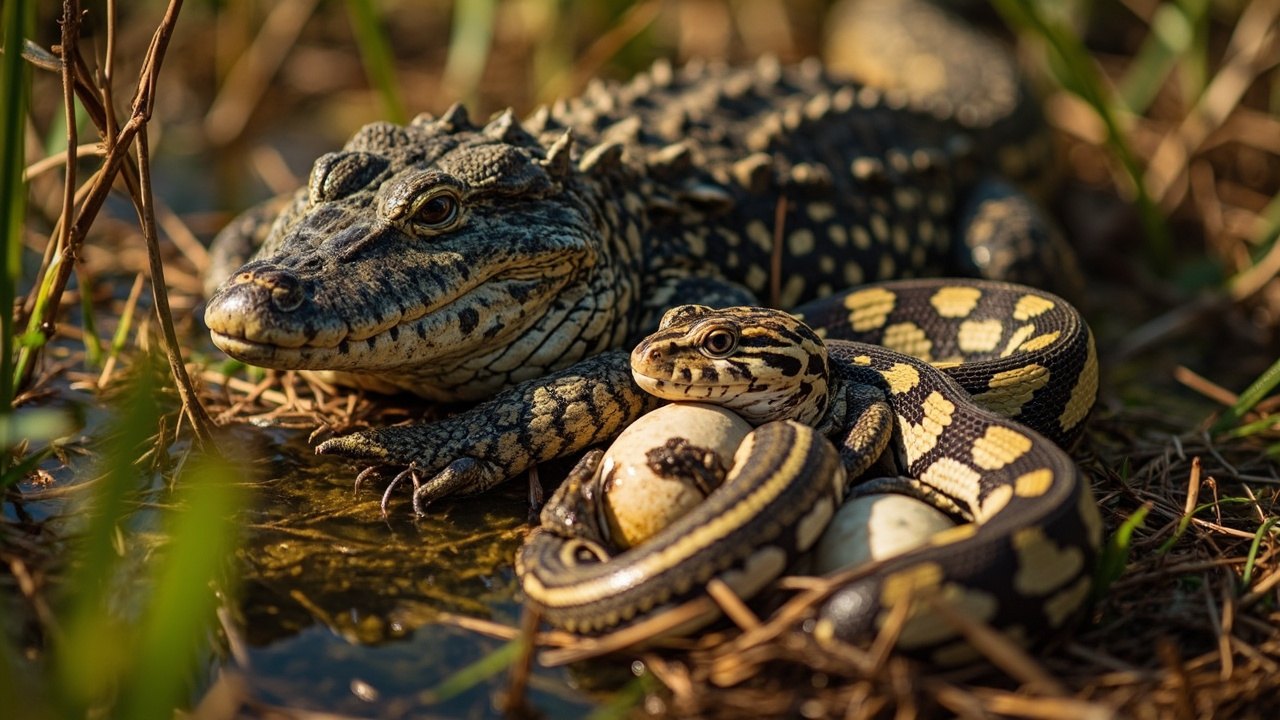
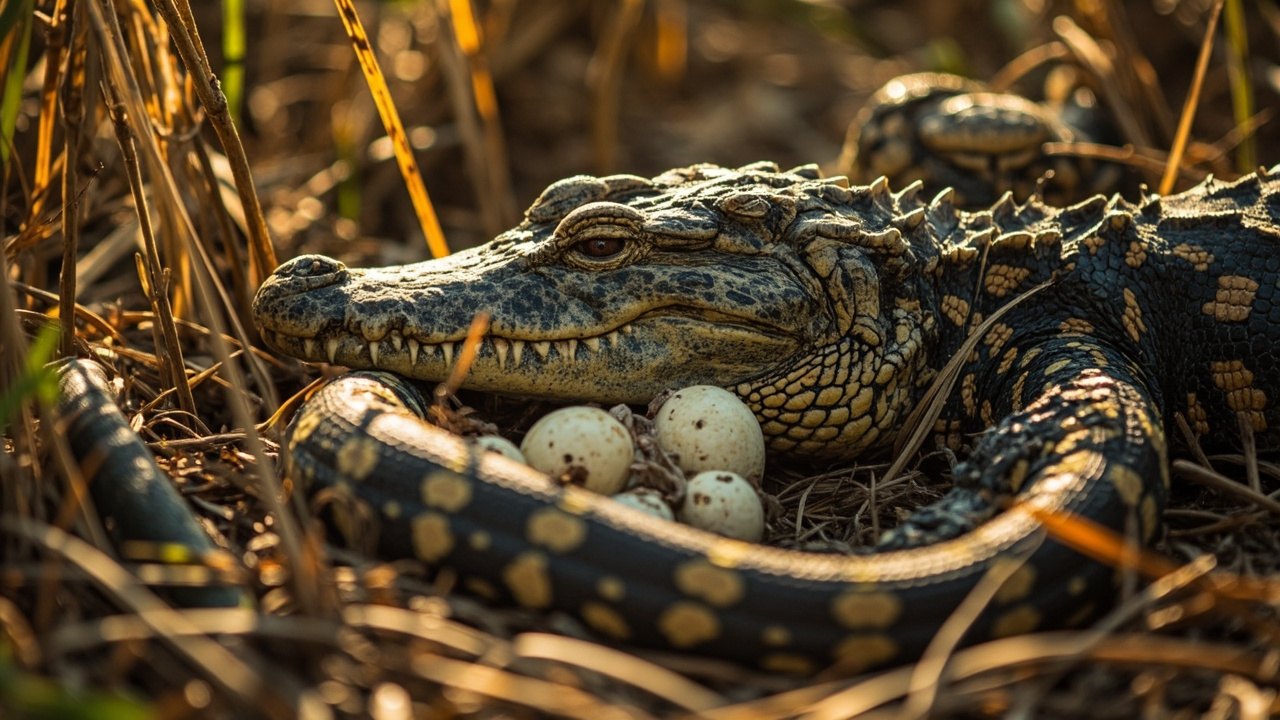
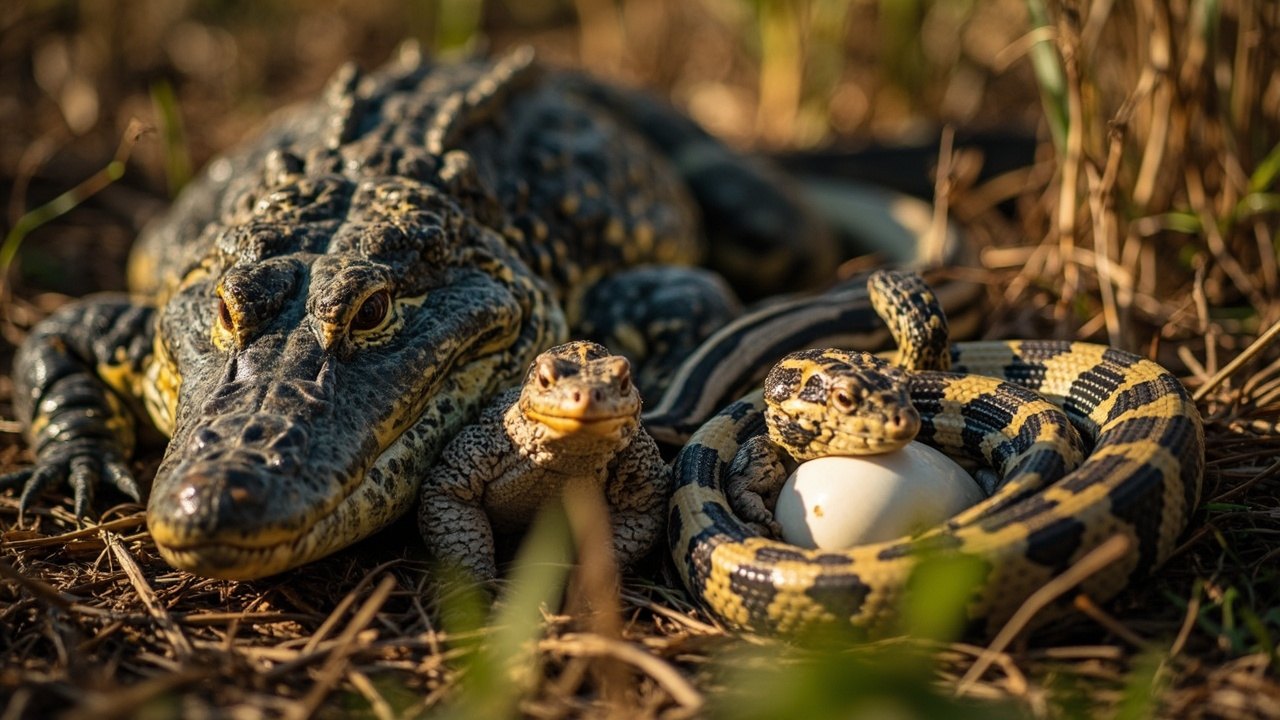
Reptile parenting isn't as cold-blooded as you might think. While some species do the bare minimum, others go above and beyond. Take crocodiles, for instance. They're not just mindless predators; they're careful parents who pick prime nesting spots and even help their babies reach water safely.
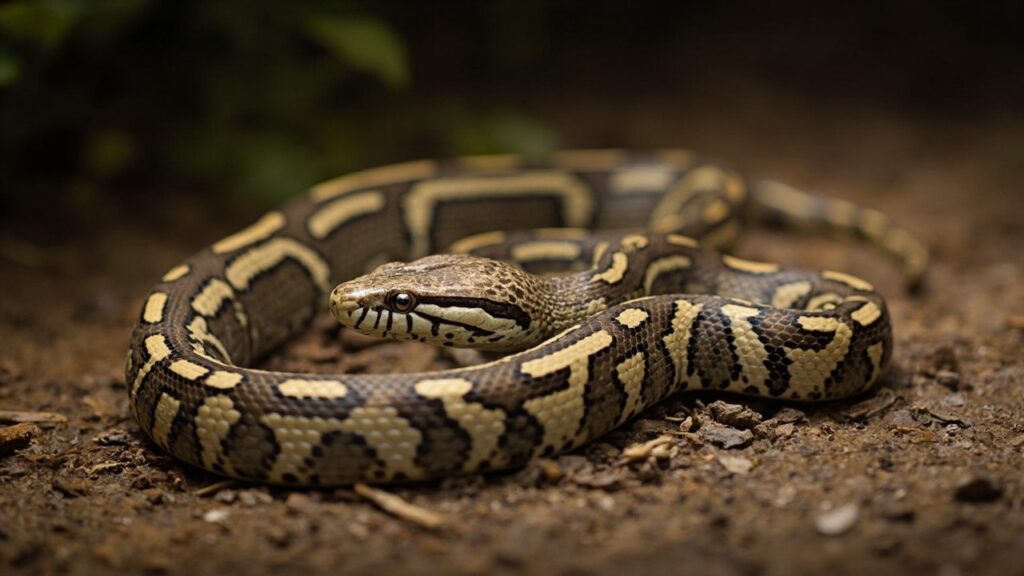
Skinks and pythons show a softer side too. These scaly moms stand guard over their eggs, and pythons even use muscle contractions to keep their clutches warm. It's not always mom's job, though. Some lizard species split parenting duties between both parents.
These varied approaches to childcare show how adaptable reptiles are. They've figured out what works best in their specific environments to give their young the best shot at survival.
If you're curious about how these ancient animals ensure their offspring make it in the world, there's plenty more to learn. Their parenting strategies are as diverse as they are fascinating, offering a glimpse into the complex lives of creatures often misunderstood.
Overview of Reptile Parental Care
Reptiles often get a bad rap as loners, but their parenting styles are actually quite varied and complex. From lizards to snakes, these scaly creatures have developed a range of ways to look after their young.
Some reptiles lay eggs and then split, leaving their offspring to fend for themselves. Others, though, stick around to protect their clutches. This guardianship is an early form of parental care that's evolved over time.
Then there's live birth, which has popped up independently in different reptile groups many times. It's a clever trick that lets these animals thrive in places where eggs might not make it. This adaptation shows how reptiles have found ways to succeed in tough spots.
Parental care in reptiles isn't one-size-fits-all. While many species do ditch their eggs or babies, others go all out, building fancy nests and standing guard like devoted sentries. These different approaches reflect how reptiles have adapted to avoid predators and make the most of what's available in their environment.
Crocodilian Parental Behaviors

Crocodiles stand out among reptiles for their impressive parenting skills. These ancient creatures don't just lay eggs and leave; they're dedicated guardians from the start.
When it's time to nest, crocodiles carefully choose their spots. They're looking for places that will keep their eggs safe and at just the right temperature. It's a bit like picking the perfect nursery.
Moms go the extra mile by building nests from plants and soil. As this material breaks down, it creates heat, helping the eggs develop. This clever trick shows how crocodiles have adapted over time to give their babies the best shot at life.
The care doesn't stop when the eggs hatch. Crocodile parents are always on alert, watching for anything that might threaten their young. They even help the little ones crack out of their shells when it's time.
In those first crucial days, parents often carry their babies to water in their mouths. It might look scary, but it's actually a gentle way to move the hatchlings to safety.
This level of commitment from crocodile parents highlights just how complex these animals are. They've figured out ways to ensure their species continues, showing off behaviors that have been fine-tuned over millions of years. To learn more about crocodiles and their behaviors, see our guide on alligator and crocodile differences.
Female and Biparental Care

Reptile parenting goes beyond crocodiles, with many species showing off impressive childcare skills. From lizards to snakes, these cold-blooded creatures have developed unique ways to look after their young.
For egg-layers, moms often take the lead. They'll keep a watchful eye on their nests, making sure nothing disturbs the eggs as they develop. But in some cases, both parents pitch in, giving their babies the best shot at survival.
Check out these cool examples of reptile parenting:
- Skinks: Some species have mom or both parents guarding eggs and hatchlings.
- Pythons: Females wrap around their eggs, using muscle twitches to control temperature.
- Geckos: Certain types stick close to their eggs, fending off hungry predators.
- Tuatara: Though they're usually loners, some females protect their nests until the babies hatch.
- Lizards: In a few species, mom and dad team up to feed and shield their little ones.
These behaviors show just how clever reptiles can be when it comes to keeping their offspring alive. It's a testament to the diverse ways animals adapt to ensure their species thrives.
Mechanisms of Parental Care

Reptile parenting styles are as varied as the creatures themselves, showing off a range of adaptations that help their young survive. These approaches have popped up independently many times, highlighting how well they work. Take egg-laying and live birth, for instance – two main ways reptiles reproduce. While most lay eggs, some give birth to live babies, which can be a big plus in places where eggs might not make it.
Crocodiles are standout parents in the reptile world. The moms build impressive nest mounds, keep a close eye on their eggs, and even help the little ones crack out of their shells when it's time. This hands-on approach gives their babies a better shot at survival.
Some lizards and snakes are just as devoted. Certain kinds wrap themselves around their eggs the whole time they're developing, keeping them warm and safe. On the flip side, regular iguanas dig deep holes using all four legs to lay their eggs, tucking them away from hungry predators and harsh weather. For more on how reptiles reproduce, read our guide to reptile egg laying.
For the rough green snake, things work a bit differently. Their eggs stay inside the mom without shells, getting food from yolk and swapping gases through special membranes and the walls of her reproductive tract. All these different parenting tricks show how reptiles have adapted to their surroundings to care for their young and keep their family lines going strong.
Future Research Directions

Looking ahead in reptile parental care research means digging into the different ways these animals reproduce and figuring out why certain strategies have stuck around. Reptiles show all sorts of parenting tricks, from keeping an eye on eggs to taking care of their young for a long time. Studying these approaches helps us see how important parenting is for different species to thrive.
Scientists might want to focus on a few key areas:
- Comparing how different reptiles look after their young to spot patterns and differences
- Looking at the genes behind parenting behaviors and how they get passed down
- Checking out how things like temperature or food affect how reptiles parent and how their babies grow
- Tracing the family tree of parenting habits to see how they changed over time
- Weighing the pros and cons of spending time on kids versus other ways to stay alive
This kind of research could tell us a lot about how parenting in reptiles came to be and why it matters for species survival. It's all about seeing how genes, surroundings, and behavior work together to shape how reptiles live their lives. There's still plenty to learn about these amazing creatures.
Frequently Asked Questions
How Do Reptiles Recognize Their Offspring?
Reptiles have a unique way of recognizing their young. Unlike mammals, they don't form emotional connections. Instead, they rely on their senses, particularly their keen sense of smell. This instinctual approach to offspring recognition is quite different from what we see in other animal groups. It's remarkable how these ancient creatures use chemical signals to identify their babies, a method that's been refined over millions of years of evolution. This biological strategy showcases the diverse ways animals have adapted to ensure the survival of their species.
Do Reptile Parents Teach Their Young Survival Skills?
Reptiles have always caught my eye, and it's quite remarkable how most don't pass on survival tricks to their offspring. There are a few exceptions, though. Take crocodiles, for instance. These prehistoric-looking creatures actually show a bit of parenting. They keep watch over their nests and even help guide their newly hatched babies to the water. It's not exactly a full-blown parenting class, but it's something.
How Does Climate Change Affect Reptile Parental Care?
Climate change is throwing a curveball at reptile parenting. As the mercury rises, it's messing with the basics of reptile reproduction. We're seeing shifts in the balance between male and female hatchlings, changes in when eggs hatch, and big shake-ups in where these critters call home. All this means reptile parents are having to think on their feet to keep their little ones safe and set them up for success in a world that's changing faster than they can adapt.
Are There Any Reptiles That Adopt Orphaned Young?
From what I know, reptiles don't typically adopt orphaned young. They're usually more self-sufficient when it comes to survival. That said, some reptile species show surprising parental care, which challenges what we used to think about their behavior. For example, certain crocodile species guard their nests and even carry their newly hatched babies to water in their mouths. Some python species coil around their eggs to keep them warm until they hatch. These behaviors aren't quite adoption, but they do show that reptiles can be more nurturing than we once thought. It's an area where scientists are still making new discoveries, so our understanding of reptile behavior continues to grow.
What Role Do Hormones Play in Reptile Parental Behaviors?
Hormones quietly shape how reptiles care for their young. These chemical messengers influence behaviors ranging from protecting nests to tending offspring, playing a key role in species survival. It's a complex interplay of biology and instinct, with hormones acting as silent directors in the background.