The Frill as a Display
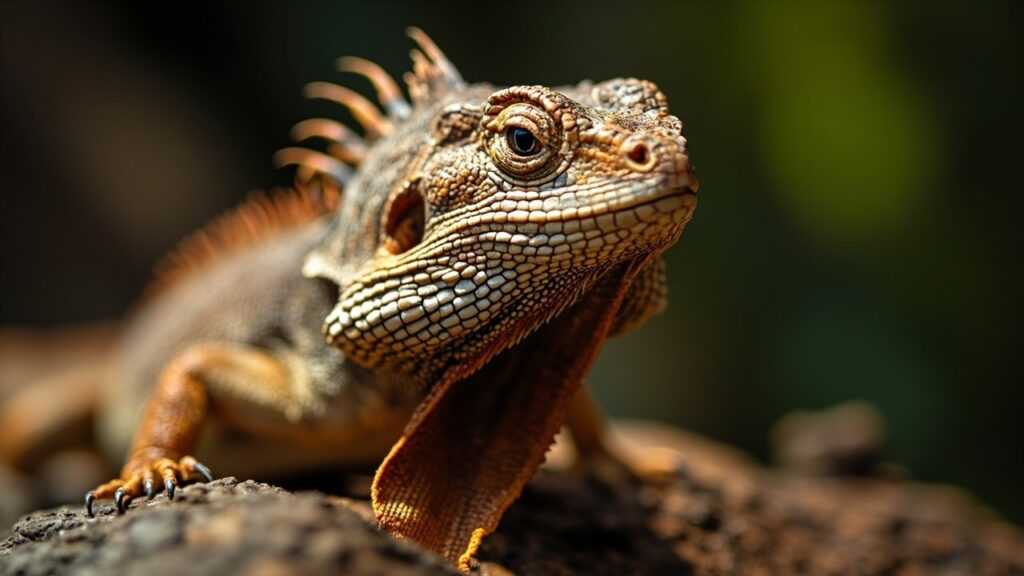
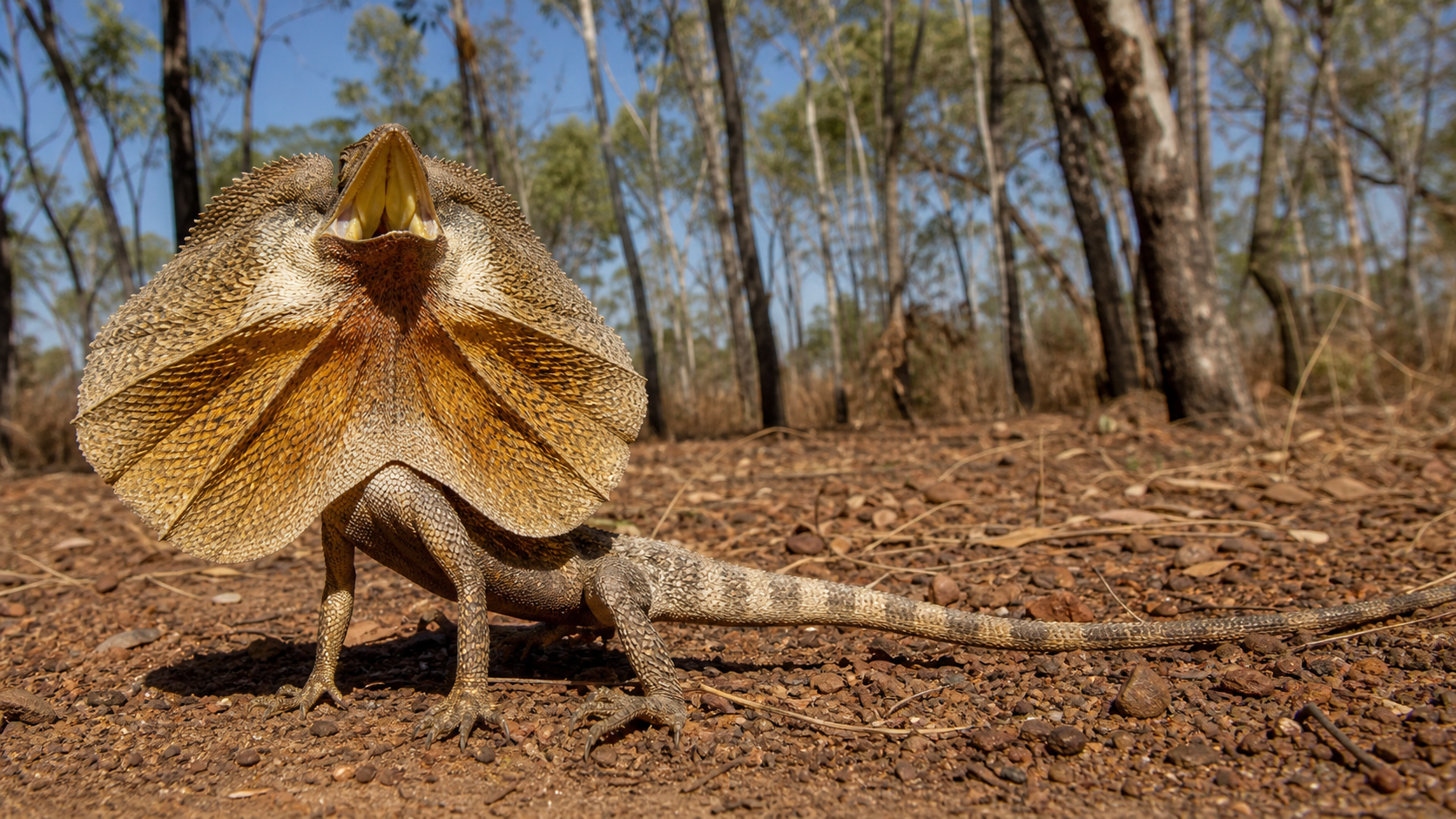
The frilled lizard, Chlamydosaurus kingii, is known for opening its mouth, hissing, and spreading the broad skin frill around its neck when alarmed. The sudden display can make the animal appear larger to a potential threat and is also part of its social signalling.
Life in Woodland and Forest
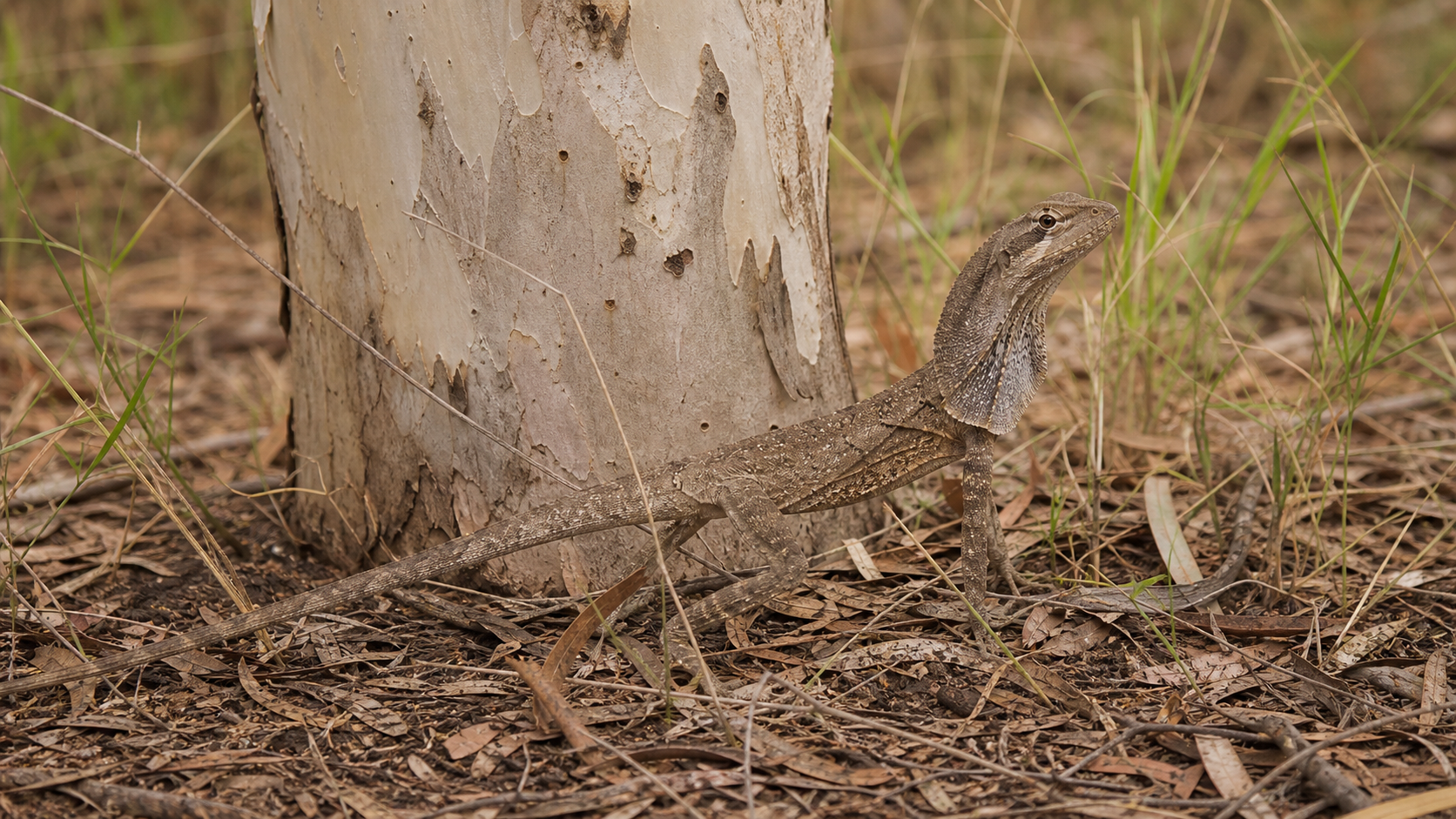
Frilled lizards occur in northern Australia and southern New Guinea, using trees and woody cover in a range of warm forest and woodland habitats. They feed mainly on insects and other invertebrates, descending to forage and returning to cover when conditions or danger demand it.
Fast Decisions in a Variable Landscape
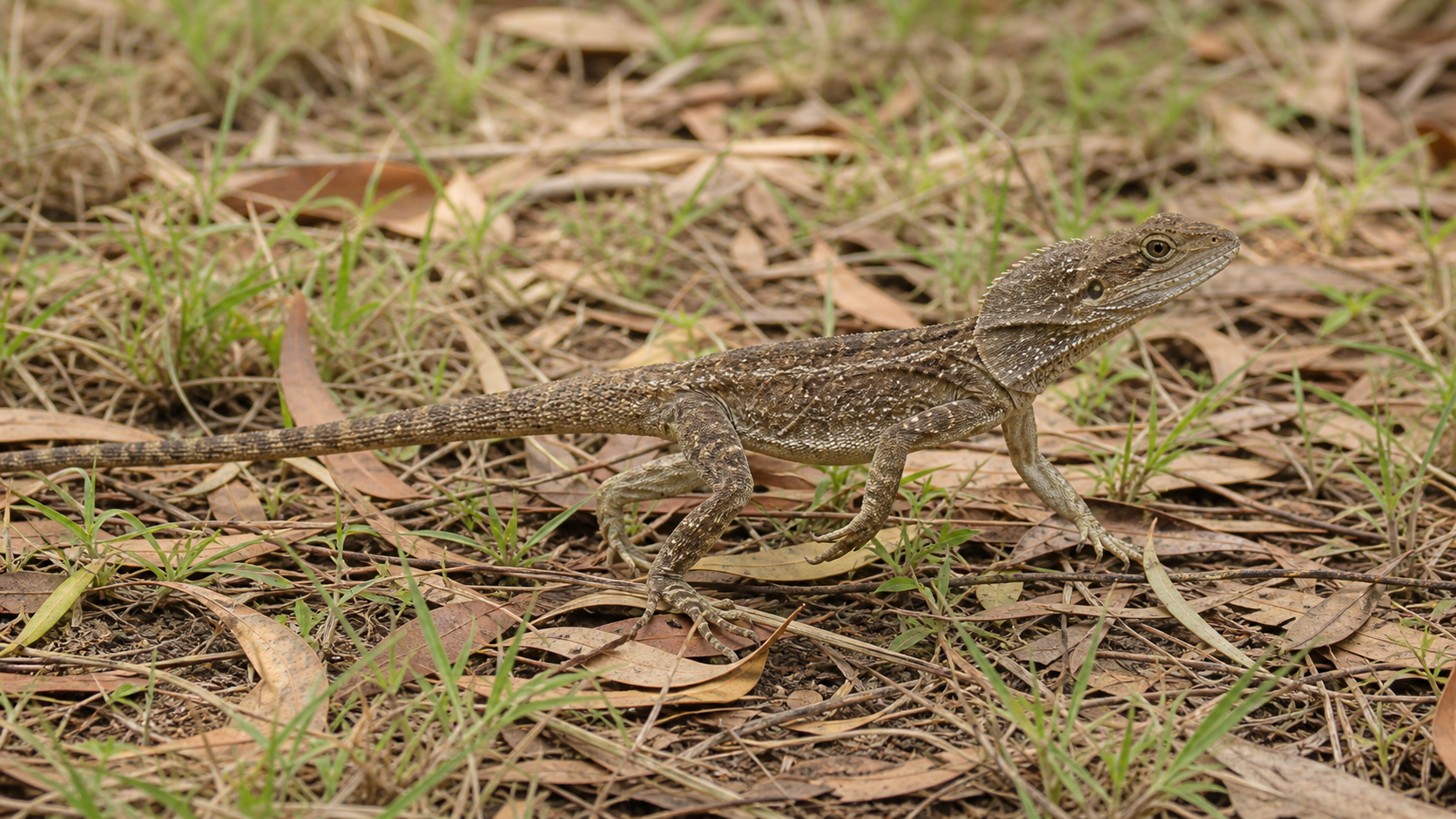
When a display does not end an encounter, a frilled lizard can run quickly on its hind legs toward shelter. Its survival depends on accessible trees, ground cover, prey, and suitable nesting conditions. Local habitat change and introduced predators should be discussed with evidence from the population or region concerned.
A frill is part of a wider display
When alarmed, a frilled lizard can open its mouth, raise its body, hiss, and spread the skin around its neck. The display makes the animal look larger and may give it time to escape, but it is not a guarantee that a predator will leave. Frills are also used in communication between lizards. Behaviour must be read in context because a similar posture can occur in response to a rival, a mate, a person, or a nearby threat.
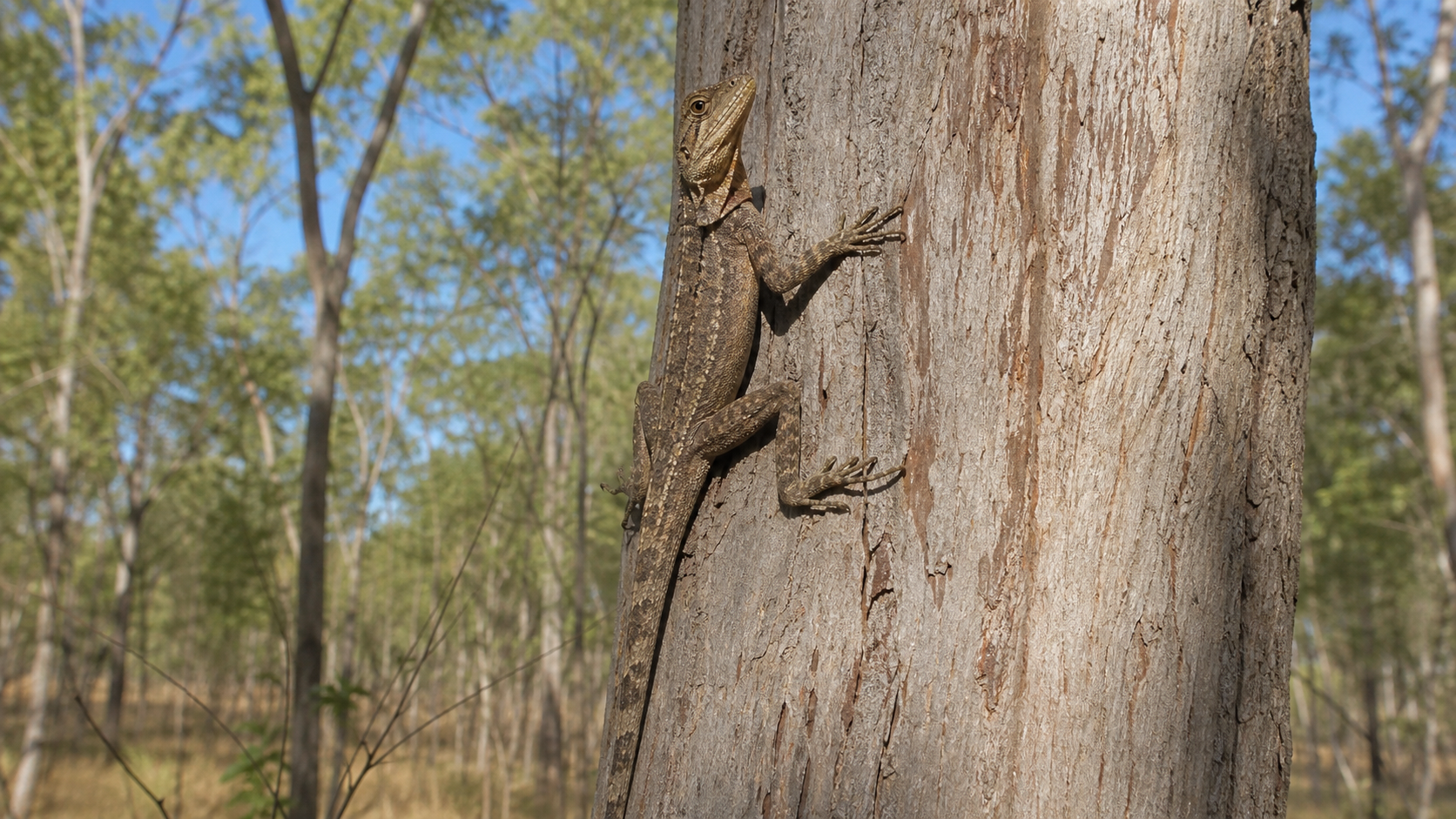
Frilled lizards are closely associated with trunks, branches, and woody cover in northern Australia and southern New Guinea. They can forage on the ground, then move rapidly toward a tree or other shelter if disturbed. Their ability to run on the hind legs is an effective escape behaviour, not evidence that the species lives only on open ground. Insect availability, cover, temperature, and seasonal conditions all influence where a lizard can be active.
Leave displays undisturbed
A person who approaches closely may cause a frilled lizard to spend energy on a defensive response instead of feeding or resting. Slow observation from a distance is better for the animal and produces more natural behaviour. Habitat discussions should consider the trees, understory, prey, nesting ground, and connected cover used in a local population. Broad statements about “prehistoric” appearance are less informative than records that identify the habitat, season, and behaviour actually seen.
Sources and review notes
Reviewed 23 August 2026. Reptile biology is wonderfully variable. We have avoided turning one species, photograph or dramatic observation into a rule for an entire group, and we have used cautious wording where evidence or local conditions differ.
Reference starting points: The Reptile Database, The IUCN Red List of Threatened Species, and PubMed-indexed research. Conservation status, taxonomy and local laws can change, so check the linked databases and the relevant local authority for current information.
Spotted something we should revisit? Send Reptile Explorer a correction—thoughtful reader feedback is always welcome.