A Slow-Moving Desert Specialist
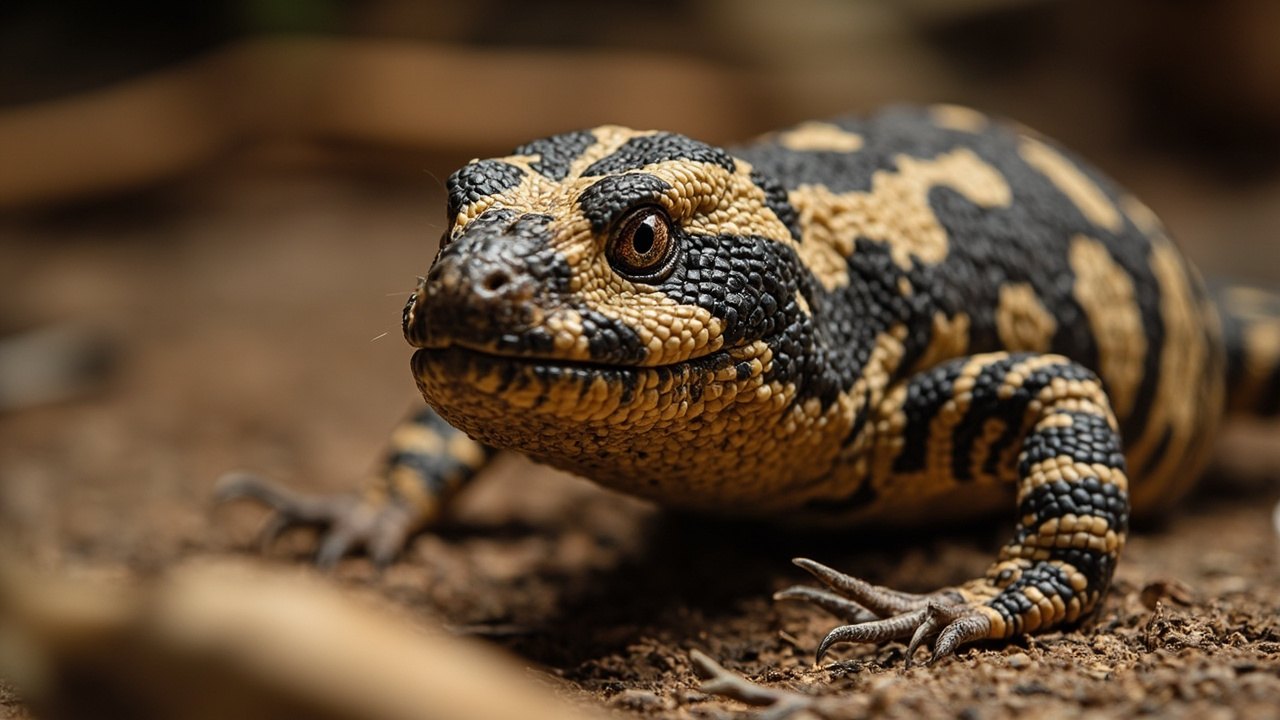
The Gila monster, Heloderma suspectum, is a large, heavily built lizard of the southwestern United States and northwestern Mexico. Its beaded skin, bold colour pattern, and ability to use shelter in rocky and scrubby landscapes make it one of North America’s most recognizable reptiles.

Venom in Context
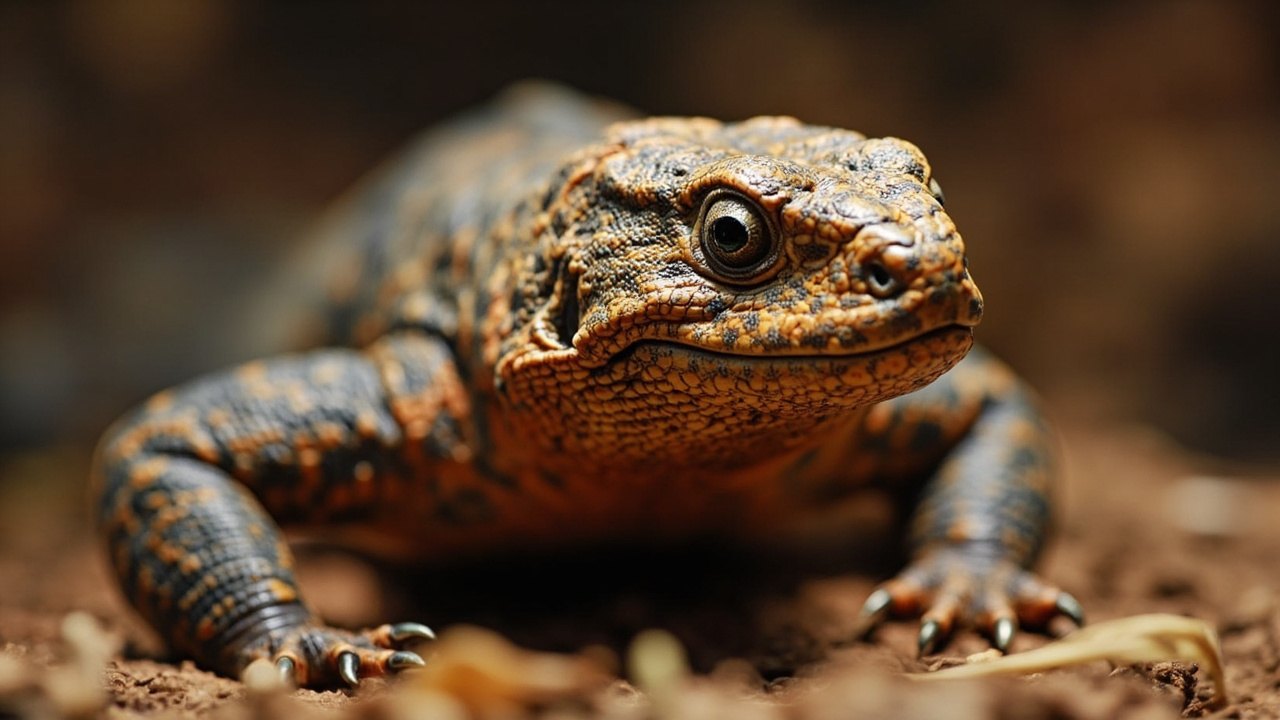
Gila monsters have venom glands in the lower jaw. Venom mixed with saliva can enter a bite wound along grooved teeth, especially if the lizard holds on. The animals should never be handled or disturbed; a suspected bite requires urgent professional medical assessment.
Habitat Protection Comes First
Gila monsters face pressure where desert habitat is fragmented or altered. Laws governing possession and collection vary across their range, but the safest approach is always to leave a wild animal where it is, give it space, and protect the habitat it depends on.
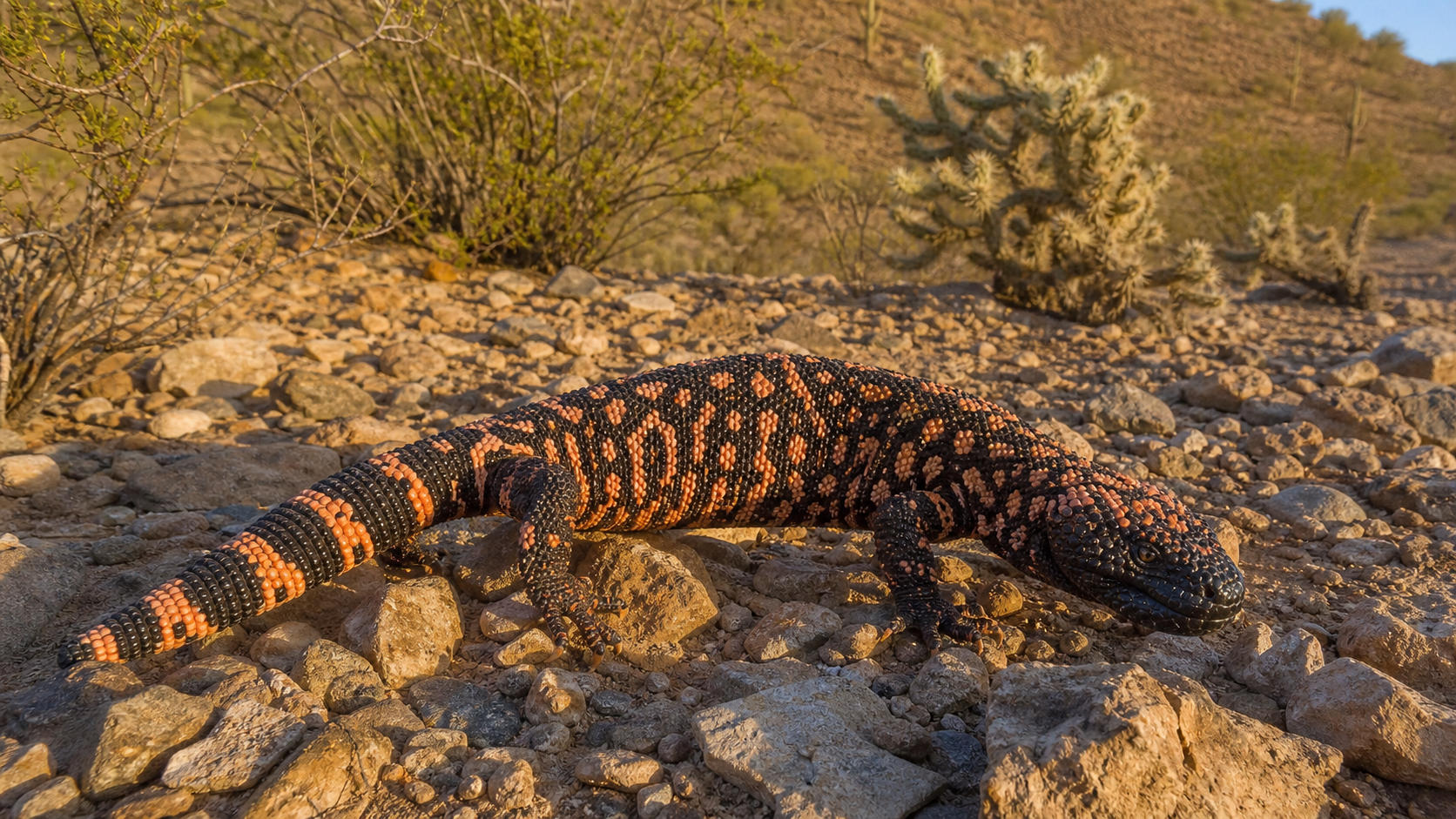
Most activity happens close to shelter
Gila monsters spend much of their time in burrows, rock crevices, or other sheltered places. They emerge when local temperatures and seasonal conditions allow activity, then may return to cover for long periods. This quiet lifestyle means an animal can be present in suitable habitat without being seen. A sighting should not be used to infer that a population is common, nor should a missing sighting be treated as proof that the species is absent.
Food can include eggs, nestlings, small mammals, lizards, and other available prey. Their broad heads and strong jaws are useful for feeding, but a wild Gila monster should never be approached to test or photograph those traits. Its warning colours are often conspicuous, yet colour alone is not a safety signal. Give every individual a clear route away from people and pets, and view it through a camera or binoculars rather than from arm’s length.
Accurate records are more useful than handling
For conservation, a record with a date, general location, habitat description, and photograph taken at a respectful distance can be valuable when shared through an appropriate local programme. Exact locations should not be broadcast for a species that can be targeted by collectors. Road crossings are another risk in fragmented desert landscapes, but untrained people should not attempt to pick up or relocate a venomous lizard. Wildlife agencies or qualified responders can advise on a safe response. Habitat protection, lawful observation, and leaving the animal undisturbed are the strongest contributions most visitors can make.
Sources and review notes
Reviewed 23 August 2026. Reptile biology is wonderfully variable. We have avoided turning one species, photograph or dramatic observation into a rule for an entire group, and we have used cautious wording where evidence or local conditions differ.
Reference starting points: The Reptile Database, The IUCN Red List of Threatened Species, and PubMed-indexed research. Conservation status, taxonomy and local laws can change, so check the linked databases and the relevant local authority for current information.
Spotted something we should revisit? Send Reptile Explorer a correction—thoughtful reader feedback is always welcome.