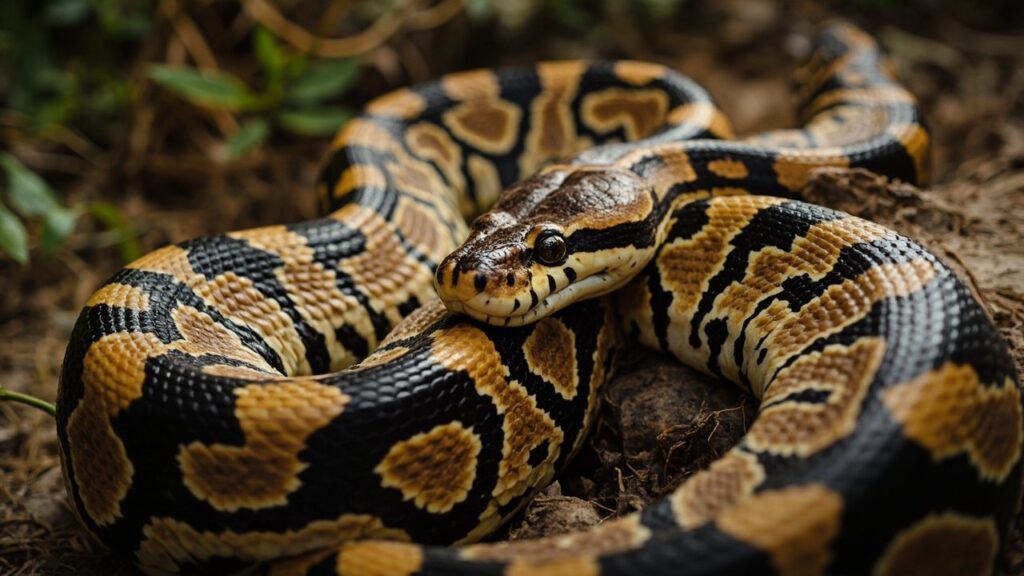
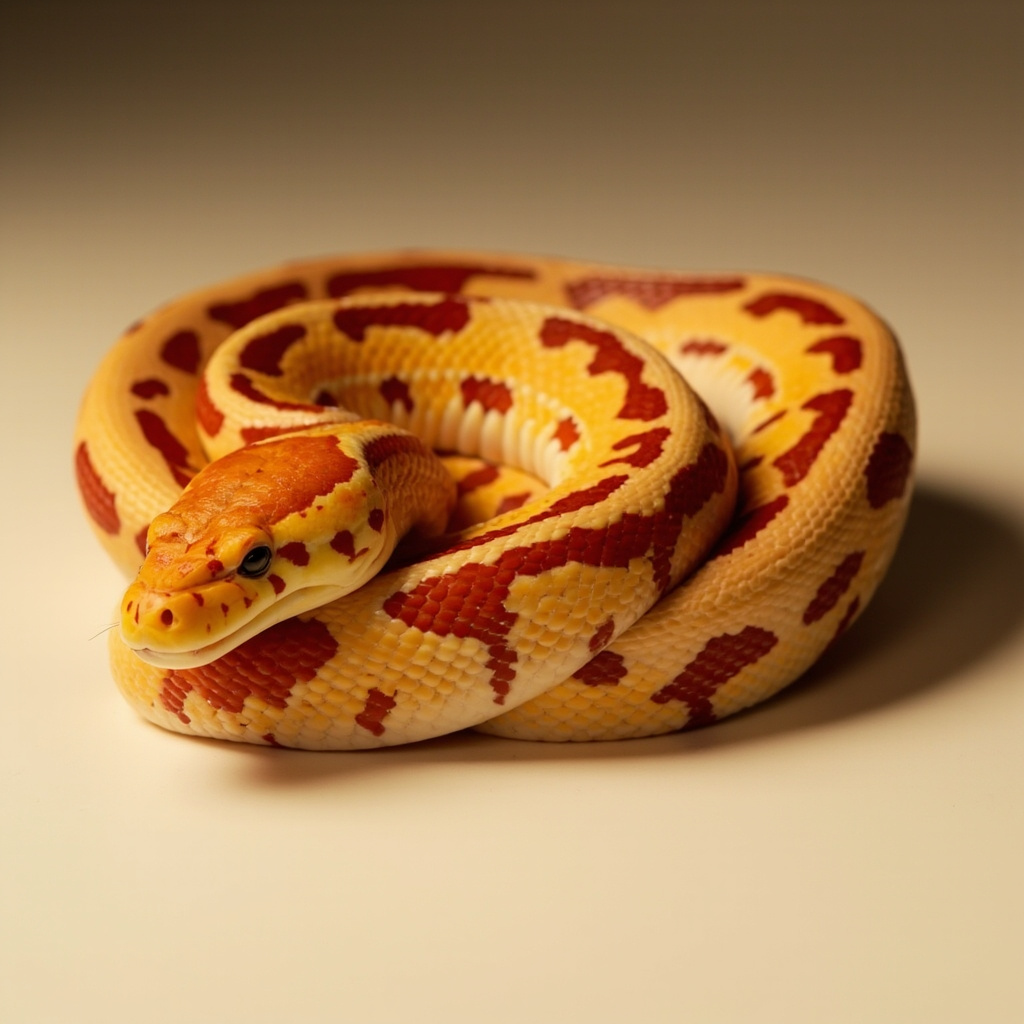
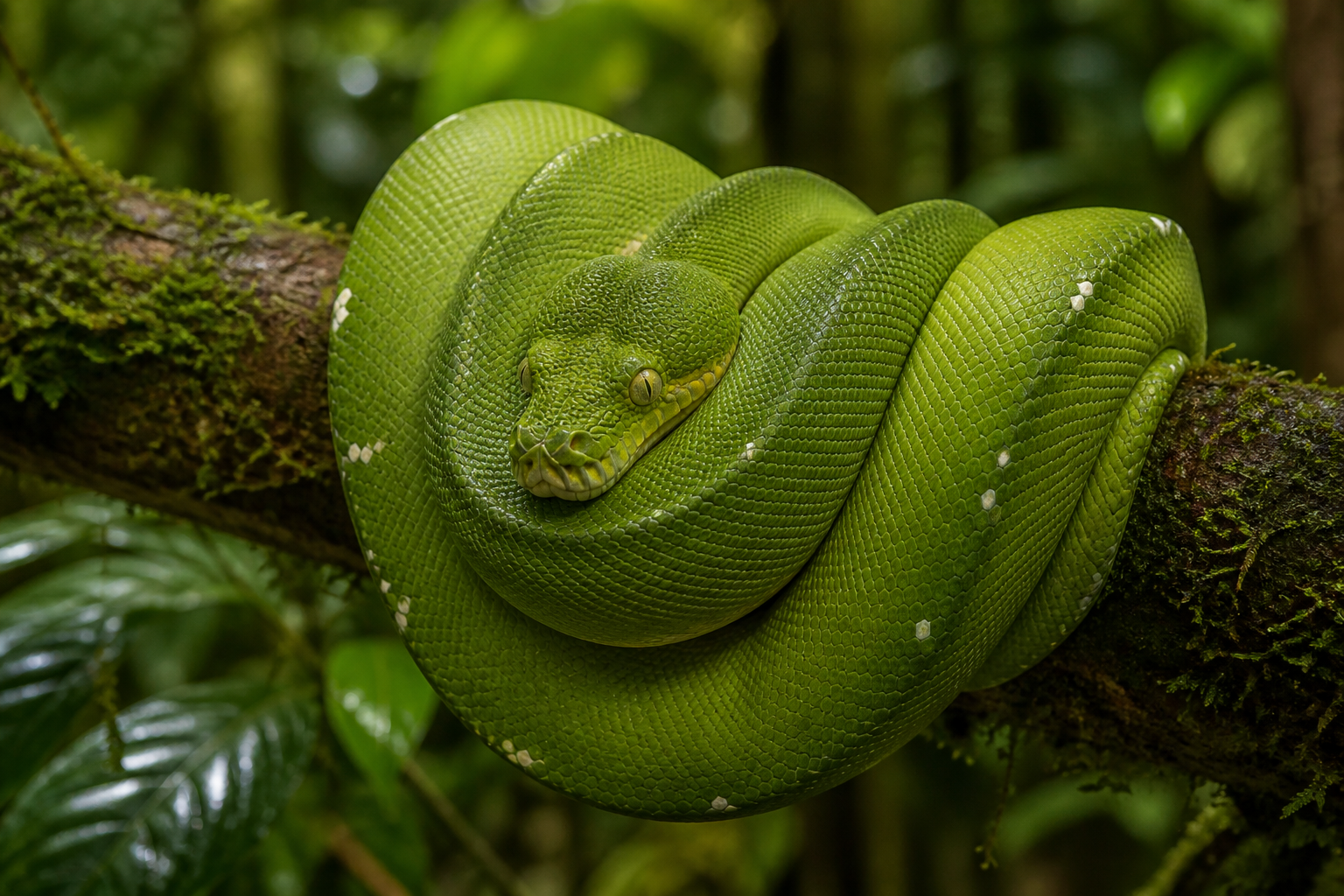
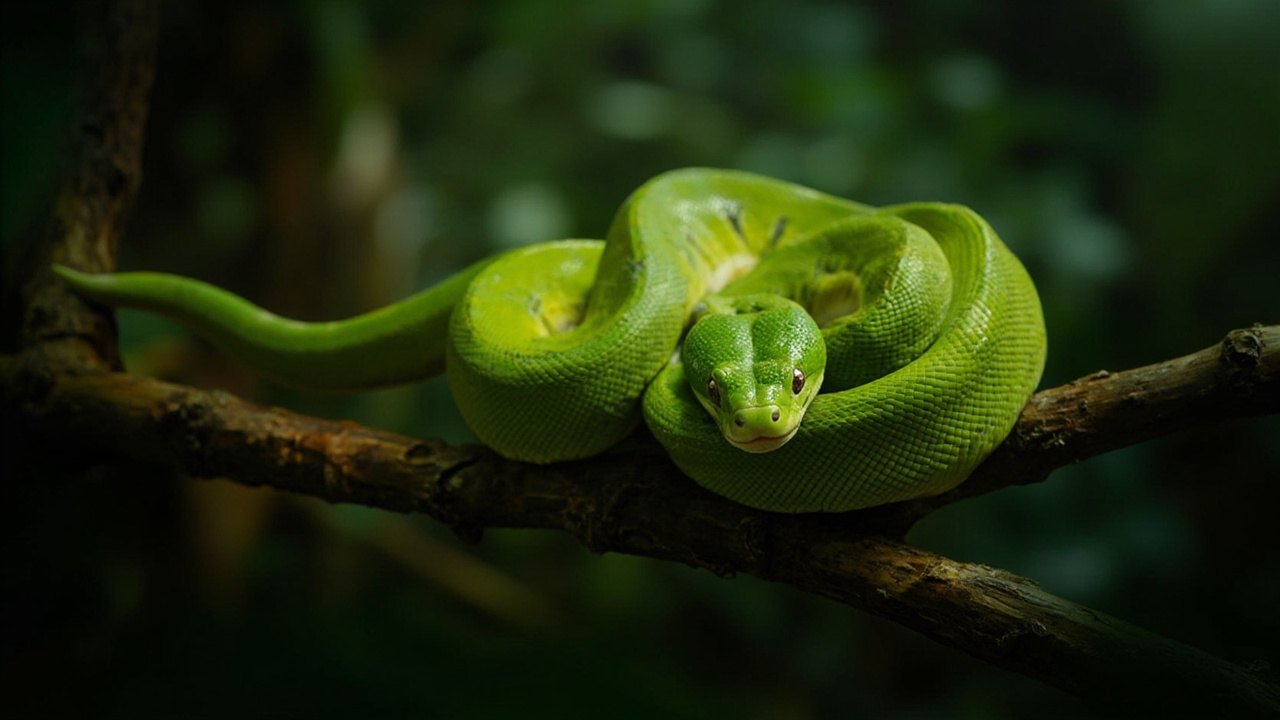
Green tree pythons (Morelia viridis) are arboreal snakes from New Guinea and nearby islands. Adults are commonly green, but juveniles are often red or yellow before changing color as they mature. A green adult should not be treated as the only normal appearance.
Ambush and constriction
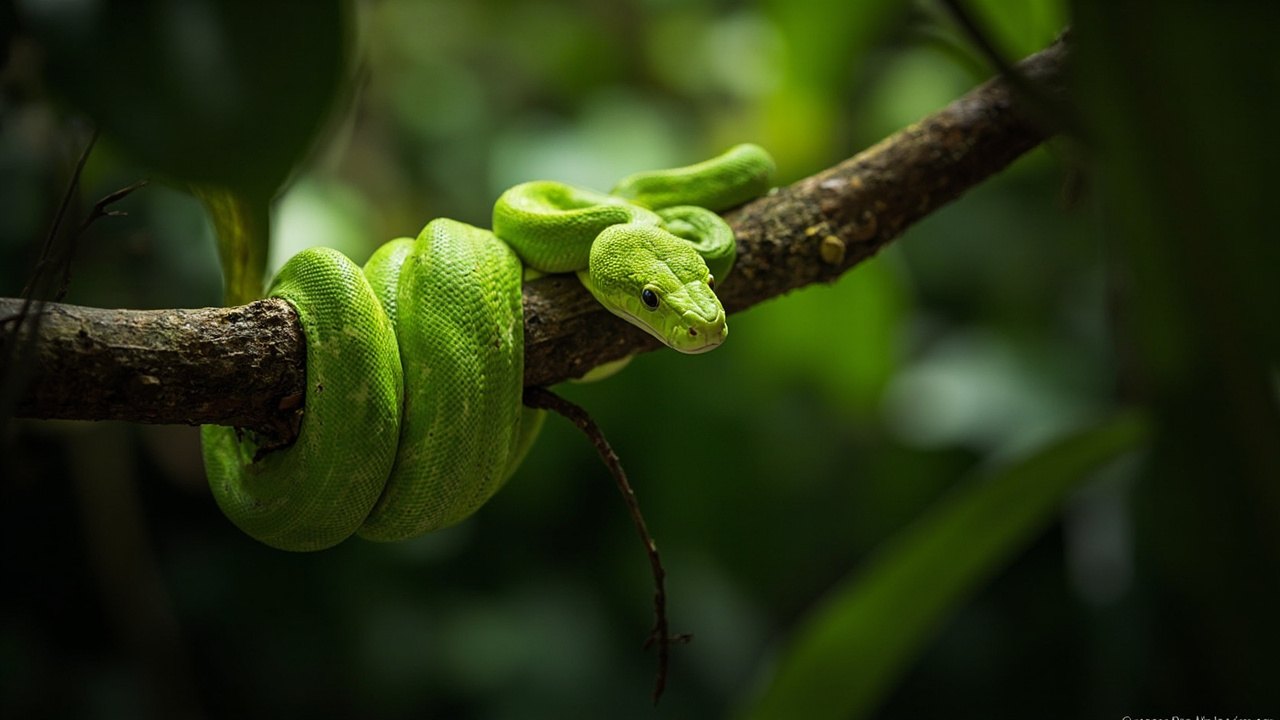
These pythons wait on branches for suitable prey and use constriction after a strike. Constriction rapidly impairs circulation; it is not simply a slow process of suffocation. Prey is swallowed whole, so claims about a fixed body-width limit oversimplify how feeding works.
Diet changes with age and opportunity
Young snakes may take small lizards and invertebrates, while older snakes take larger vertebrate prey. Exact predator lists and broad “top predator” claims depend on location and evidence, so they should not be repeated as universal facts.
Specialized captive care
Green tree pythons are not a casual pet. Legal, captive-bred sourcing, secure arboreal housing, correct temperatures and humidity, and reptile-veterinary support are essential. Do not handle wild snakes or use feeding demonstrations for entertainment.
Forest conservation
Protecting forest structure and avoiding illegal collection help the species more than close contact. Watch from a distance and let a snake remain in the branch or cover it chose.
Colour Changes Are Part of Development
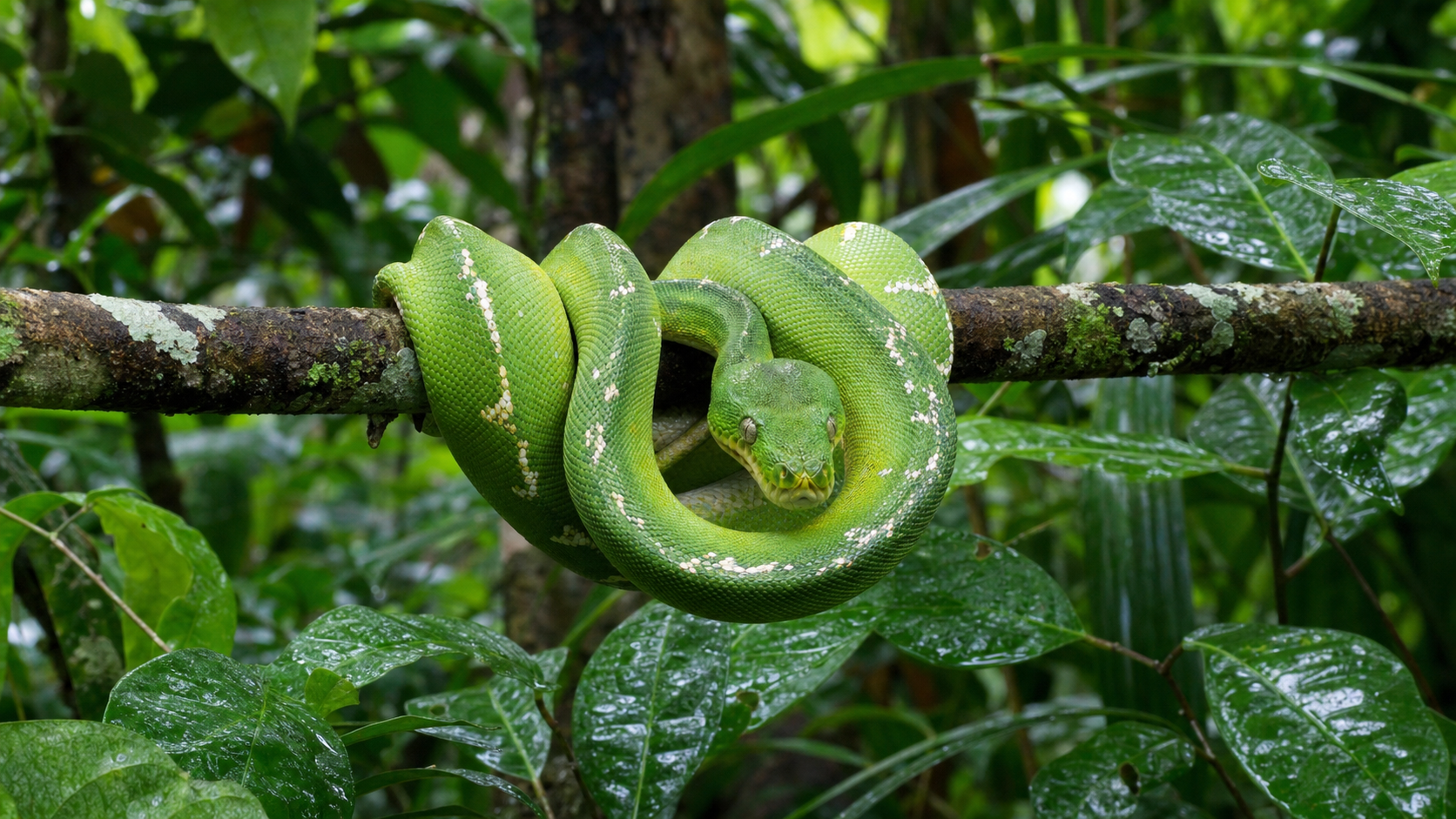
Young green tree pythons can be red or yellow before changing to the familiar adult green. This change is normal variation within the species, not evidence that a young snake belongs to a separate type. A photograph should include the species and life stage where known, because colour alone can mislead an identification.
Arboreal posture also has a purpose. A snake resting on a branch may be choosing cover, a useful hunting position or a temperature that suits its activity. Moving it to pose for an image removes the context that explains the behaviour.
Ambush Depends on Forest Structure
Branches, vegetation and connected canopy allow an arboreal snake to move, rest and hunt. Habitat loss can remove these features even when some trees remain standing. Forest conservation should consider the structure of the habitat, not only the total area of green cover.
Captive Care Is Not a Shortcut to Observation
Green tree pythons require secure, species-appropriate housing and experienced care. They should be lawfully sourced from documented captive breeding. Wild snakes should never be collected or handled for a feeding demonstration.
Sources and review notes
Reviewed 23 August 2026. Reptile biology is wonderfully variable. We have avoided turning one species, photograph or dramatic observation into a rule for an entire group, and we have used cautious wording where evidence or local conditions differ.
Reference starting points: The Reptile Database, The IUCN Red List of Threatened Species, and PubMed-indexed research. Conservation status, taxonomy and local laws can change, so check the linked databases and the relevant local authority for current information.
Spotted something we should revisit? Send Reptile Explorer a correction—thoughtful reader feedback is always welcome.