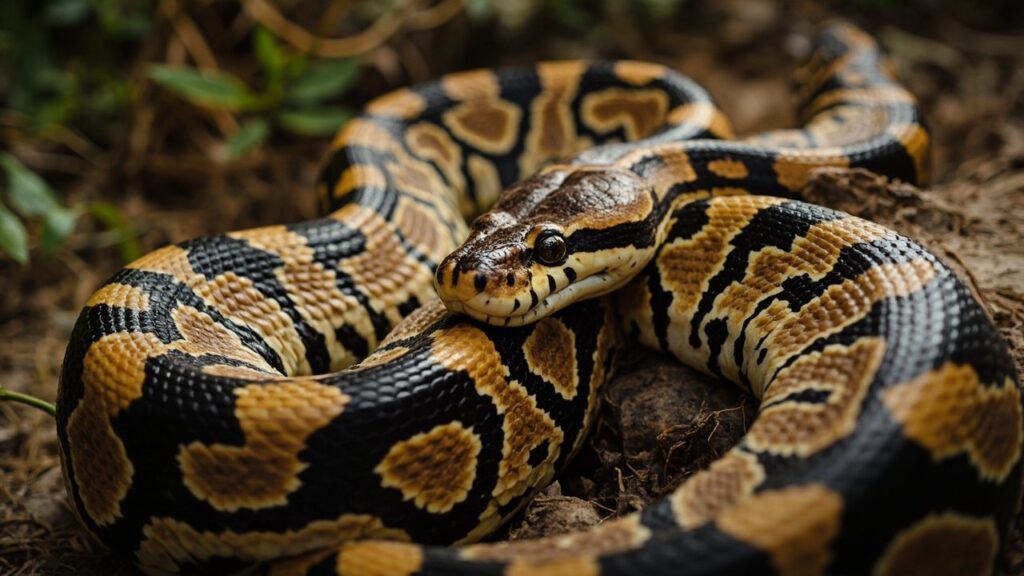
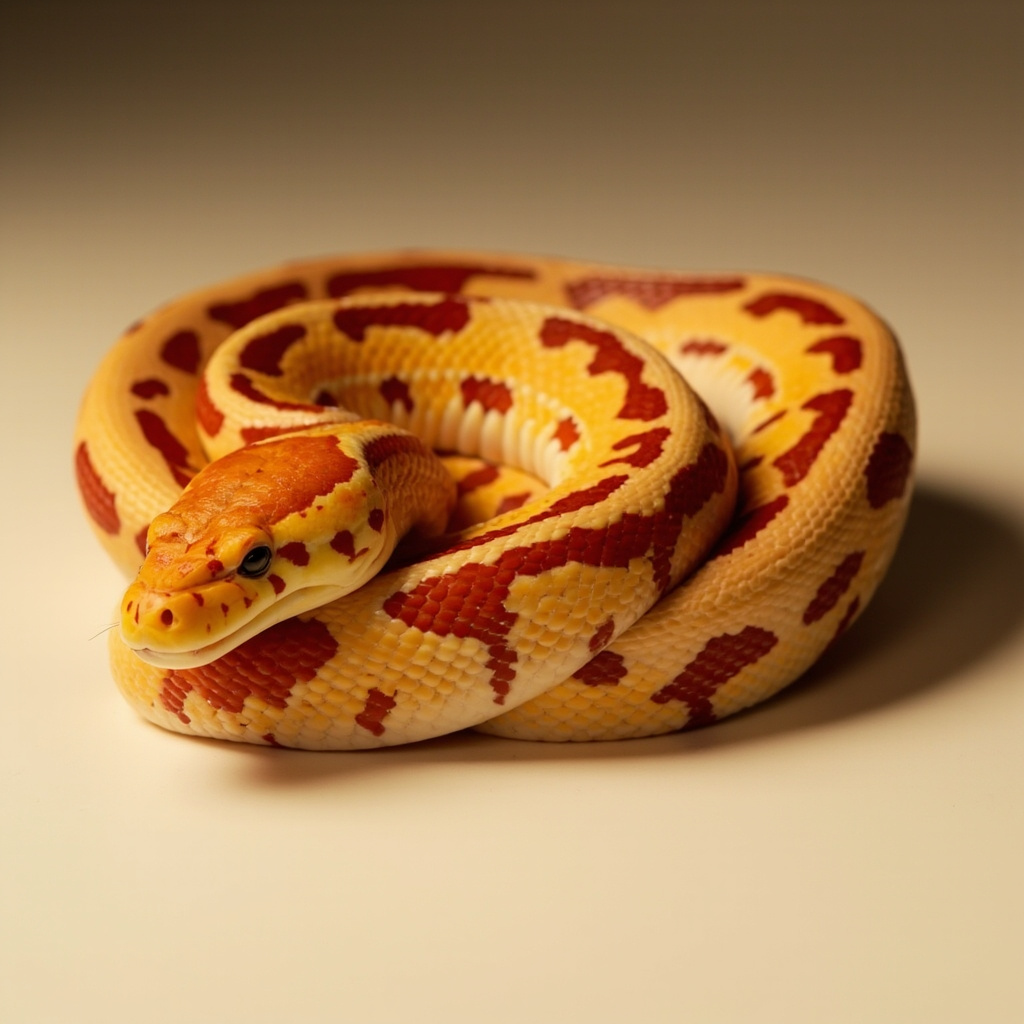
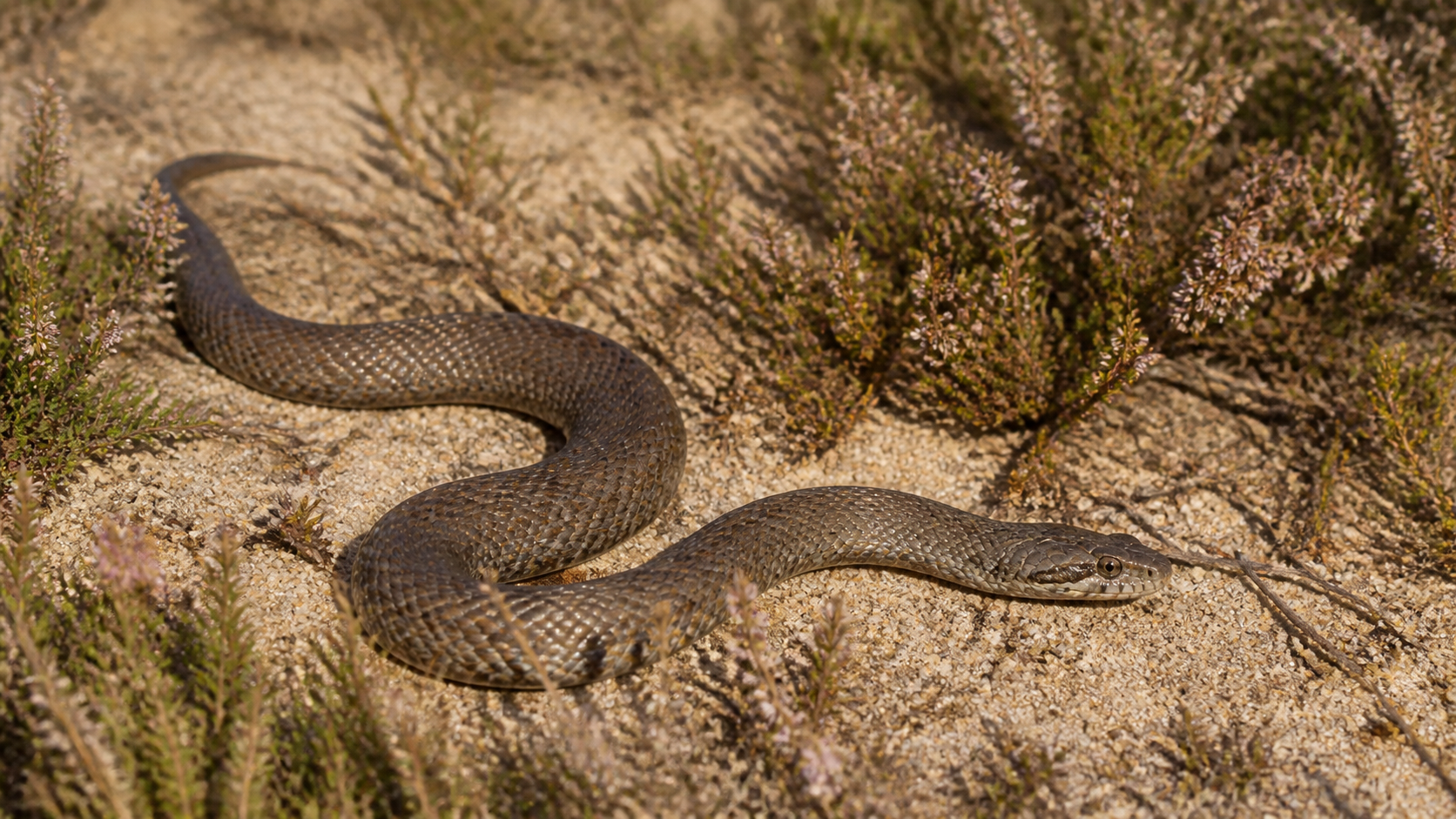
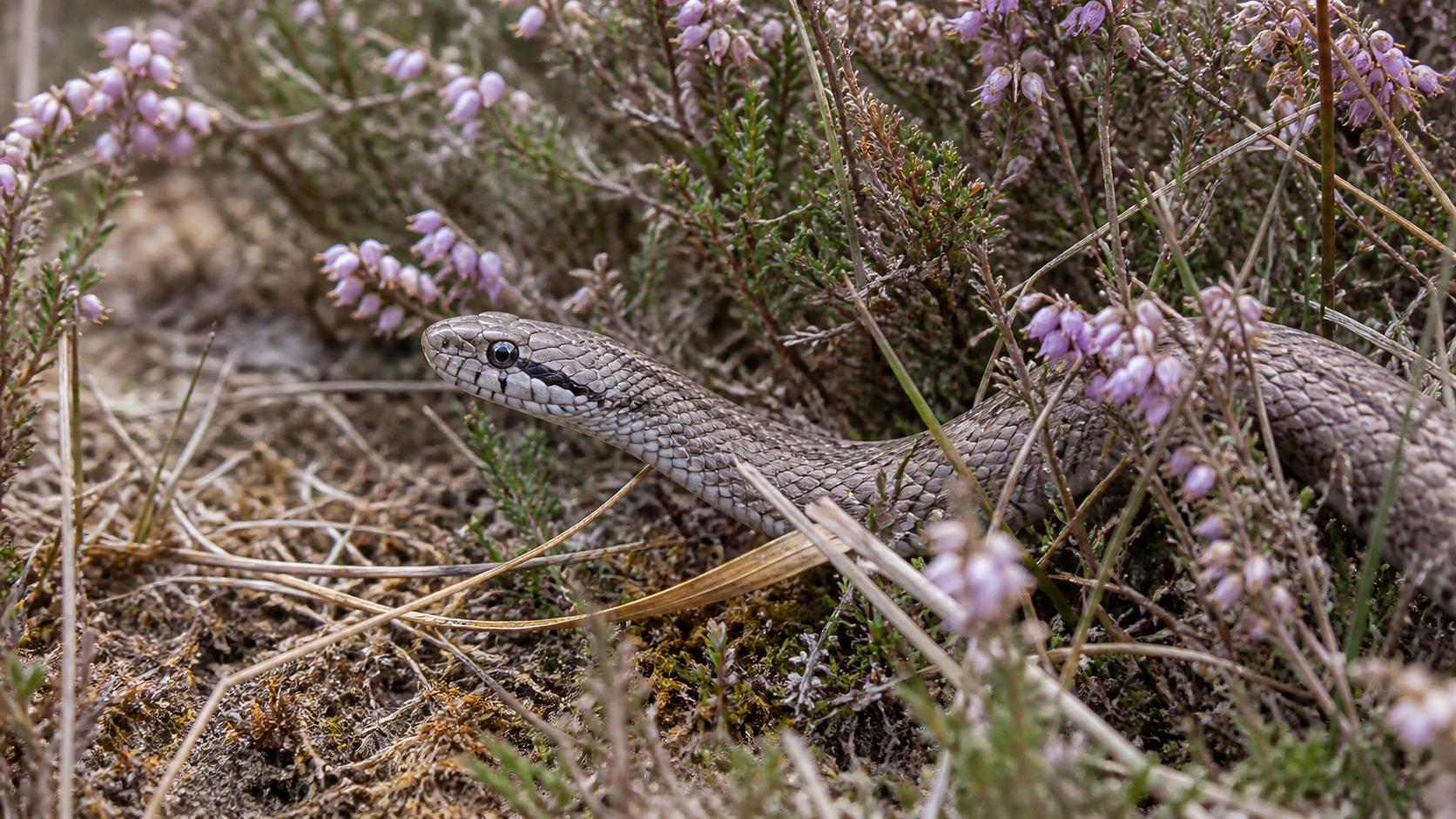
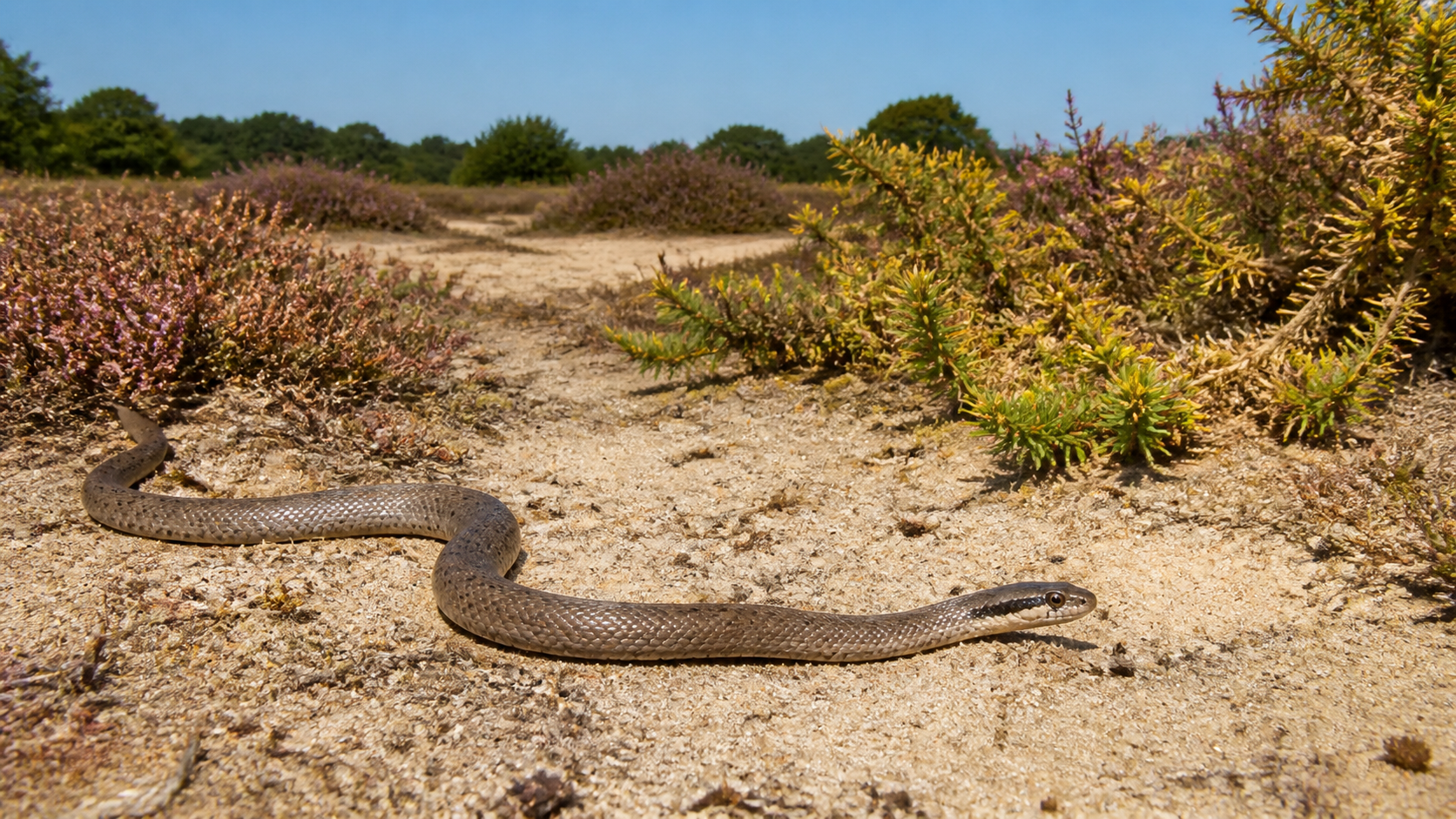
The smooth snake (Coronella austriaca) is nonvenomous, fully protected and Britain’s rarest reptile. In Britain it is largely associated with southern lowland heath, where cover, warm open patches and suitable prey occur together.
A discreet heathland predator
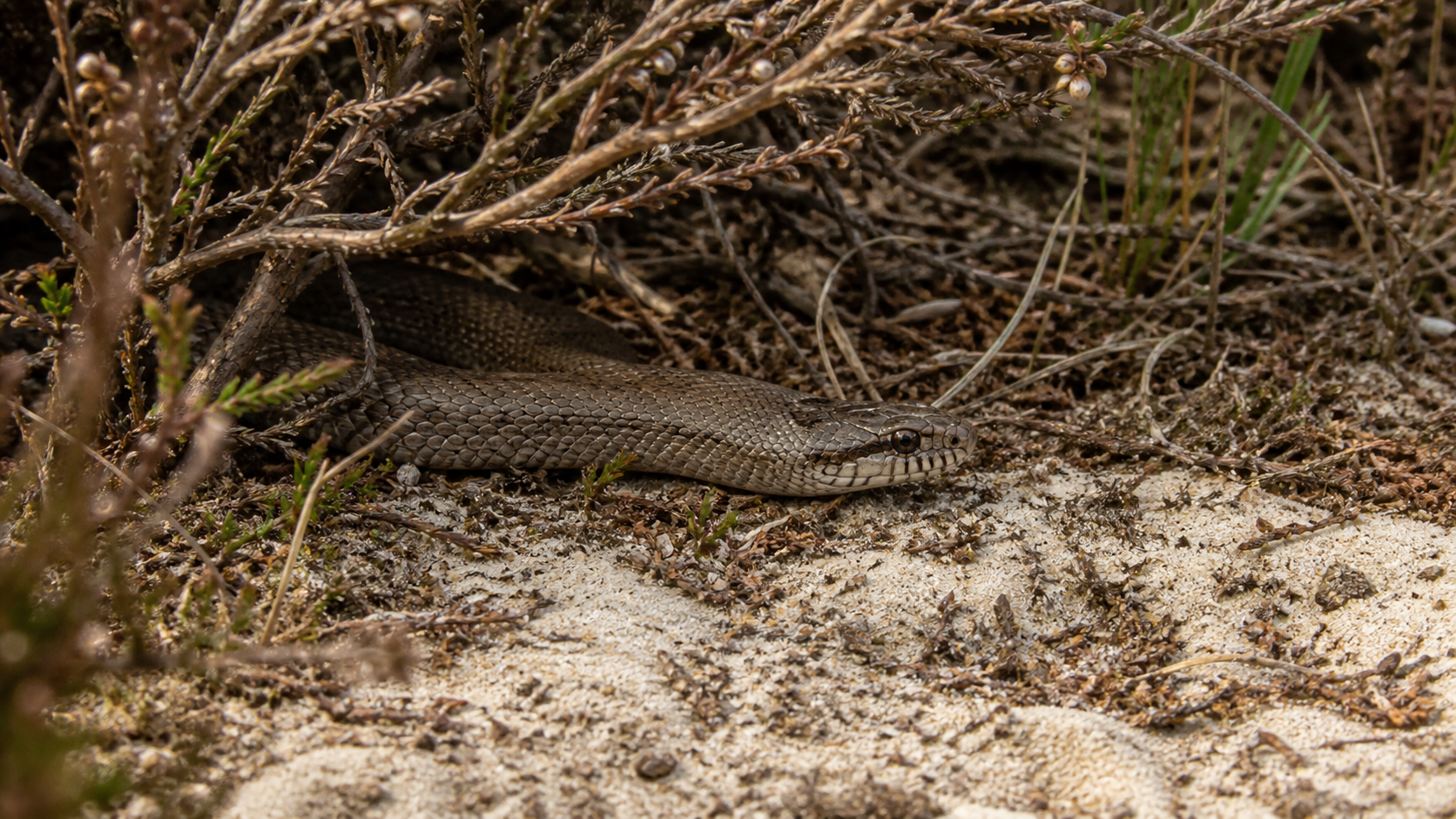
Smooth snakes feed mainly on small reptiles and small mammals. Their muted coloring and quiet behavior make them hard to detect, so an absence of sightings does not prove an absence of snakes. They retain eggs internally and give birth to live young, but this should not be mistaken for parental care after birth.
Recovery needs careful monitoring
Licensed translocation, reintroduction and habitat management have helped restore some populations in southern England, including Devon. Repeated, comparable monitoring is needed to assess population change; a few additional records alone do not prove growth. Protected-species surveys and handling require the appropriate permissions.
Helping without disturbance
Protect heathland, keep dogs under control where required and do not turn over refuge material looking for reptiles. If you see a smooth snake, leave it undisturbed and report it only through an appropriate local recording scheme.
Do not collect wild snakes
Wild collection harms protected populations and can be illegal. The best way to appreciate this species is through responsible observation and support for habitat conservation, not close handling or captivity.
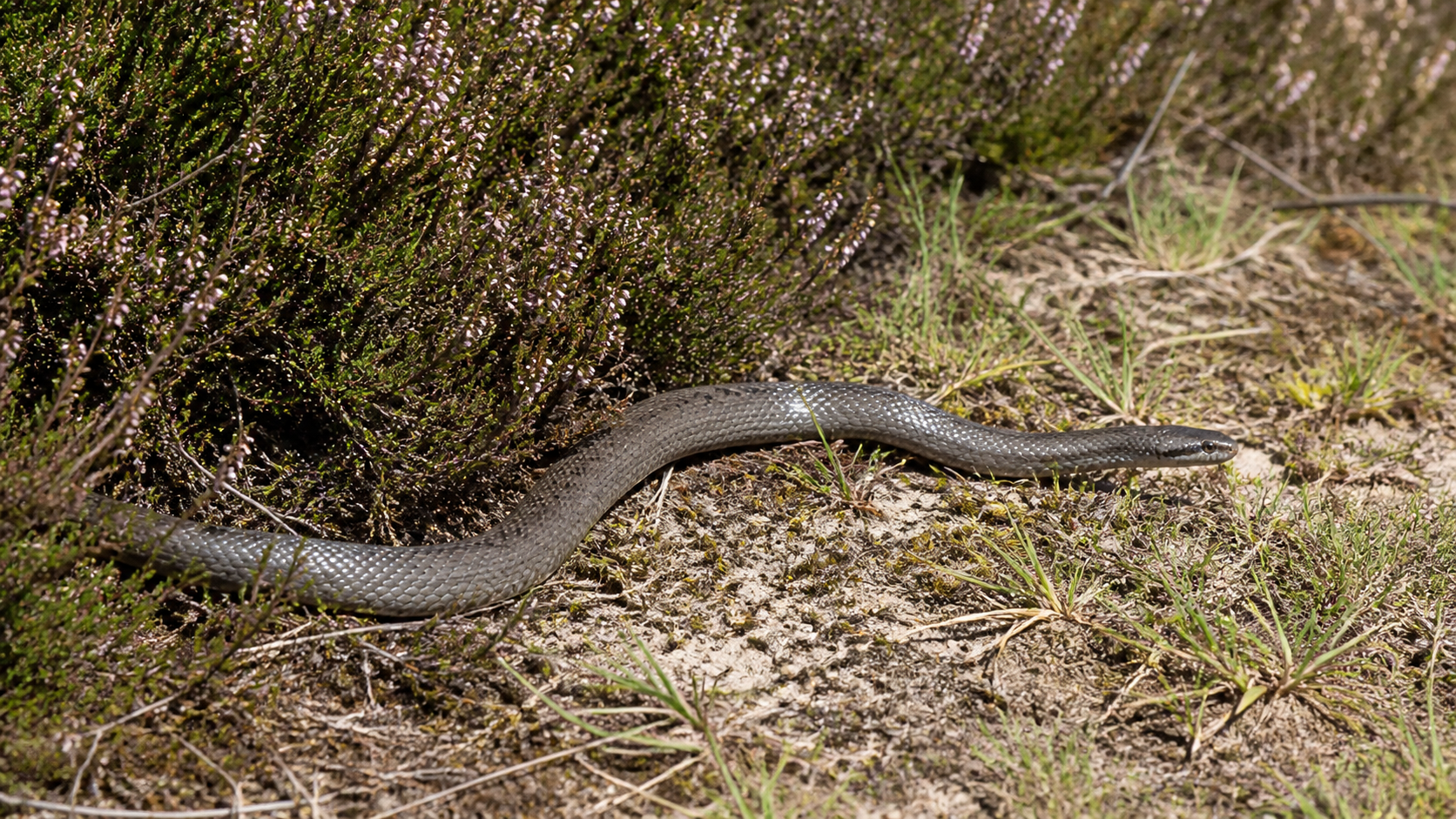
Heathland Is a Patchwork
Smooth snakes need more than a broad area labelled heathland. Warm open patches, dense cover, prey and safe movement routes can occur in different parts of the site. Vegetation change, unmanaged succession and fragmentation can reduce this mixture even when the overall habitat still looks natural from a distance.
Survey Methods Must Protect Their Subject
Artificial refuges and other survey tools can provide useful information when they are placed and checked under the correct permissions. They should not encourage visitors to lift materials or search through cover. A disturbed snake may lose a valuable shelter, and repeated disturbance can change the behaviour a survey is trying to understand.
Accurate Records Help Habitat Work
Date, general location, weather and habitat notes can make a sighting more useful to an approved local recording scheme. Exact sensitive locations should not be shared publicly. That balance supports conservation while reducing the chance that rare snakes are pursued or collected.
Sources and review notes
Reviewed 23 August 2026. Reptile biology is wonderfully variable. We have avoided turning one species, photograph or dramatic observation into a rule for an entire group, and we have used cautious wording where evidence or local conditions differ.
Reference starting points: The Reptile Database, The IUCN Red List of Threatened Species, and PubMed-indexed research. Conservation status, taxonomy and local laws can change, so check the linked databases and the relevant local authority for current information.
Spotted something we should revisit? Send Reptile Explorer a correction—thoughtful reader feedback is always welcome.