Chameleon colour change is a physical process in specialised skin cells, not a magical ability to become any object in the background. Colour can be involved in social display, temperature management, camouflage and defensive behaviour. The balance of those roles differs among species.
More than pigment cells
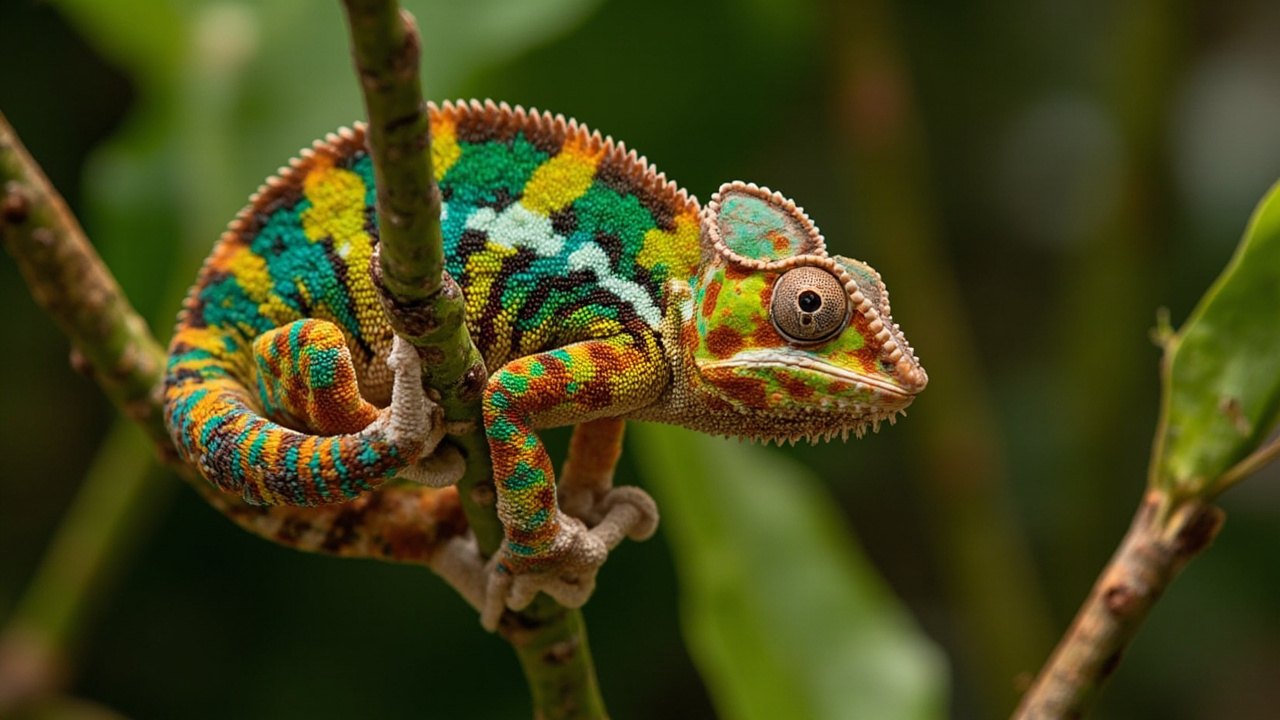
Chromatophores contribute pigments, while superficial iridophores can actively change the spacing of guanine nanocrystals and alter reflected colours. This mechanism is especially well documented in panther chameleons. It should not be reduced to a story about pigment simply spreading through the skin.

Observable state, not human emotion
Colour changes can accompany courtship, territorial displays, conflict, temperature shifts and illness. Words such as happy, angry or relaxed can be convenient shorthand, but they do not replace observation of posture, activity, feeding, temperature and social context.
Thermoregulation and camouflage
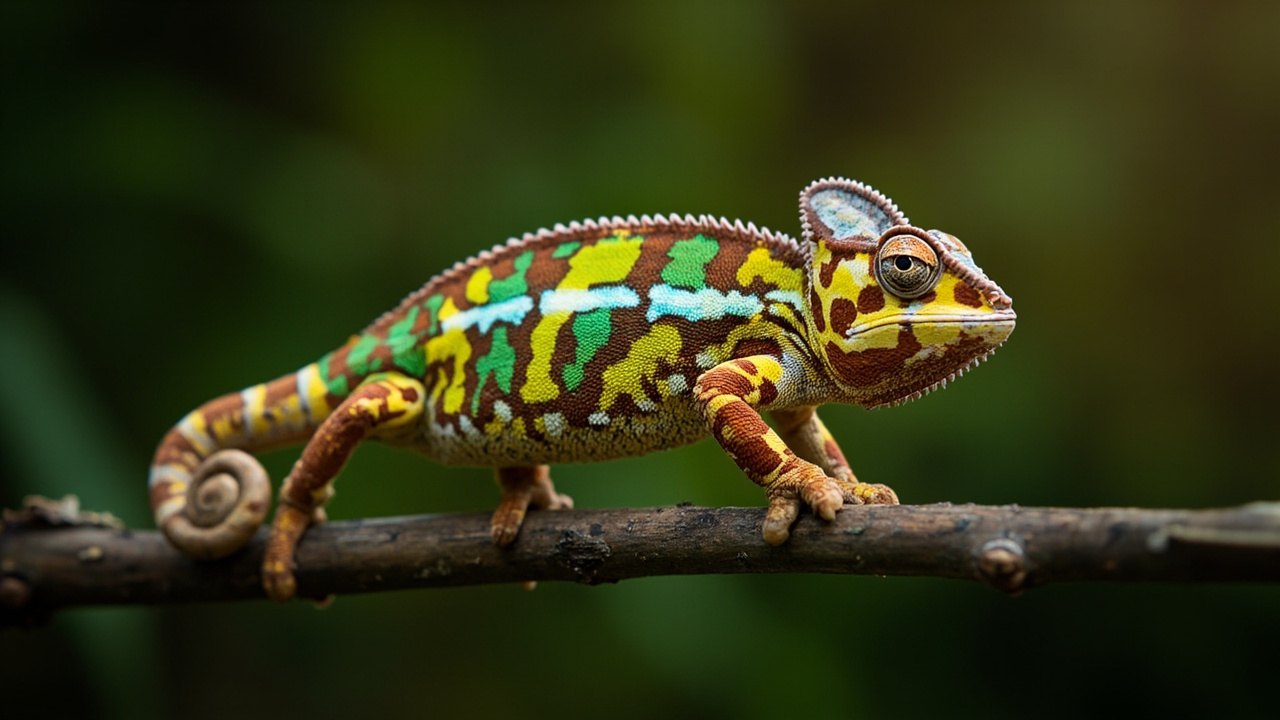
Darkening can increase heat absorption and lighter colours can reduce solar heating. Baseline patterns may help an animal blend with vegetation or bark, while rapid displays may make it conspicuous to other chameleons. A single colour has no universal meaning.
Good interpretation
For a captive chameleon, a sudden persistent change in colour alongside lethargy, poor appetite or abnormal posture deserves a husbandry review and veterinary advice. A colour chart alone is not a health diagnosis.
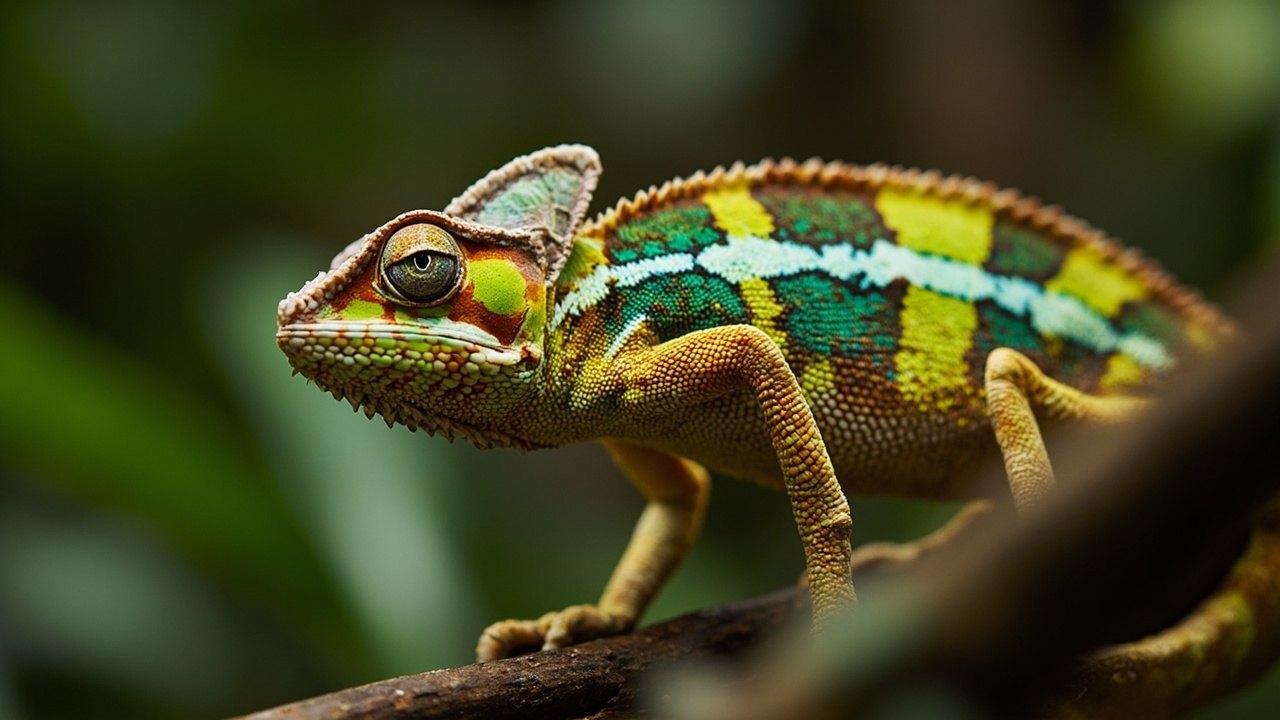
Colour Is Produced by Several Skin Layers
Chameleon skin contains more than one kind of colour-producing cell. Pigment cells affect dark and warm tones, while light-reflecting structures can alter the wavelengths that reach an observer. In species studied closely, changes in the organisation of these structures help explain rapid shifts in visible colour. The exact mechanism and range of change are not identical in every chameleon.
Context Gives a Colour Its Meaning
A brighter display, a dark patch or a paler resting colour can be related to temperature, social interaction, stress, health or background conditions. It should be read alongside posture, location, activity and the presence of other animals. A single photograph cannot reliably reveal the animal’s state or establish what caused the change.
Good Care Uses Measured Conditions
For captive chameleons, enclosure temperature, humidity, lighting, water access and visual privacy should be assessed with actual measurements. Treating colour alone as a health test can delay attention to appetite, hydration, activity or other changes that need a reptile-qualified veterinarian.
Sources and review notes
Reviewed 23 August 2026. Reptile biology is wonderfully variable. We have avoided turning one species, photograph or dramatic observation into a rule for an entire group, and we have used cautious wording where evidence or local conditions differ.
Reference starting points: The Reptile Database, The IUCN Red List of Threatened Species, and PubMed-indexed research. Conservation status, taxonomy and local laws can change, so check the linked databases and the relevant local authority for current information.
Spotted something we should revisit? Send Reptile Explorer a correction—thoughtful reader feedback is always welcome.