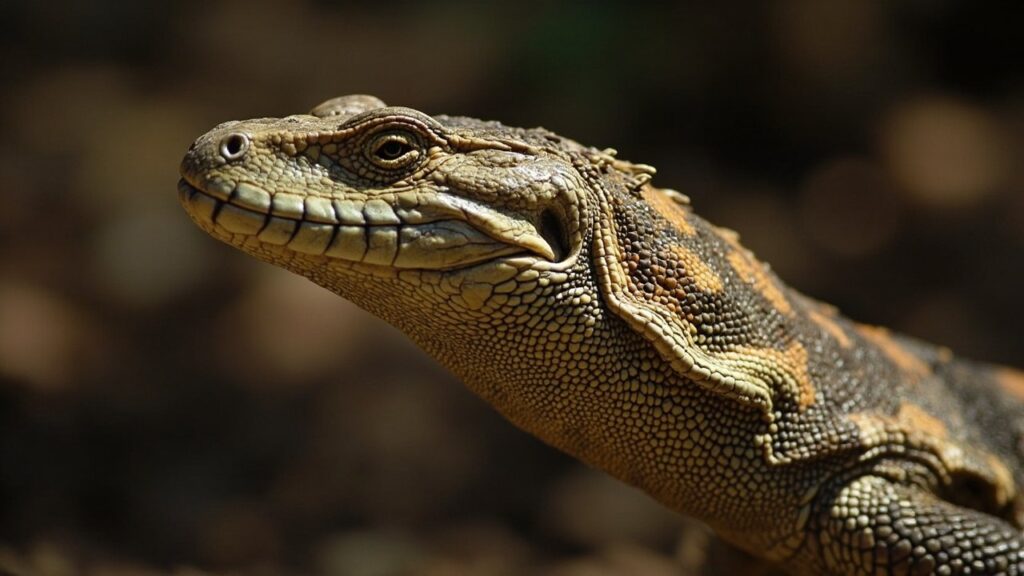
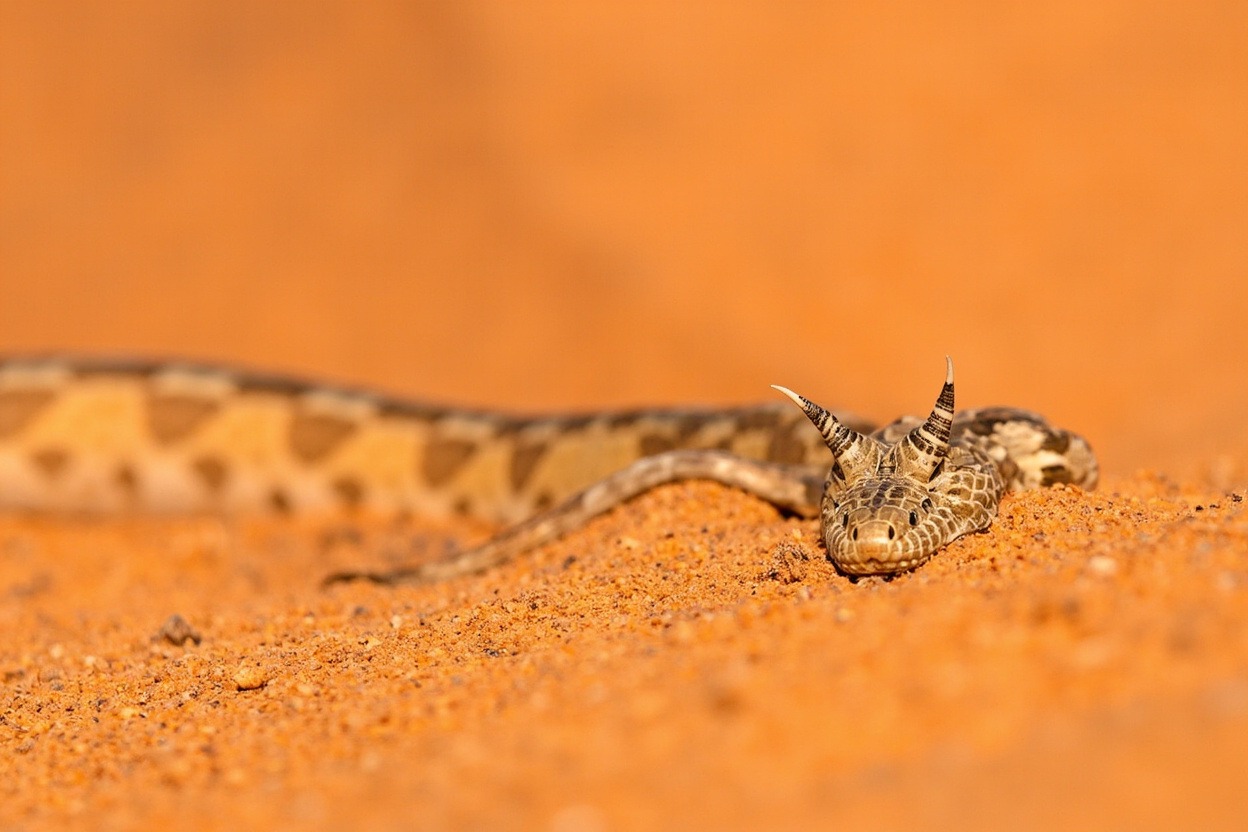
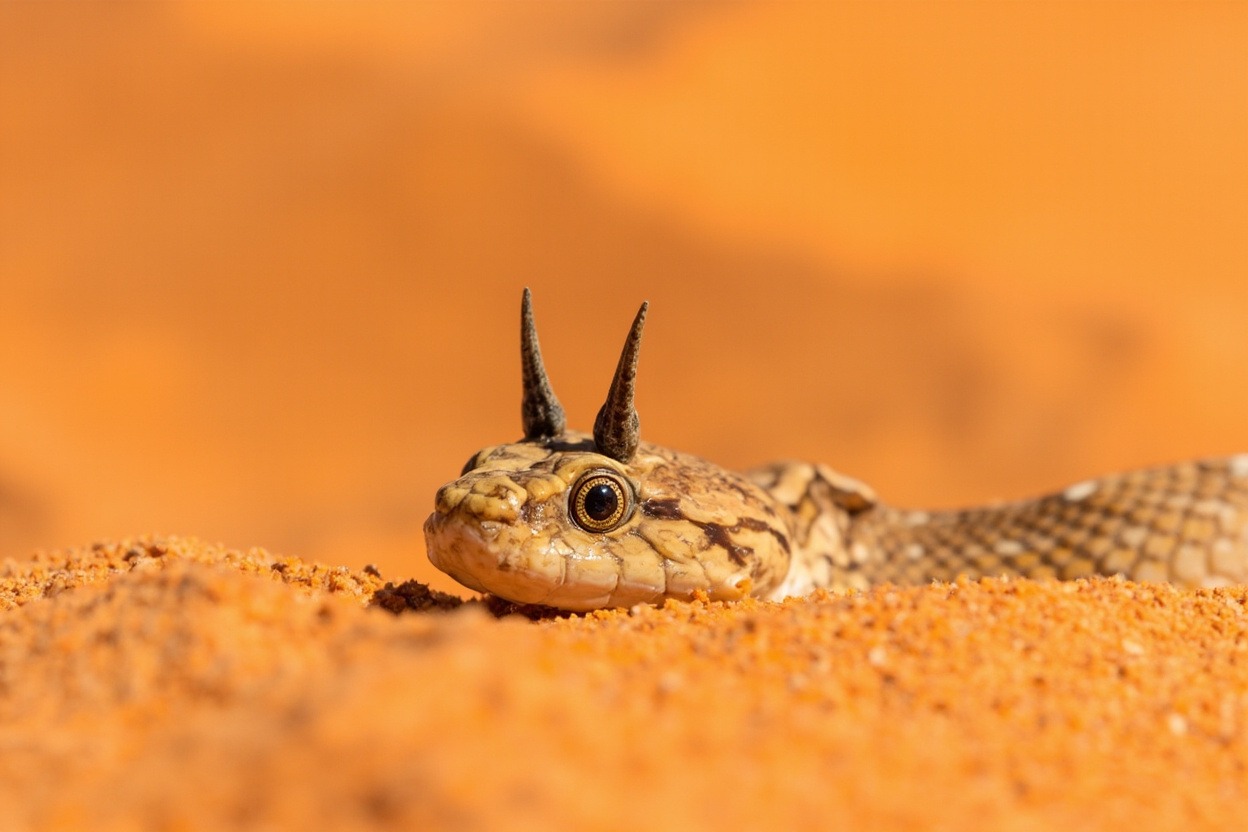
The desert horned viper, Cerastes cerastes, is a venomous viper of arid parts of North Africa and southwest Asia. Its sandy colours and patterned scales make it difficult to see on dunes and stony desert ground. The common name is useful, but pronounced horn-like scales are variable: not every individual has them.
Sidewinding is not swimming
On loose, hot sand, this viper can use sidewinding locomotion. Only small parts of the body touch the surface at a time, which can improve traction on shifting ground and limit prolonged contact with hot sand. The same snake can also use more familiar snake movements when the surface and situation differ.

Concealment and hunting
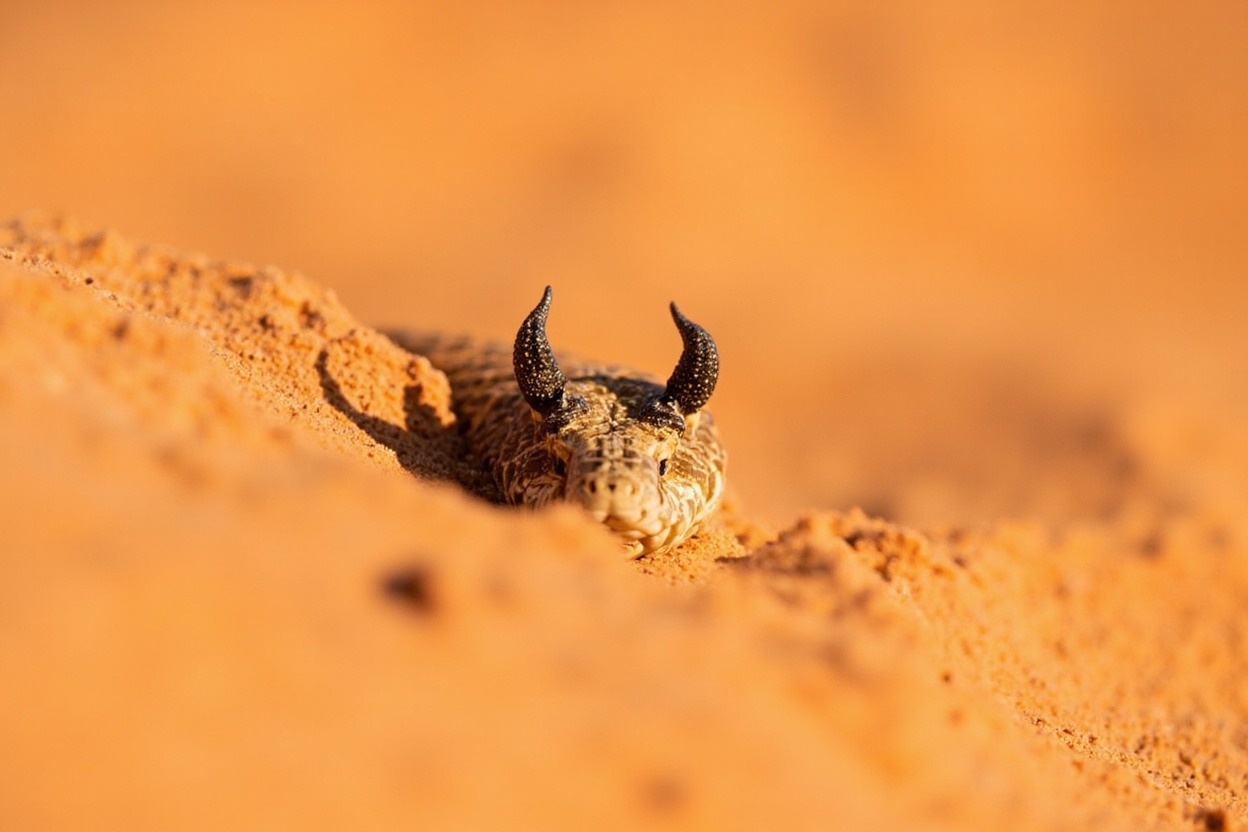
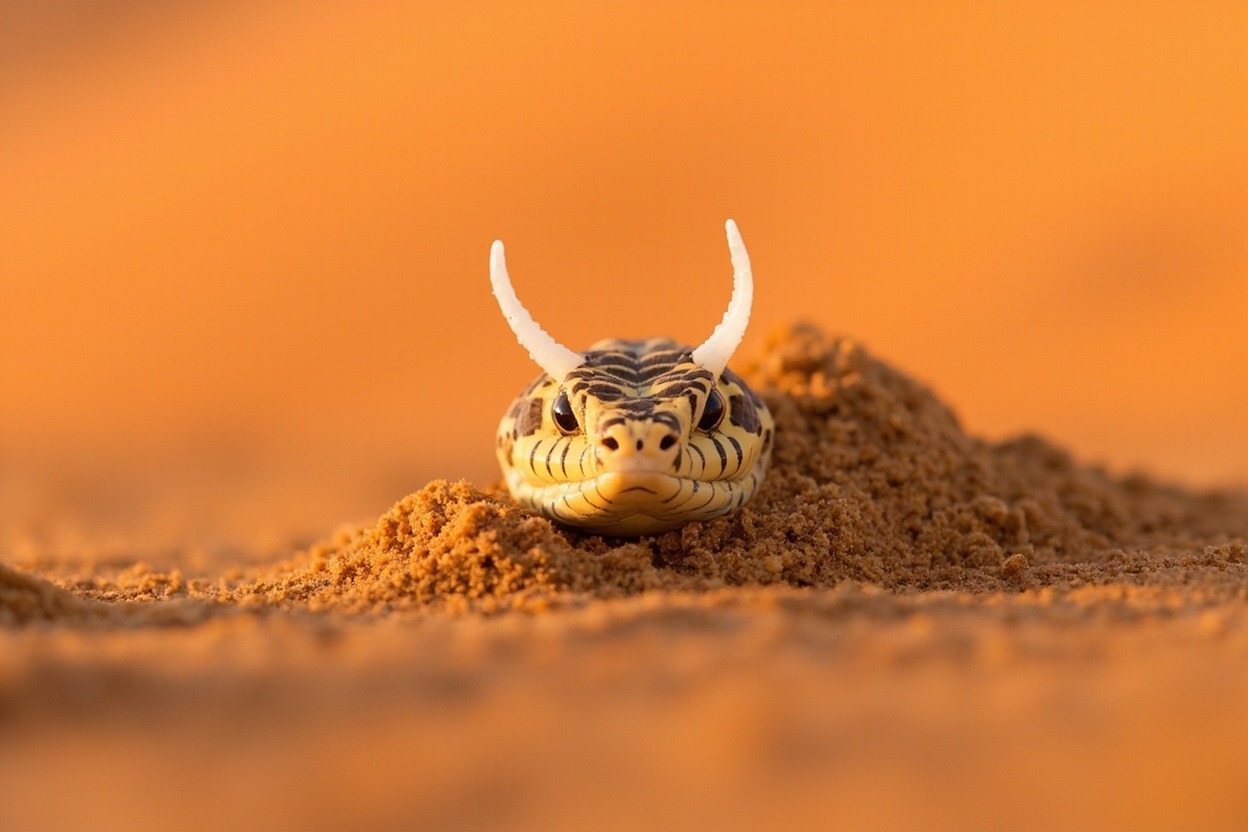
Desert horned vipers often bury or partly cover themselves in loose sand, leaving the eyes and nostrils exposed. This is effective camouflage for an ambush predator. Their diet varies with what is available locally and can include small mammals, lizards and birds. Venom helps subdue prey; it is not a reason to approach or handle the animal.
What horns and scales do
Keeled lateral scales and a compact body are useful in loose substrates, but individual features should not be assigned a single, universal purpose. Desert snakes face changing temperatures, wind, prey availability and cover. A safe description is that their anatomy and behaviour work together to support movement, concealment and ambush in dry habitats.
Respect a wild venomous snake
Information about courtship and nesting is less complete than information about feeding and locomotion, so elaborate claims about mating displays should be treated cautiously. If a horned viper is encountered in the wild, give it space, watch where hands and feet are placed, and seek urgent medical care for any bite. Never try to move, catch or identify a snake by handling it.
Movement Depends on the Surface
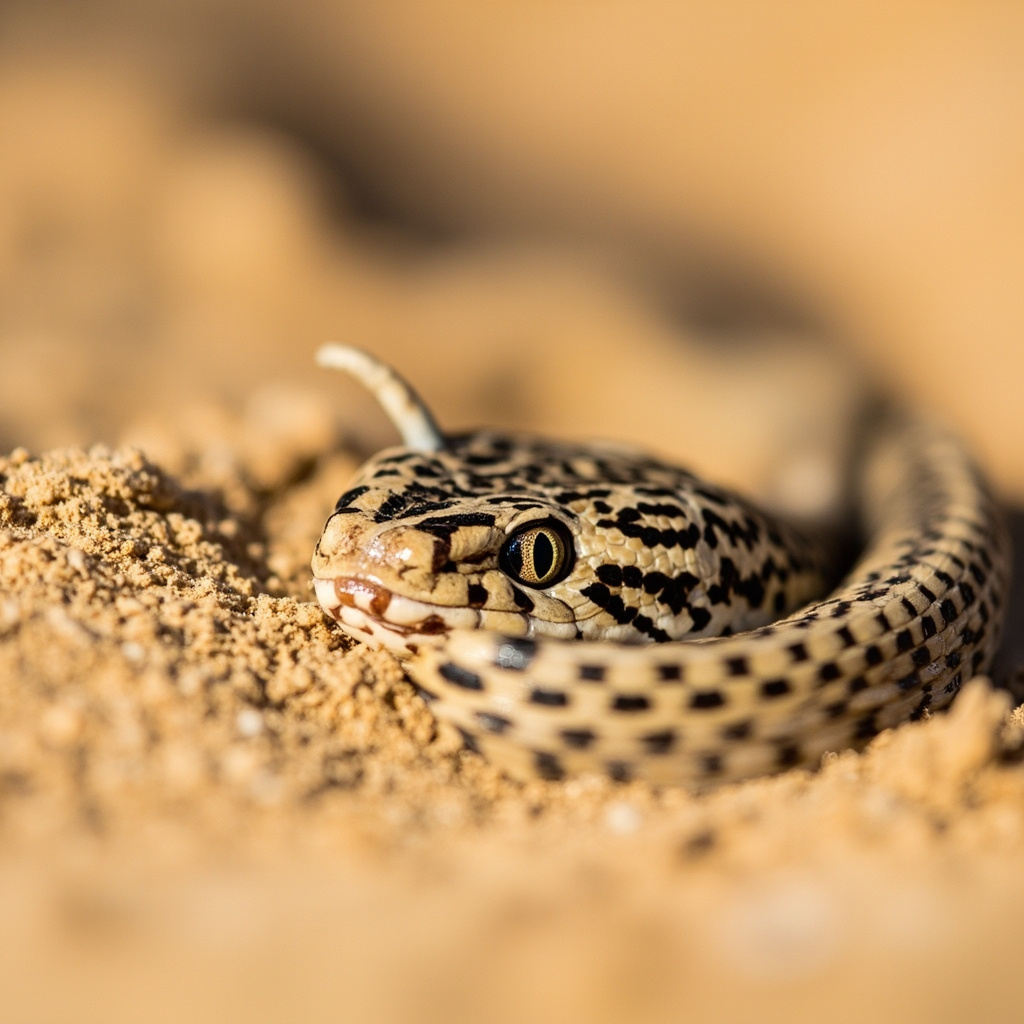
Field observations of Saharan horned vipers show that they often sidewind across shifting sand while using lateral undulation in denser, more stable ground cover. Sidewinding is therefore context dependent, not the only way the species moves. This distinction helps prevent a dramatic movement pattern from being mistaken for a permanent trait of every encounter.
Tracks Are Not a Safe Invitation
Fresh tracks or a partly buried snake can be difficult to interpret, and a person should not follow them closely to confirm an identification. Keep a clear distance, watch where hands and feet are placed, and allow the animal an open route away. Local professionals are the right contact when a venomous snake is in a place where people cannot safely avoid it.
Sources and review notes
Reviewed 23 August 2026. Reptile biology is wonderfully variable. We have avoided turning one species, photograph or dramatic observation into a rule for an entire group, and we have used cautious wording where evidence or local conditions differ.
Reference starting points: The Reptile Database, The IUCN Red List of Threatened Species, and PubMed-indexed research. Conservation status, taxonomy and local laws can change, so check the linked databases and the relevant local authority for current information.
Spotted something we should revisit? Send Reptile Explorer a correction—thoughtful reader feedback is always welcome.