A river specialist under pressure
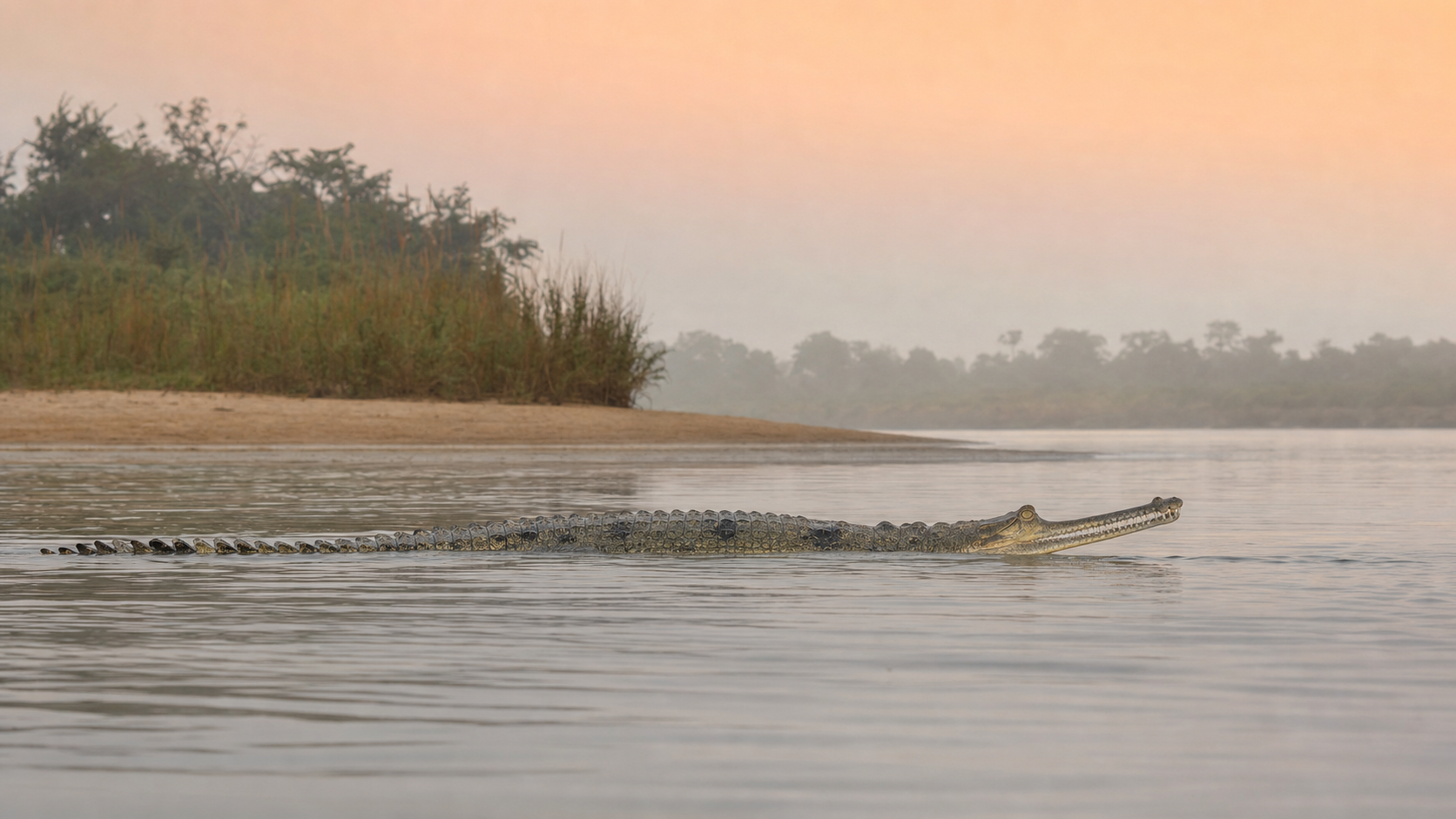
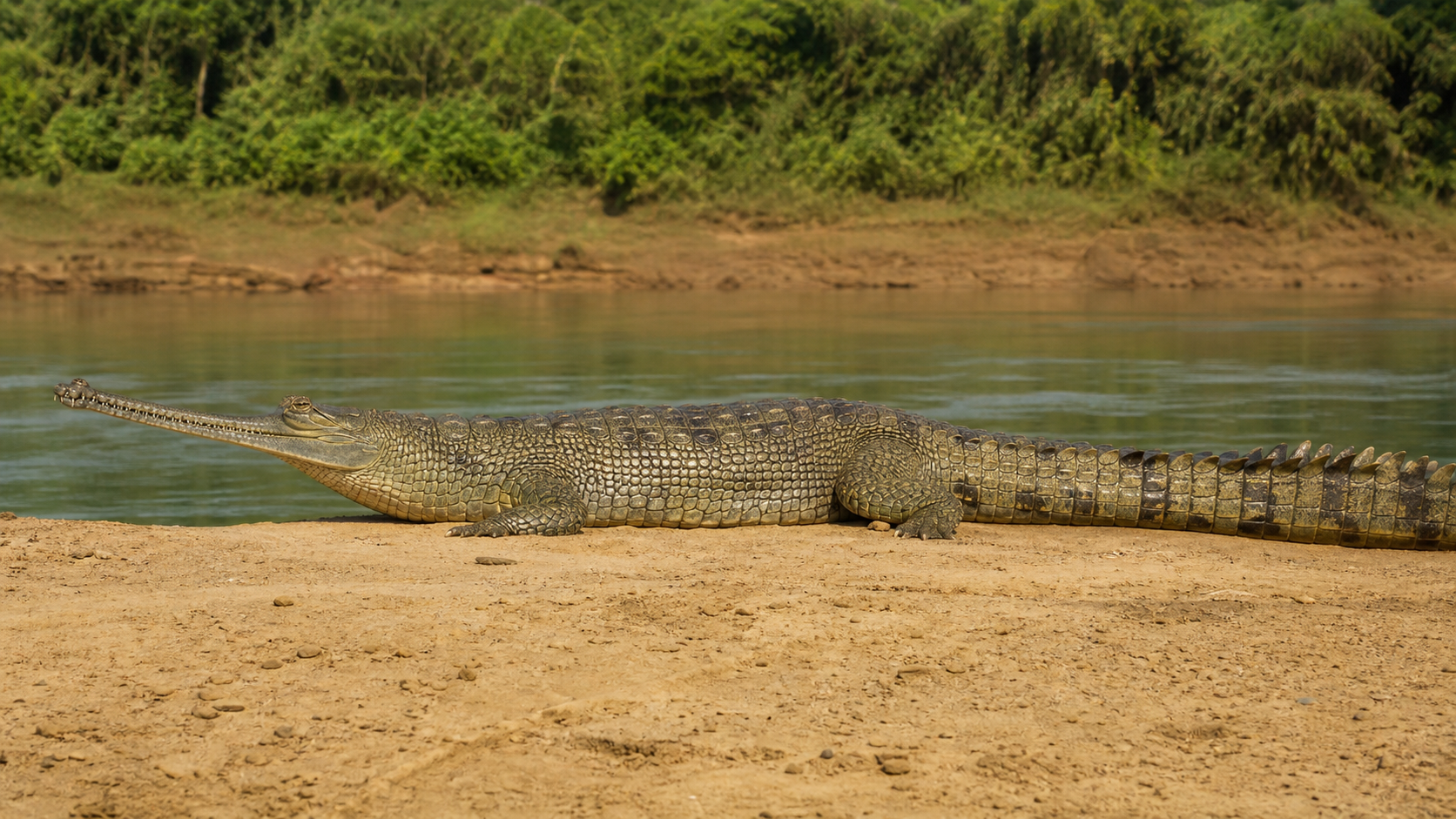
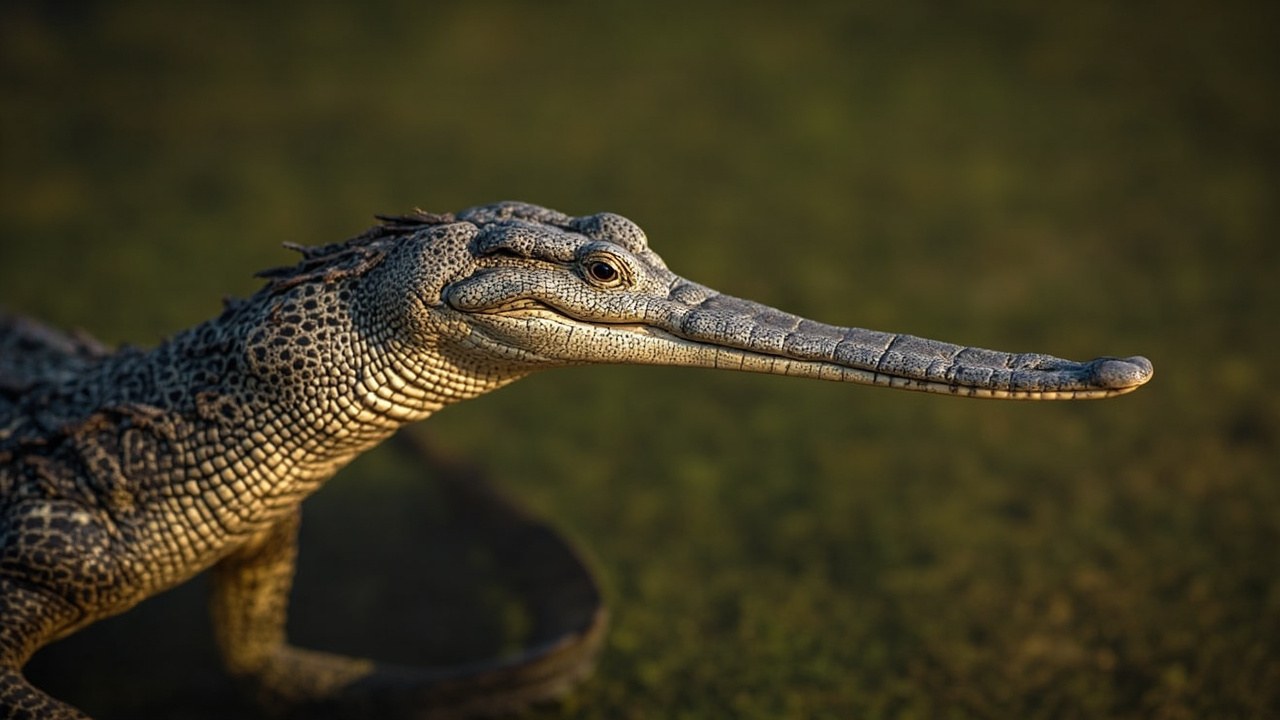
The gharial, Gavialis gangeticus, is a critically endangered crocodilian of the Indian subcontinent. Its long, narrow snout is adapted for catching fish in large rivers. Gharials need connected river channels, suitable sandbanks for nesting and basking, and enough fish to feed adults and young. Their range has contracted sharply, leaving a small number of fragmented populations.

Protecting a river means addressing several threats
River engineering, sand extraction, fishing pressure, entanglement in nets, pollution, and disturbance at nesting banks can all affect gharials. Protected reaches such as the National Chambal Sanctuary are important, but conservation also depends on river management beyond a reserve boundary. Fisheries communities, local authorities, researchers, and protected-area staff all have roles in reducing conflict and monitoring habitat change.
Releases complement habitat recovery
Captive breeding, head-starting, and carefully planned releases can support recovery, especially when wild nests and young face high mortality. They cannot replace secure river habitat or self-sustaining breeding populations. Post-release monitoring, nesting surveys, and protection of key river stretches help show whether action is improving conditions for gharials rather than simply increasing the number of animals released.
River Form Matters to a Fish Specialist
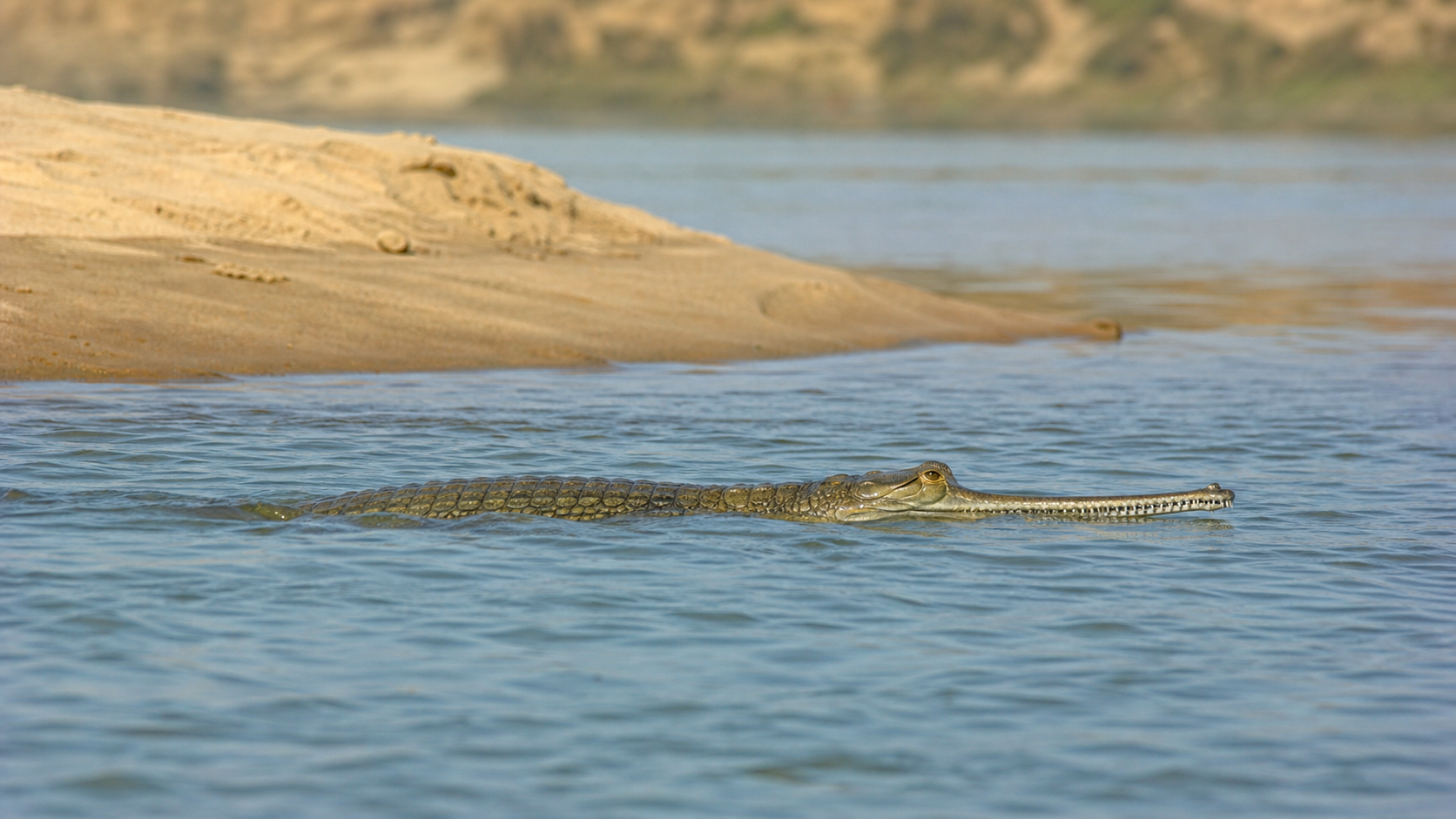
The gharial’s narrow snout and interlocking teeth are associated with catching fish, while broad river channels and exposed sandbanks provide basking and nesting conditions. Dams, altered flows, bank disturbance and sand extraction can change these features together. A river may still contain water while losing the connected channels and nesting banks that gharials require.
Adult males develop a bulb-like structure at the end of the snout called a ghara. It is one of several visible traits that distinguish the species, but a single distant photograph may not show it clearly. Field identification should account for head shape, location and other characteristics instead of relying on a dramatic close-up.
Population Counts Need Breeding Evidence
A release count is not the same as a wild recovery count. Nest surveys, hatchling survival, movement records and repeated observations of animals across a river reach show whether reproduction and habitat use are continuing. Monitoring needs to include risks such as fishing nets, river traffic and disturbance at nesting sites.
People Share the River System
Fishers and riverside communities can provide timely information about changes in channels, nets and sightings. Conservation measures are more likely to last when they reduce accidental entanglement, retain essential habitat and are discussed with people who depend on the river.
Sources and review notes
Reviewed 23 August 2026. Conservation is rarely a one-step success story. We have kept the language specific about evidence, limits and local context, because a programme that helps one population may not transfer neatly to another.
Reference starting points: The IUCN Red List of Threatened Species, IUCN conservation-translocation guidelines, and the current CITES Appendices. Conservation status, taxonomy and local laws can change, so check the linked databases and the relevant local authority for current information.
Spotted something we should revisit? Send Reptile Explorer a correction—thoughtful reader feedback is always welcome.