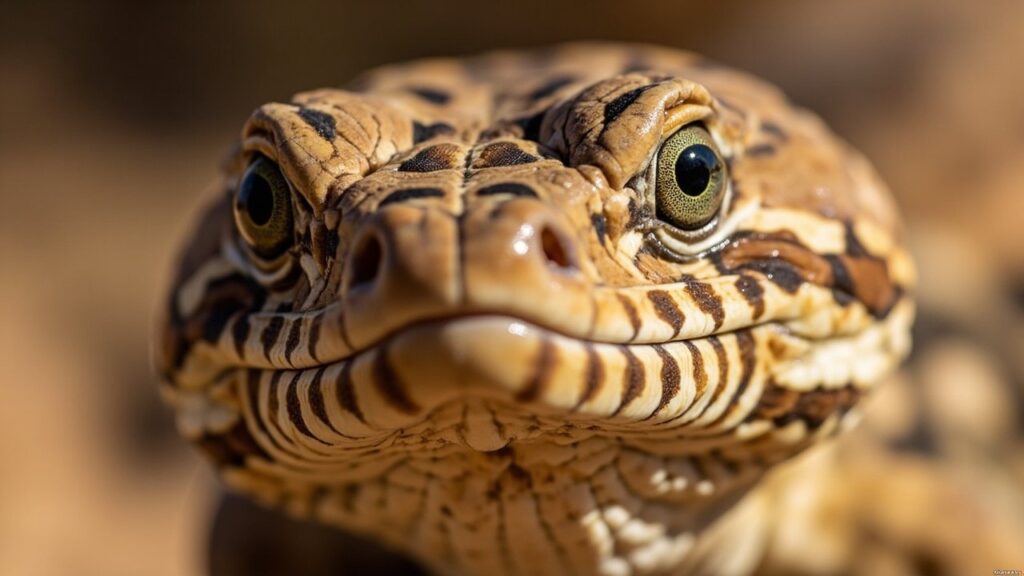
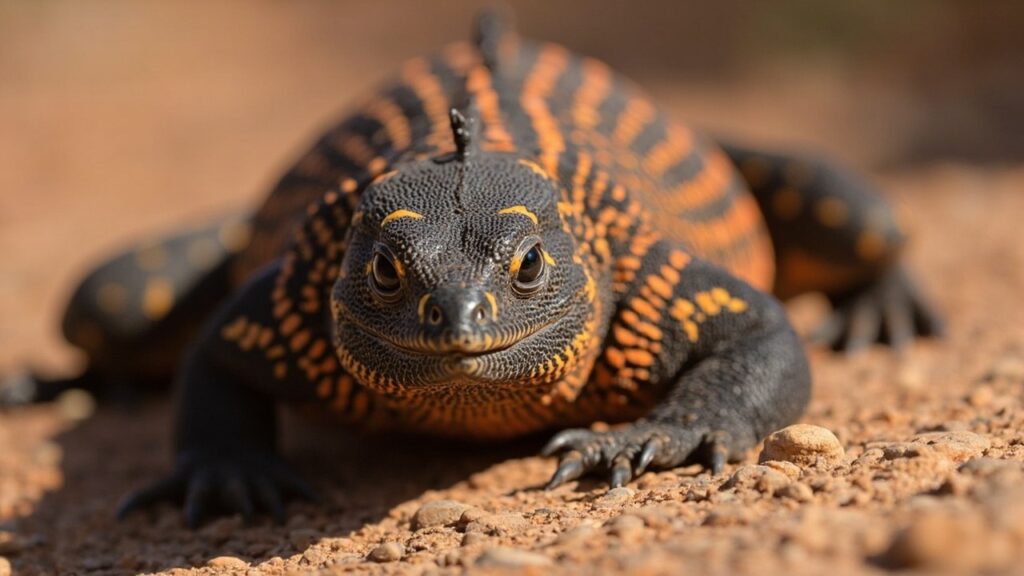
A Gecko of Coastal Sand
The Namib web-footed gecko, Pachydactylus rangei, lives in dune fields and dry riverbed habitats of the coastal Namib. Fog can bring moisture to this otherwise arid landscape, while loose sand and major day-to-night temperature changes shape when and where the gecko is active.

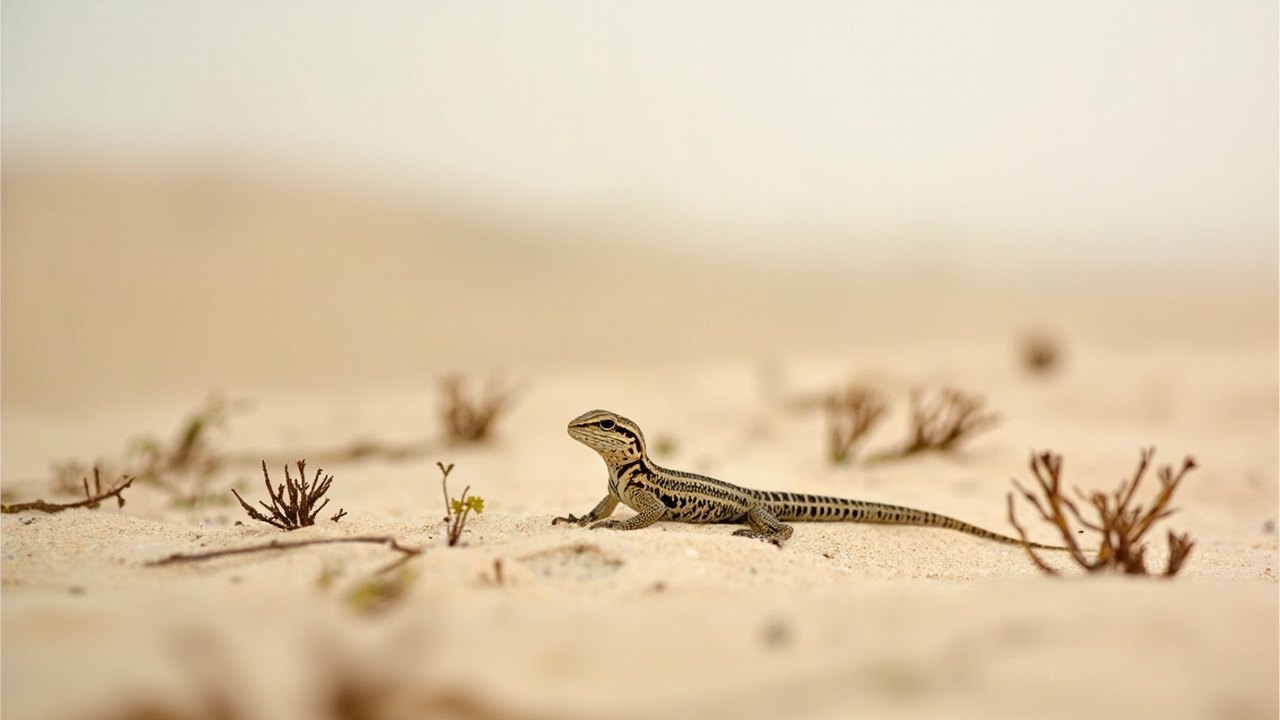
Feet Adapted for Digging
Its webbed hands and feet help the gecko move on fine sand and excavate shelter. During the day it can remain in a burrow below the hottest surface conditions, then emerge after dark when the desert becomes safer for activity.
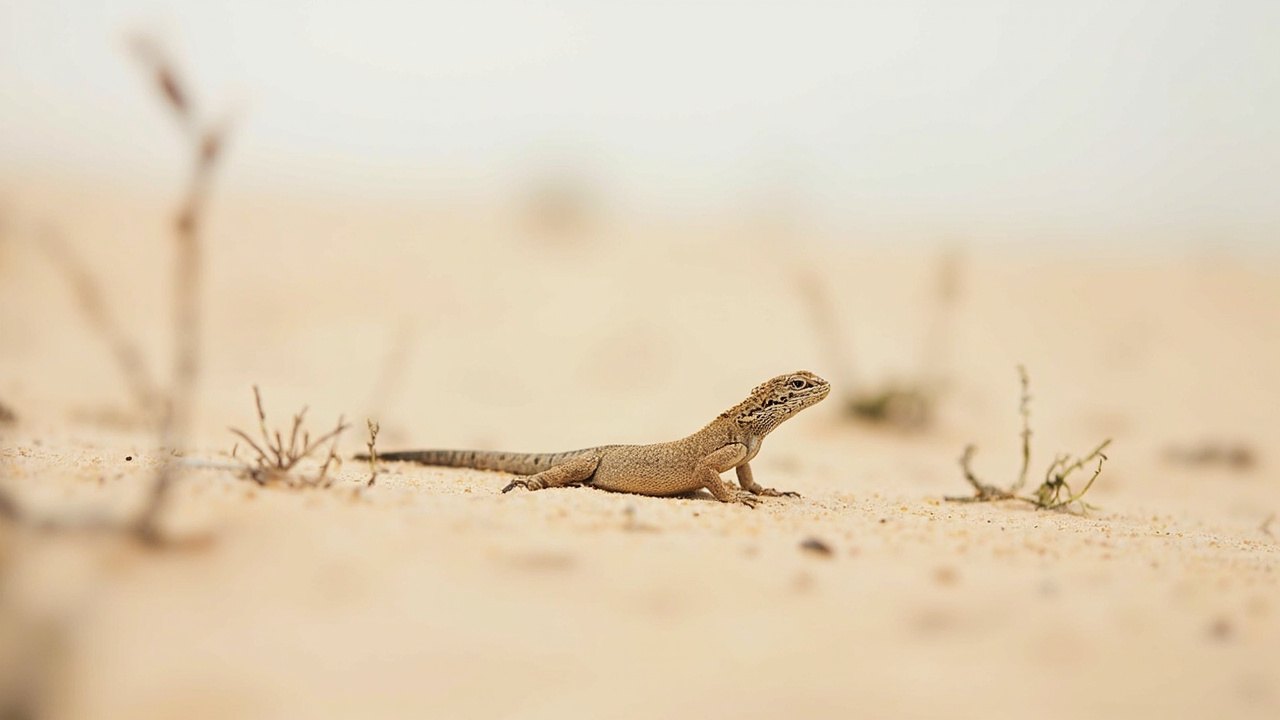
Life After Sunset
Large eyes support nocturnal hunting, and small invertebrates form the core of the gecko’s diet. The Namib contains several very different dune reptiles, so adaptations from a shovel-snouted lizard or another gecko should not be assigned automatically to this species.
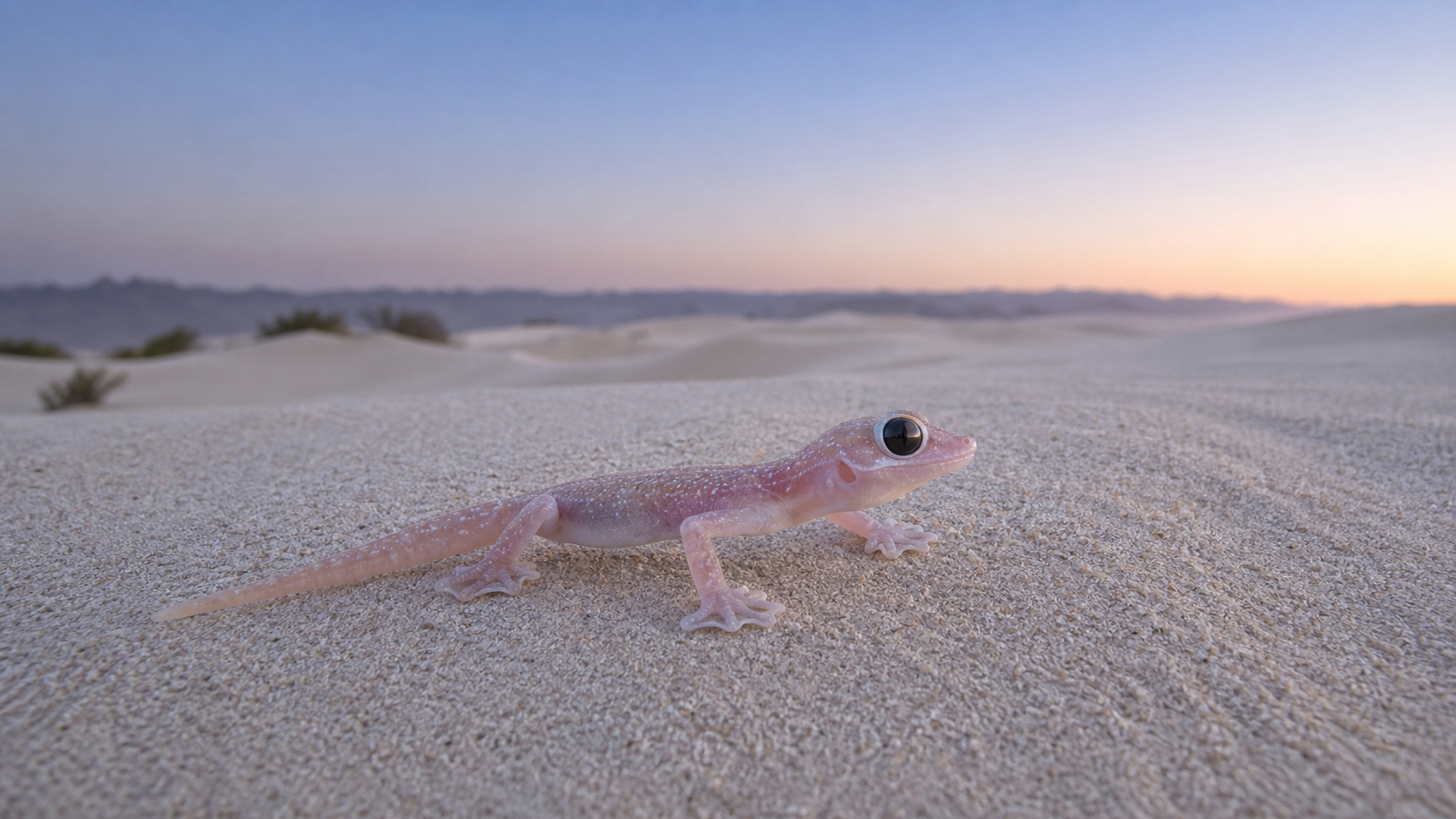
Movement on Shifting Sand
The Namib web-footed gecko is shaped by a landscape that moves. Wind can alter the surface of dunes, while sand temperature changes rapidly between daylight and darkness. Broad, webbed feet help the gecko travel across soft sand and excavate shelter, but the animal also depends on choosing the right time to emerge. Staying below the surface during the hottest part of the day can be as important as its visible anatomical adaptations.
Coastal fog influences the Namib even where rainfall is very low. It can affect moisture and temperature near the ground, but conditions differ across dune fields, riverbeds, and coastal plains. For that reason, it is better to describe the gecko as a specialist of particular sandy habitats than to assume it lives across every part of the Namib Desert.
Nocturnal Observation Has Limits
Large eyes support activity in low light, yet observing a gecko after dark does not reveal its entire ecology. Feeding, shelter use, predators, and breeding can vary with season and local conditions. Accurate accounts should distinguish what has been recorded for Pachydactylus rangei from traits belonging to other Namib reptiles, including species that move differently on sand or occupy different microhabitats.
Keep Dune Processes Intact
Off-road traffic and poorly placed infrastructure can compact or disturb the dune surface and destroy small shelters that are difficult to see. Conservation needs to protect the wider dune system, including routes where wind, sand, fog, and vegetation interact. Visitors can help by using designated routes and by leaving nocturnal wildlife undisturbed rather than trying to uncover a gecko from its daytime refuge.
Sources and review notes
Reviewed 23 August 2026. Reptile biology is wonderfully variable. We have avoided turning one species, photograph or dramatic observation into a rule for an entire group, and we have used cautious wording where evidence or local conditions differ.
Reference starting points: The Reptile Database, The IUCN Red List of Threatened Species, and PubMed-indexed research. Conservation status, taxonomy and local laws can change, so check the linked databases and the relevant local authority for current information.
Spotted something we should revisit? Send Reptile Explorer a correction—thoughtful reader feedback is always welcome.