What Gives the Species Its Name
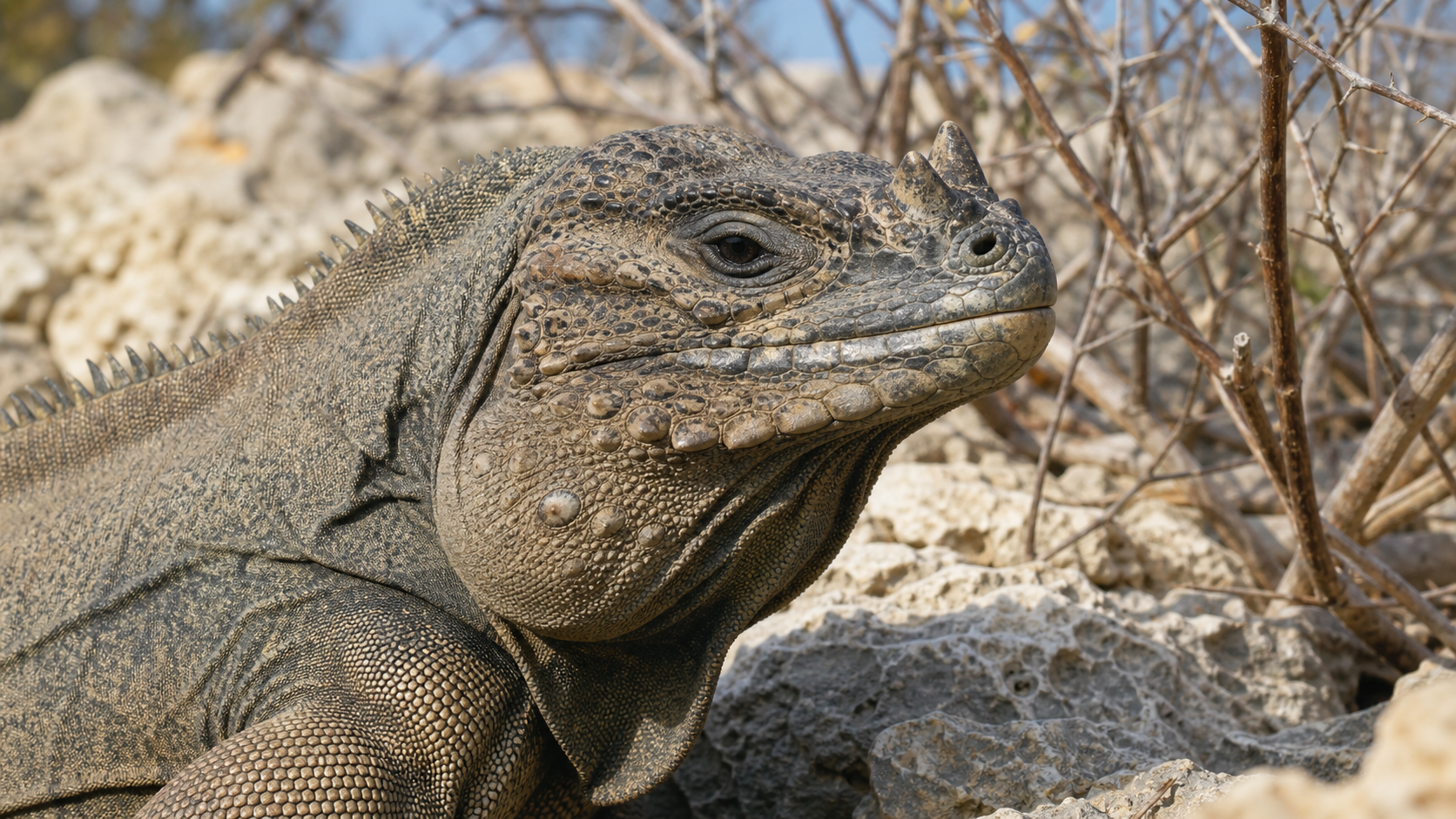
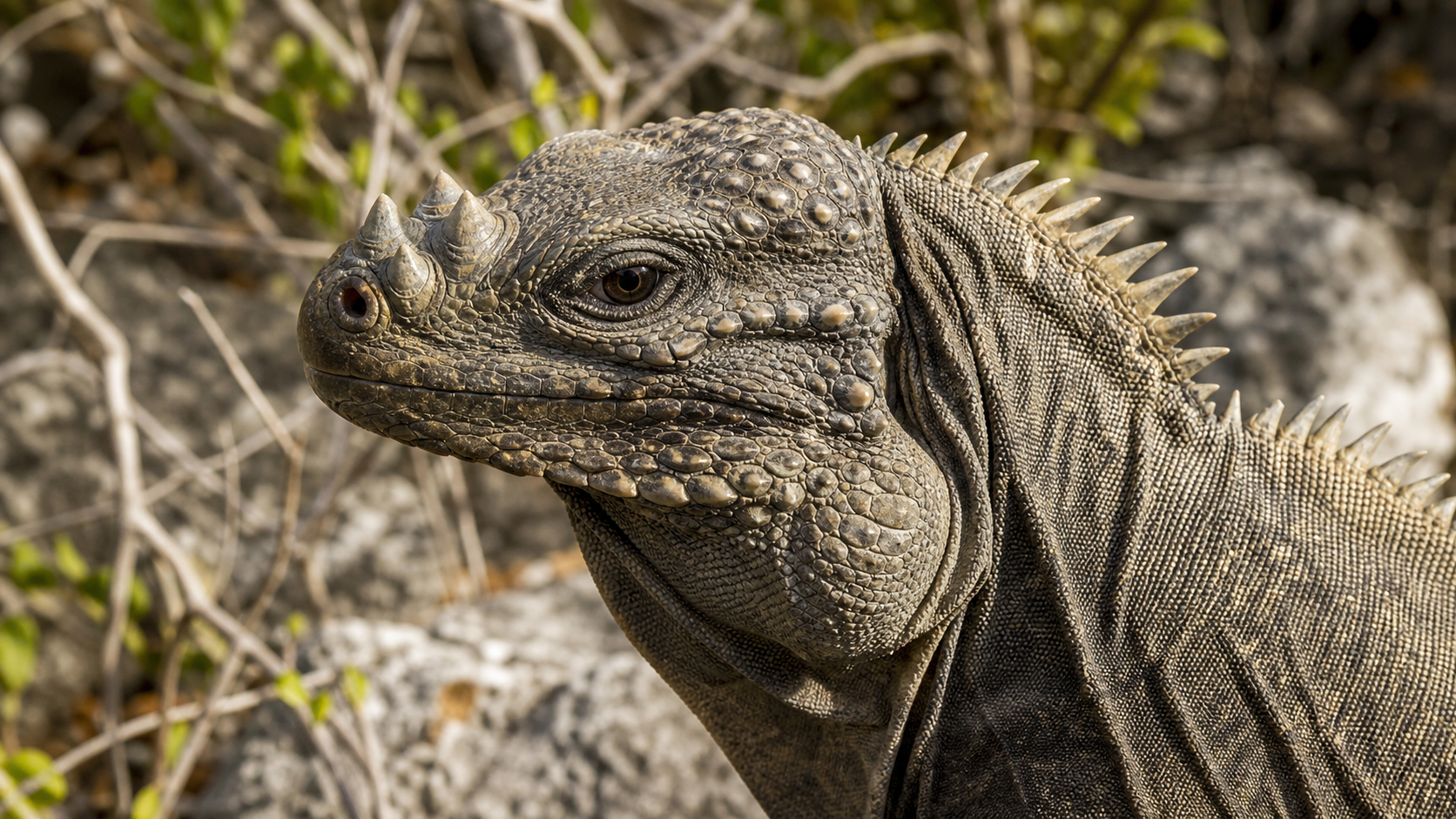
The rhinoceros iguana, Cyclura cornuta, has enlarged horn-like tubercles on its snout. These structures, together with its heavy body, crest, and strong tail, give the iguana its distinctive appearance. They are not the same as the true keratin horns of a rhinoceros.
A Dry-Habitat Iguana of Hispaniola
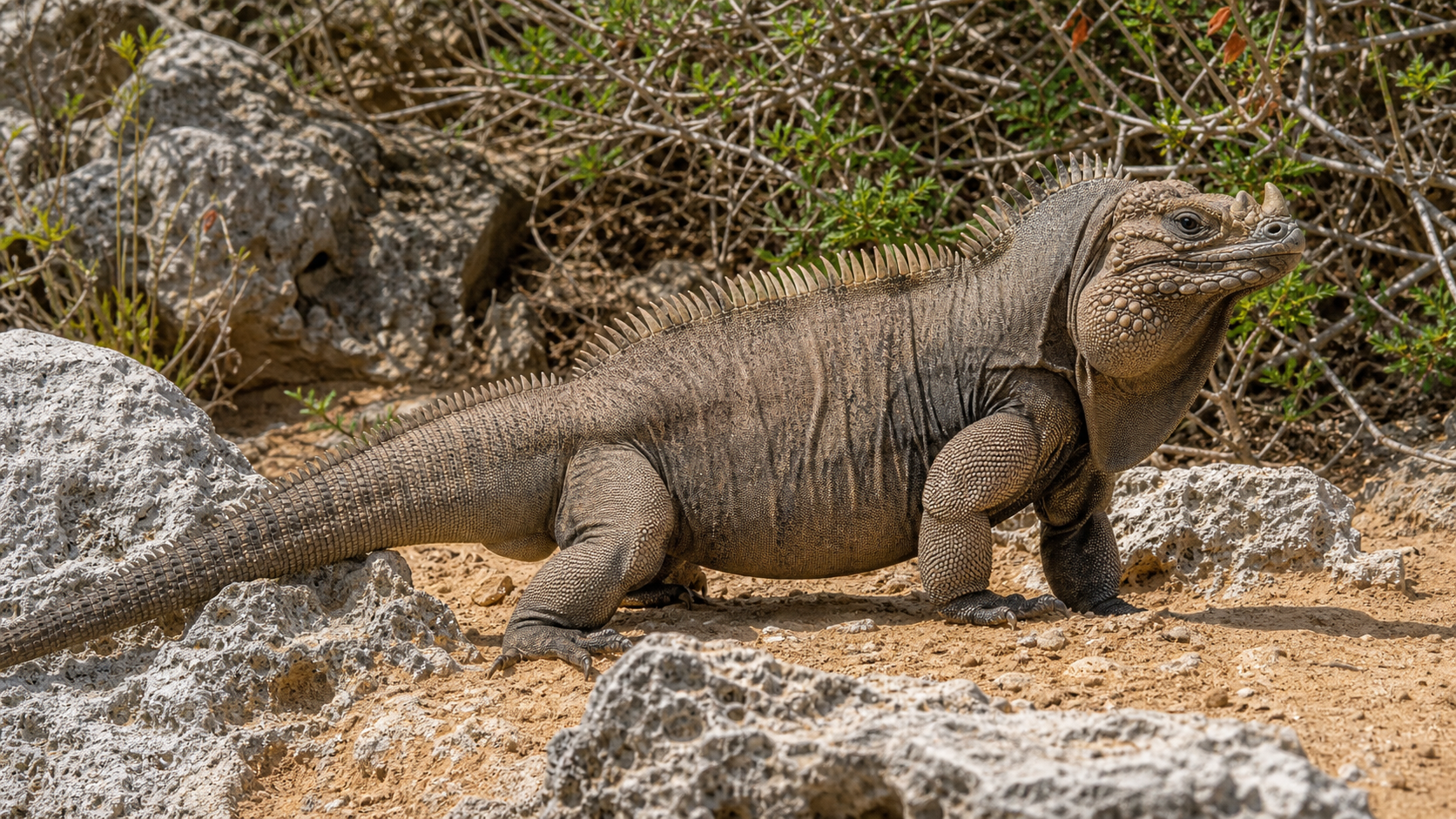
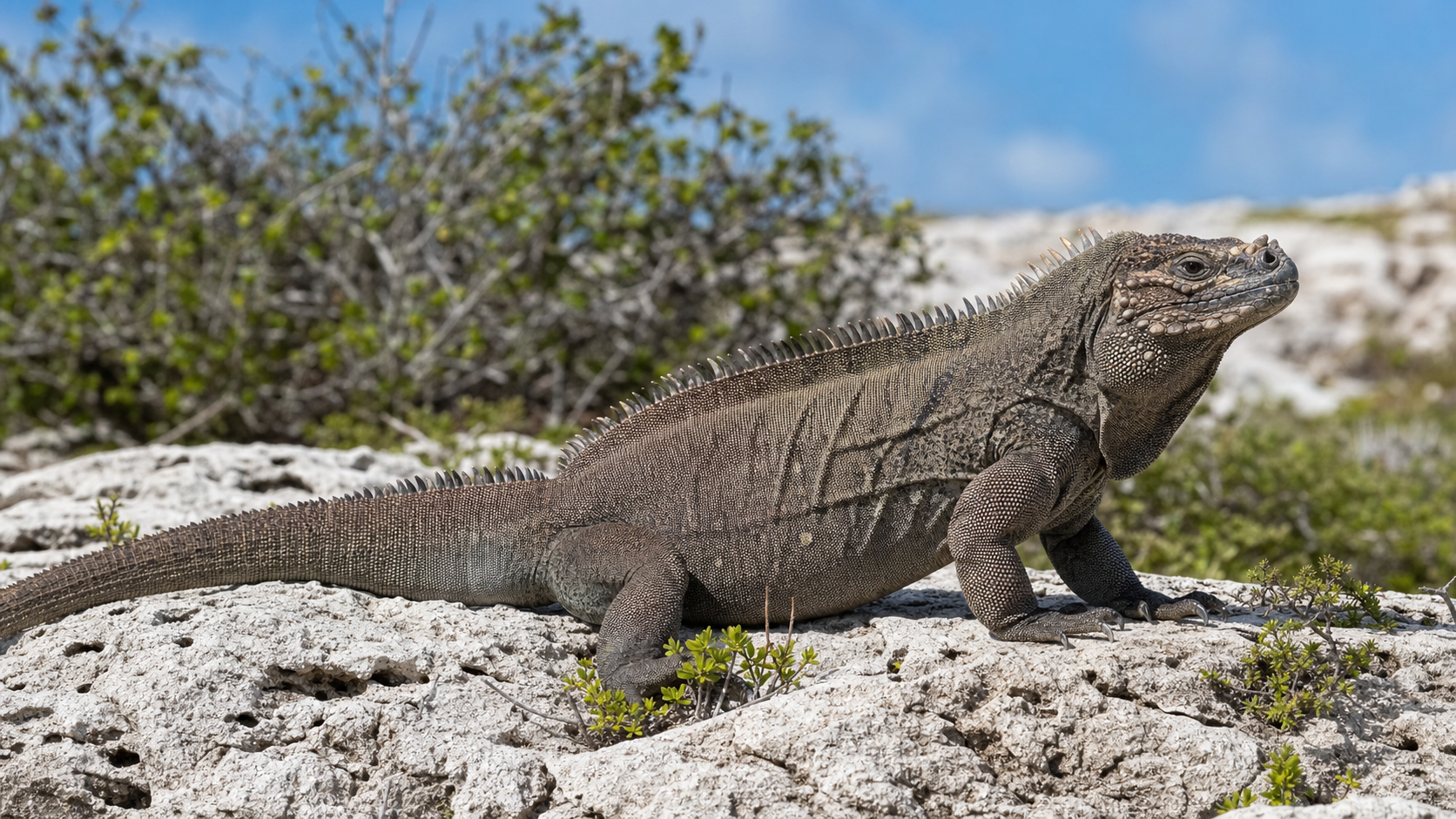
Rhinoceros iguanas are native to Hispaniola and nearby islands, where they use dry forest, scrub, rocky ground, and coastal habitats. Their form and behaviour reflect life in warm, seasonally dry landscapes with shelter in rock crevices, burrows, and dense vegetation.
Conservation Is Site-Specific
Habitat loss, introduced animals, collection, and human disturbance can affect different populations in different ways. Protecting remaining habitat, reducing pressure at nesting and refuge sites, and supporting local conservation programmes are more meaningful than treating every population as if it faces the same conditions.
Horn-like Scales Are One Part of a Larger Anatomy
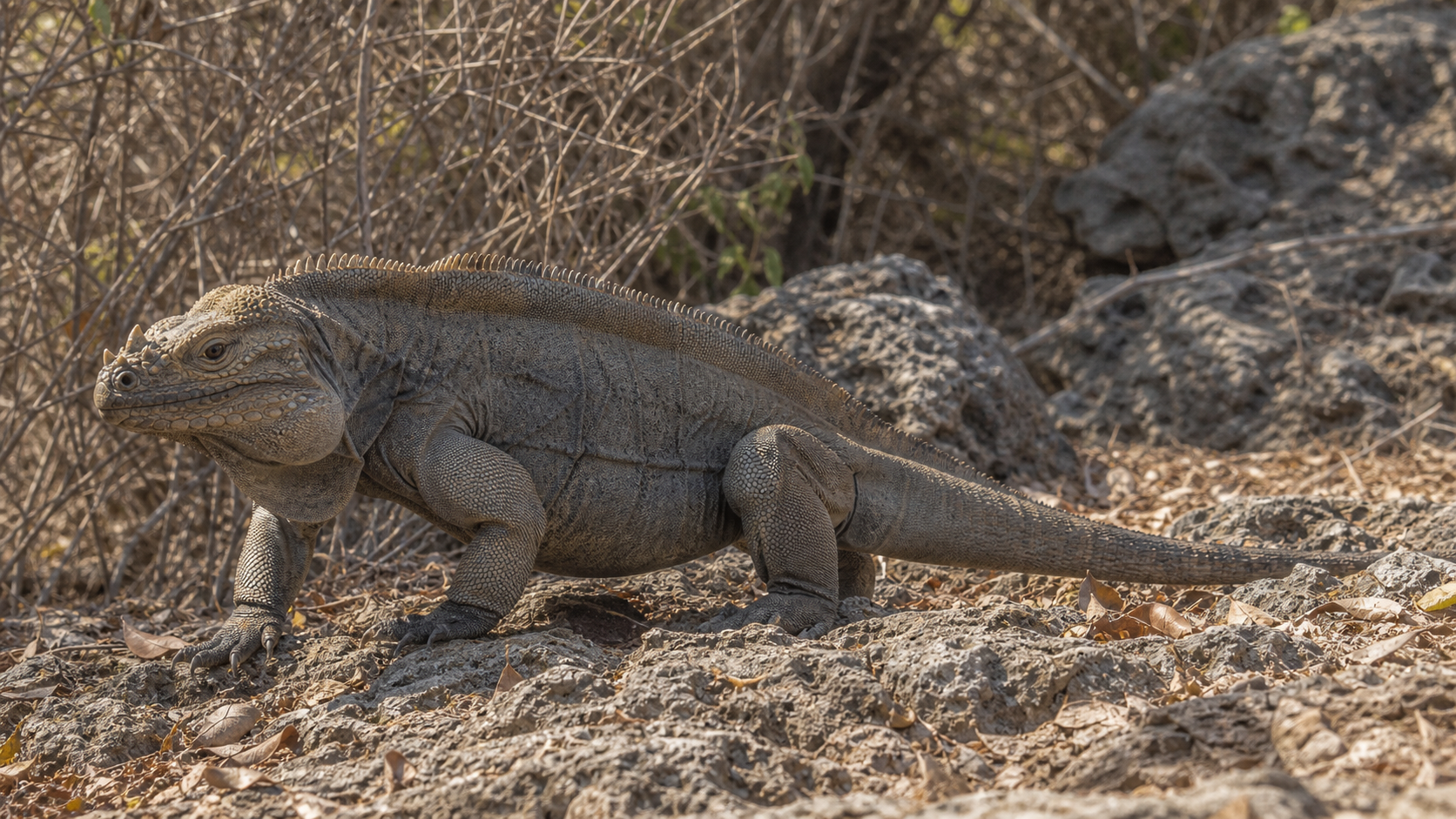
The enlarged nasal tubercles help identify the rhinoceros iguana, but they are not a reliable shortcut for judging an animal’s age, sex or condition from a single photograph. Identification also considers the broad head, heavy body, dorsal crest, tail and location. The structures are scales rather than mammalian horns, and they should be described without implying that they have the same composition or function as a rhinoceros horn.
Dry Forest Provides Food, Cover and Nesting Ground
Rhinoceros iguanas occupy landscapes with seasonal drought, rocky substrate and patches of native vegetation. Plant material forms an important part of the diet, while available foods can differ among sites and seasons. Rock crevices and burrows offer refuge from heat and disturbance. When dry forest is cleared or altered, the effect can extend beyond visible vegetation loss by changing access to shelter, nesting places and movement routes.
Population-Level Evidence Guides Protection
The species occurs in different parts of Hispaniola and on nearby islands, so threats and responses should be assessed at the population level. Introduced predators, free-roaming domestic animals, hunting, collection and habitat conversion do not have the same intensity at every site. Conservation programmes can be more effective when they identify occupied habitat, protect priority nesting and refuge areas, work with nearby communities and monitor results over time. This avoids treating one well-known iguana population as a substitute for the species as a whole.
Sources and review notes
Reviewed 23 August 2026. Reptile biology is wonderfully variable. We have avoided turning one species, photograph or dramatic observation into a rule for an entire group, and we have used cautious wording where evidence or local conditions differ.
Reference starting points: The Reptile Database, The IUCN Red List of Threatened Species, and PubMed-indexed research. Conservation status, taxonomy and local laws can change, so check the linked databases and the relevant local authority for current information.
Spotted something we should revisit? Send Reptile Explorer a correction—thoughtful reader feedback is always welcome.