The gharial (Gavialis gangeticus) is one of the most specialized crocodilians, with elongated jaws and interlocking teeth adapted for catching fish. Adult males develop a bulbous nasal protuberance called a ghara, which helps with vocal and visual courtship displays. Its unusual anatomy is tied closely to its survival in large river systems.
Physical Characteristics

The gharial’s unique features make it a master of its aquatic environment. Its long, narrow snout is perfectly suited for catching fish, its primary source of food. The interlocking, razor-sharp teeth ensure that once caught, the fish can’t escape. It’s worth noting that the gharial is sometimes confused with the false gharial (Tomistoma schlegelii), a related but distinct crocodilian native to Southeast Asia — both have long, slender snouts but belong to different families.
One of the most distinctive features of adult male gharials is the bulbous nasal protuberance, often referred to as the ‘ghara.’ This unusual structure serves a dual purpose: it amplifies vocalizations and plays a visual role in mating rituals.
Male gharials can grow up to 6 meters in length, while females are generally smaller, illustrating the sexual dimorphism in this species. The elongated skull shape is a remarkable example of evolutionary adaptation, allowing for swift and agile movements in the water.
Adult male gharials combine size with a highly specialized aquatic build. Each feature reflects survival in river habitats where fast movement, fish capture, and sandbank nesting matter.
Habitat and Distribution

Gharials live in large river systems of northern India and Nepal, especially stretches with deep water for feeding and exposed sandbanks for basking and nesting. The Chambal River, running through the National Chambal Sanctuary in India, is a critical stronghold for the species, hosting one of the largest remaining populations in the wild.
Historically, gharials roamed across the major river systems of Bangladesh, Bhutan, Myanmar, and Pakistan. However, their range is now severely fragmented, and they are primarily confined to the rivers of northern India and Nepal. Human activities such as habitat destruction, unsustainable fishing practices, and hunting have led to this drastic reduction in their habitat. The loss of these critical riverine ecosystems has pushed the gharial to the brink, making conservation efforts in places like the National Chambal Sanctuary crucial.
Gharials are highly specialized for an aquatic lifestyle, rarely leaving the water except to bask on sandbanks or nest. Their dependence on healthy river channels, deep pools, and undisturbed sandbanks highlights the importance of preserving these habitats.
Diet and Feeding Habits
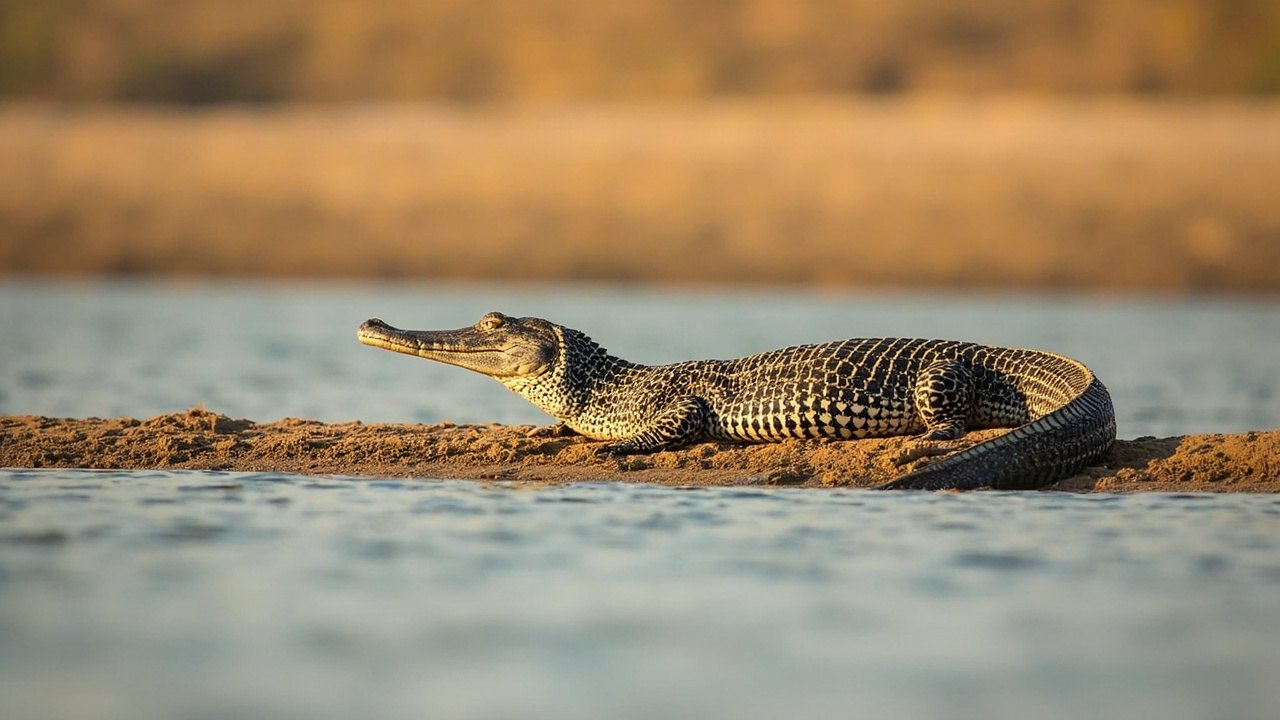
Gharials have adapted remarkably to a diet of fish, showcasing their unique physical features. Their elongated, slender snouts and sharp, interlocking teeth make them perfectly suited for catching fish. Swimming through the rivers of India and Nepal, they strike quickly, snatching fish right out of the water.
Gharials feed on various fish species, from small fry to larger fish, ensuring a diverse and abundant food supply. Young gharials, with their smaller size and less powerful jaws, initially feed on insects and small crustaceans, gradually moving on to bigger prey as they grow.
Their feeding habits are fascinating; they use their snouts to sweep through the water, corralling fish into their mouths. This efficient technique conserves energy while maximizing their catch. However, human activities, such as gill nets, can trap and injure them, posing significant threats to their survival.
Observing a gharial in its natural habitat is a remarkable experience. Its specialized diet and feeding strategies highlight the intricate balance of its ecosystem, where every meal is a demonstration of evolutionary brilliance.
Reproduction and Growth
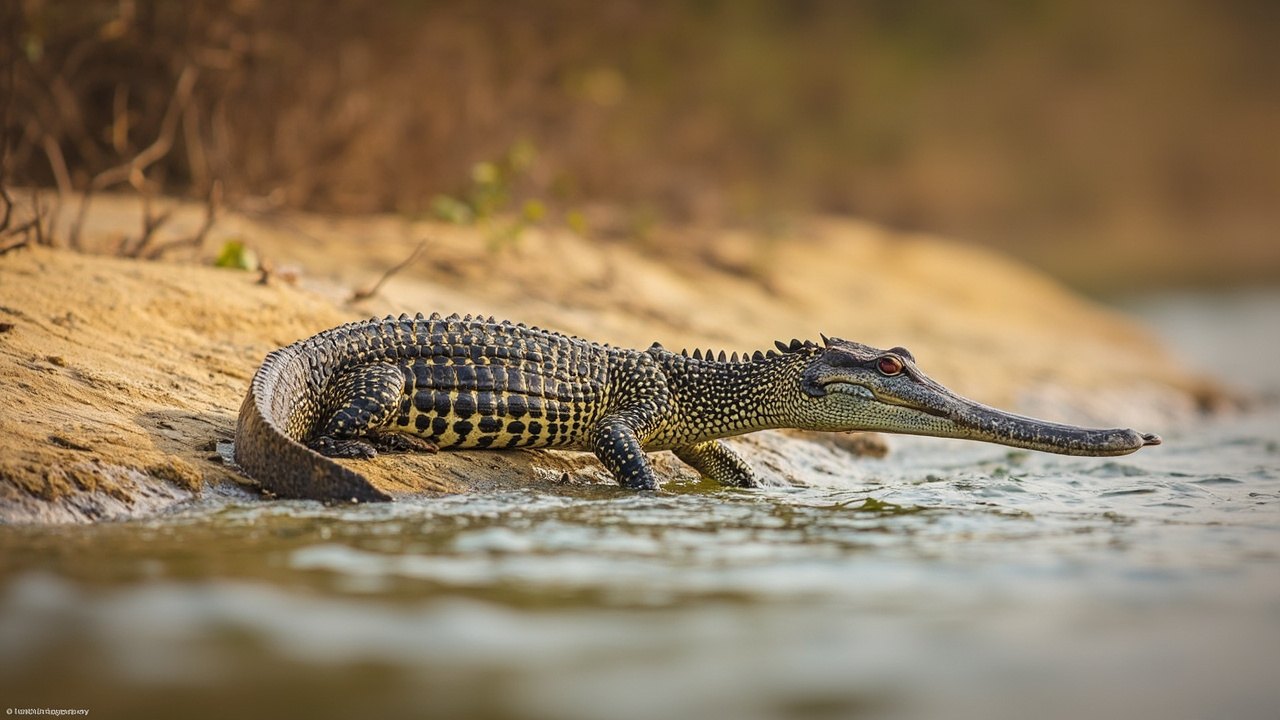
In gharial reproduction, females generally mature at a smaller size than males and nest on exposed river sandbanks during the dry season. A clutch can contain several dozen eggs, often cited around 20 to 95, and incubation lasts roughly three months. Once they hatch, young gharials feed on small aquatic prey before shifting toward fish as they grow.
Mating Season Patterns
During the cool season, mature male gharials use the bulbous ghara on the tip of the snout to help produce buzzing calls and visual displays. Females generally mature at a smaller body size than males, and breeding takes place on exposed river sandbanks during the dry-season nesting period.
The courtship process is a delicate balance of attraction and selection. Males, with their elongated snouts and robust bodies, compete for the attention of females, who carefully choose their partners based on these displays. Once a pair forms, the process of fertilization begins.
After successful mating, females prepare for the next crucial phase: incubation. They will soon lay between 20 to 95 eggs, meticulously buried in nests dug along riverbanks. This incubation period, lasting around 90 days, is a time of anticipation and vigilance. The future generation of gharials depends on the careful selection and courtship behavior exhibited during this cold season, ensuring the continuation of their species.
Nesting and Eggs
As the incubation period comes to a close, the female gharial shifts her focus to the riverbanks, where she guards her nest of 20–95 large eggs, each weighing around 6 ounces (160 grams). She remains vigilant, protecting the eggs from potential predators and human threats.
As in other crocodilians, nest temperature can influence hatchling sex ratios, but the outcome depends on the nest's full temperature profile rather than a simple hot-versus-cold rule. This makes intact, naturally shaded and sun-exposed nesting banks important for successful reproduction.
Conservation efforts are crucial in protecting these nests, as gharial eggs are sought after for food and traditional medicine. By safeguarding the riverbanks and minimizing human interference, we can help ensure the survival of these slender-snouted fishers.
The female’s dedication doesn’t end with hatching; she remains vigilant, guiding the hatchlings toward the water, setting the stage for their journey into the wild.
Hatchling Development Stages
Gharial hatchlings emerge after roughly three months of incubation at about 30–40 cm long. They begin life feeding on small aquatic prey such as insects, larvae, crustaceans, and small fish before shifting toward a more fish-based diet as their jaws lengthen and their swimming ability improves.
Growth is fastest in young animals and slows as they approach maturity. Males eventually become much larger than females and develop the distinctive ghara used in adult courtship displays.
Conservation Strategies
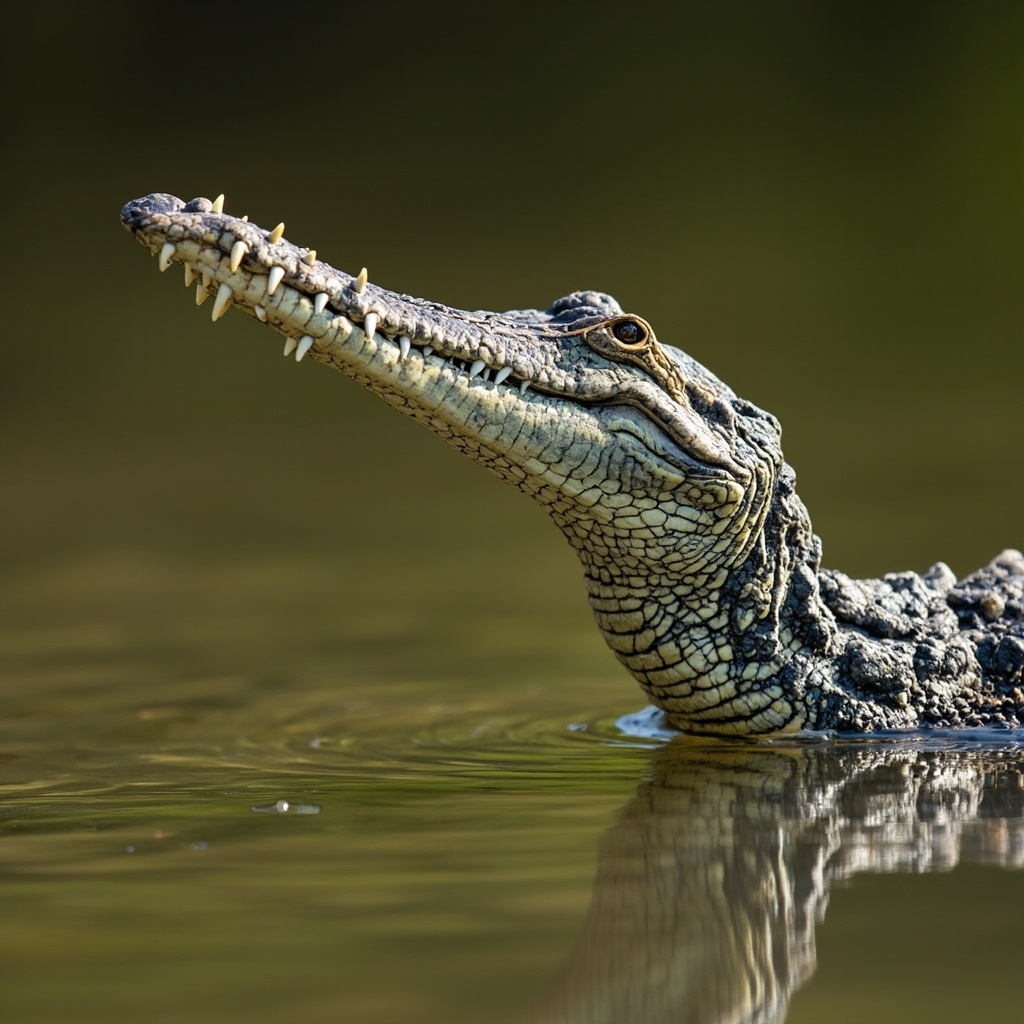
Gharial conservation depends on preserving river habitat, protecting nesting sandbanks, reducing fishing-net entanglement, and supporting carefully monitored breeding or head-starting programs. Sand mining, overfishing, dams, and riverbank disturbance all disrupt the conditions this critically endangered species needs.
Habitat Preservation Efforts
Effective habitat preservation efforts for the gharial are crucial to ensure the survival of this critically endangered species. The National Chambal Sanctuary in North India is a vital haven, safeguarding one of the most important remaining wild gharial populations. Preserving habitats here involves several key steps to combat habitat loss and disruption.
First, regulating fishing practices is crucial. Conservationists work to reduce the risk of gharials getting entangled in fishing nets, a common cause of injury and death. Maintaining natural river flow is also essential to ensure gharials have access to their preferred deep water habitats.
| Key Efforts | Description | Impact on Gharials |
|---|---|---|
| Establishing Protected Areas | Creation of the National Chambal Sanctuary | Protects a major breeding population |
| Regulating Fishing Practices | Reduction of net entanglement risks | Decreases injury and mortality rates |
| Preventing Sand Mining | Conservation of nesting sandbanks | Ensures successful breeding sites |
Preventing sand mining also helps conserve the sandbanks where gharials nest, ensuring their eggs are safe from human interference and natural predators. These combined efforts are critical in mitigating habitat disruption and promoting a stable environment for the gharials to thrive.
Breeding Program Initiatives
In the fight to save the critically endangered gharial, conservationists in India and Nepal have turned to captive-breeding programs. They meticulously collect eggs from riverbanks and nurture them to ensure the survival and genetic diversity of future generations.
In Nepal, this program has been a ray of hope since 1978, releasing over 7,000 hatchlings back into the wild. Each year, dedicated teams scour riverbanks to collect eggs, ensuring they are incubated safely away from natural threats. The reintroduced gharials have bolstered wild populations, marking a significant conservation success.
India’s National Chambal Sanctuary has also been central to head-starting and release work. The process involves not just breeding and releasing juveniles, but also monitoring survival, reducing fishing-net deaths, and protecting nesting sandbanks so released animals can contribute to wild populations.
Beyond boosting numbers, these programs reduce inbreeding and enhance genetic diversity. They also promote community engagement through education and outreach, fostering coexistence. In the grand scheme of conservation, these breeding programs offer a hopeful future for the gharial.
Anti-Poaching Measures Implementation
Implementing anti-poaching measures is crucial to protecting gharials in their natural habitats. Establishing protected areas provides a safe haven for these reptiles to thrive without human interference. Regular patrolling and monitoring of these regions are vital to deter poachers and ensure the safety of the gharials.
A multi-faceted approach is necessary for effective anti-poaching efforts. Patrolling teams, comprising local community members, play a key role in surveilling critical habitats. The use of monitoring technology, such as drones and camera traps, enables prompt detection and response to threats. Educating local communities about the importance of gharial conservation fosters cooperation and reduces human-gharial conflicts.
Key components of anti-poaching measures include:
| Component | Description | Impact |
|---|---|---|
| Patrolling | Regular surveillance by trained teams | Deters poachers |
| Monitoring | Use of drones and camera traps | Enables real-time threat detection |
| Community Education | Awareness programs for local populations | Promotes coexistence and cooperation |
Interesting Facts
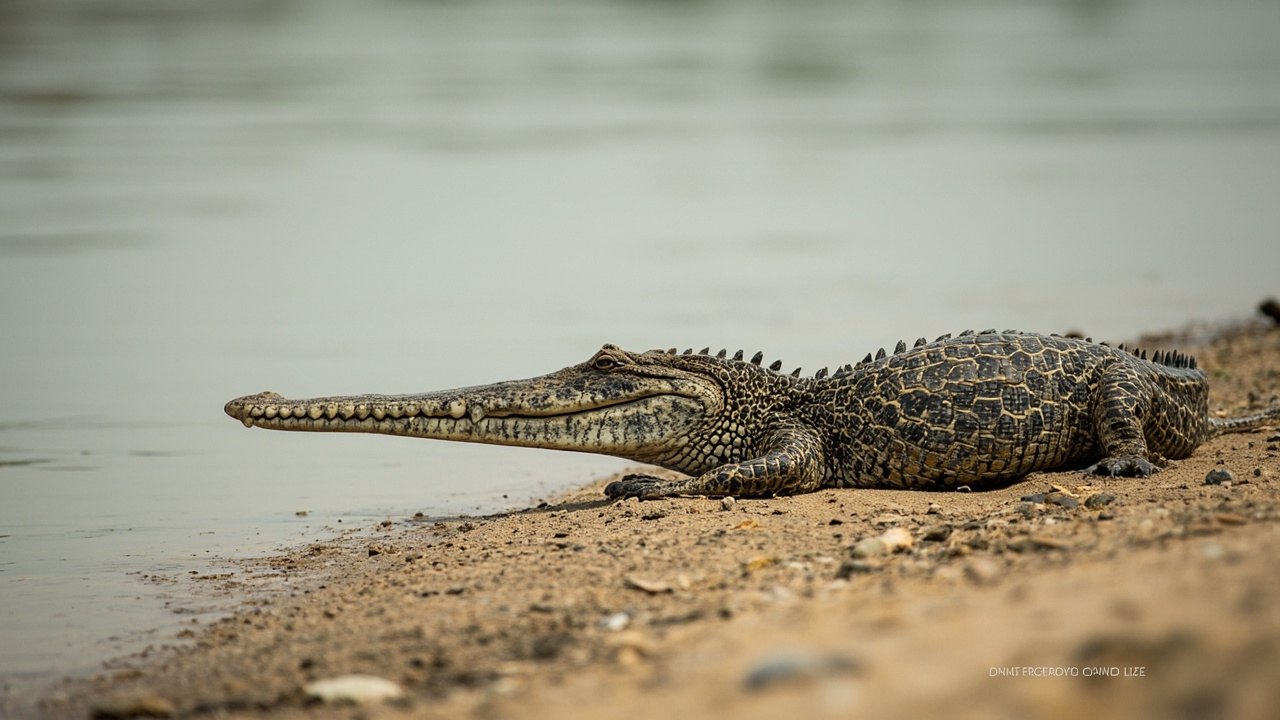
Delving into the fascinating world of the gharial, you’ll find their distinct narrow snouts aren’t just for show—they’re perfectly adapted for catching fish with astonishing precision. The gharial population, mainly aquatic, thrives in the rivers of India and Nepal, particularly in Chitwan National Park and the Chambal River. However, these magnificent reptiles are now critically endangered, with habitat loss and fishing nets posing significant threats to their survival.
Gharials eat fish almost exclusively, thanks to their long, slender jaws filled with interlocking sharp teeth, making them expert fishers. One unique feature is the male’s nasal protuberance, a bulbous growth on the tip of their snout, which they use to produce a buzzing sound during mating rituals. This fascinating adaptation not only adds to their charm but plays a vital role in their reproductive success.
Despite their intimidating appearance, gharials are relatively harmless to humans. Their narrow jaws are ill-suited for attacking large prey. Observing them glide effortlessly through the water, it’s clear they are true masters of their environment, embodying both elegance and precision in their aquatic domain. To learn more about how gavialids like the gharial fit into the broader crocodilian family tree, see our guide to how gavialids differ from crocodiles and alligators.
Frequently Asked Questions
Why Do Gharials Have Narrow Snouts?
Gharials have narrow snouts because this unique feature gives them an edge when catching fish. Their elongated, thin jaws minimize water resistance, allowing for swift and precise movements. This specialized snout is perfectly suited to their aquatic, fish-eating lifestyle, making hunting more efficient.
How Many Gharials Are Left in the Wild?
The gharial is listed as critically endangered by the IUCN, with wild population estimates showing a severe decline from historical numbers. Once found across much of the Indian subcontinent’s major river systems, the species is now confined to a handful of river sanctuaries in India and Nepal. While exact counts fluctuate, the wild population is estimated to number in the hundreds of individuals, making conservation action urgently necessary.
Why Is the Gharial Endangered?
The gharial’s critically endangered status results from decades of habitat loss and human disturbance. Key threats include sand mining that destroys nesting sandbanks, fishing net entanglement that kills adults and juveniles, water pollution that depletes fish stocks, and dam construction that alters river flow. The species’ highly specialized diet and reliance on specific river conditions make it particularly vulnerable to environmental change. Conservation programs in India and Nepal have had successes, but the gharial’s road to recovery remains challenging.
Is a Gharial a Crocodile?
A gharial isn’t a crocodile in the classical sense; it belongs to a distinct family called Gavialidae. Its unique features, such as a long, thin snout and interlocking teeth, are specifically designed for catching fish, making it a fascinating creature.