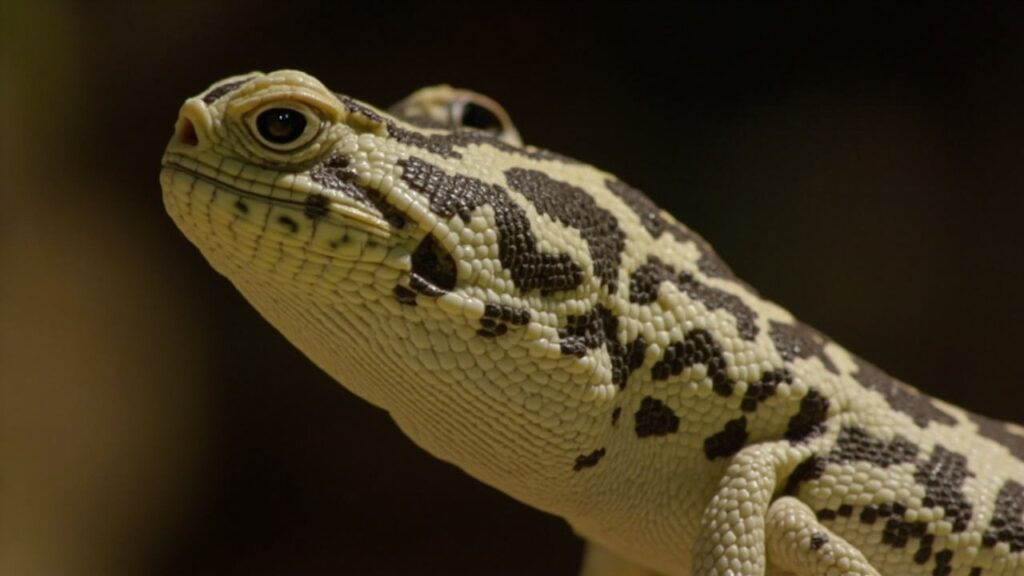
Snakes do not unhinge or dislocate their jaws to eat. Their skulls are built with many mobile joints, and the two halves of the lower jaw are joined by flexible ligaments rather than fused into one rigid bone. That anatomy allows a snake to open its mouth remarkably wide without breaking anything.
How a snake opens its mouth
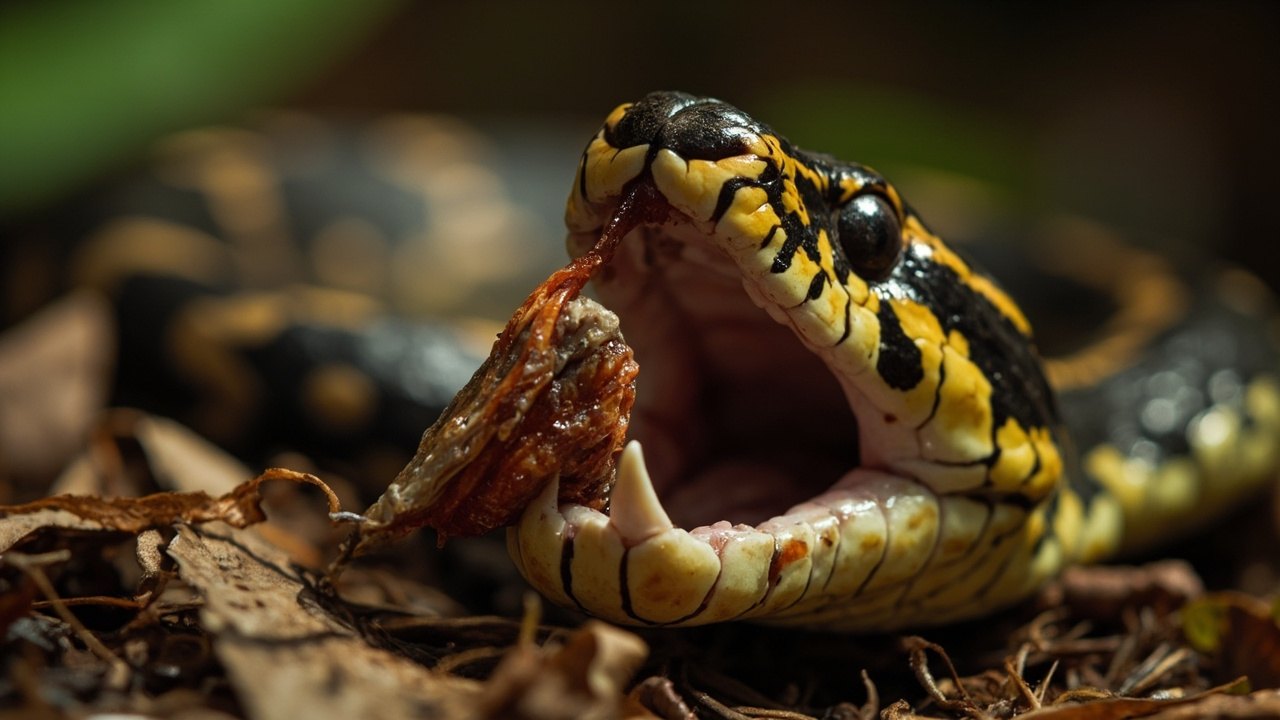
Movable bones, including the quadrate bone, let the upper and lower parts of the skull shift as the mouth opens. The exact range of movement varies by species and by the shape of the prey. A large gape is an adaptation, not an injury.

Moving prey inward
After a snake has secured prey, it uses alternating movements of the jaws and palate to advance it toward the throat. This is often called a pterygoid walk. The process can look dramatic, but it is a controlled sequence of movements rather than a jaw being popped out of place.
Limits still matter
Snakes do not simply swallow anything bigger than their heads. Prey size, body shape, the snake’s own anatomy and the risk of injury all set limits. A snake that is struggling to feed, regurgitates repeatedly or shows a swollen jaw needs assessment by a qualified wildlife rehabilitator or reptile veterinarian.

The useful takeaway
The myth comes from a real observation: snake skulls are unusually flexible. The accurate explanation is more interesting. Their feeding system combines mobile bones, elastic ligaments and coordinated muscle action to handle prey efficiently.
Flexible Does Not Mean Unlimited
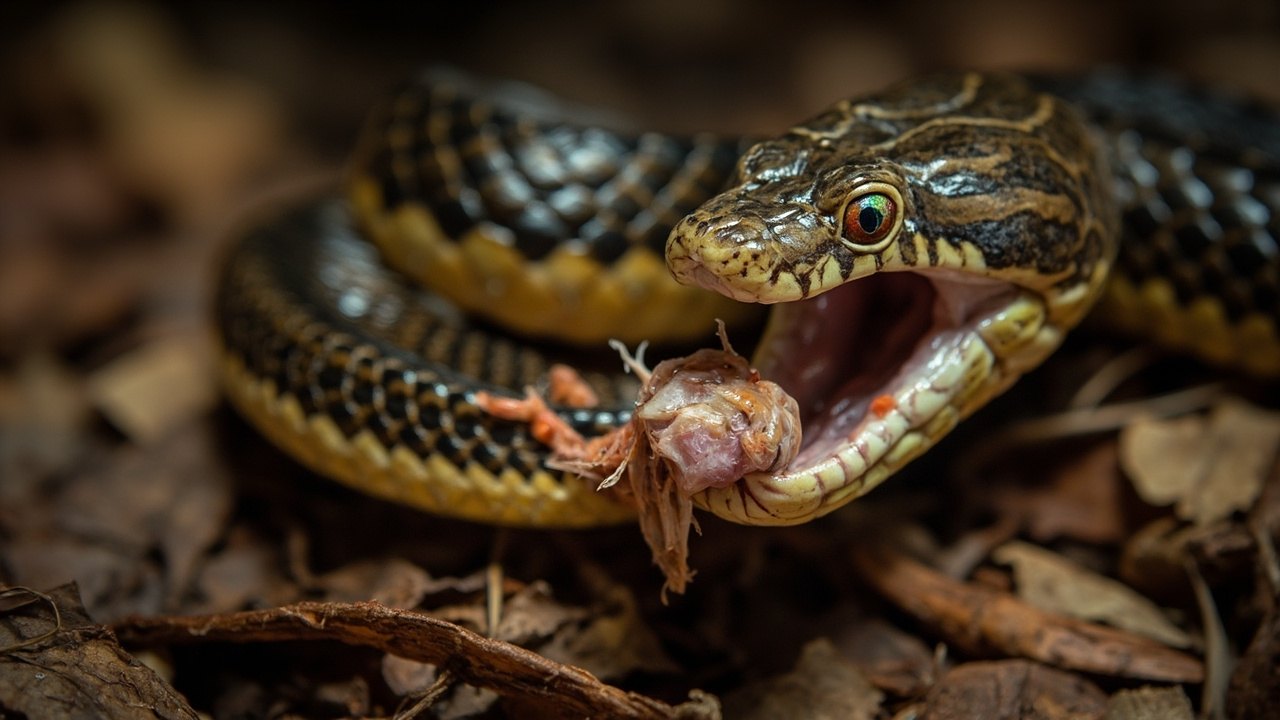
The mobile parts of a snake’s skull work together within anatomical limits. The prey’s width, shape and the snake’s condition all influence whether feeding can proceed safely. A dramatic gape does not show that the animal can swallow anything placed in front of it. This is why large or unsuitable prey should not be used to create a spectacle.
Feeding Should Be Observed Calmly
Once feeding has begun, handling the snake or trying to reposition prey can interrupt a coordinated process and create stress or a bite risk. A keeper can observe from a distance and record concerns for a veterinarian. Repeated regurgitation, swelling, laboured movement of the jaw or refusal to feed after a previous problem requires professional assessment.
Anatomy Explains the Myth
The familiar word unhinge describes what the movement looks like to many people, but it does not describe a dislocation. Understanding the flexible joints and ligaments helps replace a sensational claim with a more accurate view of how snakes feed.
Sources and review notes
Reviewed 23 August 2026. Reptile biology is wonderfully variable. We have avoided turning one species, photograph or dramatic observation into a rule for an entire group, and we have used cautious wording where evidence or local conditions differ.
Reference starting points: The Reptile Database, The IUCN Red List of Threatened Species, and PubMed-indexed research. Conservation status, taxonomy and local laws can change, so check the linked databases and the relevant local authority for current information.
Spotted something we should revisit? Send Reptile Explorer a correction—thoughtful reader feedback is always welcome.