Desert Horned Viper Sand Swimming

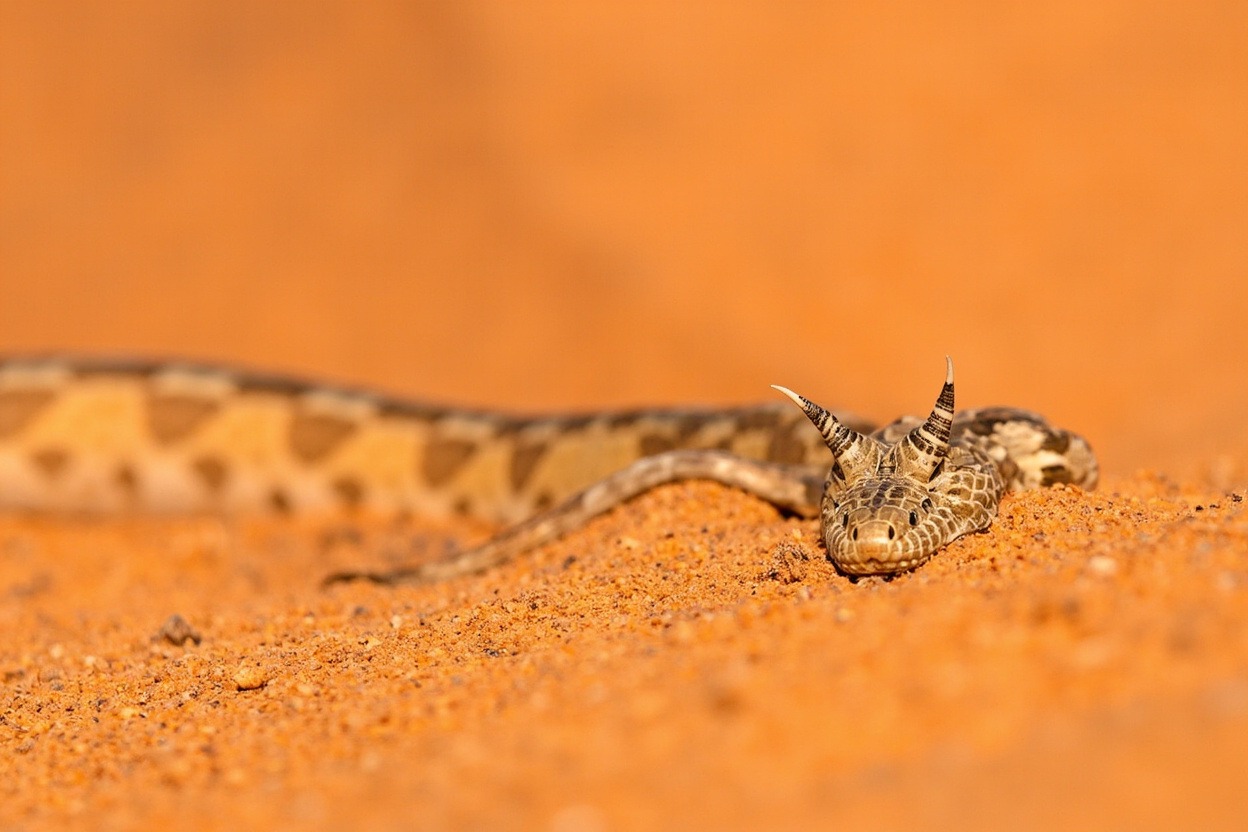
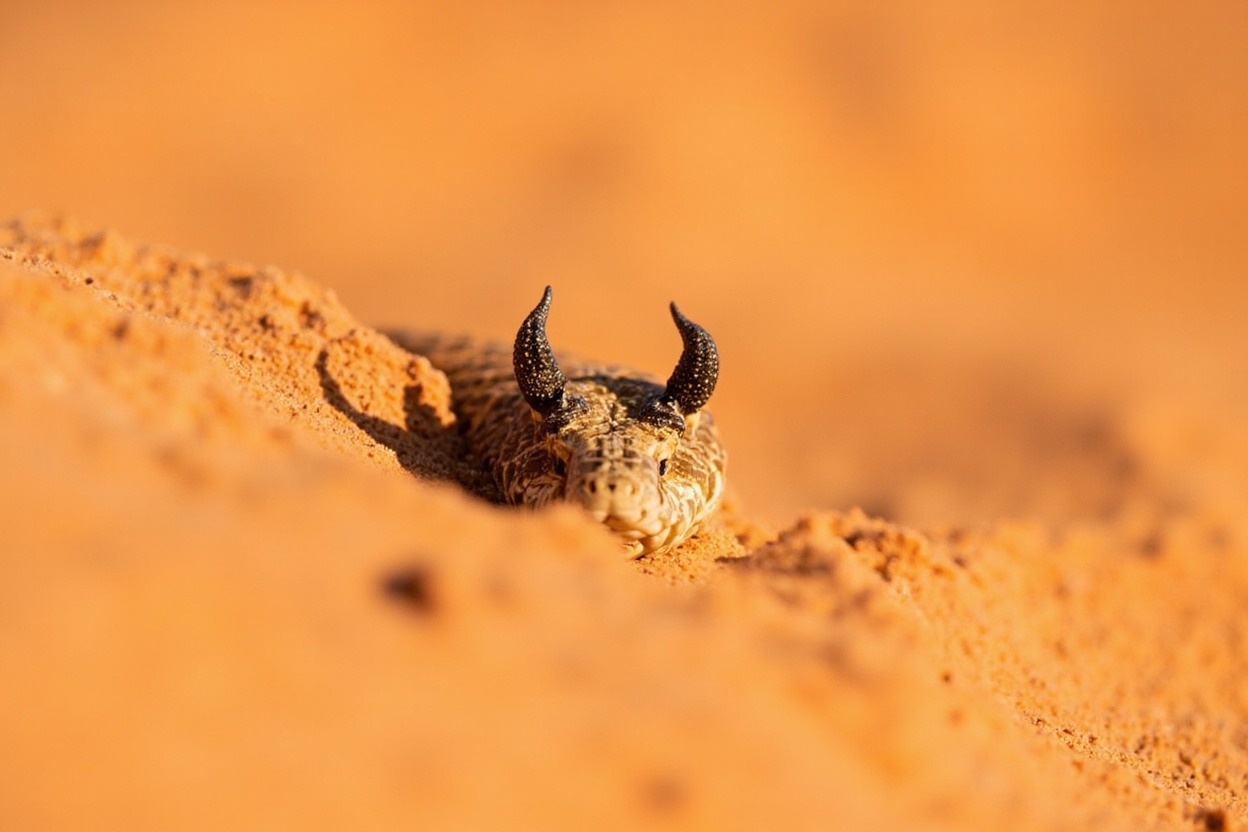
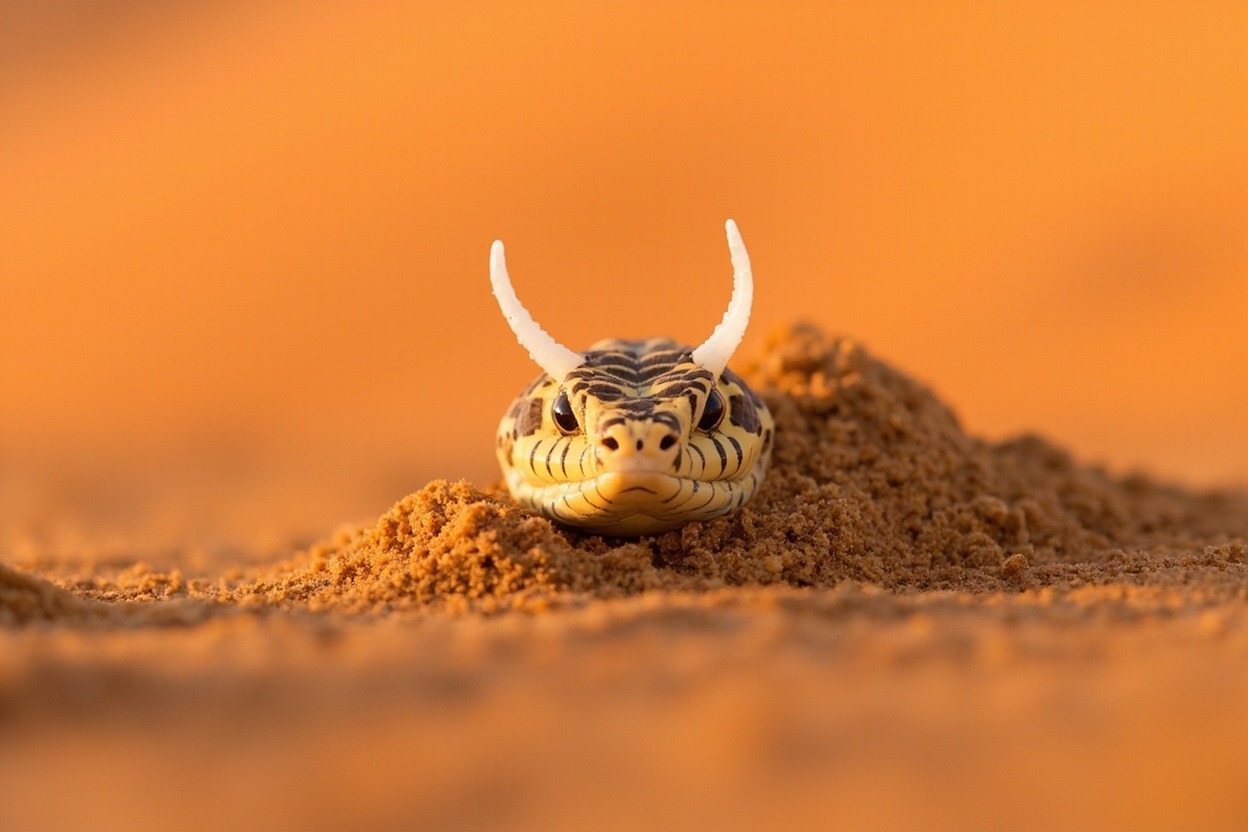
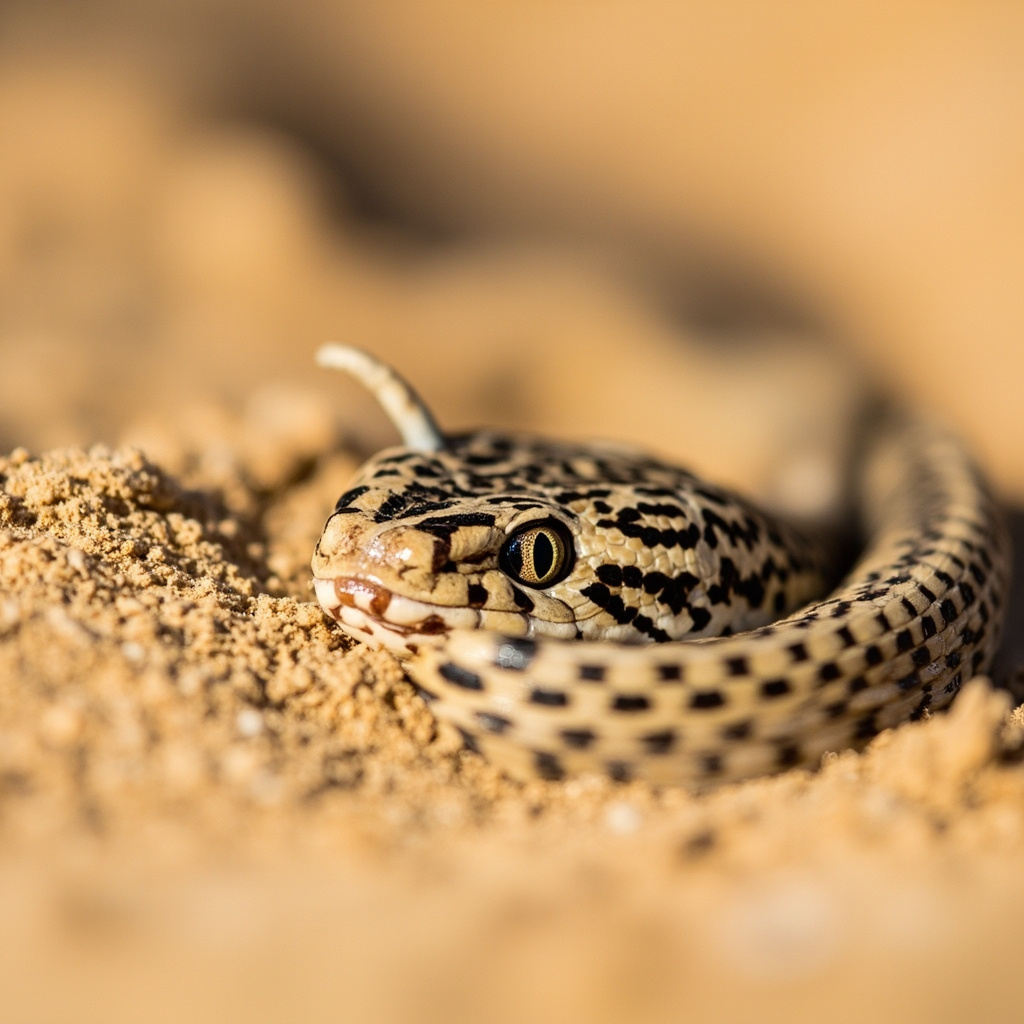
The desert horned viper's unique movement, known as sidewinding, helps it cross loose sand while keeping much of its body off the hot surface. Its keeled, rough scales provide grip on shifting dunes. When the viper buries itself, its eyes and horn-like scales can remain near the surface, helping it stay concealed while watching for prey and threats.

Habitat and Range

Youtube video

The desert horned viper, Cerastes cerastes, has adapted to the harsh, arid landscapes of North Africa and the Middle East. Across sandy deserts such as those in Egypt, this snake survives by combining camouflage, ambush hunting, and efficient sidewinding movement. Cerastes cerastes is often described as a "sand swimmer" because of the way it moves through and over loose sand.

In the vast regions of northern Africa, from Morocco to Egypt, and extending into the arid terrains of the Middle East, these vipers have carved out a niche for themselves. They prefer areas with fine sand, which allows them to burrow and camouflage effortlessly. This habitat provides not only a hunting ground but also a sanctuary from predators.

Behaviour can vary with local climate and terrain. In many desert settings, these vipers are most active during cooler periods such as dusk or night, when camouflage and lower temperatures improve their chances of hunting successfully.

Physical Characteristics

describing human body traits

The desert horned viper has coloration and patterns that blend into sandy terrain. Its keeled scales and body shape support sidewinding, burrowing, and ambush hunting, giving it vital survival advantages in harsh desert environments.

Coloration and Patterns

Here's how the Desert Horned Viper's coloration helps it thrive in the desert. The snake's hues of gray, yellow, and brown blend seamlessly with the shifting sands of its arid habitat. This remarkable camouflage isn't just for show; it's crucial for survival. The viper's rough, keeled scales are not only fascinating to touch but also play a pivotal role in its ability to stay hidden.

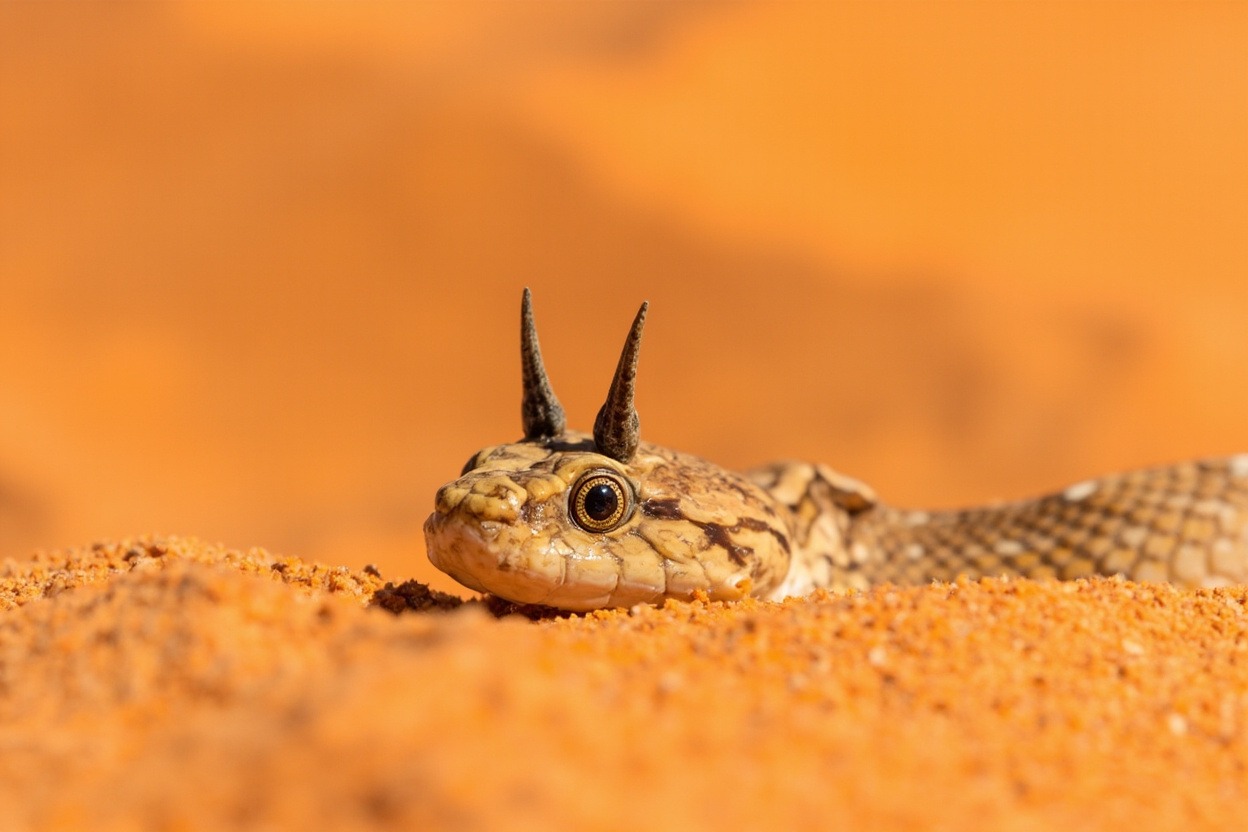
The horned viper's supraorbital horns, perched above its eyes, match its sandy color scheme, making it even harder to detect. This camouflage is vital for evading predators and ambushing prey. While the snake's color patterns can vary, they consistently feature shades of brown, gray, and yellow, ensuring it stays concealed in its environment.

When the Desert Horned Viper moves, its body undulates through the sand, its coloration and keeled scales working together to maintain its stealth. This intricate blend of form and function showcases the remarkable adaptability of this desert dweller.

Body Shape Adaptations

The Desert Horned Viper's robust, cylindrical body is perfectly suited for burrowing through the shifting sands of its arid habitat. Its narrow neck merges into a thick midsection, tapering into a short, thin tail, allowing it to glide effortlessly through the sand.

The viper's rough, keeled scales provide both camouflage and functionality. These scales play a critical role in its burrowing technique, reducing friction as the viper moves its body back and forth to dig into the sand.

The viper's physical traits are well-suited for its desert environment:

  • Body Shape: Its cylindrical shape facilitates smooth movement through sand.
  • Scales: Rough and keeled, these scales aid in camouflage and reduce friction.
  • Coloration: Gray, yellow, or brown, blending seamlessly with the sandy environment.

The viper's broad, flat head and round snout, equipped with center-ridged scales and forward-set eyes, enhance its ability to navigate and hunt in its desert home. This combination of physical traits makes the Desert Horned Viper a master of its sandy domain.

Sand Swimming Mechanics

realistic beach interaction systems

The Desert Horned Viper's sand swimming mechanics rely on a unique sidewinding motion, where it contracts and relaxes its muscles to push its body forward in a wave-like pattern, allowing it to move through the sand with remarkable efficiency. This motion is crucial for the viper to navigate its sandy environment. Watching the venomous snake in action is mesmerizing, with each muscle contraction perfectly timed to propel it forward.

The viper's scales are keeled and rough, providing the necessary grip to push through the sand. These scales also help deflect sand away from its face during sandstorms. The horns above its eyes serve a similar purpose, ensuring the viper can see even when burrowing deeply into the sand. It can bury itself in under a minute, becoming nearly invisible except for its eyes and horns – an extraordinary adaptation for both ambush and evasion.

The snake's stout, cylindrical body, broad flat head, and short thin tail are all perfectly adapted for digging and efficient movement through the sand. The viper's ability to trap morning dew in its scales also helps it conserve precious water, a critical survival tactic in the harsh desert environment.

Predation and Defense

evolutionary arms race strategies

In the harsh desert environment, the Desert Horned Viper has developed a range of strategies to survive and thrive. Its distinctive supraorbital horns help it blend seamlessly into the sandy terrain, creating effective camouflage. This viper's primary tactic is to lie in wait beneath the sand, hidden from unsuspecting prey.

When an opportunity arises, the viper strikes with precision, using its hinged hollow fangs to deliver venomous bites. This venom immobilizes prey almost instantly, guaranteeing a successful capture. The viper's diet consists mainly of small rodents, birds, and lizards, which it efficiently subdues using:

  1. Camouflage: The viper's coloration and horns allow it to blend into the desert landscape.
  2. Ambush: By hiding beneath the sand, it can launch surprise attacks on its prey.
  3. Venom: Its venomous bites are delivered through specialized fangs, immobilizing prey quickly.

On the defensive side, these vipers have developed ways to deter predators. Their venomous bites serve as a potent deterrent, while their ability to burrow and hide beneath the sand provides a quick escape route. This dual strategy of predation and defense allows the Desert Horned Viper to thrive in its arid habitat.

Reproductive Behavior

complexities of mating rituals

The Desert Horned Viper's reproductive behavior is adapted to harsh desert conditions. Females lay clutches of eggs in protected sites such as abandoned burrows or sheltered sandy areas (horned viper reproduction), where the eggs are buffered from the harshest surface conditions. Courtship is less well documented than the species' movement and ambush behaviour, so broad claims about underground mating displays should be treated cautiously.

Mating Rituals and Patterns

Desert Horned Vipers have a fascinating way of finding a mate. In the African desert, these venomous snakes put on an impressive show of attraction and competition. This complex courtship ritual highlights their adaptability and survival instincts.

Let's take a closer look at their mating rituals:

Males raise the front part of their bodies to appear larger and more intimidating, signaling their readiness to compete for a mate.

Rapid tail movements create vibrations that can be sensed by potential mates, enhancing communication in the sandy terrain.

Both males and females use pheromones to mark their territory and signal their availability, adding a chemical dimension to their courtship.

During this elaborate courtship, males often engage in physical confrontations, like wrestling and biting, to establish dominance and secure mating rights. This isn't just about attracting a mate, but also about ensuring that the strongest and fittest individuals pass on their genes, which helps the species survive in the harsh desert environment.

Egg-laying and Incubation

How does the female Horned Viper ensure her offspring's survival in the harsh desert environment? After mating, she carefully selects a secure location, often an abandoned rodent burrow or beneath rock ledges, to lay her eggs. These spots provide natural protection against predators and the desert climate. She typically lays a dozen to two dozen eggs, which she conceals well to reduce their vulnerability.

The incubation period for these eggs lasts around 50 to 80 days. During this time, the sand temperature plays a crucial role in the development of the embryos. The finer, loose sand helps maintain a stable environment, essential for successful hatching. Burrowing into sand helps these vipers ambush prey and avoid extreme heat, while protected burrows or sheltered sandy sites can provide safer places for egg-laying.

Once the eggs hatch, the hatchlings, which average four to six inches in length, are left to fend for themselves. There is no parental care, so they must immediately adapt to their surroundings and find food. This independence from birth is a testament to their resilience, a vital trait for survival in the harsh desert landscape.

Diet and Hunting

polar bears catch fish

The desert horned viper is a master of disguise, blending seamlessly into the arid wilderness of the Sahara (Sahara Horned Viper care guide). Its cryptic coloration and excellent sense of smell allow it to ambush unsuspecting prey with ease. This snake's diet consists mainly of small mammals and birds, which it swallows whole.

To catch its prey, the desert horned viper employs a unique hunting technique:

It buries itself partially in the sand, leaving only its eyes and horns exposed, making it almost invisible.

The viper uses its acute sense of smell to locate prey, even in the dark.

When a mammal or bird approaches, the snake strikes swiftly, injecting venom that quickly incapacitates the victim.

The combination of these tactics makes the desert horned viper a formidable predator in its environment. Its remarkable ability to adapt to the harsh desert landscape has allowed it to thrive in this unforgiving ecosystem.

Conservation and Threats

protecting endangered species habitats

Despite its fearsome reputation, the desert horned viper faces significant threats to its survival in the wild. Native to the northern African regions, particularly the vast Sahara, this remarkable reptile is currently classified as 'Least Concern' by the IUCN. However, its status doesn't guarantee its safety.

Habitat degradation poses a significant threat. As humans expand their agricultural and urban activities, they encroach on the viper's natural habitats. Climate change is also altering the delicate balance of the desert ecosystem, causing a decline in the viper's prey base. This forces these reptiles and amphibians to adapt quickly or face starvation.

Here's a breakdown of the key threats:

Threat Impact
Habitat Degradation Loss of shelter and hunting grounds
Climate Change Altered prey availability
Human Activity Direct harm from urbanization

The illegal pet trade also poses a significant risk. While the desert horned viper's unique sand-swimming ability fascinates many, taking them out of the wild disrupts local populations. To ensure these vipers continue to thrive in their native habitat, vital conservation efforts are necessary. By raising awareness and implementing protective measures, we can give these magnificent creatures a fighting chance to survive.

Frequently Asked Questions

Are Desert Horned Vipers Poisonous?

Desert horned vipers are indeed venomous. Their hemotoxic venom can cause severe symptoms like hemorrhaging and necrosis. While their venom is relatively mild compared to other snakes, prompt medical attention is still crucial after a bite.

Why Should You Be Careful of a Sand Viper?

Sand vipers are well camouflaged and may stay partly buried, so an unseen snake can bite if stepped on or handled. Their venom can cause pain, swelling, tissue injury, and other complications, so anyone exploring desert habitat should watch where they place hands and feet and avoid disturbing snakes.

What Happens if You Get Bit by a Sand Viper?

Getting bitten by a sand viper can be extremely painful and cause significant swelling and tissue damage due to its potent venom. If you're bitten, don't delay – seek medical help right away to prevent serious complications like necrosis or systemic effects.

What Happens if You Get Bit by a Horned Viper?

A horned viper bite can cause intense pain, rapid swelling, tissue damage, and clotting problems. Prompt medical attention is important because symptoms can worsen and complications may become serious without treatment.

Scroll to Top