How the Colour Change Works
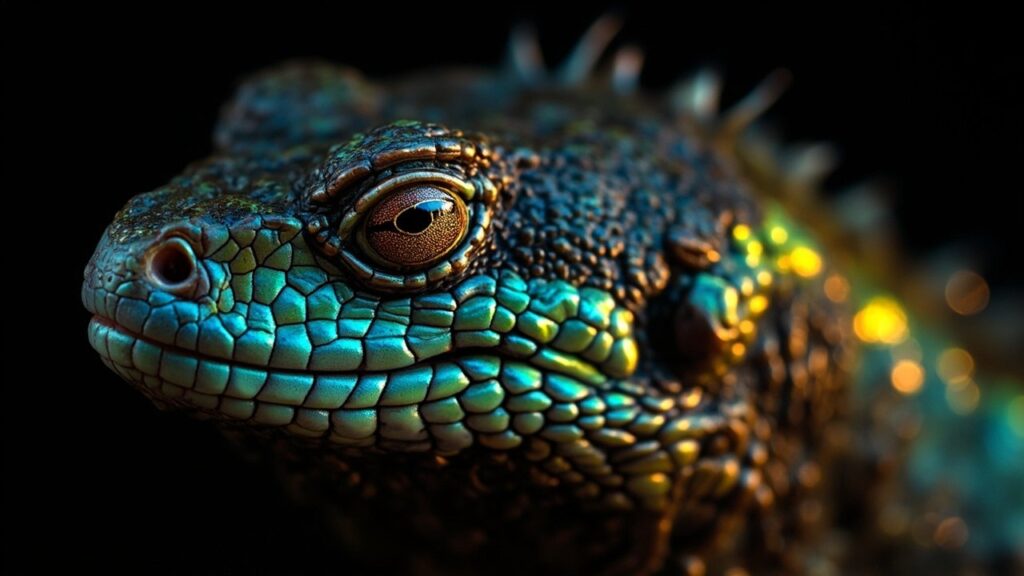
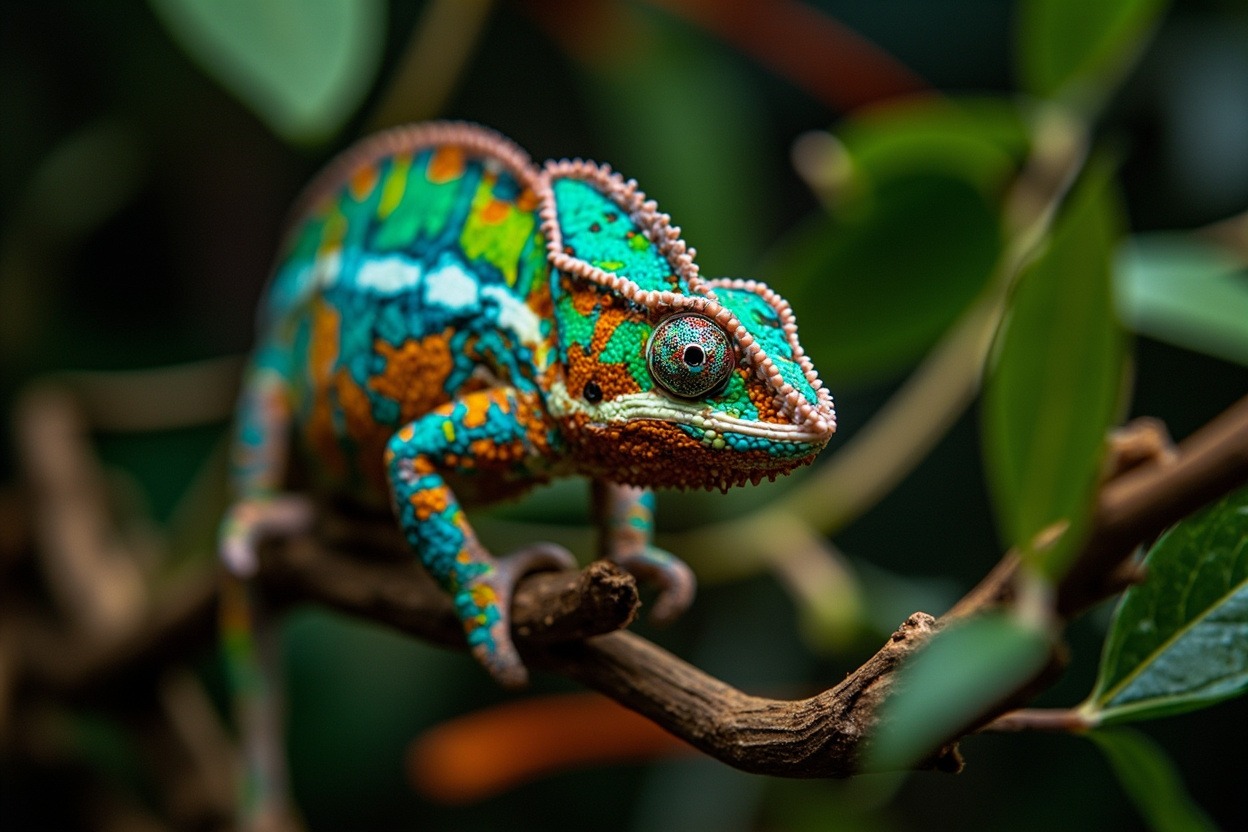
Panther chameleons, Furcifer pardalis, have specialised skin cells that shape their striking colours. In adult males, superficial iridophore cells contain ordered guanine nanocrystals. Changes in the spacing of those crystals alter the wavelengths of light reflected from the skin.

Colour Is Context-Dependent
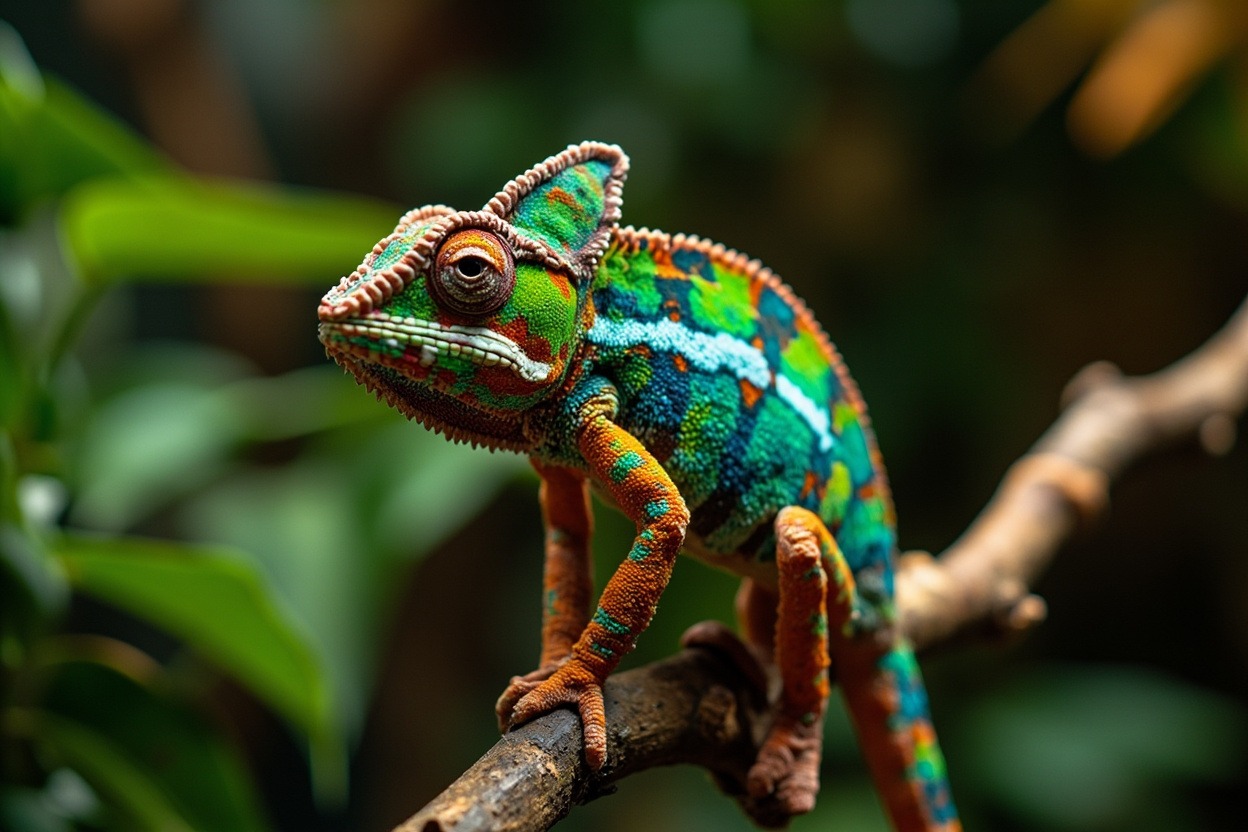
Rapid hue changes are especially well documented in adult males during social encounters, including courtship and contests. Baseline colour and the range of visible change can also vary with sex, age, locality, lighting, and condition. A particular colour is not a universal or reliable translation of mood.
Reading the Animal Responsibly
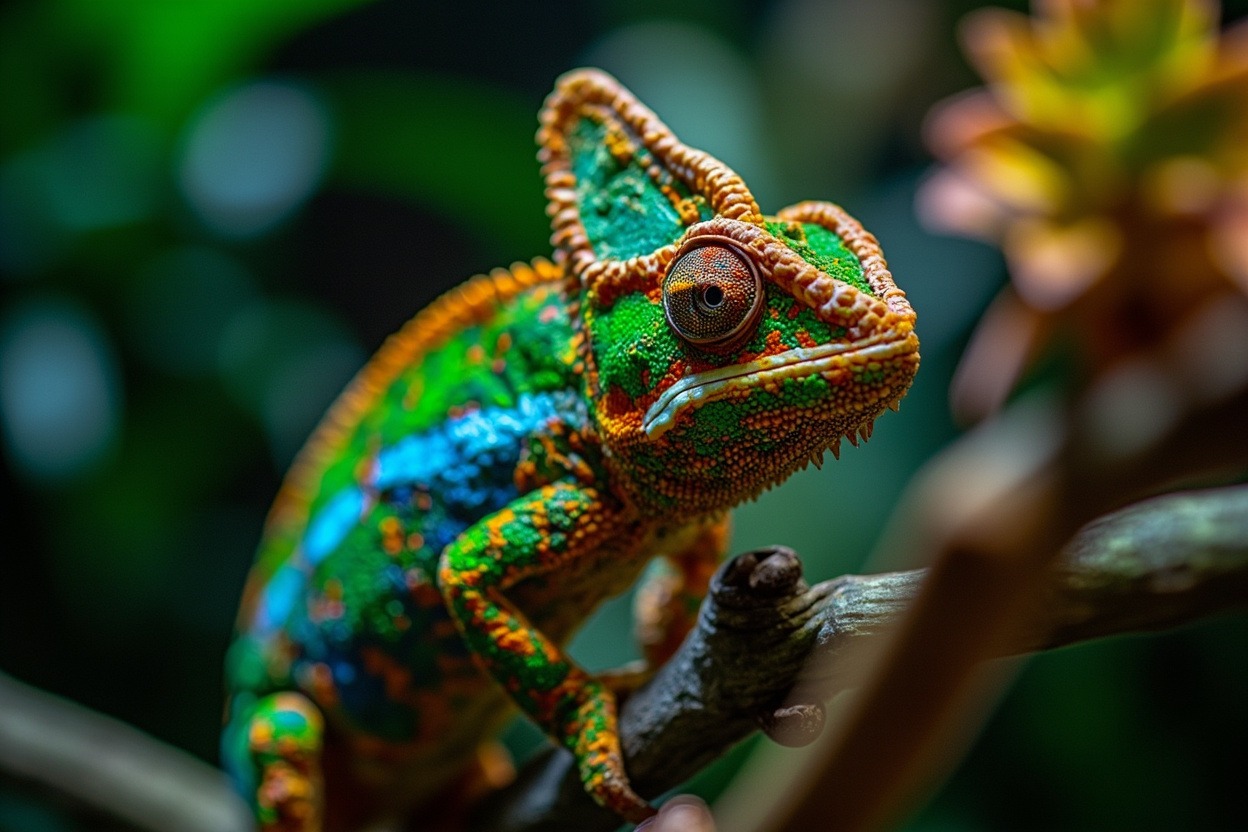
Colour change is only one part of a chameleon’s behaviour. Posture, movement, feeding, habitat use, and the immediate setting provide important context. Research on the skin’s optical structures is valuable because it explains a natural mechanism, not because it justifies fixed colour charts or unsupported claims about health and temperament.
Locality and light change what people see
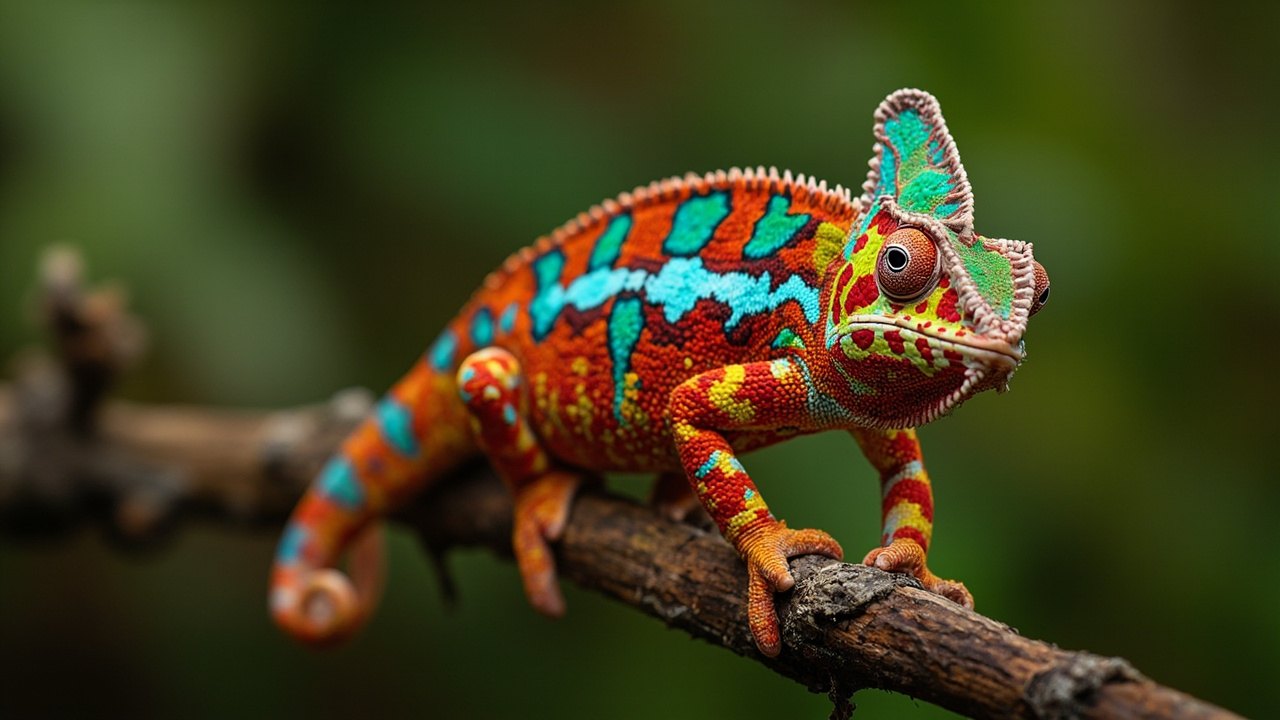
Panther chameleons are native to Madagascar, and populations from different localities can show different baseline colour patterns. A trade label based on a locality is not a substitute for scientific identification, and a photograph can change markedly with white balance, shade, flash, and the colour of nearby leaves. This is one reason fixed online colour charts are unreliable. The same individual may look different across photographs without making a clear statement about mood or health.
Colour displays should be interpreted alongside posture and the situation. An adult male facing another male may brighten or shift pattern during a social interaction, while a resting animal may show a different palette. Temperature, light exposure, and normal individual variation add more context. The iridophore mechanism explains how reflected light can change, but it does not create a simple dictionary in which every colour has one meaning.
Natural history gives colour its context
Panther chameleons use vegetation for movement, hunting, shelter, and social encounters. Their grasping feet, prehensile tail, and independently mobile eyes suit an arboreal life, while their colour is one part of a larger set of behaviours. When observing a wild or captive animal, avoid provoking a display for a photograph. A responsible account distinguishes between an observed response, a possible function supported by research, and a claim that cannot be established from colour alone.
Sources and review notes
Reviewed 23 August 2026. Reptile biology is wonderfully variable. We have avoided turning one species, photograph or dramatic observation into a rule for an entire group, and we have used cautious wording where evidence or local conditions differ.
Reference starting points: The Reptile Database, The IUCN Red List of Threatened Species, and PubMed-indexed research. Conservation status, taxonomy and local laws can change, so check the linked databases and the relevant local authority for current information.
Spotted something we should revisit? Send Reptile Explorer a correction—thoughtful reader feedback is always welcome.