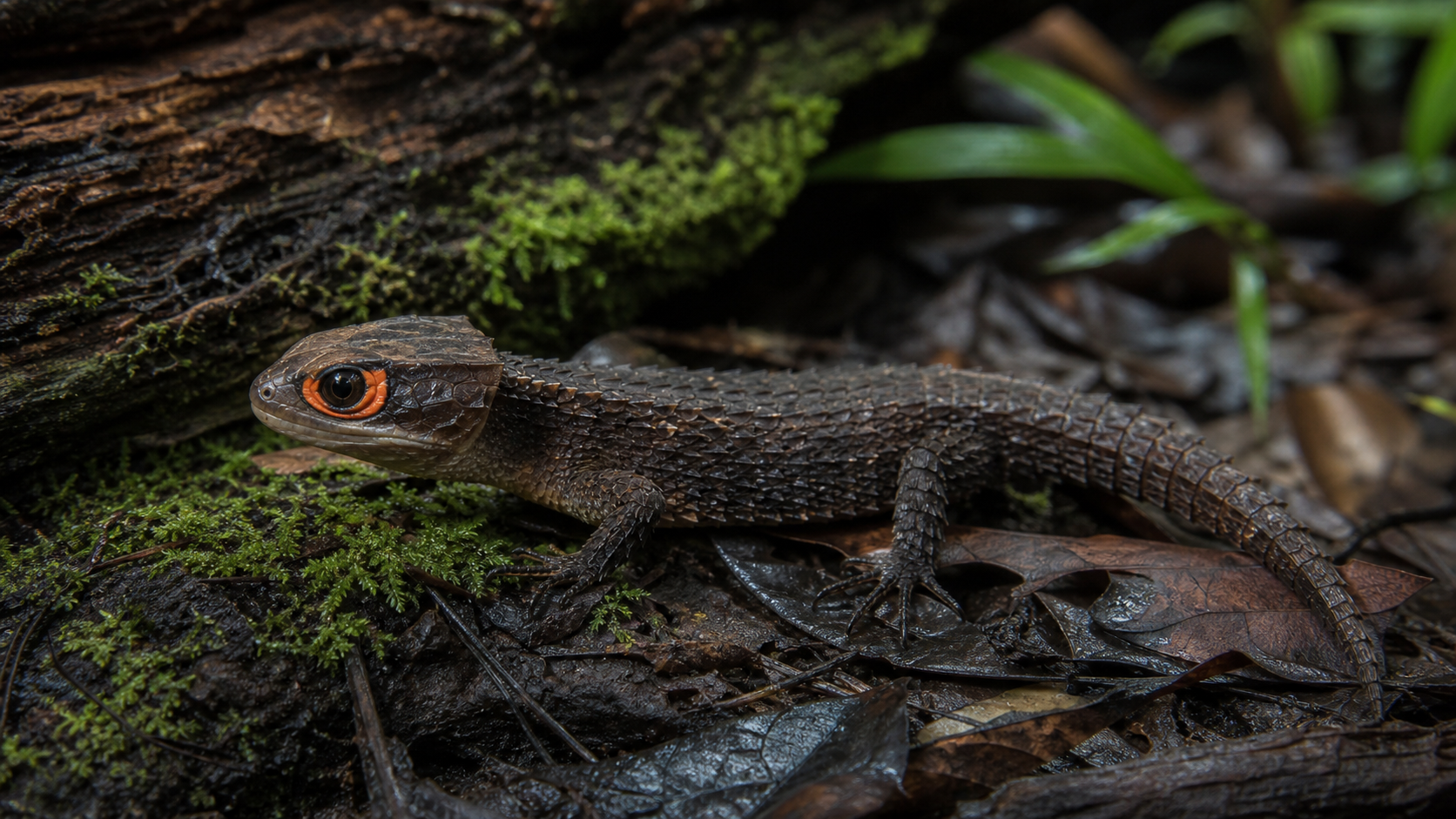
The red-eyed crocodile skink, Tribolonotus gracilis, is a small skink from New Guinea. Its rough, keeled scales and red-orange eye ring create a striking, prehistoric look, but it is not a crocodile and it is not a “living dragon.” Those are visual metaphors, not biological classifications.
What makes it distinctive?
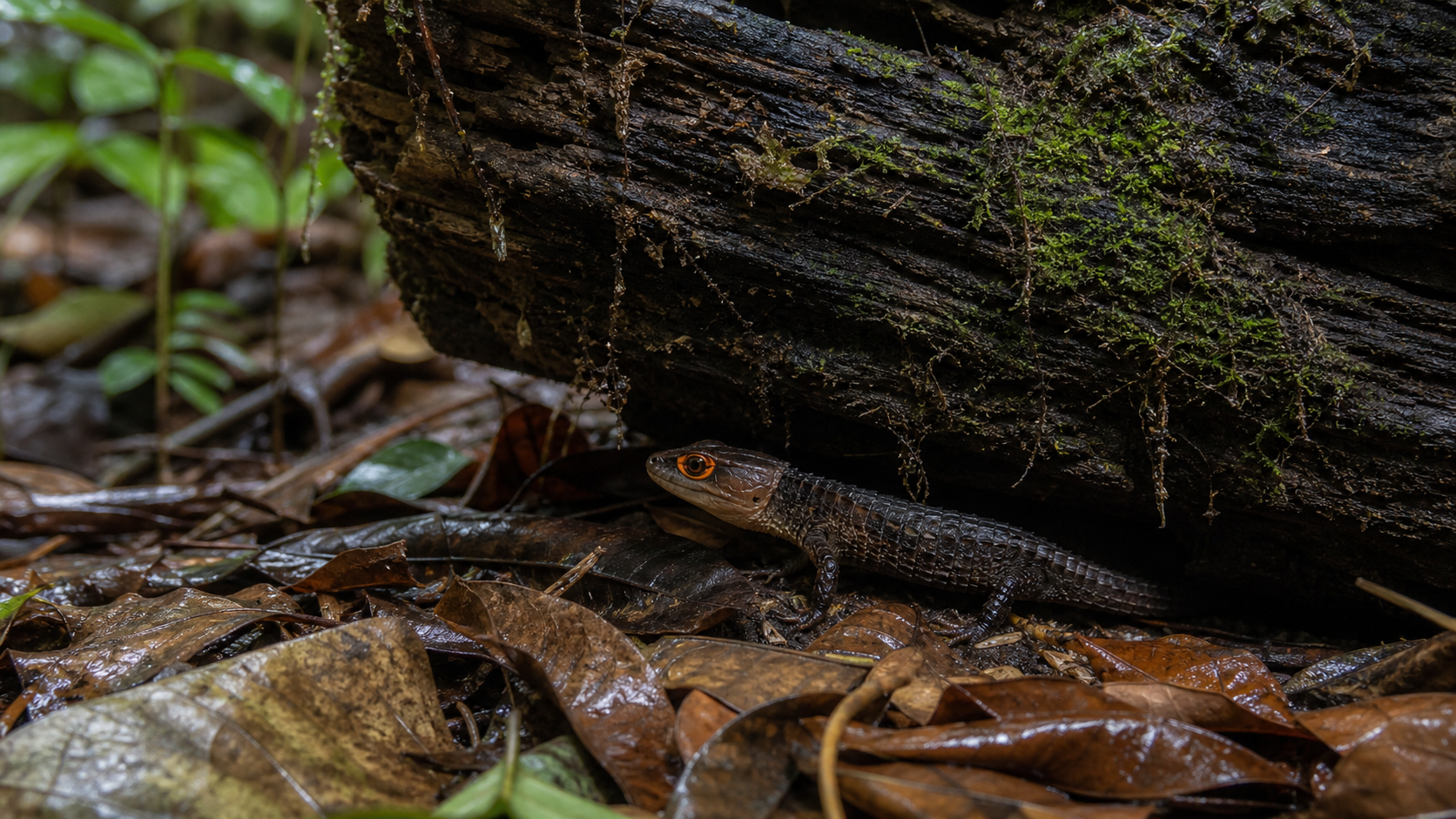
The common name refers to the animal’s crocodile-like texture, not to membership in the crocodilian group. Red-eyed crocodile skinks are ground-oriented forest reptiles associated with damp cover such as leaf litter, logs, and moss. Closely related Tribolonotus species are sometimes confused in photographs, so species labels should be used carefully.
Why accurate images matter
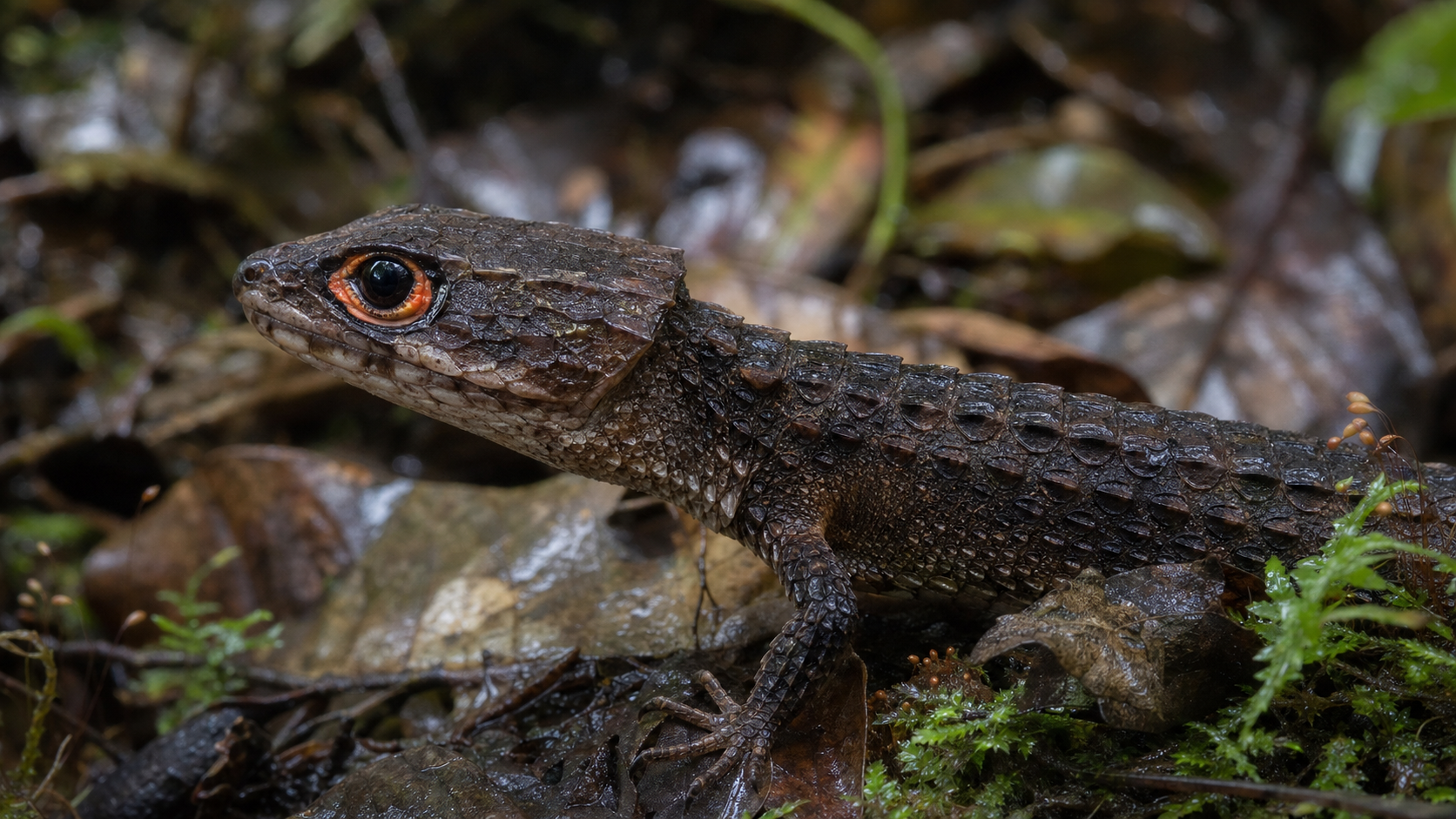
A bright green lizard, a crocodile, or a fantasy composite does not accurately show this species. A useful photo should show a verified Tribolonotus gracilis in appropriate cover and should not imply that the eye ring glows or that the animal is a miniature crocodile.
Look, do not impulse-buy
Unusual appearance does not make an animal an easy pet. Wild reptiles should not be collected, and anyone considering a captive animal should research legal, ethical, and species-specific care requirements before making a commitment.
Common Names Describe Appearance, Not Relatedness
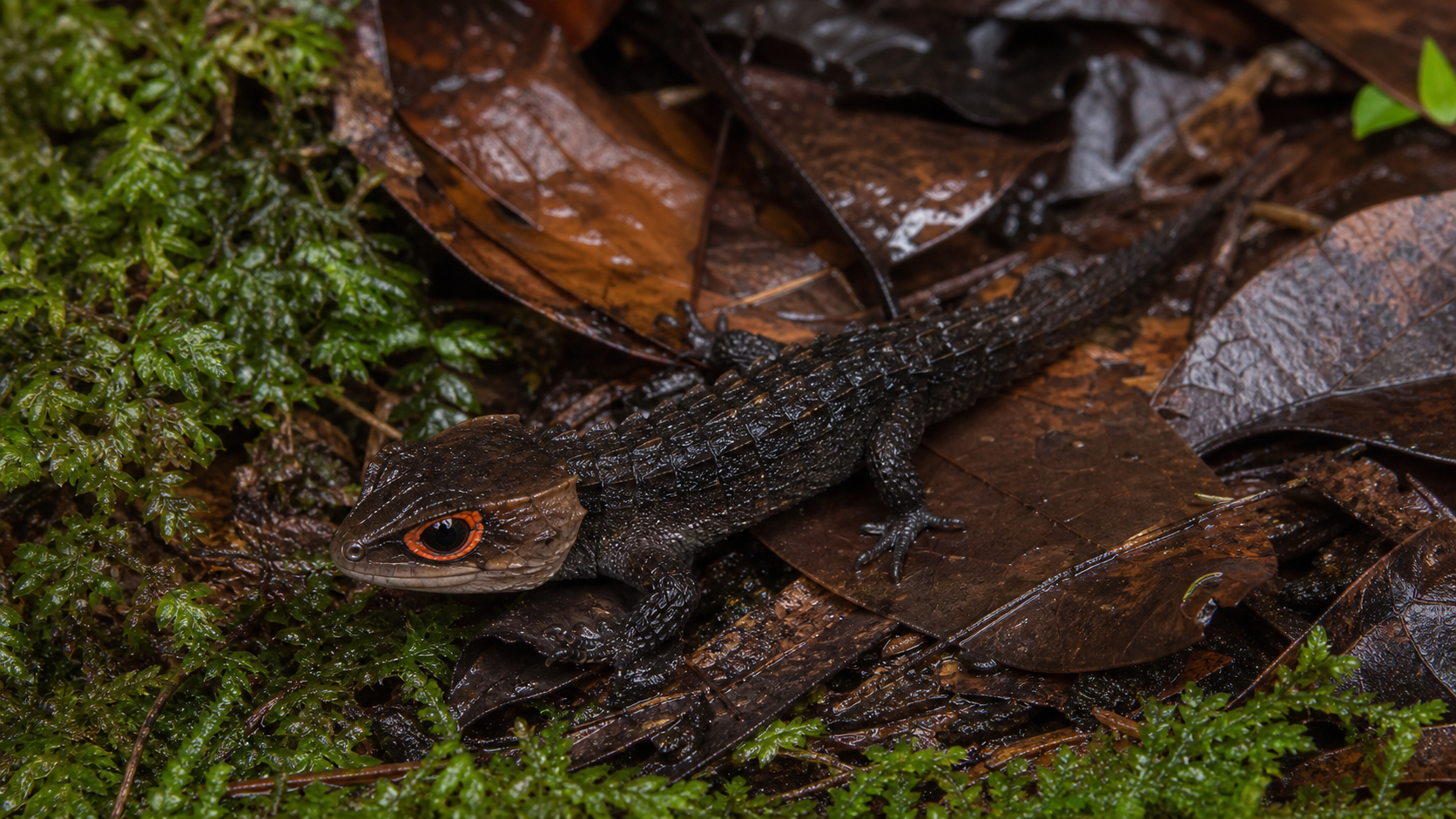
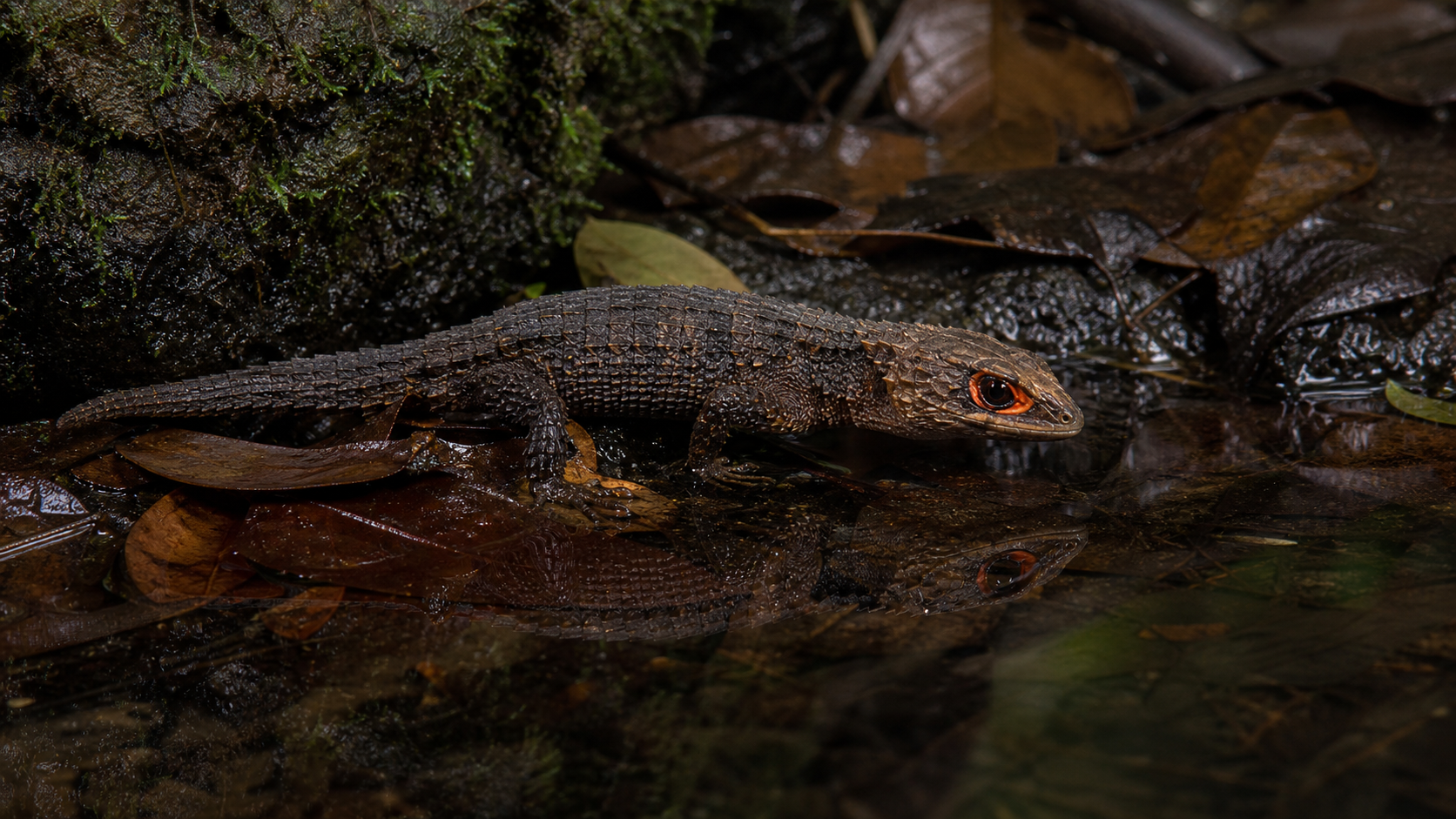
The red-eyed crocodile skink is a skink in the genus Tribolonotus. Its rough scales and eye ring create a distinctive appearance, but neither feature makes it closely related to crocodilians or to fantasy animals. A useful identification combines the body form, scale texture, eye markings, known range and, where needed, specialist comparison with related species.
New Guinea contains many habitats and many reptiles with restricted distributions. A label attached to a pet-shop image or social-media post may not be enough to establish species identity or origin. Precise naming matters because legal status, conservation concerns and husbandry information can differ among closely related animals.
Forest-Floor Cover Is Part of the Animal’s Setting
Leaf litter, moss, fallen wood and damp shelter are not decorative details in a photograph. They provide cover and support the invertebrate communities that forest-floor reptiles use. Removing an animal from cover for a picture can expose it to stress and predators, while a staged image may give viewers a poor impression of natural behaviour.
Unusual Looks Do Not Make a Simple Pet
Captive reptiles need lawful origin, species-specific conditions and access to appropriate veterinary care. Interest in a striking animal should lead to careful research, not impulse purchasing or collection from the wild. Observing wildlife without handling it is the safer choice for both animal and observer.
Sources and review notes
Reviewed 23 August 2026. Reptile biology is wonderfully variable. We have avoided turning one species, photograph or dramatic observation into a rule for an entire group, and we have used cautious wording where evidence or local conditions differ.
Reference starting points: The Reptile Database, The IUCN Red List of Threatened Species, and PubMed-indexed research. Conservation status, taxonomy and local laws can change, so check the linked databases and the relevant local authority for current information.
Spotted something we should revisit? Send Reptile Explorer a correction—thoughtful reader feedback is always welcome.