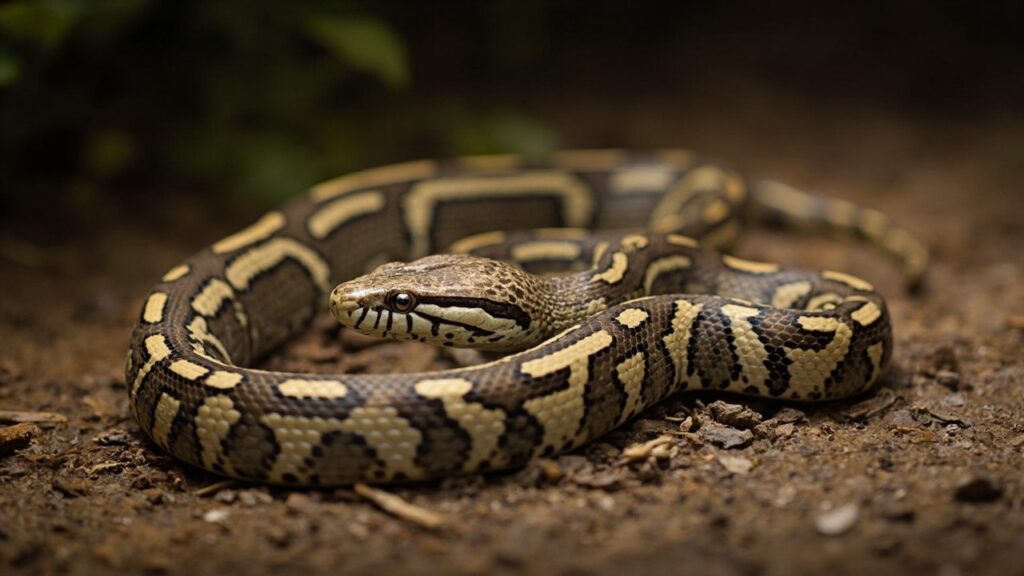
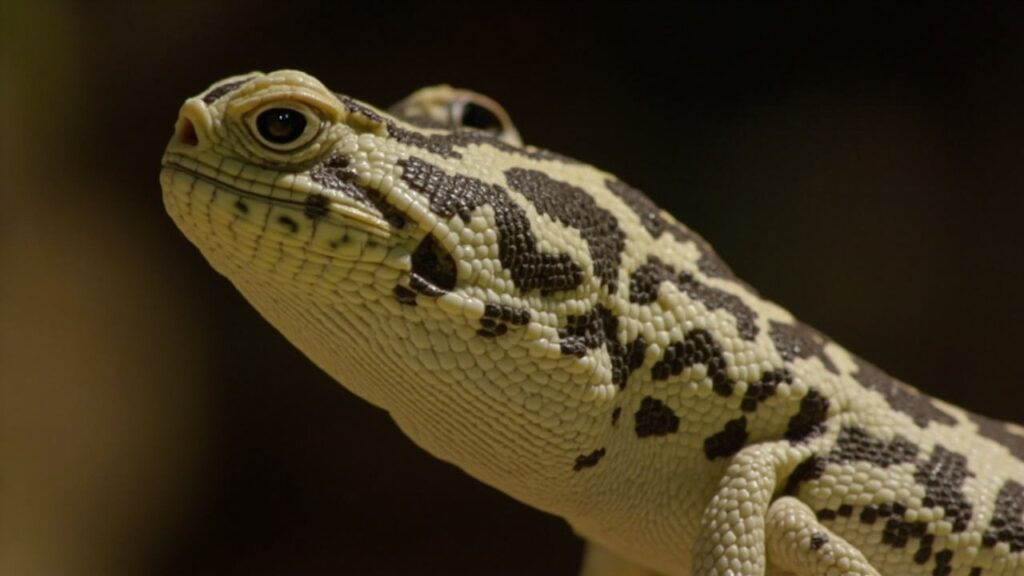
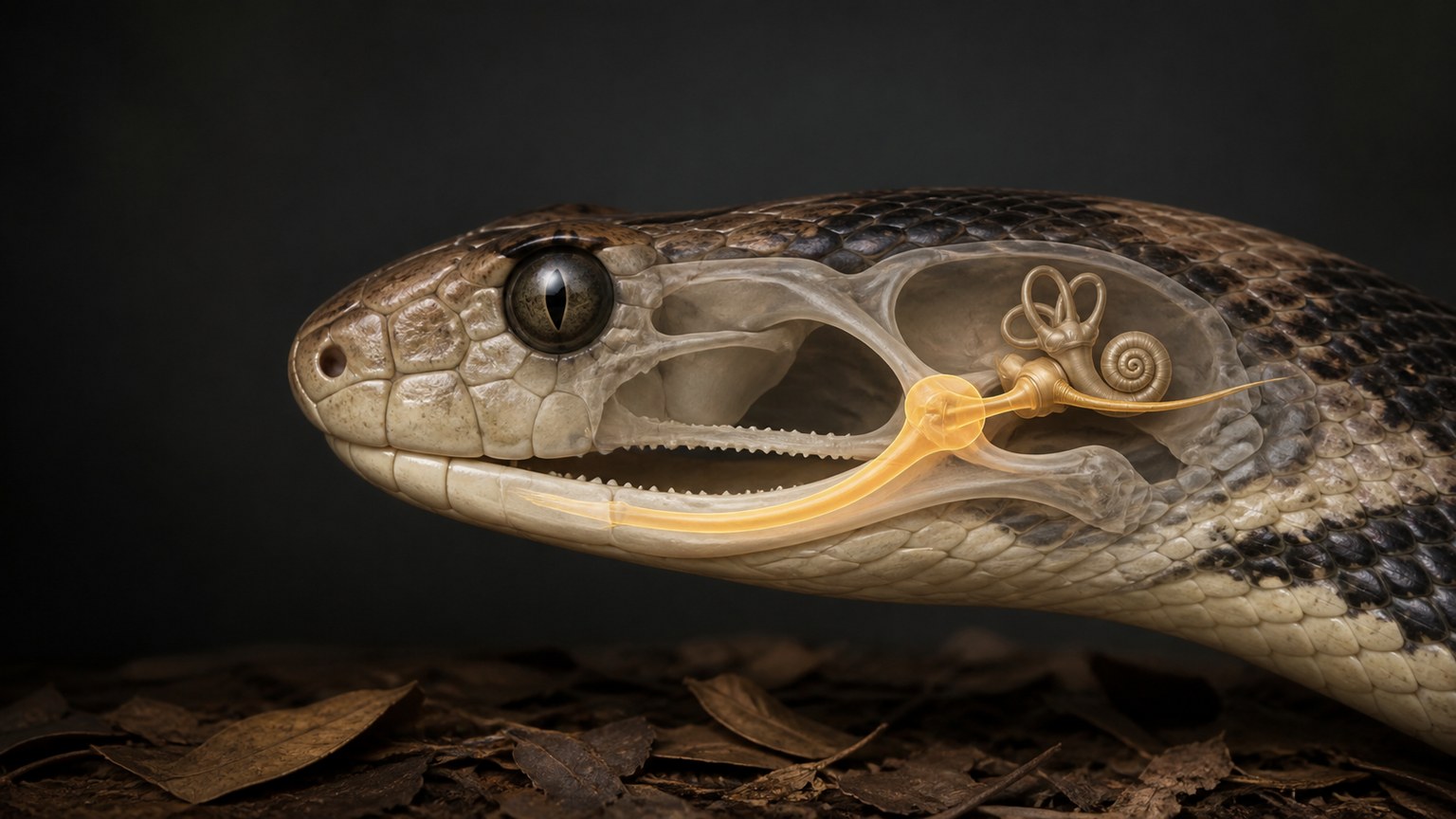
True: snakes can detect sound and vibration, but they do not hear in the same way that people do. They have no external ear openings or eardrums. Instead, their inner ears and a middle-ear bone connected to the lower jaw are part of a vibration-sensitive system.
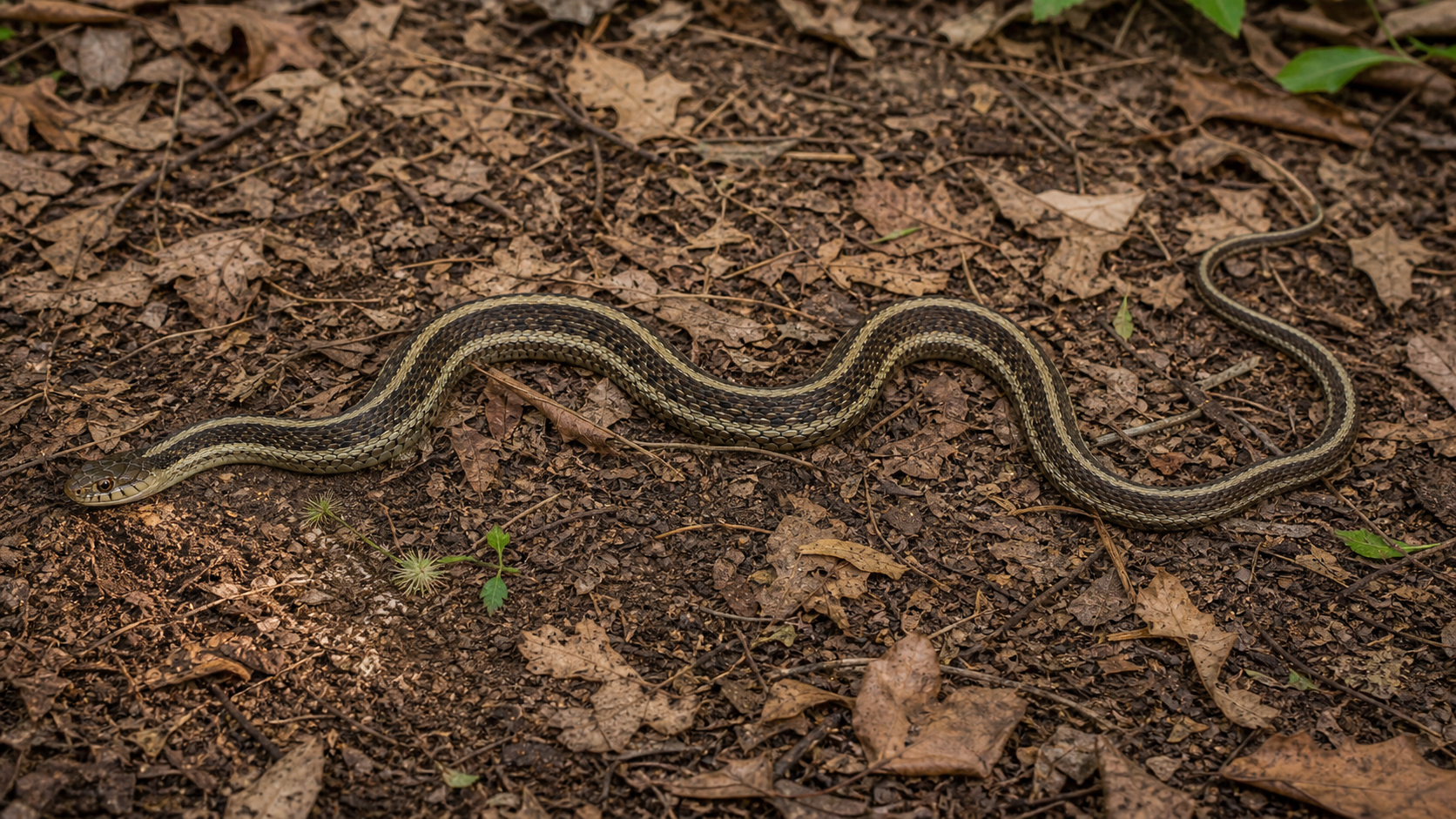
Groundborne vibration
Movement through the ground can travel through a snake’s body, jaw and skull to the inner ear. This is one reason a snake may react to nearby footsteps, a moving animal or a disturbance in its shelter. It does not mean the snake is listening to conversations through the soil.
Airborne sound
Research also shows that some snakes respond to airborne sound, especially at lower frequencies. Sensitivity differs among species and is not comparable to human hearing. A snake may react to a sound wave, but that does not mean it interprets spoken words or music as people do.
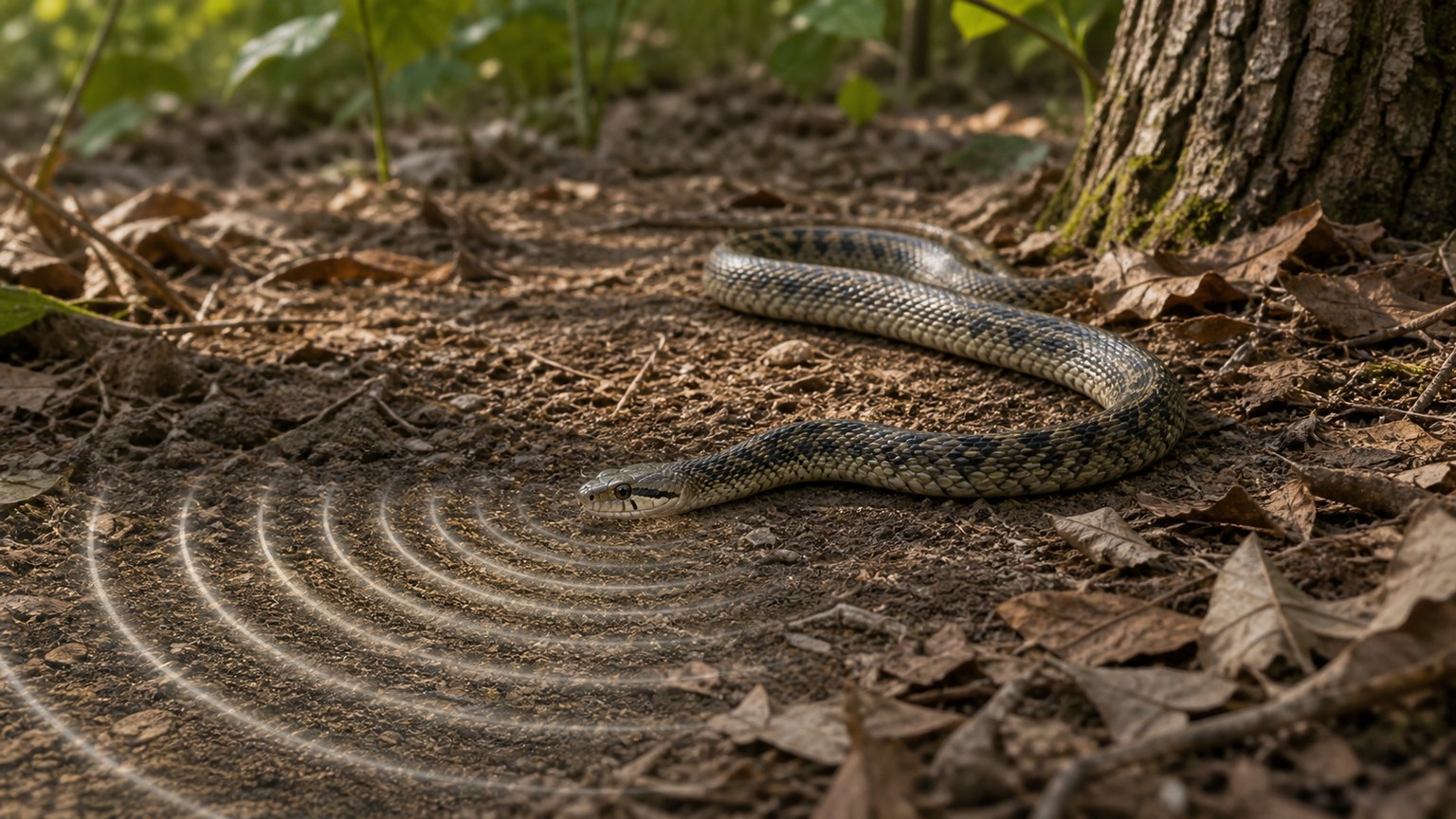
Why the myth persists
Because snakes lack visible ears, they are often described as deaf. That shortcut misses the difference between detecting vibration, airborne sound and human-style hearing. Their sensory system is adapted to their ecology, not absent.
Practical advice
Do not rely on loud noise to drive a snake away. Give it space, avoid sudden attempts to handle it and contact a qualified local wildlife professional if it is in a place where people or pets could be at risk.
Vibration Does Not Equal Human Hearing
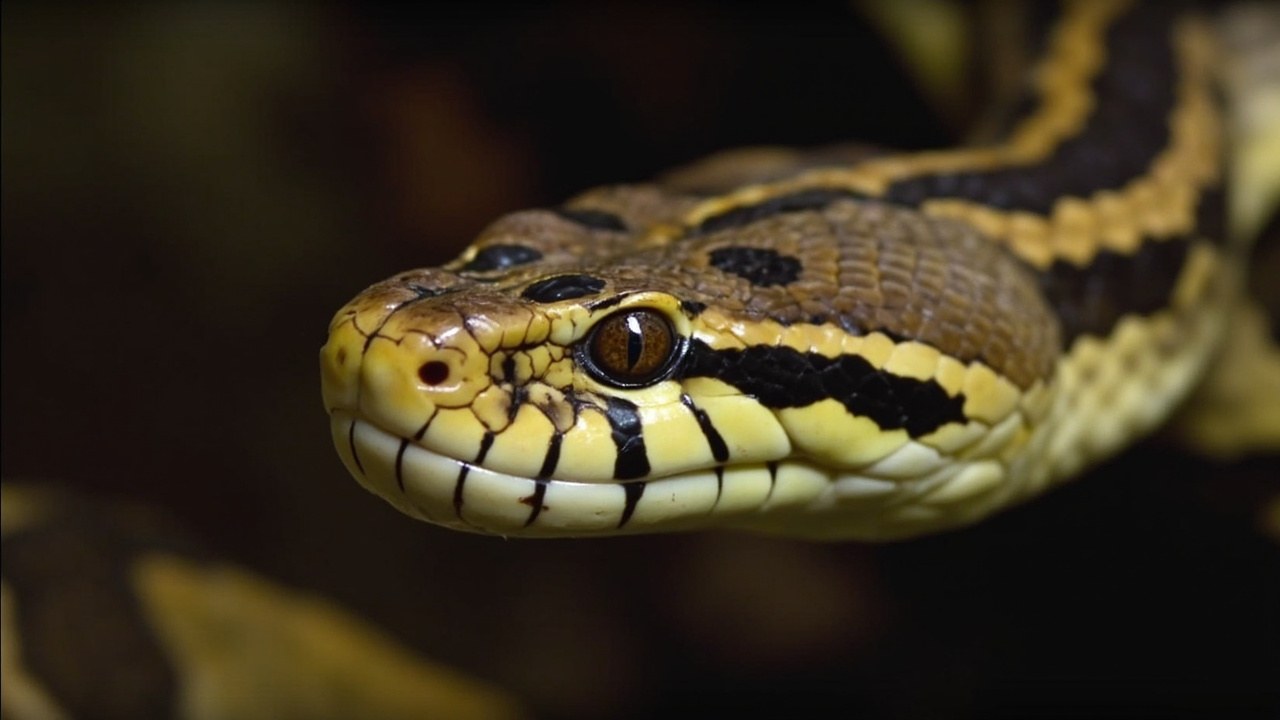
A snake can receive vibration through the ground and body, but that does not mean it hears words or music as a person does. The middle-ear bone and inner ear are part of a system adapted to the snake’s way of moving and sensing its environment. Sensitivity differs among species and frequencies, so claims that every snake hears the same sounds in the same way are too broad.
Sound Experiments Need Restraint
Playing loud music, stamping near a snake or tapping its enclosure is not a useful welfare test. A reaction could reflect vibration, airflow, movement or disturbance rather than an interest in sound. Repeated startling can leave an animal without a secure place to rest. Calm observation gives a better picture of ordinary behaviour than an attempt to provoke a visible response.
A Quiet Approach Helps Wildlife
When an unfamiliar snake is nearby, slow movement and distance are safer than trying to scare it away with noise. Give it a route to leave and keep children and pets back. If it is in a place where it cannot remain safely, contact a local wildlife professional rather than testing whether it can hear you.
Sources and review notes
Reviewed 23 August 2026. Reptile biology is wonderfully variable. We have avoided turning one species, photograph or dramatic observation into a rule for an entire group, and we have used cautious wording where evidence or local conditions differ.
Reference starting points: The Reptile Database, The IUCN Red List of Threatened Species, and PubMed-indexed research. Conservation status, taxonomy and local laws can change, so check the linked databases and the relevant local authority for current information.
Spotted something we should revisit? Send Reptile Explorer a correction—thoughtful reader feedback is always welcome.