Not Instant Background Matching
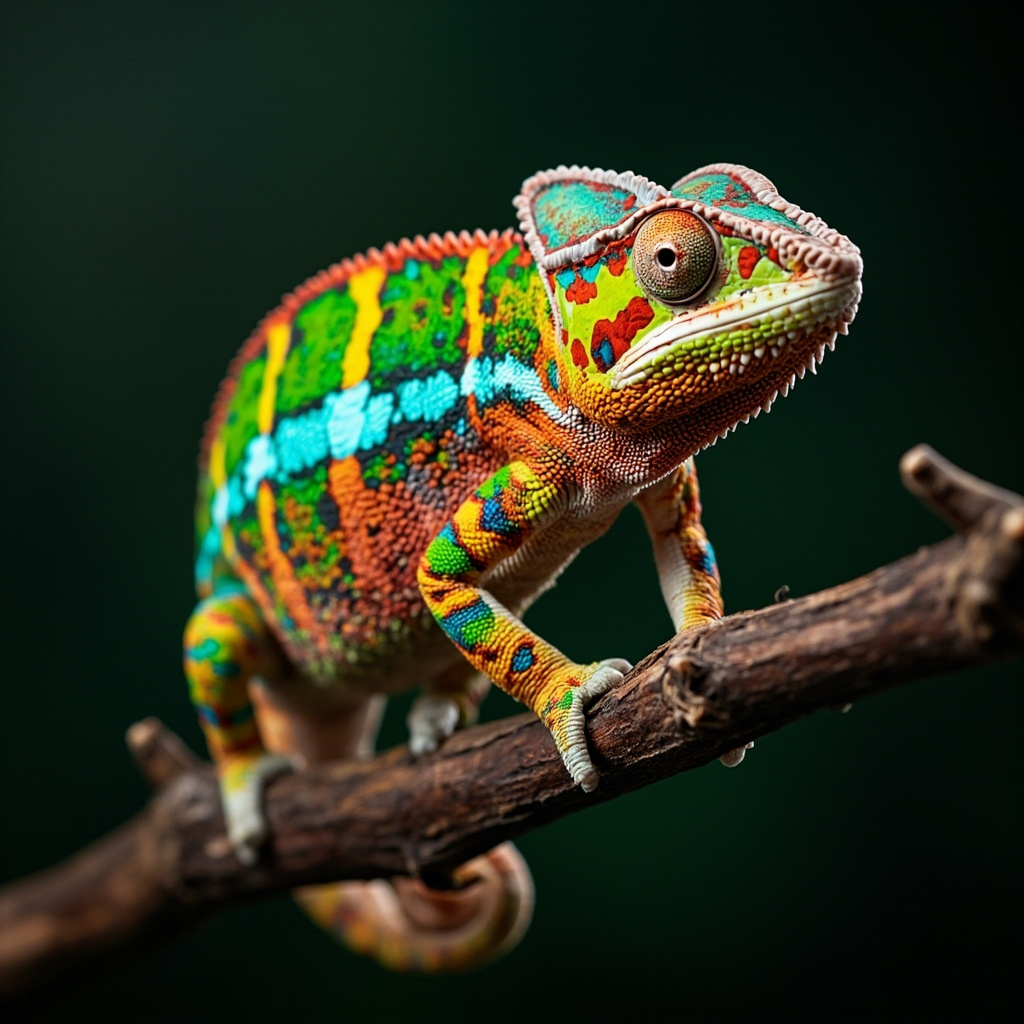
Chameleons do change colour, but they do not copy every background they encounter. Their available colours and patterns are limited by species, sex, age and individual physiology. Camouflage can be important, yet rapid colour change is also used in social situations. In several chameleon species, brighter or contrasting colours appear during courtship and contests between males.
Skin Cells Change the Light
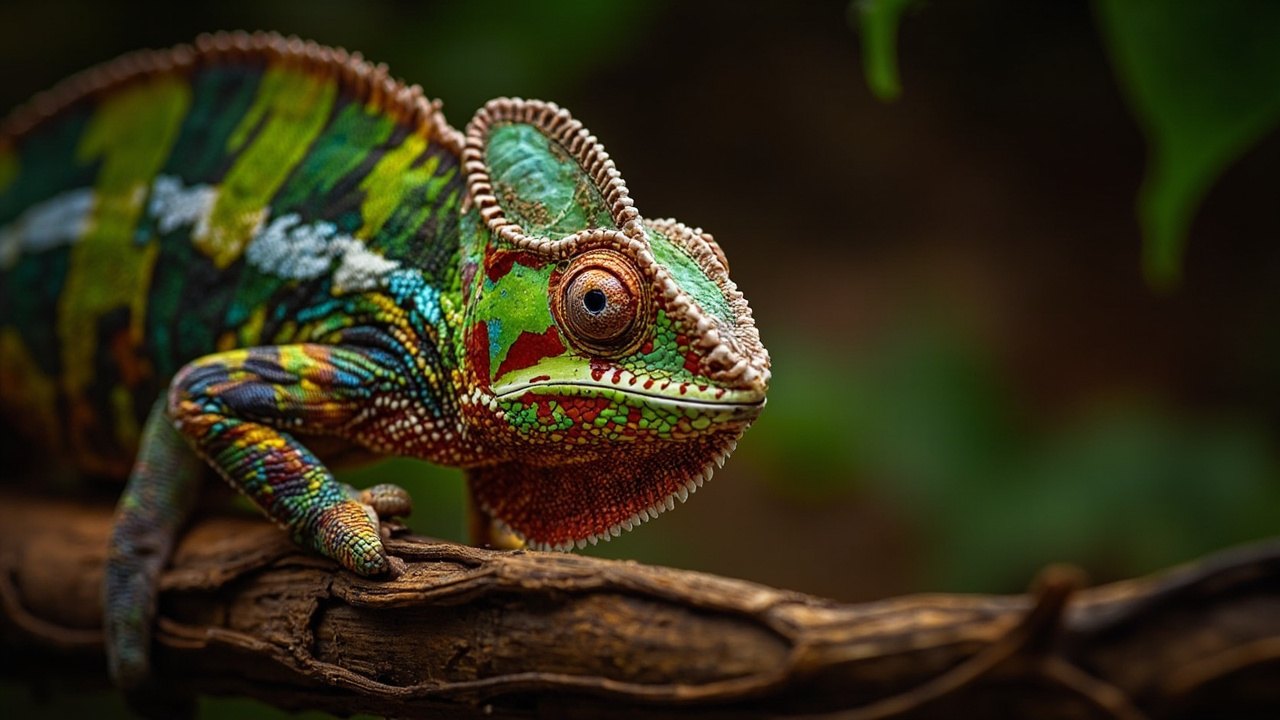
Colour comes from several layers of specialised skin cells. Pigment-containing cells contribute some colours, while iridophores reflect light. Research on panther chameleons showed that males can alter the spacing of guanine nanocrystals in superficial iridophores, changing the wavelengths reflected by the skin. That study explains one mechanism in one species group, not a universal rule for every colour-changing reptile.
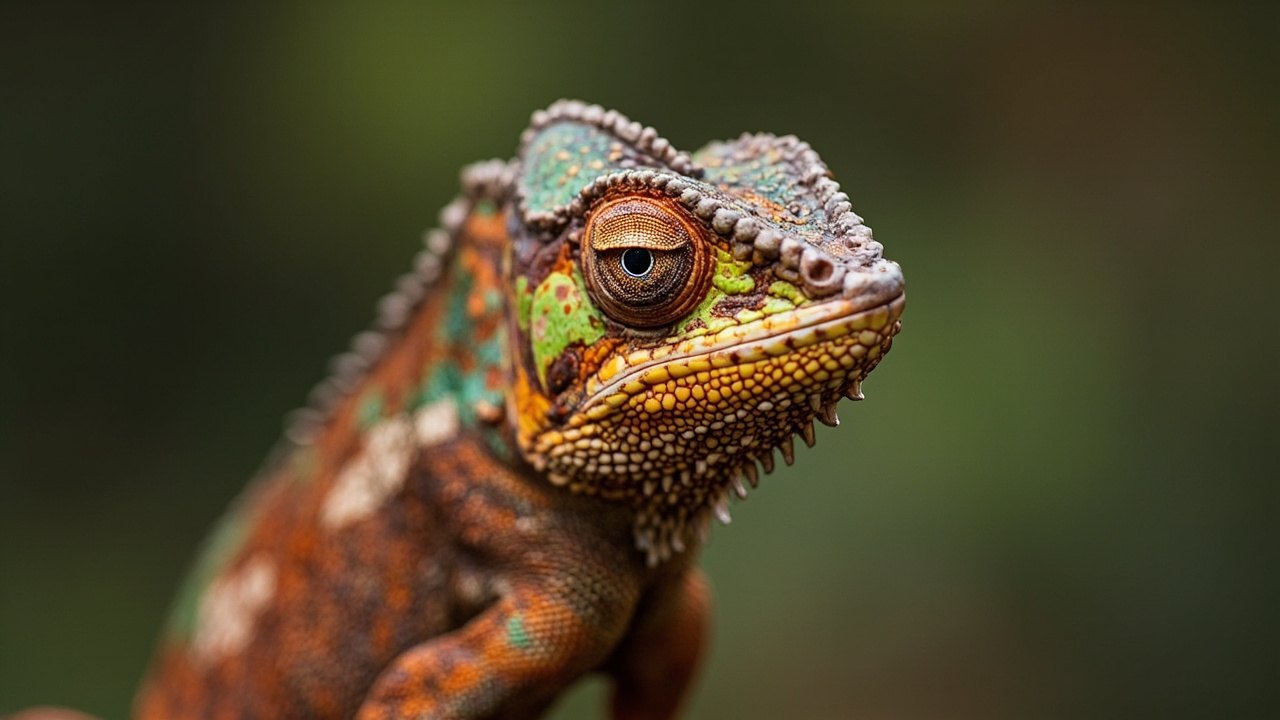
Colour Needs Context
Temperature, stress, health and social setting can all affect an animal’s appearance. Darkening may help absorb heat, while particular patterns may signal submission or readiness to interact. In captivity, colour is one observation among many, alongside appetite, posture, hydration, activity and enclosure conditions. A sudden or persistent change that accompanies signs of illness deserves advice from a reptile-qualified veterinarian.
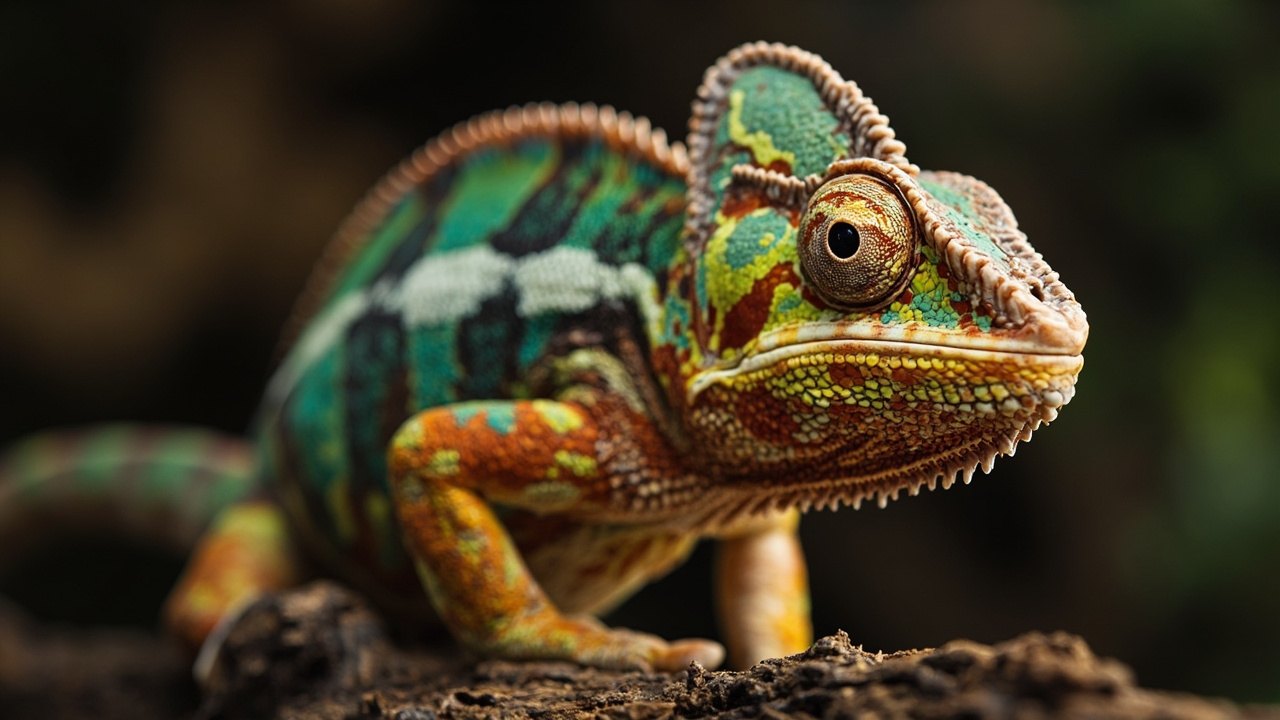
Colour Is Produced by Several Skin Layers
Chameleon skin does not work like a set of paint pots. Pigment cells and light-reflecting cells contribute different parts of the visible pattern, and the effect depends on the species and the state of the animal. A published finding about one chameleon species can explain a mechanism without proving that every chameleon uses the same mechanism or has the same range of colours.
Light also changes what a camera records. A flash, shaded foliage, a dark perch or automatic colour correction can make a pattern appear stronger or weaker than it looked in person. Photos are useful records, but they should not be used alone to diagnose health, mood or species identity.
Signals Work With Posture and Setting
Colour often appears with body flattening, expansion, head movement, position on a branch and the presence of another chameleon. These cues can occur during courtship, competition or avoidance. A bright display is not a universal sign of aggression, and a darker animal is not automatically ill. The surrounding conditions and the particular species give the observation meaning.
Care Requires More Than Watching Colour
For captive chameleons, drinking behaviour, grip strength, body condition, eyes, activity and enclosure measurements provide more useful context than colour alone. Persistent changes paired with reduced feeding, weakness, swelling or breathing difficulty deserve advice from a reptile-qualified veterinarian.
Sources and review notes
Reviewed 23 August 2026. Reptile biology is wonderfully variable. We have avoided turning one species, photograph or dramatic observation into a rule for an entire group, and we have used cautious wording where evidence or local conditions differ.
Reference starting points: The Reptile Database, The IUCN Red List of Threatened Species, and PubMed-indexed research. Conservation status, taxonomy and local laws can change, so check the linked databases and the relevant local authority for current information.
Spotted something we should revisit? Send Reptile Explorer a correction—thoughtful reader feedback is always welcome.