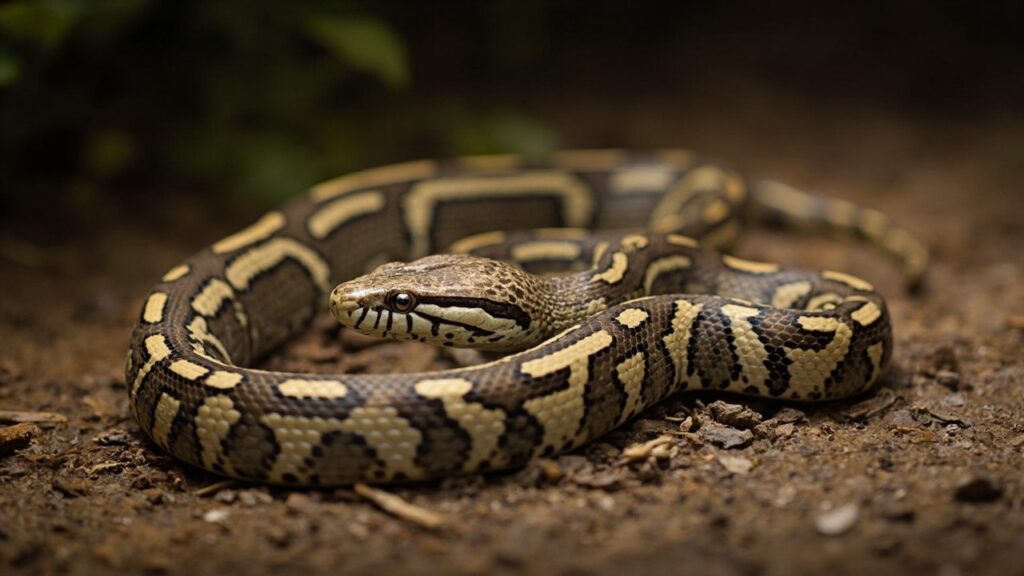
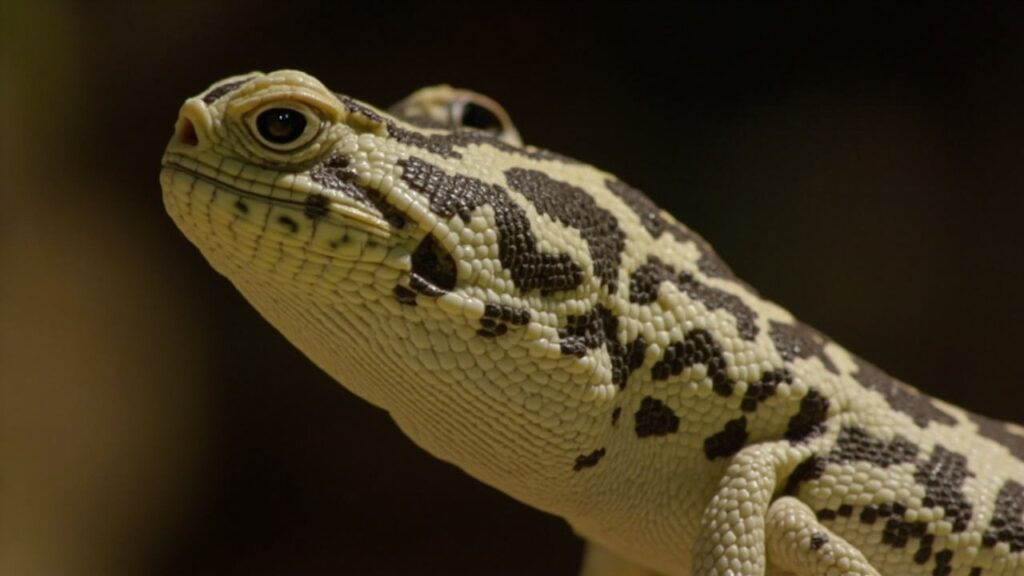
Chameleons do not change colour only to match a background. Depending on the species and situation, colour can help with social signalling, thermoregulation, camouflage and defensive display. A colour shift is an observable response to context and physiology, not a simple window into a chameleon’s feelings.
How colour change works
Chameleon skin contains several layers of specialised cells. Pigment cells contribute darker and warmer tones, while iridophores contain guanine nanocrystals that can alter how light is reflected. In well-studied species such as panther chameleons, changes in crystal spacing help tune visible colour.

Communication and temperature
Many chameleons use colour during courtship, territorial encounters and conflict. Darkening can also help absorb heat, while lighter colours may reduce solar heating. The meaning of a pattern depends on species, sex, age, temperature, lighting and the behaviour occurring at the same time.
Camouflage has limits
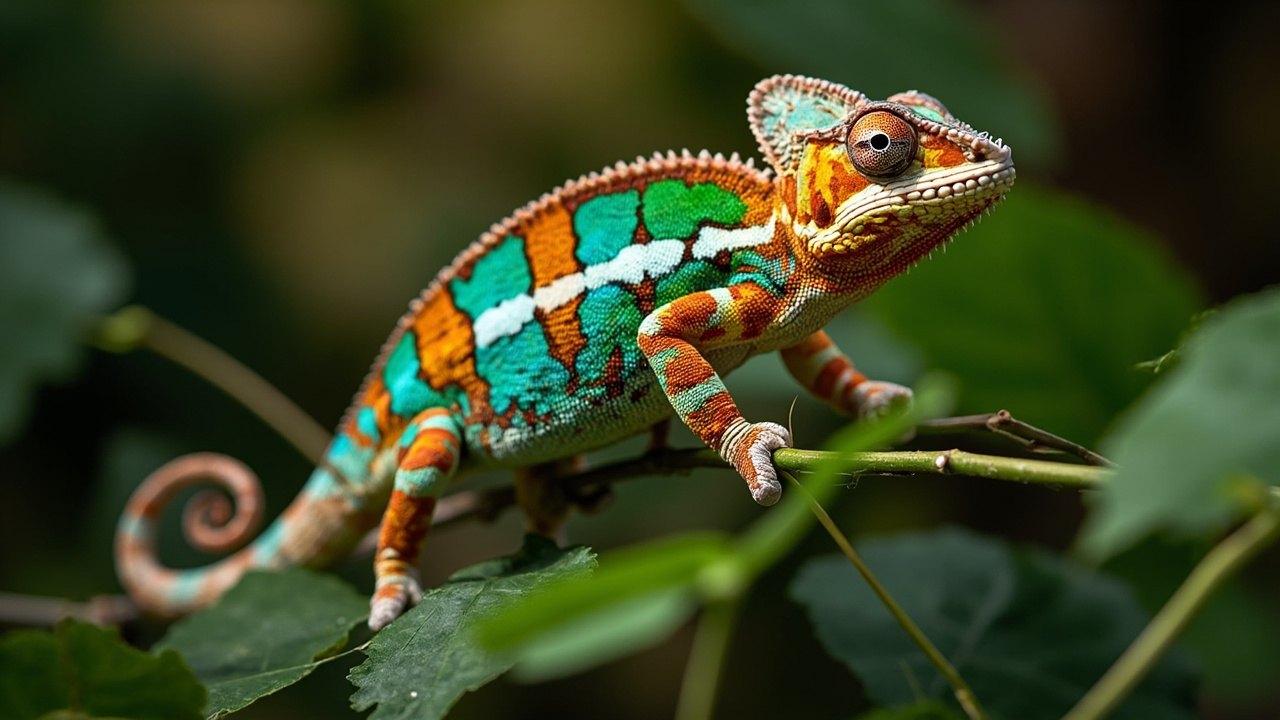
Chameleons often begin with colours that suit the vegetation, bark or leaf litter in their habitat. Rapid change is not a pixel-perfect attempt to copy every surface. A chameleon may become conspicuous during a display even when remaining hidden would seem safer to a human observer.
Read behaviour, not a colour chart
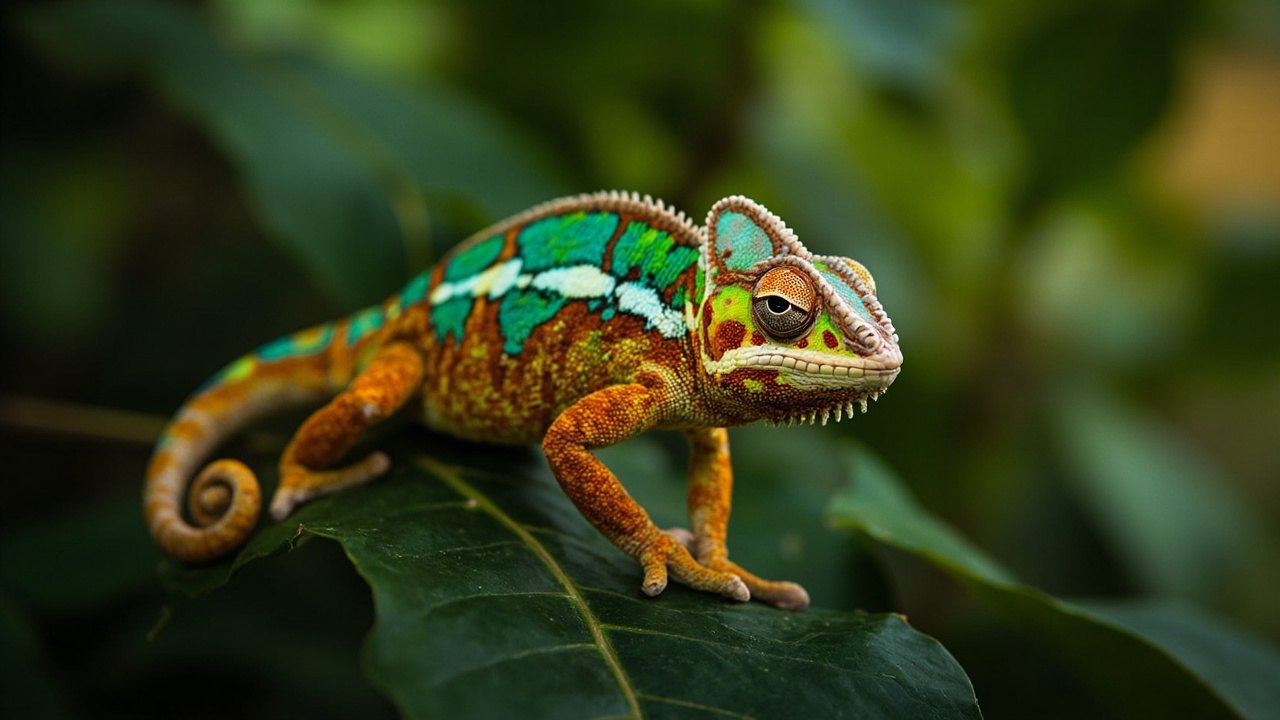
A universal chart that labels one colour as happy and another as stressed is misleading. When a captive animal is persistently dark, pale, inactive, refusing food or showing other changes, review husbandry and consult a reptile veterinarian rather than diagnosing its state from colour alone.
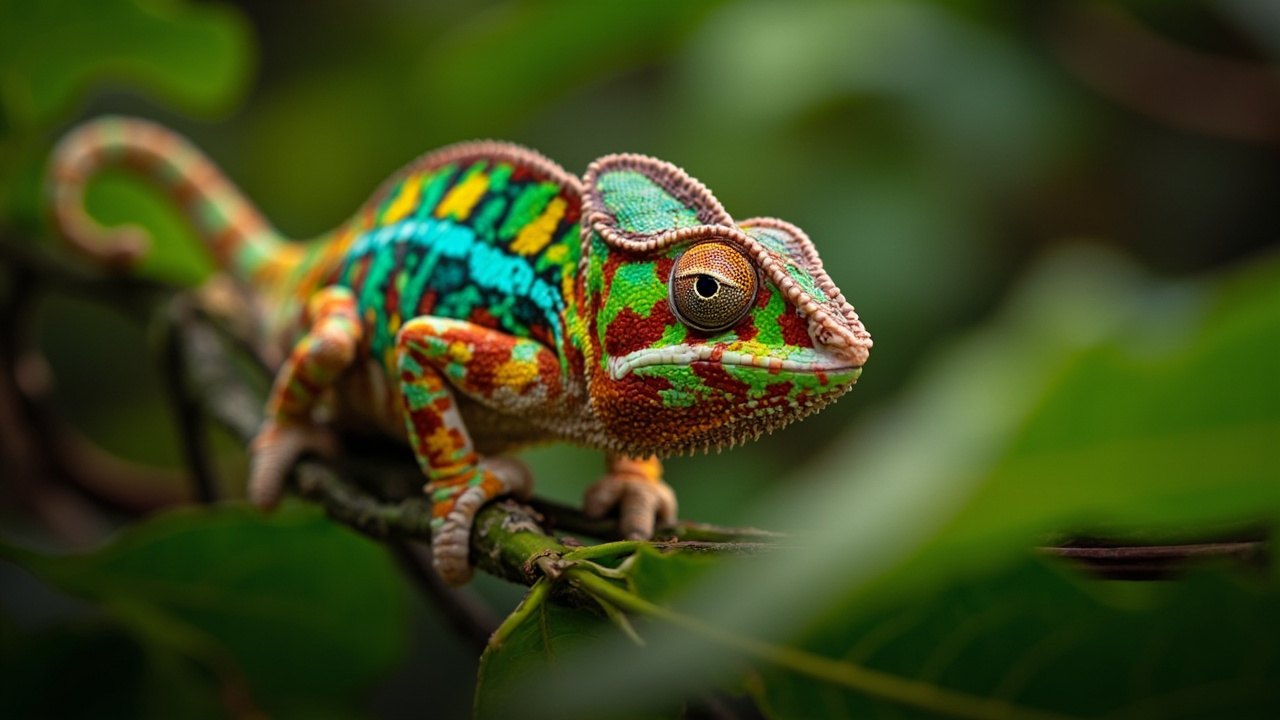
Observe More Than Colour
Posture, grip, eye movement, location in the enclosure and activity provide context for a colour change. A chameleon can darken while basking, during a display or when conditions are unsuitable, so one photograph cannot settle the reason. Recording the time, recent enclosure conditions and behaviour is more useful than assigning a fixed emotional label to a pattern.
Reflections Can Create a Problem
Glass, mirrors and nearby enclosures can present a chameleon with a persistent visual stimulus. Repeated displays toward a reflection may be a sign that the animal has no break from it. Adjusting sight lines and providing dense, usable cover can reduce that pressure. Do not encourage a display for photographs by placing another chameleon or a mirror in front of the animal.
Species Differences Still Apply
Colour ranges and social signals differ widely among chameleon species. Advice developed for a well-studied panther chameleon should not be assumed to describe every species. Good care starts with confirmed identification and conditions that match that animal’s natural history.
Sources and review notes
Reviewed 23 August 2026. Reptile biology is wonderfully variable. We have avoided turning one species, photograph or dramatic observation into a rule for an entire group, and we have used cautious wording where evidence or local conditions differ.
Reference starting points: The Reptile Database, The IUCN Red List of Threatened Species, and PubMed-indexed research. Conservation status, taxonomy and local laws can change, so check the linked databases and the relevant local authority for current information.
Spotted something we should revisit? Send Reptile Explorer a correction—thoughtful reader feedback is always welcome.