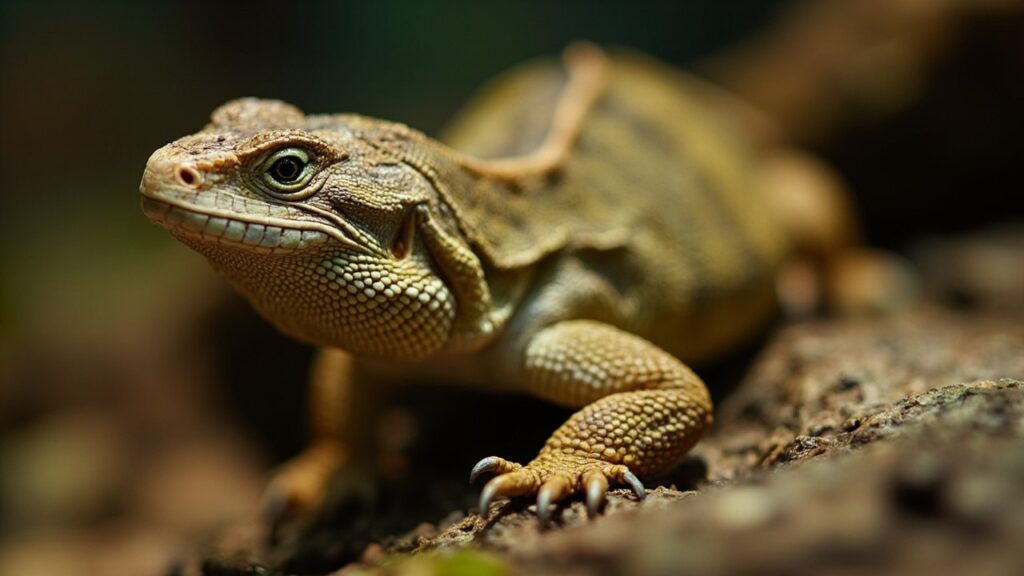
Handling a reptile should have a clear purpose, such as necessary husbandry, a health check or safe transfer. It is not automatically good enrichment, and frequent handling can be stressful for many species. Advice about workplace lifting or manual loads does not apply to live reptiles.
Know when not to handle
Do not handle unfamiliar wild animals, venomous species, very large constrictors or crocodilians. Contact a qualified veterinarian, licensed wildlife professional or experienced keeper when a species requires specialist restraint. Never attempt to identify a snake by touching it.

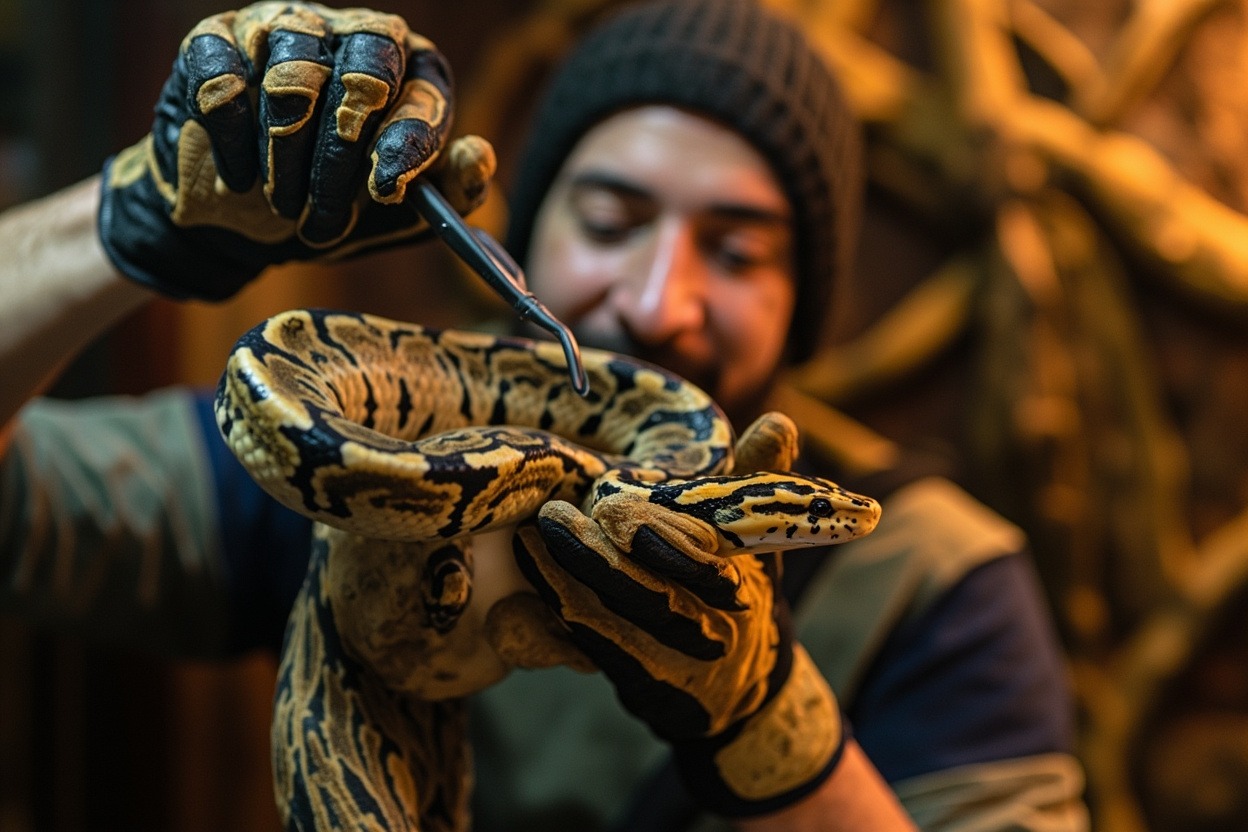
For routine captive care
Move slowly, support the animal’s body and avoid gripping the tail, neck or ribs. Keep sessions brief, use a secure transfer container when appropriate and stop if the animal shows clear defensive or stress behavior. Species-specific technique matters more than a generic “confidence” rule.
Hygiene and injury prevention
Wash hands after handling reptiles, their food or enclosure items because reptiles can carry Salmonella. Keep hands away from the face, supervise children closely and clean bites or scratches promptly. Seek medical advice for significant wounds or signs of infection.
Wildlife belongs at a distance
Photograph wild reptiles without moving them. Give them an escape route, keep pets back and ask local professionals for help when an animal is trapped or injured.
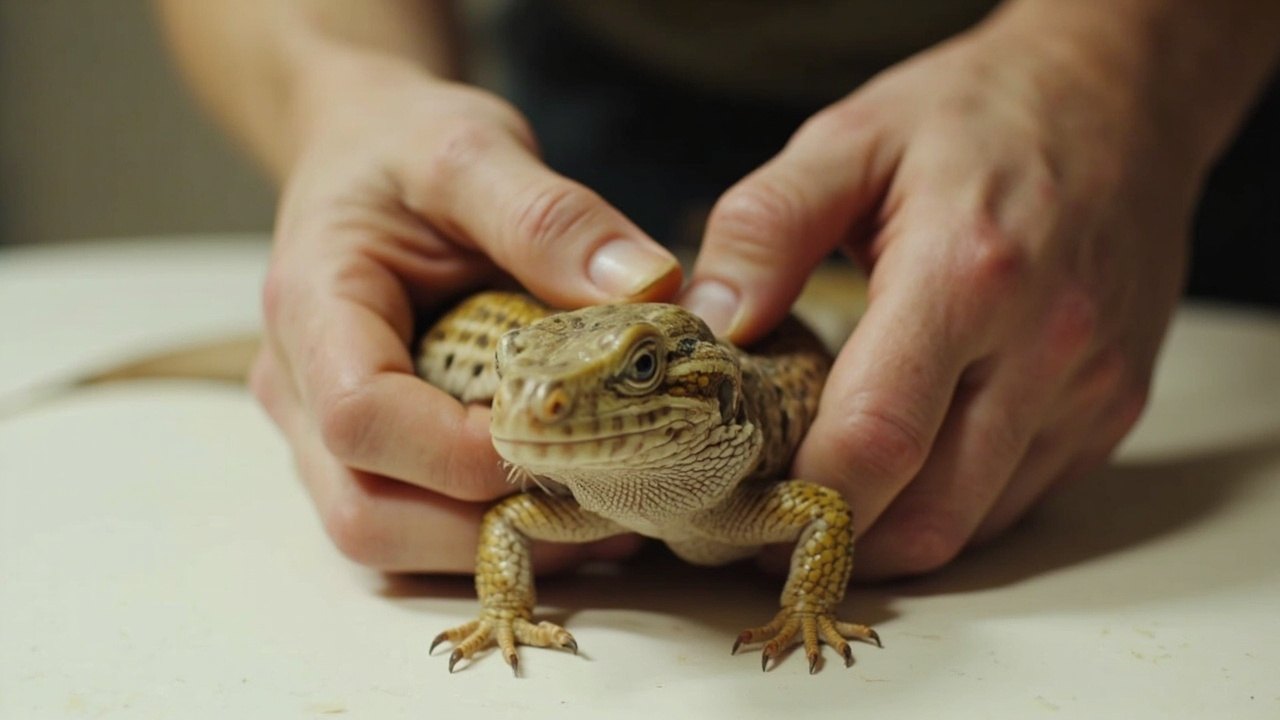
Preparation Reduces the Need for Restraint
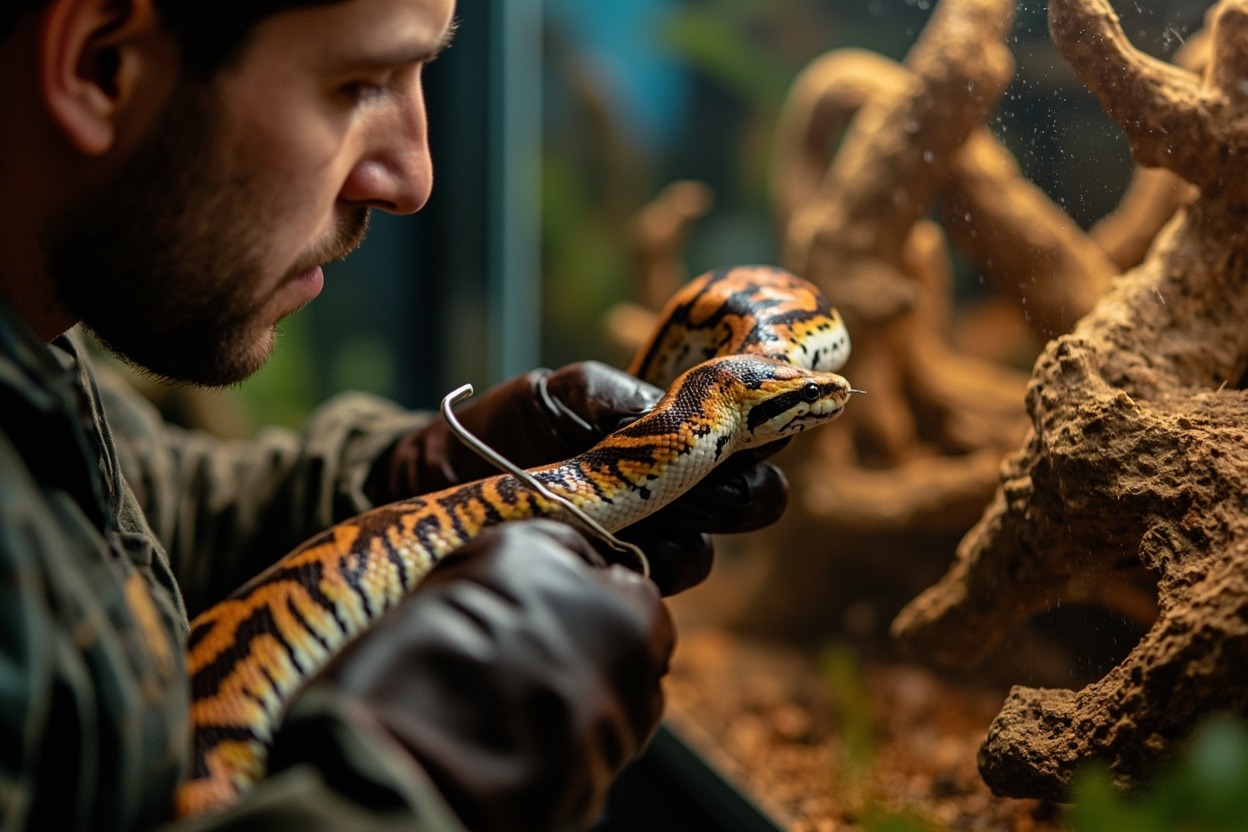
Routine work is safer when the enclosure is set up so food, water and cleaning can be handled without chasing an animal. Plan the route to a secure container before opening the enclosure, keep doors and lids clear, and remove distractions such as pets or crowded work areas. A calm transfer usually begins before the animal is touched.
Use Equipment Designed for Transfer
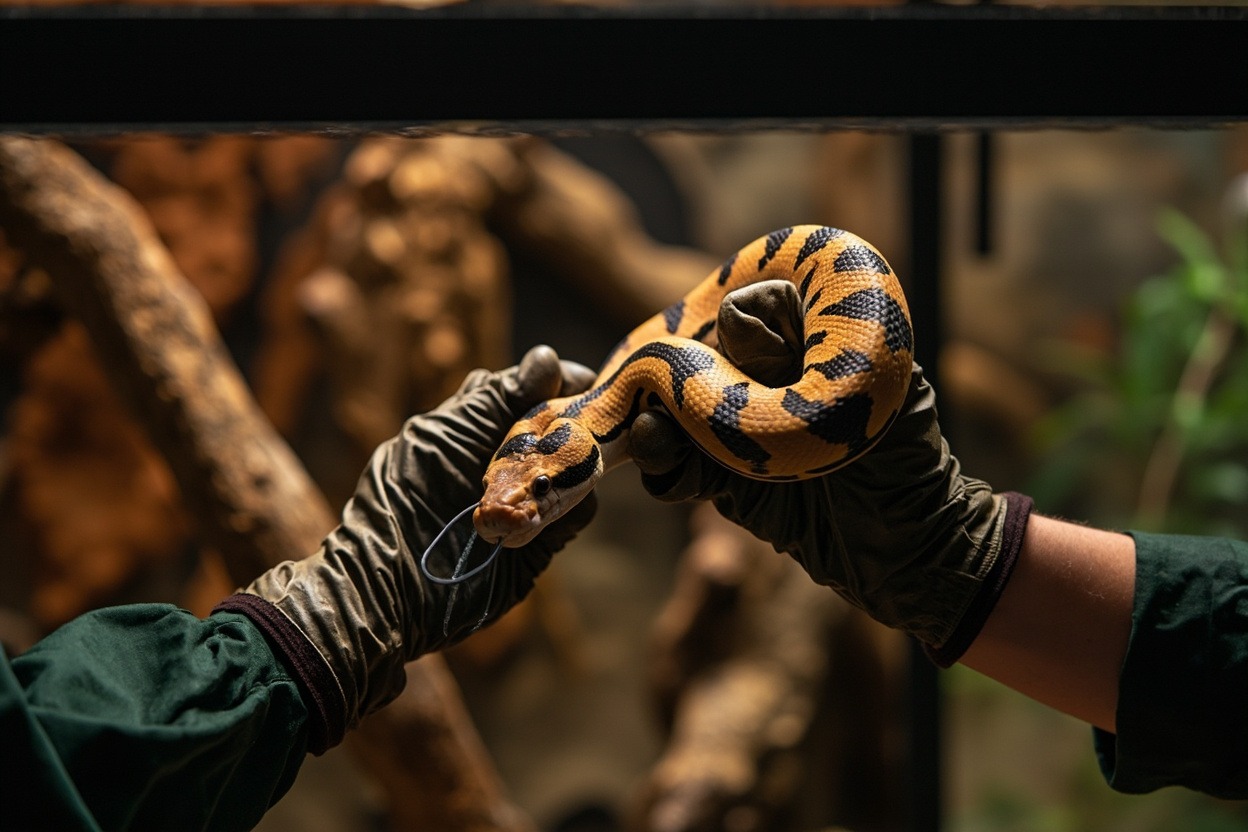
Appropriate containers, hooks or barriers depend on the species and task. They are not substitutes for training. A person who is unfamiliar with a large constrictor, venomous snake or crocodilian should contact a qualified professional instead of trying a technique seen in a video. Improvised restraint can injure the animal and create a bite risk.
Stop When Stress Is Clear
Defensive posture, repeated escape attempts, hard breathing or loss of coordination are reasons to pause and reassess. Returning an animal safely to its enclosure is often the right outcome. Necessary care can then be planned with a veterinarian or an experienced keeper who understands the species.
Sources and review notes
Reviewed 23 August 2026. Care works best when it starts with the exact species in front of you. We checked this article against current veterinary husbandry guidance, but measured enclosure conditions and a reptile-experienced veterinarian should guide decisions for an individual animal.
Reference starting points: Merck Veterinary Manual: reptile management and husbandry, CDC: healthy handling around reptiles and amphibians, and The Reptile Database. Conservation status, taxonomy and local laws can change, so check the linked databases and the relevant local authority for current information.
Spotted something we should revisit? Send Reptile Explorer a correction—thoughtful reader feedback is always welcome.