Start with the species, not a generic kit
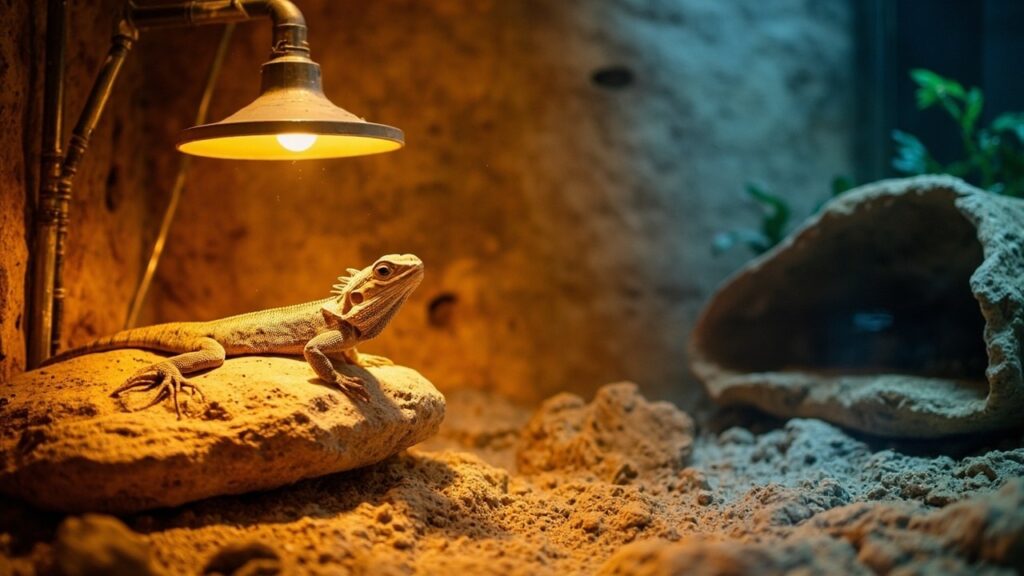
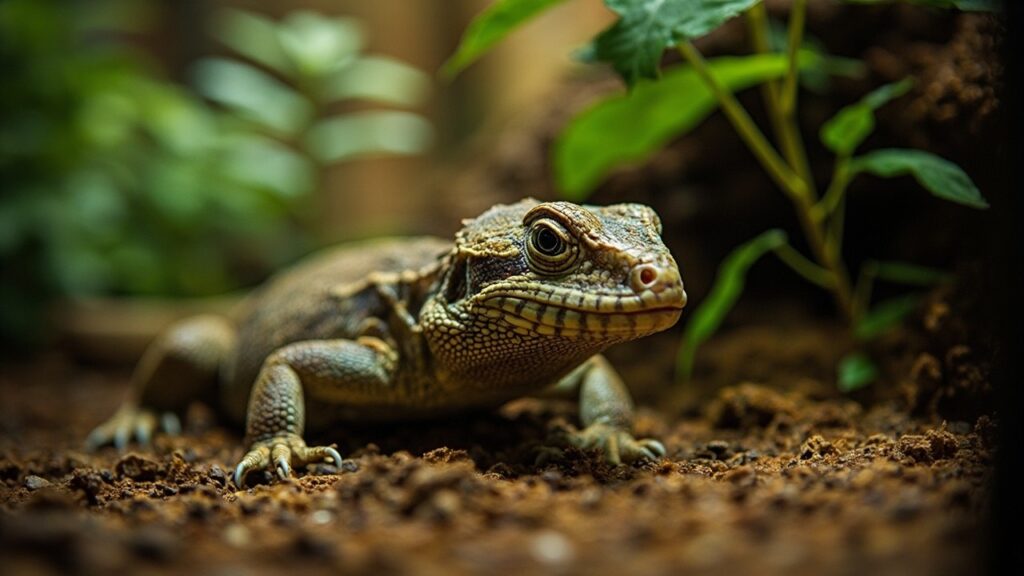
An enclosure should be planned for the animal’s adult size, natural history, activity pattern, and legal requirements. A terrestrial snake, an arboreal lizard, an aquatic turtle, and a desert tortoise do not need the same space or furnishings. Set up and test the enclosure before bringing an animal home, and use reliable species-specific guidance rather than assuming one display will suit every reptile.
Build choices into the environment
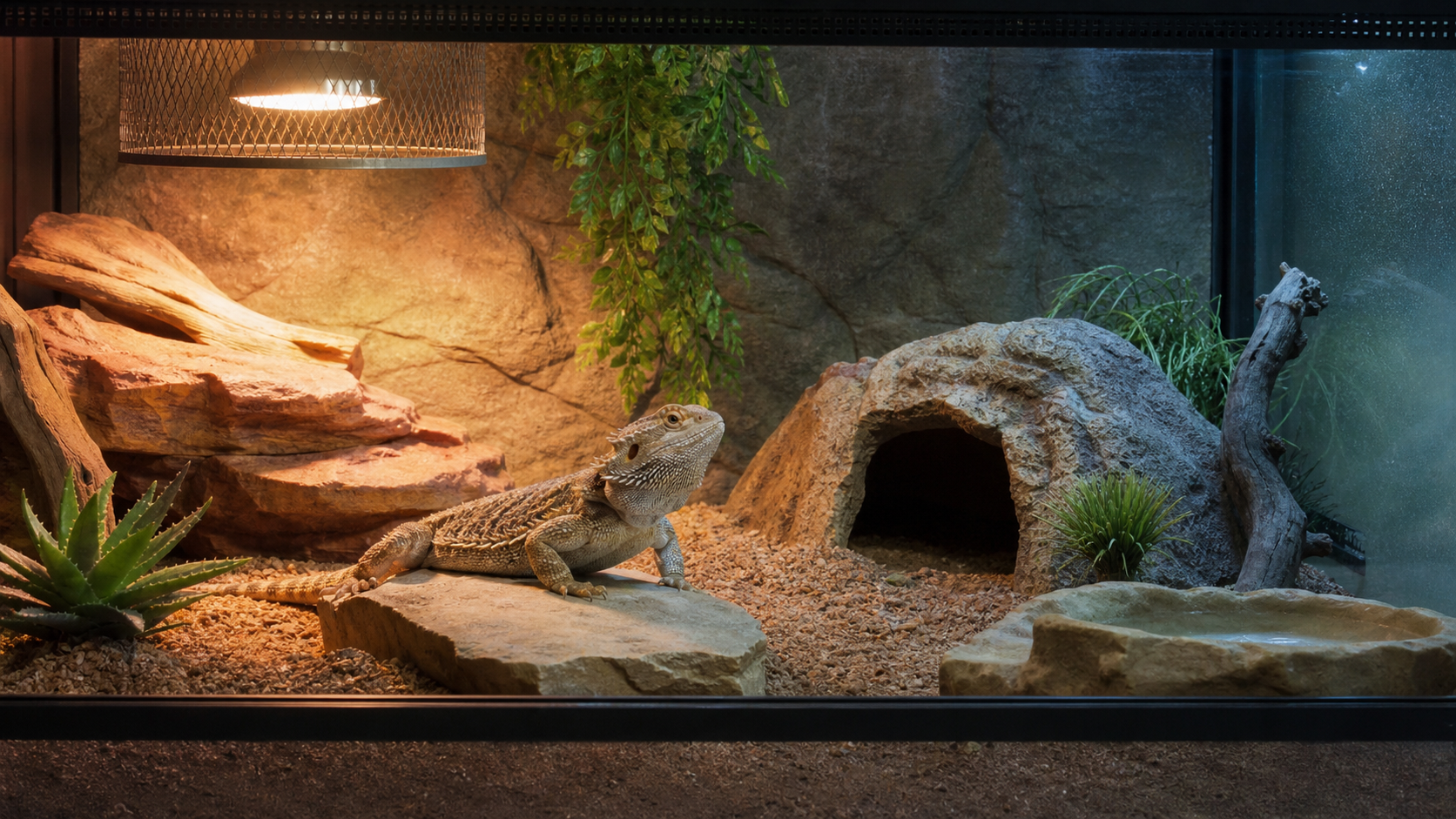
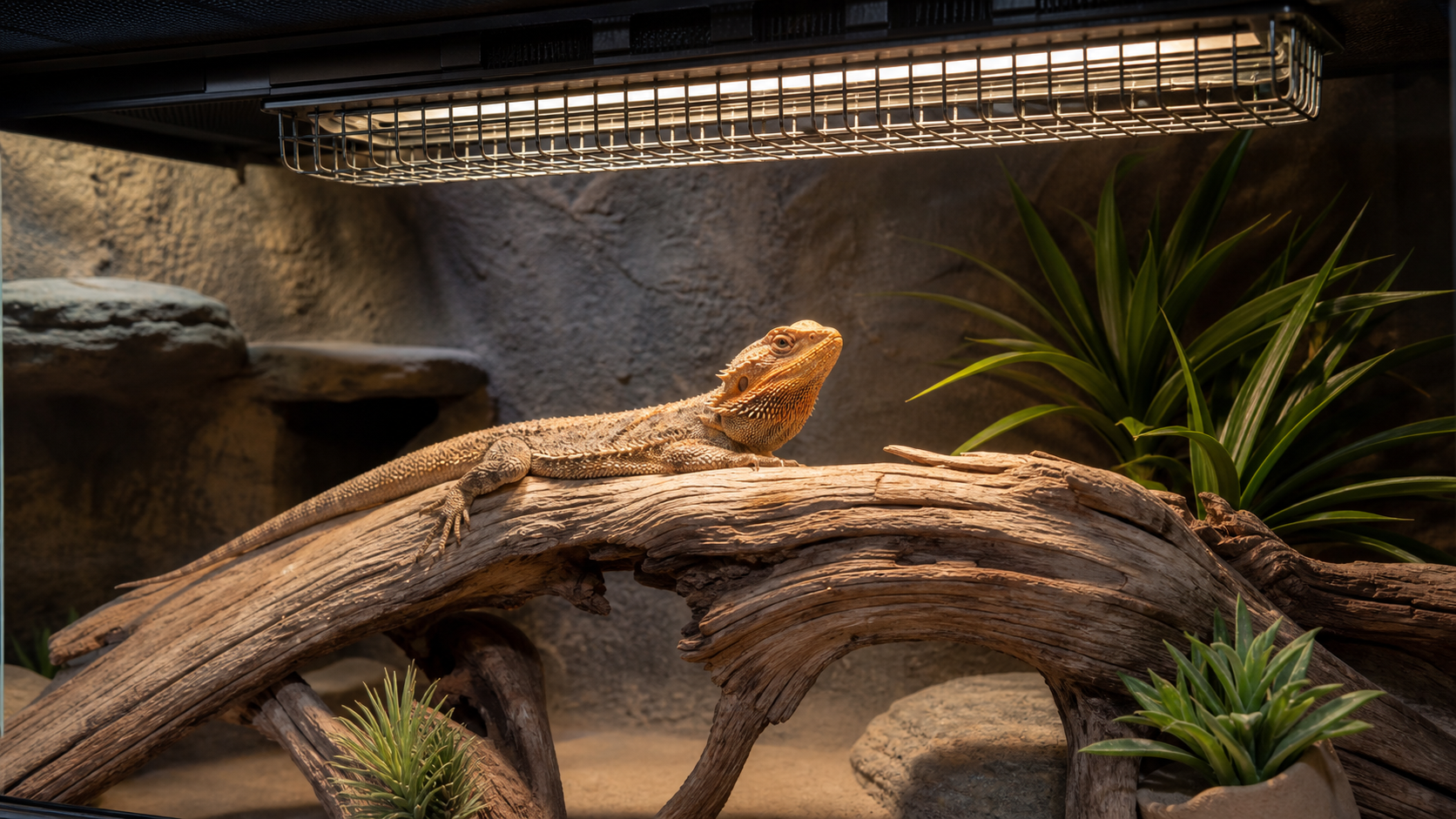
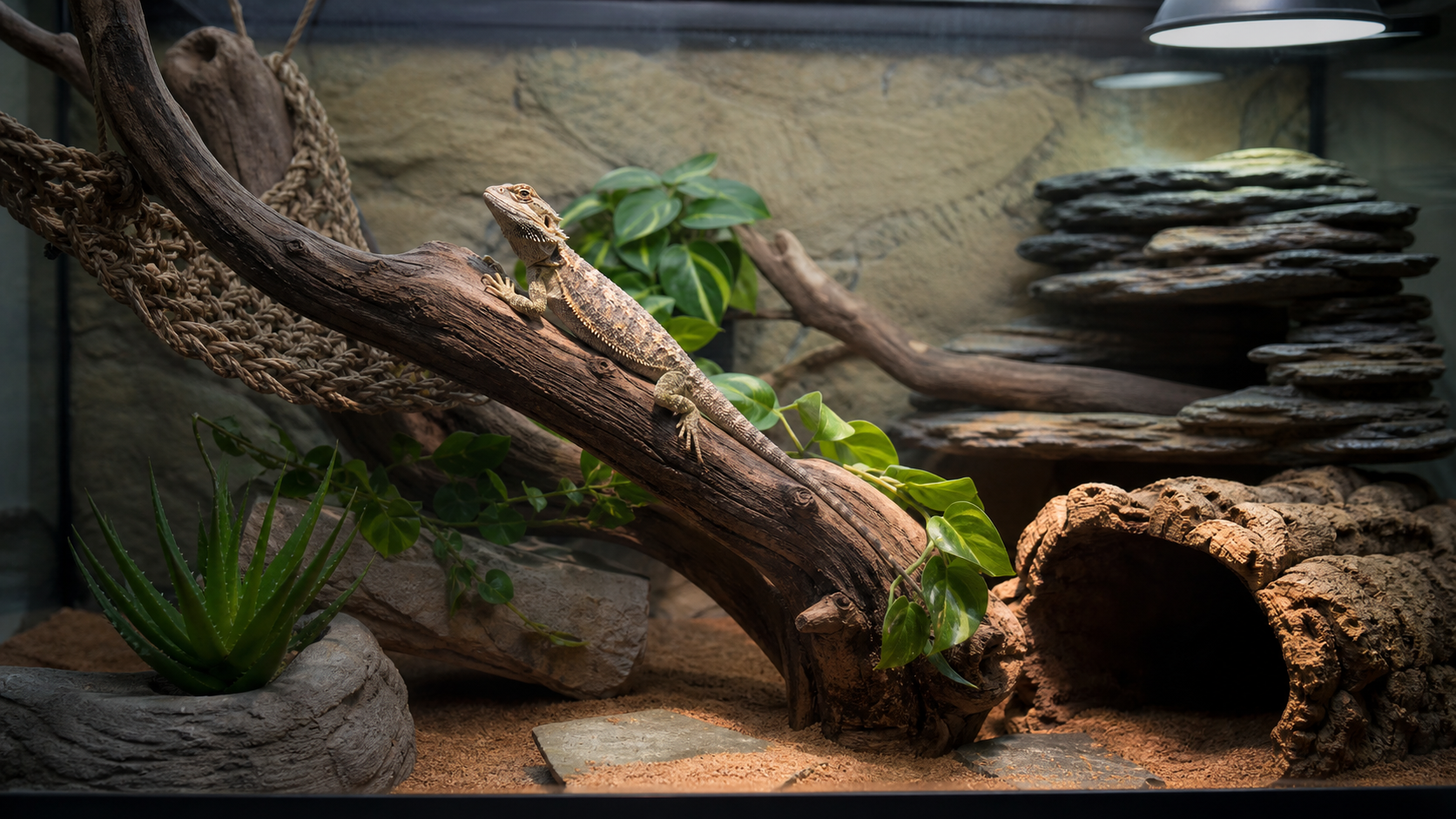
Reptiles need usable warm and cool areas so they can regulate body temperature. Heating equipment should be safely guarded and controlled with an appropriate thermostat, while temperatures and humidity should be measured in the places the animal actually uses. Lighting and ultraviolet provision also depend on the species and enclosure design. Direct sun through glass can overheat an enclosure and does not replace a planned lighting system.
Safety, cover, and maintenance matter
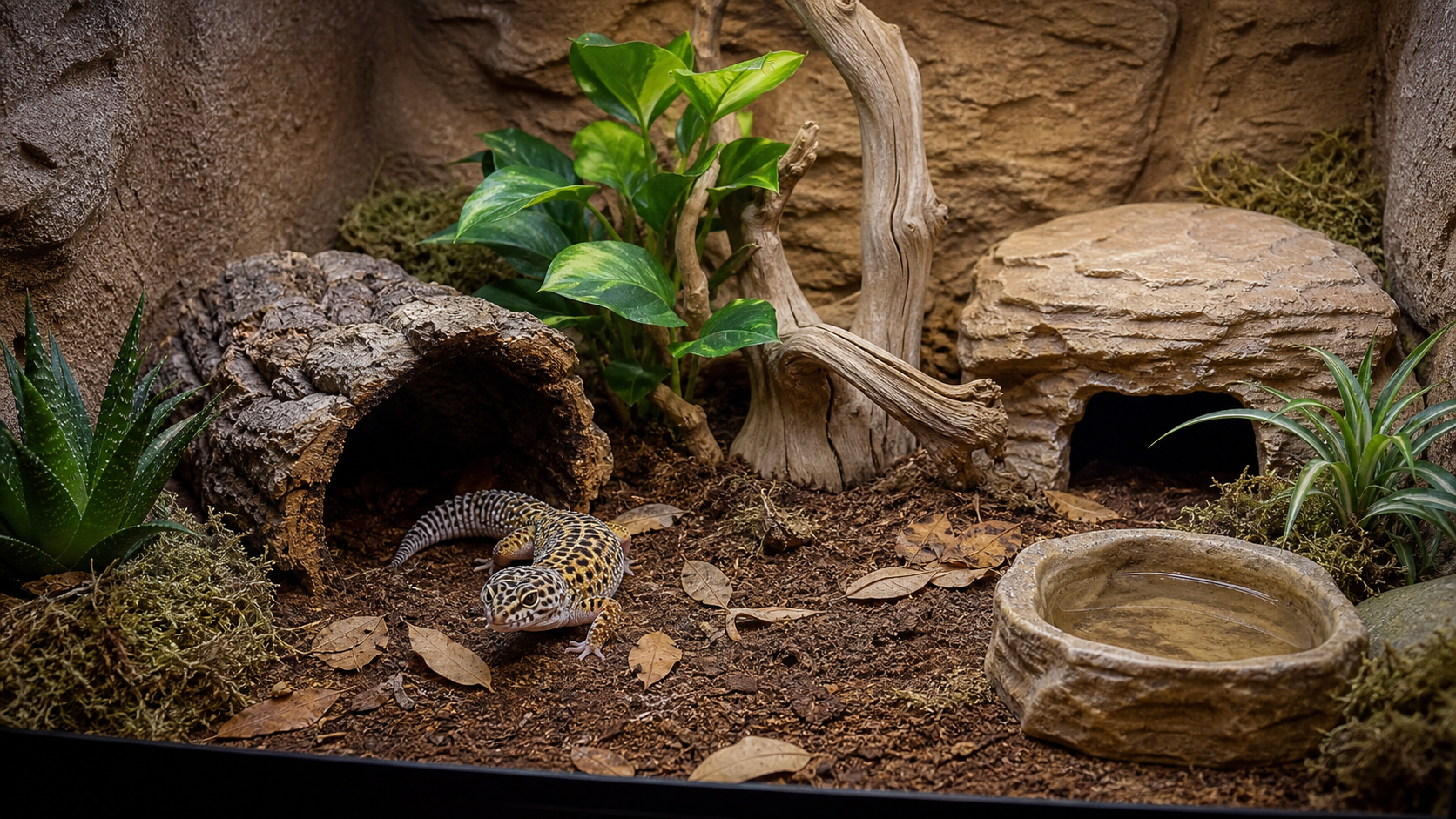
A secure enclosure needs suitable ventilation, clean water, appropriate substrate, and enough cover for the animal to rest without being exposed. Hides, branches, basking surfaces, and water features must be stable and easy to clean. For many commonly kept reptiles, individual housing is the safest starting point; any shared housing should follow species-specific guidance and give each animal room to avoid the others. Persistent appetite changes, poor sheds, burns, or unusual behaviour should prompt a review of husbandry and advice from a reptile-experienced veterinarian.
Test the Empty Enclosure First
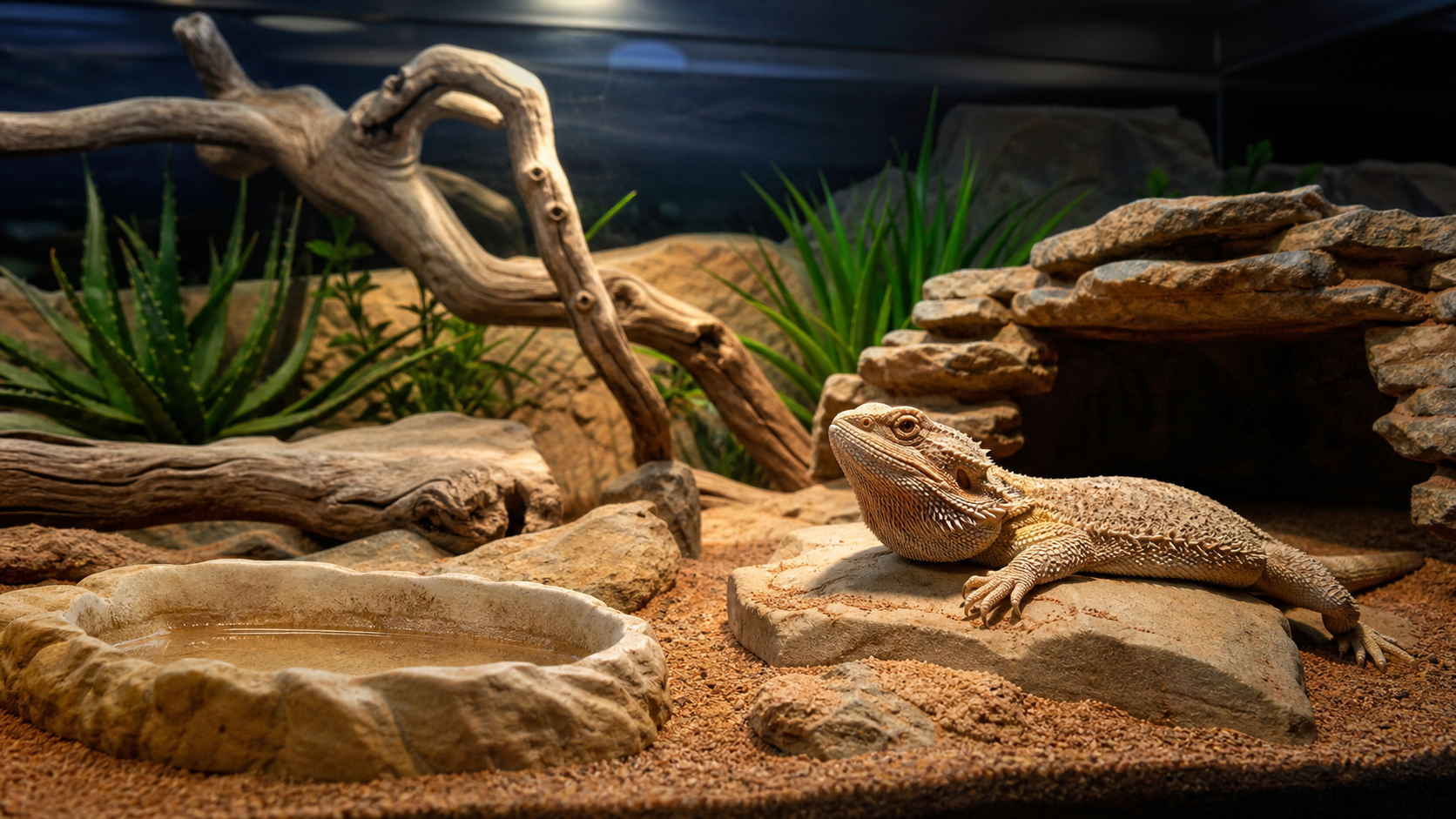
Run heating, lighting, ventilation and monitoring equipment before the animal arrives. Measurements should be taken where the reptile will rest, climb, bask and hide, not only at the enclosure door. A thermostat helps control a heat source, while separate instruments show whether the intended conditions are actually being reached. Recheck after furnishings are moved because branches, hides and screens can alter access and airflow.
Make Electrical Equipment Inaccessible
Heat sources, wires and fittings need secure placement and a method that prevents direct contact or accidental dislodging. Water changes and cleaning should not create an electrical hazard. Regularly inspect cords, guards, fasteners and thermostats for damage. Equipment that feels unreliable should be taken out of service and replaced rather than left in use because it worked previously.
Plan for Routine Care
A practical setup lets a keeper refresh water, remove waste and check the animal without dismantling its safe areas. Keep cleaning tools separate from kitchen items and wash hands after enclosure work. Good access is not a reason to leave cover out of the design. The animal should still be able to retreat while routine tasks are completed.
Sources and review notes
Reviewed 23 August 2026. Care works best when it starts with the exact species in front of you. We checked this article against current veterinary husbandry guidance, but measured enclosure conditions and a reptile-experienced veterinarian should guide decisions for an individual animal.
Reference starting points: Merck Veterinary Manual: reptile management and husbandry, CDC: healthy handling around reptiles and amphibians, and The Reptile Database. Conservation status, taxonomy and local laws can change, so check the linked databases and the relevant local authority for current information.
Spotted something we should revisit? Send Reptile Explorer a correction—thoughtful reader feedback is always welcome.